
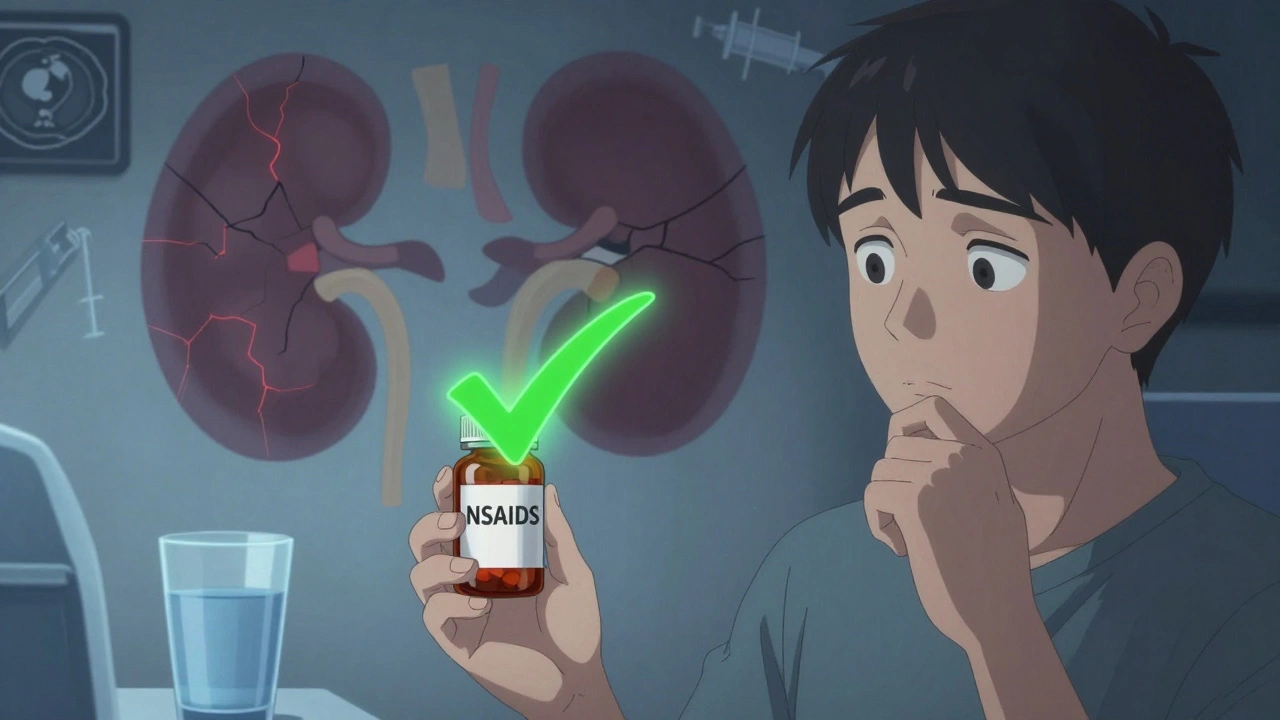
When you have chronic kidney disease (CKD), even a small change in your kidneys’ function can be dangerous. Acute kidney injury (AKI) on top of CKD isn’t just a temporary setback-it can lead to permanent damage, hospitalization, or even the need for dialysis. The biggest threats? Contrast dye and common medications you might not think twice about. Many patients don’t realize how easily their kidneys can be pushed over the edge, especially when they’re already weakened.
What Happens When AKI Hits CKD?
Chronic kidney disease means your kidneys are already working at less than full capacity-often 30% to 50% of normal function. When something like contrast dye or a painkiller causes a sudden drop in kidney function, your body has little reserve to cope. This is AKI on CKD. It’s not just worse than regular AKI-it’s more likely to become permanent. About 30% of these episodes lead to lasting kidney damage, and 10-15% of patients end up needing long-term dialysis within five years.
The definition of AKI is simple: a rapid drop in kidney function over 48 hours. That means either a rise in serum creatinine by 0.3 mg/dL or more, a 50% increase from baseline, or urine output falling below 0.5 mL per kg per hour for six hours or longer. For someone with CKD, even a small rise in creatinine can signal serious trouble.
Contrast Dye: The Silent Threat
Iodinated contrast, used in CT scans, angiograms, and other imaging tests, is one of the most common causes of AKI in people with CKD. In healthy people, the risk is low-around 1-5%. But if you have CKD, especially stage 3 or worse (eGFR under 60), that risk jumps to 12-50%. If you also have diabetes or heart failure, your risk climbs even higher.
Here’s what actually happens: contrast dye reduces blood flow to the kidneys and causes oxidative stress. In healthy kidneys, this is quickly cleared. In CKD, it lingers and damages the tiny filtering units. The good news? You can avoid it. The better news? When you can’t avoid it, there are proven ways to reduce the damage.
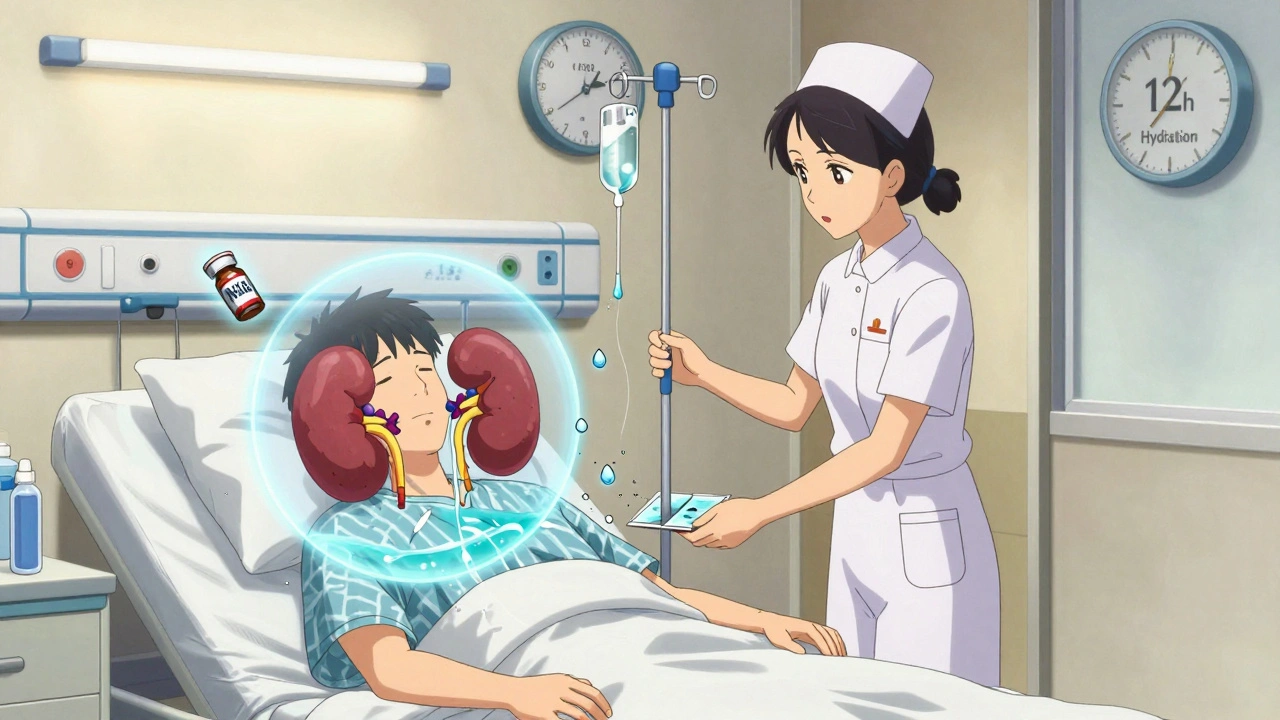
Kidney Disease: Improving Global Outcomes (KDIGO) guidelines say: use the lowest possible dose-usually no more than 100 mL-and hydrate well before and after. That means drinking water or getting IV fluids at 1.0 to 1.5 mL per kg per hour for 6 to 12 hours before and after the scan. Studies show this cuts the risk by 30-40%. No fancy solutions like albumin or hydroxyethyl starch work. Stick to normal saline. And forget about sodium bicarbonate-recent trials show it’s no better than plain salt water.
Nephrotoxic Medications: The Hidden Killers
Contrast dye gets all the attention, but everyday pills and injections are just as dangerous. NSAIDs-like ibuprofen, naproxen, and celecoxib-are the #1 offender. They block chemicals your kidneys need to maintain blood flow. In CKD patients, NSAID use triples the risk of AKI. A 2021 study in the Veterans Health Administration found NSAIDs increased AKI risk by 2.5 times. And many patients don’t even realize they’re taking them-some are in cold medicines, migraine pills, or topical gels.
Other high-risk drugs include:
- Aminoglycosides (like gentamicin): nephrotoxic in 10-25% of courses
- Vancomycin: risk spikes when blood levels exceed 15 mcg/mL
- Amphotericin B: up to 80% of patients on this antifungal develop kidney damage
- ACE inhibitors and ARBs: these blood pressure meds are lifesavers for CKD-but if you’re dehydrated or sick, they can cause sudden drops in kidney function. Don’t stop them abruptly. Work with your doctor to adjust doses safely.
And here’s the kicker: dopamine, diuretics, and renal vasodilators like fenoldopam? They don’t help. KDIGO says clearly: don’t use them to prevent AKI. They waste time, cost money, and can cause side effects without any benefit.
What to Do Before Any Medical Procedure
If you have CKD and your doctor recommends a scan with contrast, ask these questions:
- Is this test absolutely necessary? Can we use ultrasound or MRI instead? (No contrast needed.)
- What’s the lowest possible dose they’ll use?
- Will I get IV fluids before and after?
- Are any of my current meds nephrotoxic? Can they be paused?
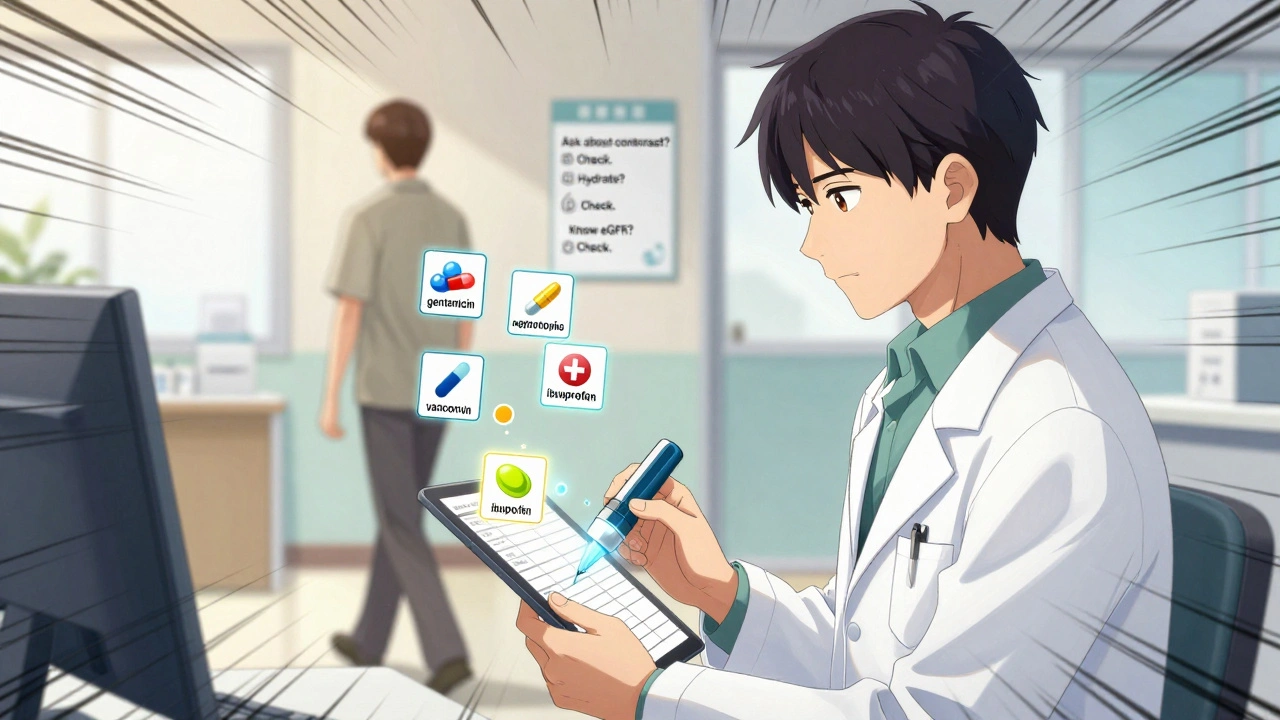
Pharmacists are your secret weapon. Studies show pharmacist-led reviews cut AKI rates in hospitalized CKD patients by 22%. They check your med list, flag risky drugs, and suggest safer alternatives. If you’re in the hospital, ask for a pharmacy consult. If you’re outpatients, bring your full med list to every appointment.
Medication Adjustments: It’s Not Just About Stopping
Some meds need to be held temporarily. Others need dose changes based on your current kidney function-not your old CKD stage. For example, if your eGFR drops from 40 to 25 because you’re sick, your metformin, antibiotics, or pain meds need to be adjusted immediately. Don’t rely on your last lab result from six months ago.
Use eGFR from the last 72 hours to guide dosing. And if your creatinine is rising fast, check your cystatin C. It’s not affected by muscle mass or inflammation like creatinine is. In critically ill patients, cystatin C gives a clearer picture of true kidney function.
Hydration Is Still the Gold Standard
No magic pill, no supplement, no IV cocktail beats simple hydration. Drink water. If you’re on IV fluids, normal saline is the only proven option. Avoid sugary drinks, caffeine, and alcohol-they dehydrate you. And don’t wait until after the scan to start hydrating. Start 12 hours before, and keep going for 12 hours after.
Some people think N-acetylcysteine (NAC) helps. The evidence is mixed. Some studies show a 15-30% risk reduction. Others show nothing. It’s not harmful, but it’s not a substitute for hydration. Don’t rely on it alone.
What Happens After the Injury?
If you’ve had AKI on CKD, your kidneys don’t bounce back the same way they used to. Even if your creatinine returns to normal, you might have lost permanent function. That’s why follow-up is critical.
Check your eGFR and urine albumin-to-creatinine ratio (uACR) in 3 months. If your kidney function hasn’t recovered fully after 7 days, you’re now in the Acute Kidney Disease (AKD) zone-meaning your kidneys are still healing and vulnerable. This isn’t just AKI anymore. It’s a longer-term problem that needs monitoring.
And here’s something few patients know: getting a nephrologist involved cuts your death risk by 20%. If you’re hospitalized with AKI on CKD, ask for a kidney specialist to review your case. They spot subtle signs others miss and adjust meds more precisely.
What You Can Do Right Now
You don’t need to wait for a hospital stay to protect your kidneys. Start today:
- Make a list of every medication you take-prescription, OTC, supplements, and herbal products.
- Remove all NSAIDs. Use acetaminophen (Tylenol) for pain instead, but don’t exceed 3,000 mg/day.
- Drink water daily. Aim for 1.5 to 2 liters unless your doctor says otherwise.
- Know your eGFR and uACR numbers. Write them down and bring them to every appointment.
- Ask your doctor if your imaging tests can be done without contrast.
- Get vaccinated for flu and pneumonia. Infections are a major trigger for AKI in CKD patients.
Studies show patients who get clear, simple advice about avoiding NSAIDs and staying hydrated have 25% fewer AKI hospitalizations. Knowledge isn’t power here-it’s protection.
What’s Changing in 2025?
New tools are emerging. Blood tests for TIMP-2 and IGFBP7 can predict AKI within 12 hours-long before creatinine rises. Hospitals in major centers are starting to use them in high-risk patients. And the updated KDIGO guidelines, expected late 2024, will likely reinforce that early dialysis doesn’t help most AKI cases. The focus is shifting from aggressive intervention to prevention.
Electronic alerts in hospital systems now flag nephrotoxic meds for CKD patients. But here’s the problem: 40% of doctors ignore them because they’re too noisy. So don’t rely on the system. Be your own advocate. Ask: Is this safe for my kidneys?
Can I still get a CT scan if I have CKD?
Yes, but only if it’s truly necessary. Always ask if an ultrasound or MRI without contrast could work instead. If contrast is required, insist on the lowest possible dose and IV hydration before and after. Never skip hydration.
Is Tylenol safe for CKD patients?
Acetaminophen (Tylenol) is the safest pain reliever for CKD patients, as long as you don’t exceed 3,000 mg per day. Avoid combination products with codeine or caffeine, which can add strain. Always check labels.
Should I stop my blood pressure meds before a scan?
Never stop ACE inhibitors or ARBs without talking to your doctor. Abruptly stopping them can cause a dangerous spike in creatinine. Instead, your doctor may delay the dose on the day of the scan and restart it once you’re hydrated and stable.
Can drinking more water prevent contrast kidney injury?
Yes-hydration is the most effective way to reduce risk. Drink 1.5 to 2 liters of water over 12 hours before and after the scan. If you’re getting IV fluids, normal saline is the only proven option. Don’t use fancy alternatives like albumin or bicarbonate.
What if I took ibuprofen and now my creatinine is up?
Stop the NSAID immediately. Drink water. Contact your doctor. A sudden rise in creatinine after NSAID use is a red flag for AKI. Your doctor will check your kidney function again in 24-48 hours. Most cases improve once the drug is stopped, but you need monitoring.
How often should I check my kidney function if I have CKD?
If you’re stable, every 3-6 months. After an AKI episode, check every 2-4 weeks for the first 2 months, then monthly until stable. Use both eGFR and uACR. Cystatin C may be added if your creatinine is unreliable due to low muscle mass or illness.
Final Thought: Your Kidneys Are Listening
You don’t need to live in fear. But you do need to be smart. Every pill, every scan, every sip of water matters. The difference between keeping your kidneys working and losing them often comes down to one decision: Do I really need this? When in doubt, pause. Ask. Double-check. Your kidneys have carried you this far. Give them a chance to stay strong.
Bro just stop taking ibuprofen like its candy. I did that for years and my creatinine jumped to 2.1. Now I use Tylenol and drink water like its my job. No drama, no fancy stuff.
This is actually one of the clearest posts I've seen on CKD and AKI. I'm a nurse and I see so many patients get blindsided by contrast or NSAIDs. Hydration really is the MVP-no magic supplements needed. Just plain water and a little common sense.
STOP USING NSAIDS. I don't care if you think 'it's just a little pain'-your kidneys are NOT a backup battery. I've seen people go from stage 2 CKD to dialysis because they popped Advil like M&Ms. You're not tough-you're just stupid. Get educated or get a transplant.
I love how this post doesn't just list dangers-it gives you a roadmap. It’s not about fear, it’s about awareness. I have CKD stage 3, and I now carry a little card in my wallet that says: 'No NSAIDs. Hydrate before imaging. Check eGFR.' I’ve had pharmacists thank me for it. Small actions, big protection.
It’s wild how something so simple-like drinking water-can be the difference between keeping your kidneys and losing them. I used to think dialysis was something that happened to 'other people.' Now I know it’s just one bad decision away. Thanks for the reminder that we have more control than we think.
hydration = 💧
NSAIDs = ☠️
tylenol = ✅
ask questions = 🛡️
you’re welcome 😊
lol so now we need a whole 2000 word essay to not take ibuprofen? people used to live fine without all this overthinking. just dont drink bleach and youll be fine. contrast? pfft. my grandpa had 3 ct scans and lived to 92. you people are scared of your own shadows
Just wanted to say thank you for the part about asking for a pharmacy consult. I did that last month and they caught three meds I didn’t even know were risky. My doc was impressed. Small team effort, big results. Keep sharing stuff like this.