

Imagine you're at a dinner party and a friend mentions the sauce has peanut oil. Within seconds, your throat feels tight, your skin breaks out in hives, and you struggle to catch your breath. This isn't just a mild allergy; it's a race against time. Anaphylaxis is a severe, systemic hypersensitivity reaction that can lead to circulatory collapse and death if not treated immediately. Often referred to as anaphylactic shock, it is a critical medical emergency that requires a fast, decisive response. Knowing how to spot the signs and use life-saving medication can be the difference between a scary episode and a fatal one.
Spotting the Warning Signs
Anaphylaxis doesn't always look like it does in the movies. While some people collapse instantly, others develop symptoms over several minutes or even hours. The key is looking for a combination of symptoms across different body systems. Usually, it involves the skin-like itching or swelling-plus a problem with breathing or blood pressure.
Keep an eye out for these specific red flags:
- Skin and Mucosa: Hives (urticaria), redness, or swelling of the lips, tongue, and throat. This happens in about 80-90% of cases.
- Respiratory: Wheezing, a hacking cough, or a high-pitched sound when breathing (stridor).
- Cardiovascular: A sudden drop in blood pressure, feeling dizzy, or passing out.
- Gastrointestinal: Intense nausea, stomach cramps, or vomiting.
If someone has been exposed to a known trigger and shows two or more of these signs, you shouldn't wait for them to "get worse" before acting. Delaying treatment is the biggest risk factor for a poor outcome.
What Triggers a Severe Reaction?
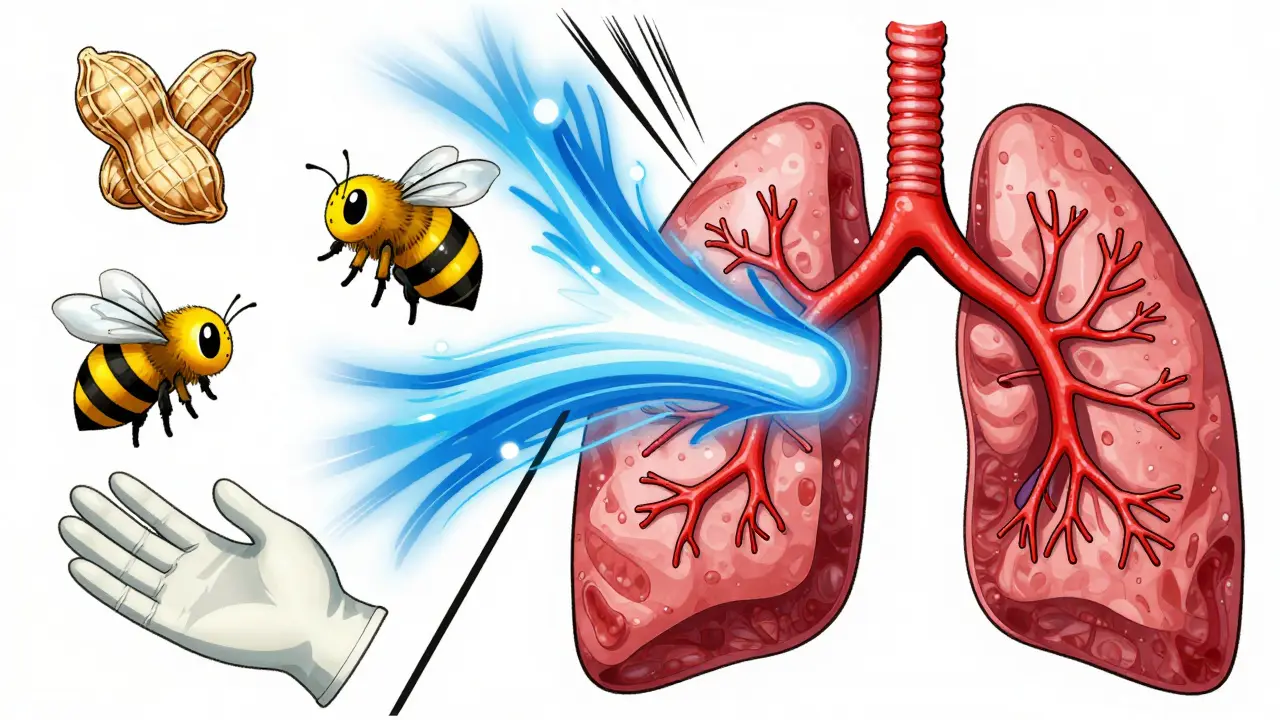
Most people associate anaphylaxis with peanuts, but the triggers are diverse. Food Allergens are the most common culprits, with peanuts, tree nuts, and shellfish causing the vast majority of food-induced reactions. However, other triggers are just as dangerous.
Insect stings from the Hymenoptera family (like bees and wasps) cause nearly 10% of emergency department visits for anaphylaxis. Medications also play a huge role; for example, Penicillin is responsible for about 75% of drug-induced severe reactions. Then there is latex, found in some medical gloves and balloons, which can trigger reactions in sensitive individuals.
The Gold Standard: Why Epinephrine is Non-Negotiable
When a reaction hits, you need a medication that works fast and hits multiple targets. This is where Epinephrine (also known as adrenaline) comes in. It is the only first-line treatment for anaphylaxis. Unlike antihistamines, which only treat the surface symptoms like itching, epinephrine attacks the core physiological collapse.
It works by targeting two main receptors in the body:
- Alpha-adrenergic receptors: These cause blood vessels to constrict, which raises blood pressure and reduces swelling in the throat.
- Beta-adrenergic receptors: These open up the airways in the lungs (bronchodilation), making it possible to breathe again.
Many people make the mistake of taking a Benadryl or another antihistamine first. Here is the hard truth: antihistamines have 0% efficacy as a standalone treatment for anaphylaxis. They might stop the itch, but they won't stop your throat from closing. Steroids are also too slow to help in an emergency; they are used later to prevent a second wave of symptoms, known as a biphasic reaction.
| Medication | Primary Action | Speed of Effect | Role in Emergency |
|---|---|---|---|
| Epinephrine | Constricts vessels, opens airways | Minutes (Fast) | First-line / Life-saving |
| Antihistamines | Blocks histamine receptors | Slow | Symptom relief only |
| Corticosteroids | Reduces overall inflammation | Hours | Prevents late-phase reactions |
How to Use an Auto-Injector Correctly
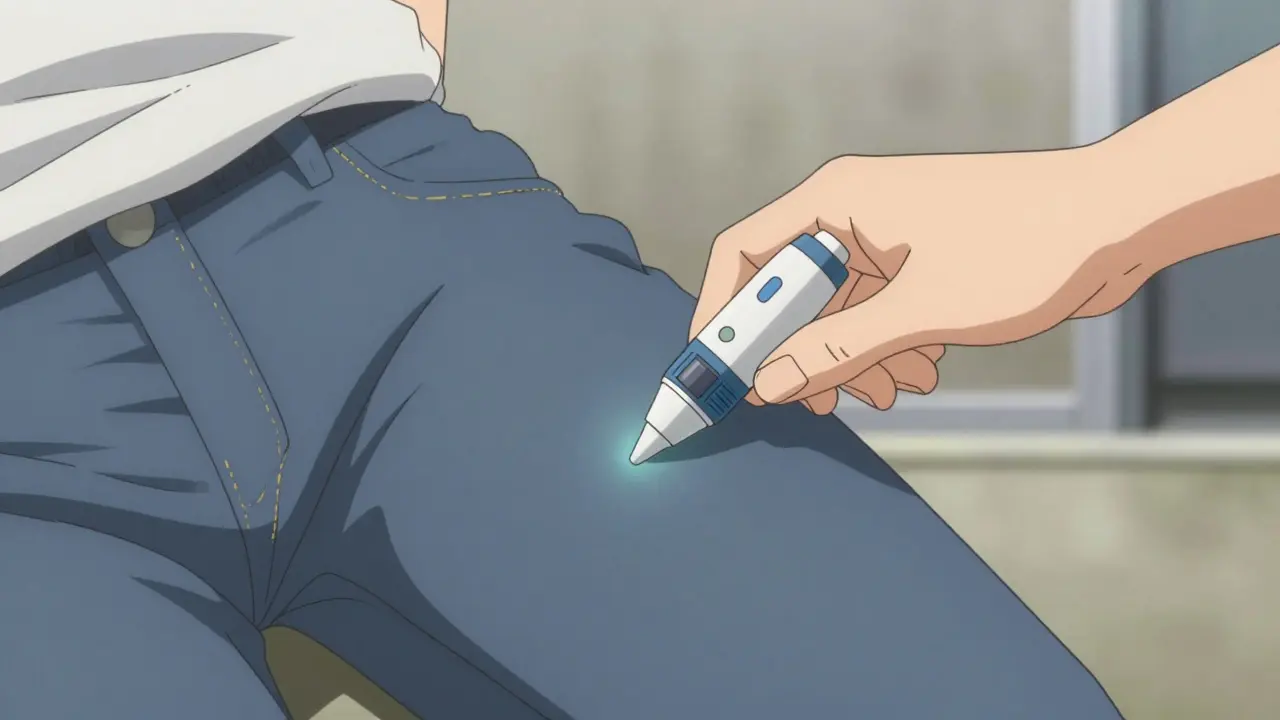
In the heat of a panic, it's easy to fumble with a device. Whether you're using an EpiPen, Auvi-Q, or a generic version, the goal is the same: get the medication into the large muscle of the outer thigh (the vastus lateralis).
Why the thigh? Because the muscle there absorbs the drug much faster than the arm or the buttock. An intramuscular injection in the thigh reaches peak plasma levels in about 8 minutes, whereas a subcutaneous shot takes 20 minutes. In a crisis, those 12 minutes are everything.
Quick Steps for Administration:
- Prepare: Remove the safety cap (usually blue or grey).
- Position: Swing and push the orange or black tip firmly against the outer thigh. You can do this through clothing if necessary.
- Hold: Keep the device pressed firmly against the thigh for the amount of time specified by the brand (usually 3 seconds).
- Massage: Some guidelines suggest rubbing the area for 10 seconds to help the medicine absorb.
If the symptoms don't improve within 5 minutes, a second dose is often necessary and permissible. Many patients carry a two-pack for this exact reason.
Critical Aftercare and Pitfalls
A common and dangerous mistake is thinking, "I feel better now, I don't need a hospital." Even if the epinephrine works perfectly, you must call emergency services or go to the ER immediately. Epinephrine is a short-acting drug. Once it wears off, the allergic reaction can return with a vengeance-this is the biphasic reaction mentioned earlier.
High-risk patients-specifically those with asthma or heart disease-may need to be observed for up to 12 hours. If you've used an auto-injector, you've essentially bought yourself some time, but you haven't "cured" the allergy. You need medical monitoring to ensure your airway remains open.
Modern Options and Future Outlook
The world of allergy management is changing. For people who have a phobia of needles, new options are appearing. The FDA recently approved Neffy, a nasal spray version of epinephrine, which removes the fear and complexity of an injection.
We're also seeing a shift in how we prevent these crises. Some high-risk patients are now using Omalizumab (brand name Xolair), a medication that can significantly reduce the number of severe reactions a person has. While not a replacement for carrying an auto-injector, it provides a much-needed safety net.
Can I use an EpiPen if I'm not sure it's anaphylaxis?
Yes. Medical experts generally agree that it is safer to give epinephrine when it might not be needed than to withhold it when it is. The risks of an unnecessary dose are far lower than the risks of untreated anaphylaxis.
Where is the best place to store my auto-injector?
Store your device at room temperature (between 68-77°F or 20-25°C). Avoid keeping it in a hot car or a freezer, as extreme temperatures can degrade the epinephrine, making it less effective.
How often should I replace my epinephrine device?
Most auto-injectors have a shelf life of 12 to 18 months. Check the expiration date on your device regularly. Use a phone app or calendar reminder to ensure you replace it before it expires.
What if the person is unconscious when I find them?
Administer the epinephrine into the outer thigh immediately and call emergency services. Lay them flat on their back with their legs raised to help maintain blood flow to the heart and brain.
Does a generic auto-injector work as well as a brand-name EpiPen?
Yes, generic epinephrine auto-injectors are designed to deliver the same dose and are just as effective. The main difference is usually the price and sometimes the specific physical design of the device.
The emphasis on the biphasic reaction is absolutely critical here. In clinical settings, we see this frequently where the patient stabilizes after the initial epinephrine dose only to experience a recurrence of systemic symptoms hours later. It's a classic case of the pro-inflammatory cascade not being fully extinguished, which is why corticosteroids are administered to mitigate that delayed response. Many people underestimate the risk of a second peak in symptoms, but the pharmacological window of epinephrine is simply too narrow to cover the entire event.
So true! 😱 Always keep those injectors handy just in case! ✨
big pharma just wants us hooked on these pens pharma companies make billions off the price hikes its all a scam