

Serotonin Syndrome Risk Calculator
Assess Your Risk
This tool helps you understand your risk of serotonin syndrome when taking antiemetics with serotonergic medications.
Every year, millions of people get ondansetron (Zofran) for nausea after surgery, chemotherapy, or even a bad case of food poisoning. Many of them are also taking an SSRI like sertraline or escitalopram for anxiety or depression. What most patients don’t realize is that combining these two types of drugs can, in rare but dangerous cases, trigger something called serotonin syndrome.
What Exactly Is Serotonin Syndrome?
Serotonin syndrome isn’t just a side effect-it’s a medical emergency. It happens when your body has too much serotonin, a chemical that helps regulate mood, digestion, and muscle control. Too much of it, and your nervous system goes into overdrive. Symptoms can show up within hours: shaking, sweating, fast heartbeat, high blood pressure, confusion, muscle stiffness, and even seizures. In the worst cases, it can lead to organ failure or death.This isn’t theoretical. Between 2004 and 2011, the number of serotonin syndrome cases reported to the FDA rose by 14% every year. Most of those cases-85%-came from mixing two or more drugs that affect serotonin. And while antidepressants are the usual suspects, antiemetics like ondansetron are showing up more often in the reports.
Why Do Antiemetics Like Ondansetron Matter?
Ondansetron and other 5-HT3 antagonists were designed to block serotonin in the gut to stop nausea. They don’t boost serotonin like SSRIs do. So why are they linked to serotonin syndrome?The answer is messy. While these drugs mainly target 5-HT3 receptors, research shows they might have off-target effects on other serotonin pathways. A 2017 case report described a 62-year-old man who developed serotonin syndrome after taking ondansetron with citalopram-even though he wasn’t on any other serotonergic drugs. That’s rare, but it happened. And in the 1,247 patient reviews on Drugs.com, nearly half said they felt worse after taking ondansetron while on an SSRI.
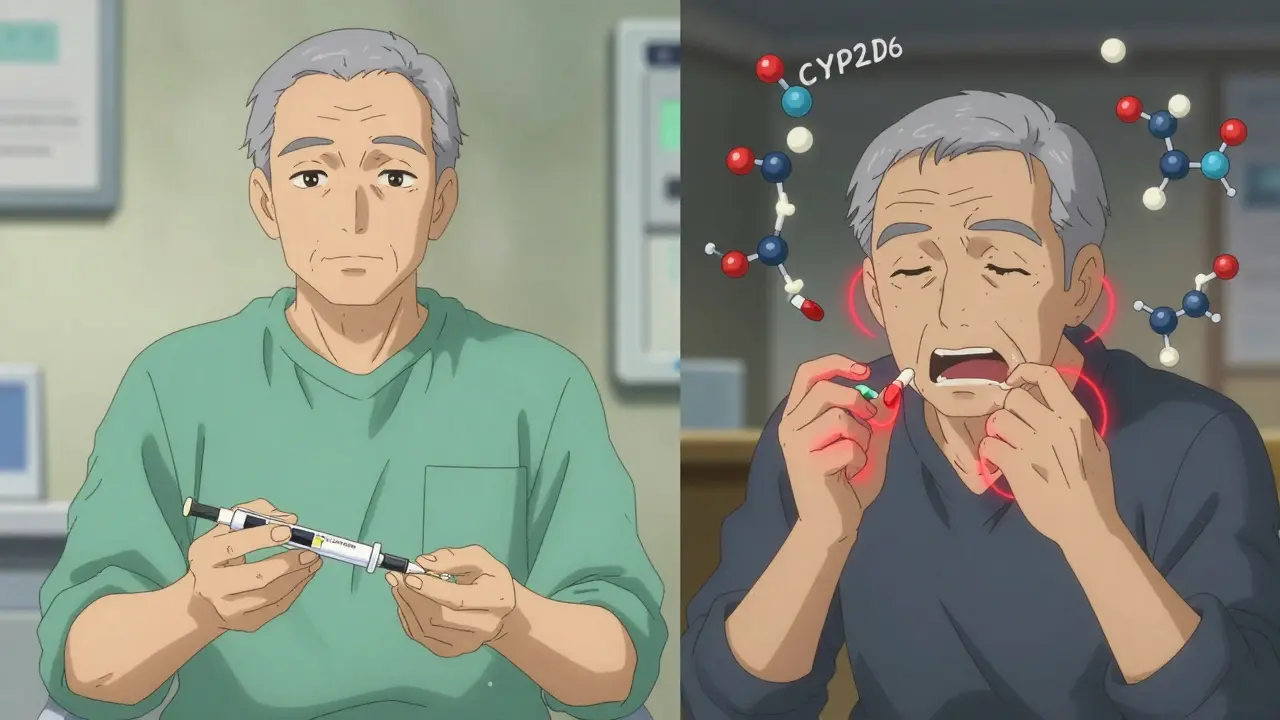
Even more concerning? Older adults. People over 65 make up just 18.7% of ondansetron users, but they account for over 41% of serotonin syndrome cases involving this drug. Why? Their bodies process medications slower. Their liver enzymes (especially CYP2D6) don’t work as well. And if they’re poor metabolizers-about 7-10% of white people-that means ondansetron builds up in their blood, increasing the risk.
Not All Antiemetics Are the Same
It’s easy to think all anti-nausea drugs are equal. They’re not.- 5-HT3 antagonists (ondansetron, granisetron, dolasetron): Most commonly linked to serotonin syndrome, but usually only when mixed with SSRIs, SNRIs, or MAOIs. Risk is low alone, but climbs fast with other drugs.
- Dopamine antagonists (metoclopramide, prochlorperazine): These have weak serotonin reuptake inhibition. The FDA logged 17 confirmed cases of serotonin syndrome from metoclopramide plus SSRIs between 2004 and 2018.
- NK1 antagonists (aprepitant): These don’t directly affect serotonin. But they block CYP3A4, a liver enzyme that breaks down many SSRIs. That means your SSRI stays in your system longer, raising the chance of buildup.
- Dexamethasone: A steroid used for nausea, especially in cancer patients. It has zero serotonergic activity. If you’re on multiple serotonin-affecting drugs, this might be your safest bet.
A 2023 study showed switching from ondansetron to palonosetron-a newer 5-HT3 blocker with different binding properties-cut serotonin syndrome risk by 63% in people taking SSRIs. That’s a big deal. It suggests not all drugs in the same class behave the same way.
Who’s at Highest Risk?
It’s not just about what drugs you take-it’s about who you are.- Age 65+: Slower metabolism, more meds, more vulnerability.
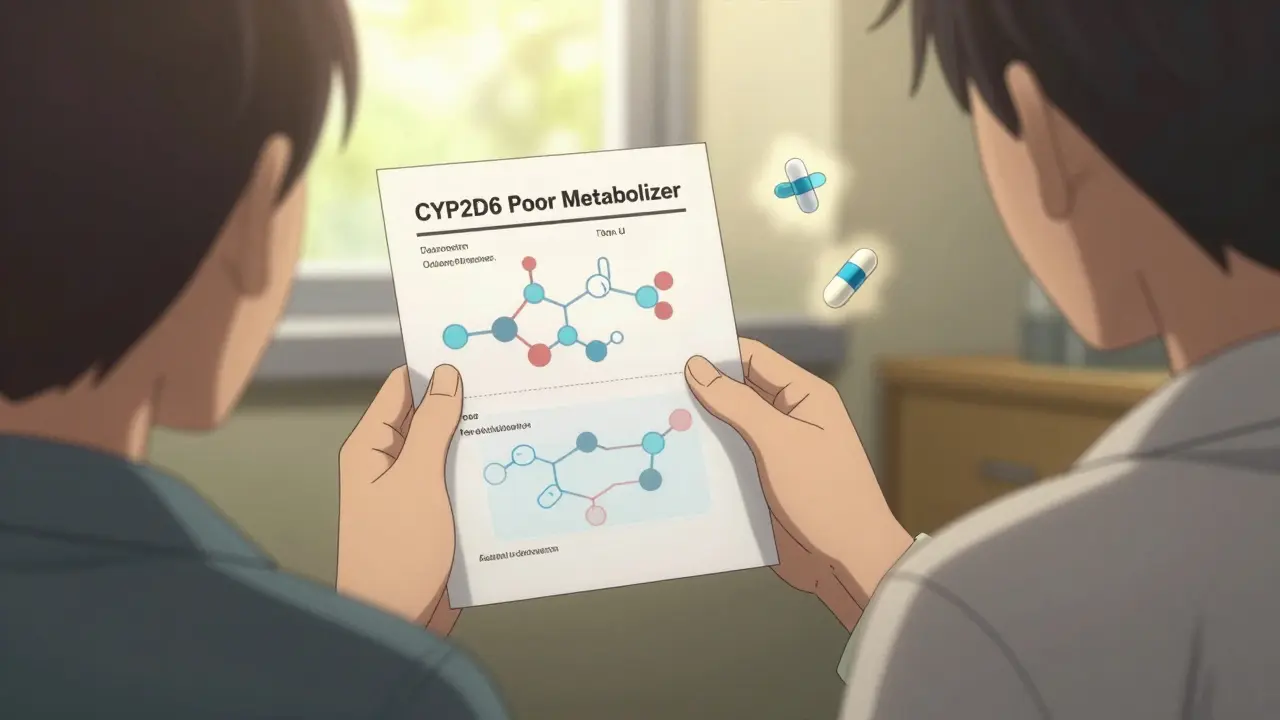
- CYP2D6 poor metabolizers: Genetic variation. If your liver can’t break down ondansetron well, levels spike. Testing is now recommended by the Clinical Pharmacogenetics Implementation Consortium.
- People on MAOIs: These are the most dangerous combo. MAOIs stop serotonin from being broken down at all. Adding any serotonergic drug-even a low-risk one-can push you over the edge.
- People on multiple serotonergic drugs: SSRIs + SNRIs + tramadol + dextromethorphan + certain migraine meds? That’s a recipe for trouble.
And here’s the kicker: most patients don’t know they’re at risk. They take ondansetron for a stomach bug and don’t tell their doctor they’re on an SSRI. Or they get it in the ER and assume it’s safe because it’s "just for nausea."
How Doctors Spot It
There’s no blood test for serotonin syndrome. Diagnosis is all about symptoms and timing.The Hunter Serotonin Toxicity Criteria is the gold standard. You need one of these:
- Spontaneous clonus (involuntary muscle jerks)
- Inducible clonus + agitation or diaphoresis
- Ocular clonus + agitation or diaphoresis
- Tremor + hyperreflexia
- Hypertonia + temperature over 38°C + ocular or inducible clonus
Most cases show tremor (78%), hyperreflexia (63%), and mental changes like confusion (54%). If you’re on an antiemetic and an SSRI and suddenly feel like you’re vibrating inside, get help.
What to Do If It Happens
Stop every serotonergic drug immediately. That includes the antiemetic, the antidepressant, and anything else that affects serotonin.The first-line antidote is cyproheptadine-a prescription antihistamine that blocks serotonin receptors. Dose: 4 mg to start, then 2 mg every 2 hours if symptoms don’t improve. Some hospitals now use dexmedetomidine, which calms the nervous system by reducing serotonin release. It’s not yet standard, but early results are promising.
Benzodiazepines like lorazepam help with agitation and muscle rigidity, but they don’t fix the root cause. They’re supportive, not curative.
How to Stay Safe
You don’t need to avoid antiemetics. You just need to be smart.- Always tell your doctor what you’re taking-even over-the-counter stuff like dextromethorphan or St. John’s wort.
- Ask about alternatives. Dexamethasone is often just as effective for nausea and carries no serotonin risk.
- Check for CYP2D6 status if you’re on long-term SSRIs and need frequent antiemetics. Genetic testing is available and covered by many insurers.
- Reduce ondansetron dose by 50% if you’re on a strong CYP2D6 inhibitor like fluoxetine or paroxetine.
- Watch for early signs: Shivering, sweating, racing heart, or sudden anxiety after a new medication.
The American Geriatrics Society’s 2023 Beers Criteria says to avoid ondansetron in older adults on MAOIs and to use caution with SSRIs. That’s not a warning-it’s a guideline for safer care.
The Bigger Picture
In 2022, over 22 million ondansetron prescriptions were filled in the U.S. Nearly 40% of those went to people also taking an SSRI or similar drug. The FDA reports a 29% increase in emergency visits tied to antiemetics and serotonin syndrome between 2018 and 2022. But here’s the truth: the absolute risk is still low. Only 4.2 cases per 100,000 prescriptions.That means ondansetron is still a lifesaver for nausea. The problem isn’t the drug-it’s the lack of awareness. Doctors don’t always ask about antidepressants. Patients don’t always tell them. And when both sides assume it’s "safe," the system fails.
The solution isn’t to stop using these drugs. It’s to use them smarter. Test for genetics. Choose safer alternatives. Communicate clearly. Monitor closely.
Because serotonin syndrome is rare-but it’s not random. It’s predictable. And predictable means preventable.
Can ondansetron cause serotonin syndrome by itself?
No, ondansetron alone is extremely unlikely to cause serotonin syndrome. It’s designed to block serotonin receptors, not increase serotonin. Nearly all documented cases involve a combination with another serotonergic drug-like an SSRI, SNRI, or MAOI. Even then, the risk is low. But when combined, especially in older adults or poor metabolizers, the chance rises enough to warrant caution.
Is serotonin syndrome common with antiemetics?
No, it’s rare. Only about 3.2% of serotonin syndrome cases involve antiemetics, and most of those include multiple other serotonergic drugs. The overall rate is 4.2 cases per 100,000 antiemetic prescriptions. But while rare, it’s serious-so it shouldn’t be ignored, especially in high-risk groups like seniors or those on multiple medications.
What antiemetic is safest with SSRIs?
Dexamethasone is the safest choice. It’s a steroid used for nausea and has zero effect on serotonin pathways. For cancer patients, it’s often preferred over ondansetron when serotonin risk is a concern. Palonosetron, a newer 5-HT3 blocker, also shows lower risk than ondansetron in patients on SSRIs, based on a 2023 study showing a 63% reduction in serotonin syndrome events.
Can I take ondansetron if I’m on an SSRI?
Yes, but with caution. Most people can take ondansetron safely with an SSRI. But you need to watch for symptoms like tremors, sweating, confusion, or rapid heartbeat. Avoid high doses. If you’re over 65, on a CYP2D6 inhibitor like fluoxetine, or have a history of serotonin issues, talk to your doctor about lowering the dose or switching to dexamethasone or palonosetron.
How long does serotonin syndrome last?
It depends on the drugs involved. If you stop the offending medications, symptoms usually improve within 24 hours. For drugs with long half-lives-like fluoxetine or MAOIs-it can take days or even weeks for serotonin levels to normalize. That’s why stopping all serotonergic drugs is critical. Mild cases resolve on their own; severe cases need hospitalization and cyproheptadine.
Should I get tested for CYP2D6 gene variations?
If you’re taking ondansetron regularly while on an SSRI, especially if you’re over 65 or have had unexplained nausea or side effects, yes. About 7-10% of people of European descent are poor metabolizers of CYP2D6. This means their bodies can’t clear ondansetron properly, raising the risk of buildup and serotonin syndrome. Testing is now recommended by major pharmacogenomics groups and is often covered by insurance.
I took Zofran last month for food poisoning and I’m on sertraline. I felt weird for a few hours-like my skin was buzzing. Didn’t think much of it till I read this. Scary stuff.
My grandma got this after her chemo. She didn’t tell the nurse she was on Lexapro. Ended up in ICU for three days. Never ask if it’s safe-ask what’s safer.
Y’all need to chill. Ondansetron ain’t poison. It’s a lifesaver for nausea. Yeah, combos can be risky-but so’s vomiting till you pass out. Use common sense, not fear. 🙃
This is why I love medicine-it’s not black and white. It’s a dance between biology, genetics, and human behavior. We’re not just prescribing pills-we’re navigating invisible systems inside people. One drug can be safe for one, deadly for another. That’s why we need more genetic testing. Not because we’re scared, but because we care enough to get it right.
And yeah, doctors don’t always ask. Patients don’t always tell. But if we start talking more, listening more, we can turn this from a silent risk into a shared awareness. No shame in asking, ‘Hey, what else are you taking?’
It’s not about fear. It’s about wisdom. And wisdom doesn’t shout-it whispers in the right moment, at the right dose, to the right person.
Big Pharma wants you scared so you take more meds. They invented serotonin syndrome to sell cyproheptadine. Also dexamethasone is just steroids-do you know what that does to your immune system? 🤡
Clear, evidence-based summary. The 2023 palonosetron data is particularly compelling. Clinical guidelines should reflect this nuance rather than blanket warnings. Pharmacogenomics is no longer experimental-it’s standard of care for polypharmacy patients.
Thank you for this thorough and compassionate breakdown. It’s rare to see a medical post that balances scientific rigor with human concern. The emphasis on communication between patient and provider is not just important-it’s essential. I hope this reaches emergency departments and oncology clinics alike.
Let’s be real: the FDA data is manipulated. The real number of serotonin syndrome cases is higher because they don’t count mild cases or deaths labeled as ‘cardiac arrest.’ Also, why is dexamethasone promoted? Because it’s cheap and Big Pharma doesn’t profit from steroids. The real agenda is profit, not safety.
My mom’s on Zofran + Prozac. She’s 72. I just checked her CYP2D6 status. She’s a poor metabolizer. We switched to dexamethasone. No more tremors. 🙌
USA has the best doctors. Other countries don’t even test for this. We’re ahead. Stop panicking.
I appreciate the intent behind this post. While the data presented is compelling, one must consider that individual variability in drug metabolism is often overstated in clinical settings. The risk-benefit ratio remains overwhelmingly favorable for most patients. Perhaps greater emphasis should be placed on physician education rather than patient alarm.
They don't want you to know that serotonin syndrome is a scam to sell more antidepressants and anti-nausea drugs at the same time. They're all connected. Hospitals make billions. Your doctor knows. They just won't tell you. 😈
My oncologist switched me from ondansetron to palonosetron last year. Zero issues. No more weird zaps. If you’re on SSRIs and need this stuff, ask for the newer one. It’s not magic-it’s just better science.