

For decades, taking a daily low-dose aspirin was a common habit for people worried about heart attacks-especially if their parents had them. But if you’re still popping a baby aspirin every morning because your dad had a heart attack at 58, you might be doing more harm than good. As of 2026, the science has shifted dramatically. Aspirin isn’t the universal shield it once seemed to be. In fact, for most healthy adults, it’s no longer recommended for preventing a first heart attack or stroke.
Why the Big Change?
Aspirin works by thinning the blood-specifically, it stops platelets from clumping together and forming dangerous clots. That’s why it’s still a life-saver for people who’ve already had a heart attack, stroke, or stent placed. But for people without any history of cardiovascular disease, the balance of benefits and risks has flipped.
Large, high-quality studies from the last five years-like ASPREE, ASCEND, and ARRIVE-showed that while aspirin slightly lowers the chance of a nonfatal heart attack or ischemic stroke, it also increases the risk of serious bleeding by about 43%. That includes bleeding in the stomach, brain, or intestines. For someone with no prior heart issues, the odds of avoiding a heart attack are small. The odds of having a dangerous bleed? Much higher.
Doctors now know that modern treatments like statins, blood pressure control, and quitting smoking reduce heart disease risk far more effectively than aspirin ever did. A statin can cut your risk by 25-37%. Aspirin? Around 10-15%. And statins don’t cause internal bleeding.
Who Might Still Benefit?
The guidelines aren’t a blanket no. There are specific situations where the benefits might still outweigh the risks-but only after careful review.
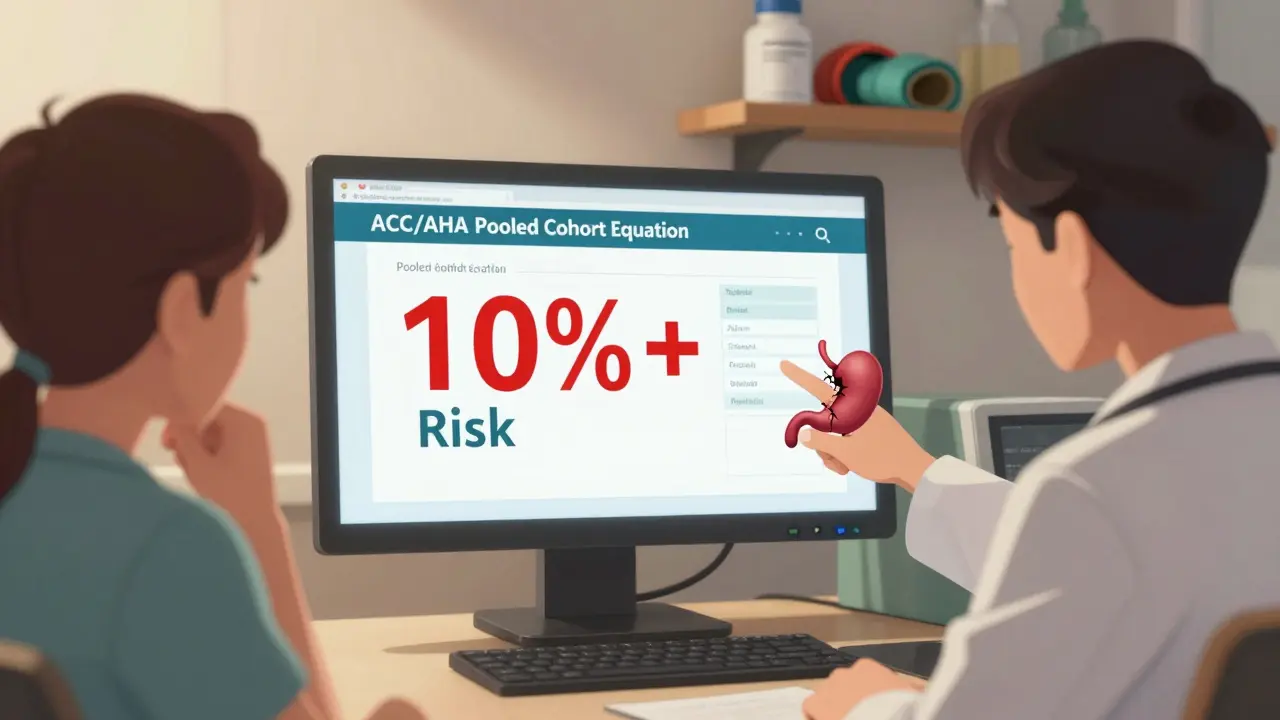
For adults aged 40 to 59 with a 10% or higher 10-year risk of heart disease or stroke, a daily low-dose aspirin (75-100 mg) might be considered. This risk is calculated using a tool called the ACC/AHA Pooled Cohort Equation. It looks at your age, sex, race, cholesterol levels, blood pressure, whether you have diabetes, and if you smoke. If you’re in this group and your doctor says your bleeding risk is low, aspirin could be an option.
People with type 2 diabetes and at least one other risk factor-like high blood pressure, smoking, or kidney disease-are another group where aspirin may still be recommended. The American Diabetes Association says it’s reasonable for those over 40 with elevated risk, even if their overall 10-year score is below 10%.
There’s also emerging evidence that people with very high coronary artery calcium (CAC) scores-meaning they have significant plaque buildup in their heart arteries-might benefit. A CAC score over 100 or in the 75th percentile for age and sex can signal hidden risk. Some cardiologists will consider aspirin in these cases, especially if other treatments aren’t enough.
Who Should Avoid It Completely?
If you’re 60 or older and have never had a heart attack, stroke, or stent, you should not start aspirin for prevention. The 2022 US Preventive Services Task Force (USPSTF) says the risk of bleeding clearly outweighs any possible benefit. This applies even if you feel healthy. Age alone increases bleeding risk-your stomach lining gets more fragile, your blood vessels become more delicate, and healing slows down.
Also avoid aspirin if you have:
- A history of stomach ulcers or GI bleeding
- Active liver or kidney disease
- Bleeding disorders like hemophilia
- Use of blood thinners like warfarin, apixaban, or rivaroxaban
- Regular alcohol use (more than 3 drinks per day)
- A HAS-BLED score of 3 or higher (a tool doctors use to measure bleeding risk)
And don’t assume family history overrides this. If your father had a heart attack at 50, that doesn’t mean you need aspirin. Your own risk factors matter more than your relatives’ medical history. Many people cling to aspirin because of family stories-but science says to look at your own numbers, not your dad’s.
What About Low-Dose Aspirin?
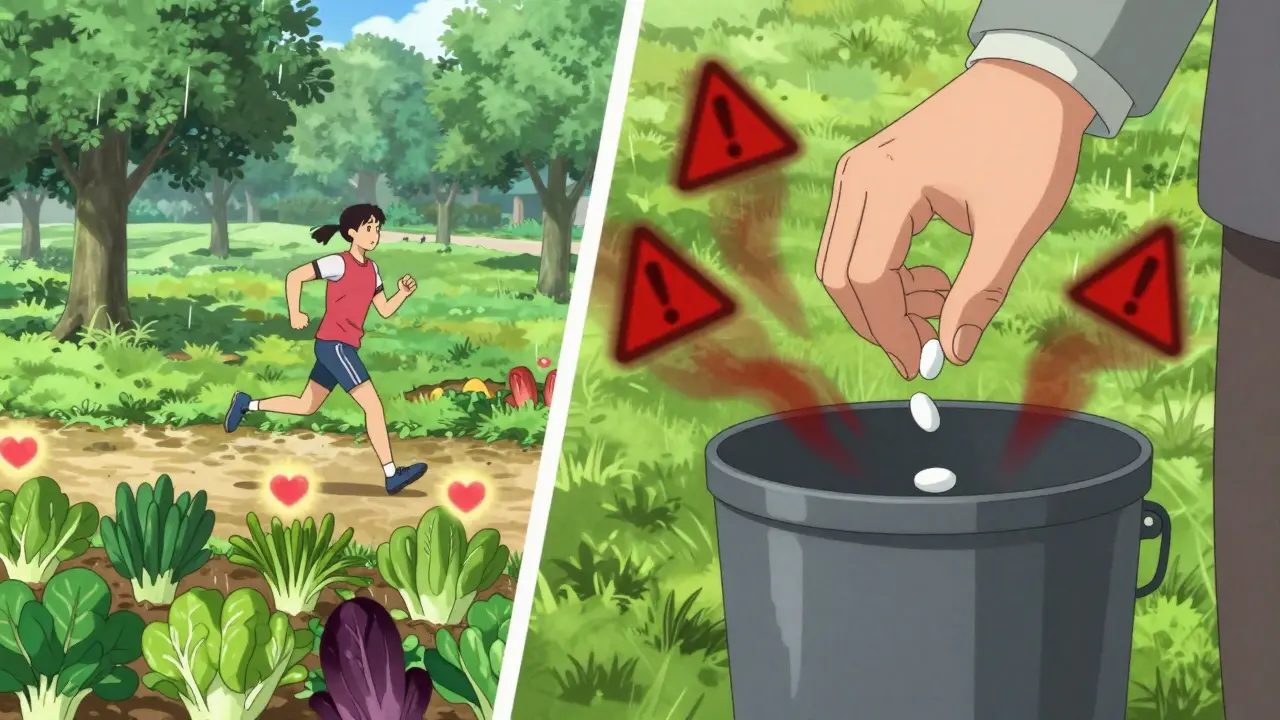
When aspirin is used, it’s always low-dose: 75 mg to 100 mg per day. That’s the equivalent of one “baby aspirin.” Higher doses (like 325 mg) offer no extra protection and significantly increase bleeding risk. Don’t take regular strength aspirin for prevention. It’s unnecessary and dangerous.
Also, don’t assume all aspirin is the same. Enteric-coated aspirin (the kind with a special coating) was once thought to be gentler on the stomach. But studies show it doesn’t reduce bleeding risk. It just delays absorption. So if you’re taking it for heart protection, plain low-dose aspirin works just as well.
What If You’re Already Taking It?
If you’re over 60 and have been taking aspirin daily for prevention-without a doctor’s recommendation-you should talk to your doctor about stopping. Don’t quit cold turkey, but don’t keep taking it blindly either. Many people continue because they’re afraid of heart attacks. But the data shows: for someone over 60 with no prior heart disease, aspirin is more likely to cause a bleed than prevent a heart attack.
Some people report feeling “safer” on aspirin. But that’s perception, not proof. In one study, 68% of people over 60 kept taking aspirin even after being told not to, mostly because of family history or habit. That’s dangerous. Your body doesn’t “get used to” aspirin. Stopping it doesn’t trigger a rebound heart attack. The risk of bleeding drops quickly after you stop.
On the flip side, if you’re under 60, have high risk, and your doctor recommended aspirin, keep taking it-unless you develop new bleeding symptoms like black stools, vomiting blood, unexplained bruising, or frequent nosebleeds. Then see your doctor right away.
What Should You Do Instead?
If you’re trying to prevent heart disease, focus on what actually works:
- Get your cholesterol checked. If your LDL is over 100, a statin is more effective than aspirin.
- Control your blood pressure. Keep it under 130/80.
- Don’t smoke. Smoking is one of the biggest preventable causes of heart disease.
- Exercise 150 minutes a week. Walking counts.
- Manage diabetes if you have it. Tight control cuts heart risk by half.
- Eat real food: vegetables, fruits, whole grains, nuts, fish. Avoid processed carbs and sugar.
These steps don’t just reduce heart disease-they reduce cancer, dementia, and early death. Aspirin doesn’t do that.
The Bottom Line
Aspirin is not a daily wellness supplement. It’s a powerful drug with serious side effects. For most people without heart disease, it’s no longer the right choice. The days of popping a baby aspirin like a vitamin are over.
Only consider it if you’re 40-59, have a high 10-year heart disease risk (10% or more), and have no bleeding risk factors. And even then, talk to your doctor. Don’t decide alone.
If you’re over 60 and never had a heart event, stop. Your risk of bleeding is too high. Focus on statins, diet, and movement instead. That’s where real protection lies.
Should I take aspirin every day to prevent a heart attack?
Only if you’re between 40 and 59, have a 10% or higher 10-year risk of heart disease, and your doctor confirms your bleeding risk is low. For everyone else-especially if you’re over 60 or have no prior heart disease-the risks outweigh the benefits. Don’t take it without medical advice.
Is baby aspirin safe for long-term use?
Low-dose aspirin (75-100 mg) is generally safe for people who need it-like those with a history of heart attack or stroke. But for healthy people without heart disease, long-term use increases the risk of serious bleeding in the stomach or brain. The longer you take it, the higher the risk. It’s not harmless.
Does aspirin help if I have diabetes?
Yes, for some people with diabetes. If you’re over 40 and have at least one other risk factor-like high blood pressure, smoking, or kidney disease-your doctor may recommend low-dose aspirin. Diabetes increases heart disease risk significantly, so the benefit-risk balance is different than for non-diabetic people.
Can I stop aspirin suddenly if I’ve been taking it?
Yes. Unlike blood thinners like warfarin, stopping aspirin doesn’t cause a rebound effect or sudden increase in clotting risk. If your doctor advises you to stop, you can quit without tapering. But always consult your doctor first-especially if you’re on other medications.
What are the signs of aspirin-related bleeding?
Watch for black or tarry stools, vomiting blood or material that looks like coffee grounds, unexplained bruising, nosebleeds that won’t stop, or sudden headaches with dizziness (possible brain bleed). If you notice any of these, stop aspirin and contact your doctor immediately.
Are there better alternatives to aspirin for heart health?
Yes. Statins are far more effective for preventing first heart attacks in most people. Controlling blood pressure, quitting smoking, exercising, and eating well reduce heart disease risk more than aspirin ever could. Aspirin is only useful for secondary prevention-after you’ve already had a heart event.
Why do some doctors still prescribe aspirin for prevention?
Some doctors follow old habits, or patients pressure them. Others may not have updated their knowledge. Studies show nearly 30% of adults without heart disease still take aspirin, often without medical advice. But major guidelines have changed. If your doctor recommends it without calculating your 10-year risk or checking your bleeding risk, ask for the evidence.
Let’s cut through the noise: aspirin for primary prevention is a relic of 2005 medicine. The ASPREE trial alone should’ve buried this myth. People still take it because their grandpa did, not because the data supports it. Statins, blood pressure control, and lifestyle? That’s where the real ROI is. 10% risk reduction vs. 43% higher bleed risk? Even my 8th-grade math teacher could do that math.
And don’t get me started on enteric-coated aspirin. It’s a placebo for your stomach. The coating doesn’t stop bleeding-it just delays absorption so you think you’re being ‘gentler.’ Spoiler: you’re not. The GI tract still gets shredded.
Also, if you’re over 60 and still popping baby aspirin because your dad had a heart attack at 58, you’re not being proactive-you’re being dangerously nostalgic. Your dad’s genetics don’t override your current bleeding risk. Get your ACC/AHA score done. If it’s under 10%, stop. Now.
I just want to say how deeply grateful I am that this post exists. So many of us grew up thinking aspirin was like a multivitamin-something you just take because it’s ‘good for you.’ I started taking it after my uncle had a heart attack, and I didn’t even know why. I just felt safer. But reading this? It’s like a light turned on.
I went to my doctor last week and asked about stopping. She ran my 10-year risk score-it was 7%. She said, ‘You’re not the person aspirin was designed to help.’ I cried. Not because I was scared, but because I felt so relieved. I’ve been carrying this tiny white pill like a talisman for 12 years. Now I’m letting it go.
And honestly? I feel lighter. Not just physically, but emotionally. I’m focusing on walking 30 minutes a day, eating more greens, and sleeping better. Those things feel so much more meaningful than swallowing a pill I didn’t need. Thank you for helping me see that.
And if you’re reading this and still taking aspirin out of habit? Please, just talk to your doctor. You deserve to be safe, not just feel safe.
Let’s contextualize this within the broader collapse of Western medical authority. The aspirin paradigm shift isn’t just clinical-it’s epistemological. We’ve moved from a paternalistic, one-size-fits-all prophylactic model to a precision medicine framework grounded in risk stratification and evidence-based thresholds.
The ASCEND and ARRIVE trials didn’t just invalidate aspirin for primary prevention-they exposed the institutional inertia of guideline adoption. Nearly 30% of asymptomatic adults continue use? That’s not ignorance-it’s cultural capitulation to biomedical nostalgia.
And let’s not forget the economic architecture: pharmaceutical marketing, physician inertia, and patient confirmation bias have sustained this practice long after the data flipped. The real question isn’t whether aspirin works-it’s why we clung to it so long despite the bleeding risk curve trending upward while CVD mortality declined.
Statins? Lifestyle? Yes. But we need systemic reform in medical education and public health messaging. This isn’t about pills. It’s about relearning how to interpret risk.
OH MY GOSH. I JUST STOPPED MY ASPIRIN TODAY. 😭
I’ve been taking it since 2018 because my mom had a stroke. I thought I was being responsible. Turns out? I was just scared. I went to my doc, she ran the numbers, my 10-year risk was 6%. She said, ‘You’re not the person this helps.’ I cried in the parking lot.
But then? I started walking every day. I swapped my morning bagel for oatmeal. I even got my cholesterol checked-and I’m on a low-dose statin now. I feel SO much better. Not because of a pill, but because I finally listened to my body instead of my fear.
If you’re still taking it out of habit… please, just ask your doctor. You’re not weak for stopping. You’re brave for rethinking.
And if you’re reading this and thinking, ‘But my dad…’-honey, your dad’s story isn’t yours. Your numbers are. 💪❤️
Aspirin for primary prevention is medically indefensible. The risk-benefit ratio is clearly negative in asymptomatic individuals. The 43% increased major bleeding risk, especially intracranial and gastrointestinal, outweighs marginal reduction in nonfatal myocardial infarction. Evidence from ASPREE, ASCEND, and ARRIVE is conclusive. Clinical guidelines have evolved accordingly. Continuing aspirin without individualized risk assessment constitutes iatrogenic harm. Discontinue unless high-risk and low-bleeding-risk profile confirmed by ACC/AHA Pooled Cohort Equation. Statins and lifestyle interventions are superior.
It’s not just aspirin. It’s the entire culture of medical self-medication. People treat their bodies like cars-throw in a little oil, a little fuel additive, and hope for the best. But you don’t fix a failing engine by pouring aspirin into the gas tank. You diagnose. You fix the root.
And yet, here we are. People who’ve never seen a cardiologist are self-prescribing a blood thinner because their uncle had a heart attack. That’s not prevention. That’s magical thinking wrapped in a Bayer wrapper.
Statins? Diet? Exercise? Those require discipline. Aspirin? That’s easy. And easy is the enemy of health. You want to live longer? Stop looking for shortcuts. Start looking in the mirror.
Okay but like… I just cried reading this 😭💖
I’ve been taking baby aspirin since 2020 because my grandma died of a heart attack. I thought I was being so smart. I even bought the fancy enteric-coated ones because I thought they were ‘gentler.’ 😅
Then I read this and went to my doctor. She said my 10-year risk is 5%. I was like… ‘Wait… I’ve been taking this for 4 years for nothing?’
So I stopped. And I started walking with my dog every morning. I’m eating more veggies. I even joined a yoga class. And guess what? I feel more alive than I have in years.
To anyone still taking it out of guilt or habit: you’re not broken. You’re just misinformed. And it’s never too late to change. 🌱💛
P.S. My dog smells better now. (He’s a golden retriever. He always smells like a beach. But now he smells like hope.)
Let’s analyze the data integrity here. The 43% increased bleeding risk is a relative risk increase-absolute risk is still low. But the real issue? Publication bias. The trials were powered for nonfatal MI, not all-cause mortality. No significant reduction in death. So aspirin doesn’t save lives-it just delays nonfatal events while increasing hemorrhagic strokes.
And the CAC score argument? That’s cherry-picking. Only 12% of the population has CAC >100. Why are we pivoting to a biomarker that’s not even in routine clinical use? This isn’t precision medicine-it’s biomarker fetishism.
Meanwhile, statins have 10x the evidence base, lower cost, and better adherence. Why is aspirin still in the conversation? Because it’s cheap, familiar, and emotionally comforting. That’s not medicine. That’s nostalgia.
Hey everyone-I’ve been a nurse for 22 years, and I’ve seen this play out a thousand times. A patient comes in, scared, clutching their aspirin bottle like it’s a lifeline. They say, ‘My dad had a heart attack at 55.’ I say, ‘Tell me about your blood pressure, your cholesterol, your smoking habits.’
And you know what? Most of them don’t know.
Aspirin isn’t the hero here. The real heroes are the people who walk daily, who check their numbers, who talk to their doctors. That’s the real medicine.
If you’re over 60 and taking aspirin for prevention? I’m not here to shame you. I’m here to say: you’ve been doing the right thing for the wrong reason. Now you know better. And knowing better? That’s how you heal.
You’re not alone. And you’re not broken. You’re just learning. And that’s beautiful.
Oh, so now aspirin is bad because ‘science says so’? Tell me, when did we stop trusting common sense? My grandfather took aspirin every day. Lived to 92. Walked 5 miles daily. Never had a heart attack. Your ‘studies’ don’t know my family. Your ‘guidelines’ don’t know my life.
And what about the people who live in food deserts? Who can’t afford statins? Who don’t have time to ‘exercise 150 minutes a week’? You want them to stop aspirin? Then give them something better. Don’t just take away a cheap, accessible tool and call it progress.
This isn’t medicine. It’s elitism wrapped in peer-reviewed journals.
Let’s be honest: this post is a masterpiece of fear-mongering disguised as science. The 43% bleeding risk increase? Relative. Absolute risk for a healthy 50-year-old? 0.2% higher. That’s not a crisis-it’s a statistical whisper.
Meanwhile, the benefits of aspirin extend beyond cardiovascular events. Emerging data links low-dose aspirin to reduced colorectal cancer incidence over 10+ years. You ignore that? That’s not evidence-based medicine. That’s selective interpretation.
And let’s not pretend statins are harmless. Myalgia, diabetes risk, cognitive fog-those are real. But you don’t see headlines screaming about them.
This isn’t about health. It’s about controlling behavior through guilt and misinformation.
I used to take aspirin because I thought it was a sign of being responsible. Like I was doing something proactive. But then I realized-I was just trying to control the uncontrollable. Death. Risk. Genetics.
What I didn’t realize was that true care isn’t about swallowing pills. It’s about showing up-for your body, your mind, your community.
I started cooking meals with my mom again. We walk after dinner. We talk about her childhood. I stopped checking my blood pressure three times a day. I stopped obsessing.
And you know what? I feel more protected now than I ever did with that little white pill.
Maybe the real medicine isn’t in the bottle. Maybe it’s in the quiet moments. In the shared silence. In the choice to stop trying to control everything.
Just a thought.
I appreciate the nuance here. The science is clear, but the emotional weight isn’t. People aren’t just taking aspirin because they’re dumb-they’re taking it because they’re afraid. And fear doesn’t respond to data. It responds to safety.
So we can’t just say ‘stop.’ We have to offer something better. Not just statins and walking. But community. Support. A sense that you’re not alone in this fear.
I run a local heart health group. We don’t talk about pills. We talk about meals, walks, and stories. People show up because they feel heard. And guess what? Their numbers improve.
Medicine isn’t just about guidelines. It’s about connection. This post? It’s a great start. But we need more than info. We need compassion.
I just read this and I feel so seen. I’ve been taking aspirin for 7 years. I’m 54. My mom died of a heart attack at 58. I’ve been terrified every day since I turned 50. I thought I was being strong. But I was just… drowning.
I didn’t know my risk score. I didn’t know about CAC. I didn’t know aspirin didn’t help me. I just knew I had to do something. Anything.
Now I’m going to my doctor next week. I’m going to ask for the test. I’m going to ask for help.
Thank you for saying what I needed to hear. I’m not weak for needing this. I’m human.
Oh please. ‘Aspirin is dangerous.’ Sure. And the FDA is a benevolent guardian of public health. Let’s not forget that the same people who now say ‘don’t take aspirin’ were the ones who told you to take it for 40 years.
Now they’re rewriting history. ‘We never said it was for everyone.’ Really? Then why did every doctor’s office have those free aspirin samples? Why did every TV ad say ‘ask your doctor’?
Don’t blame the patient. Blame the system that sold you a lie for decades. Now you’re trying to make us feel guilty for believing you.
Real talk: this isn’t about science. It’s about liability. And you’re just covering your tracks.
Replying to @6675: You’re right about one thing-the system failed us. But the solution isn’t to double down on a flawed habit. It’s to demand better. Demand transparency. Demand doctors who explain risk, not just hand out pills.
And yes, I used to take aspirin too. I was angry when I stopped. But then I got my CAC score: 87. My doctor said, ‘You’re not high risk, but you’re not low either.’ We talked about statins. We talked about diet. We talked about my sleep.
That’s what real care looks like. Not blame. Not nostalgia. Just honest conversation.
Don’t hate the science. Hate the silence that let you believe the lie for so long.