
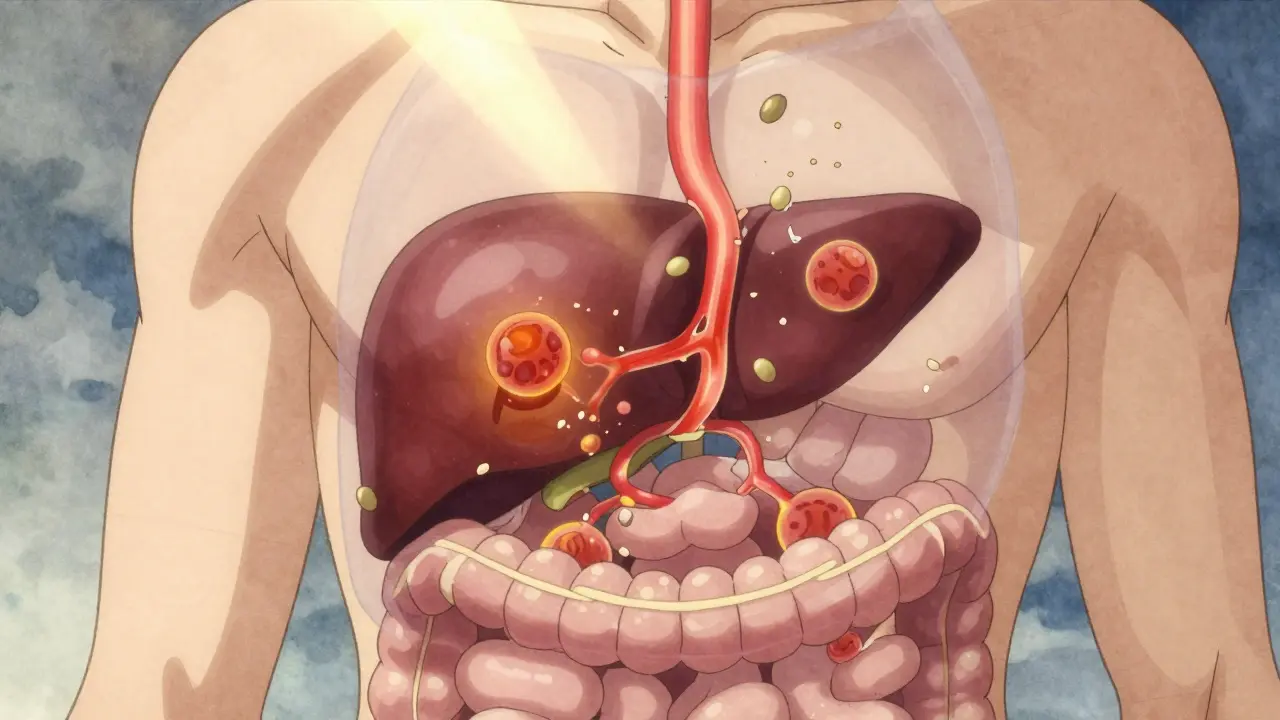
When you hear about celiac disease, you probably think of bloating, diarrhea, or stomach pain. But there’s another part of your body that quietly suffers when you eat gluten - your liver. Up to 40% of people with untreated celiac disease show abnormal liver enzyme levels, even if they feel fine otherwise. And here’s the twist: for many, the fix isn’t a pill or a procedure - it’s simply removing gluten.
Why Your Liver Gets Hit by Celiac Disease
Celiac disease isn’t just about the gut. It’s an autoimmune condition where your immune system attacks your small intestine when you eat gluten. But that attack doesn’t stop there. The same immune confusion can spill over into your liver. Studies show that people with celiac disease are twice as likely to develop chronic liver problems compared to those without it. The most common sign? Elevated liver enzymes - especially ALT and AST. In one study of 67 confirmed celiac patients, 70% had both enzymes raised. These numbers don’t mean you have cirrhosis or hepatitis - at least not yet. But they’re your body’s way of screaming that something’s wrong. What’s happening inside? Three big factors are at play:- Leaky gut: Damaged intestinal lining lets toxins and bacteria slip into your bloodstream, heading straight for your liver.
- Autoimmune crossfire: Your immune system gets confused. Antibodies meant for gluten start attacking liver cells, especially if you have a genetic predisposition to autoimmune conditions.
- Nutrient gaps: Malabsorption means you’re not getting enough vitamin E, vitamin D, or antioxidants - all of which help protect your liver from damage.
The Liver Conditions Linked to Celiac Disease
Celiac disease doesn’t just raise enzyme levels - it can trigger real liver diseases:- Autoimmune hepatitis: About 1 in 20 people with autoimmune hepatitis also have celiac disease. The reverse is also true - 4-6.4% of celiac patients develop this condition.
- Primary biliary cholangitis and sclerosing cholangitis: These rare bile duct diseases show up more often in celiac patients than in the general population.
- MASLD (Metabolic Dysfunction-Associated Steatotic Liver Disease): Formerly called NAFLD, this fatty liver condition is now known to be more common in celiac patients. And here’s the irony - it’s often worsened by the very diet meant to help: processed gluten-free foods full of sugar, fat, and refined carbs.
How Common Is This? The Numbers Don’t Lie
Let’s put this in perspective:- 36.7% of celiac patients have abnormal liver enzymes - compared to just 19.3% of people without celiac.
- 4.7% of people diagnosed with cryptogenic cirrhosis (liver failure with no clear cause) were later found to have undiagnosed celiac disease.
- Patients with celiac and liver issues spend 37% more on healthcare each year than those with celiac alone.

What Happens When You Go Gluten-Free?
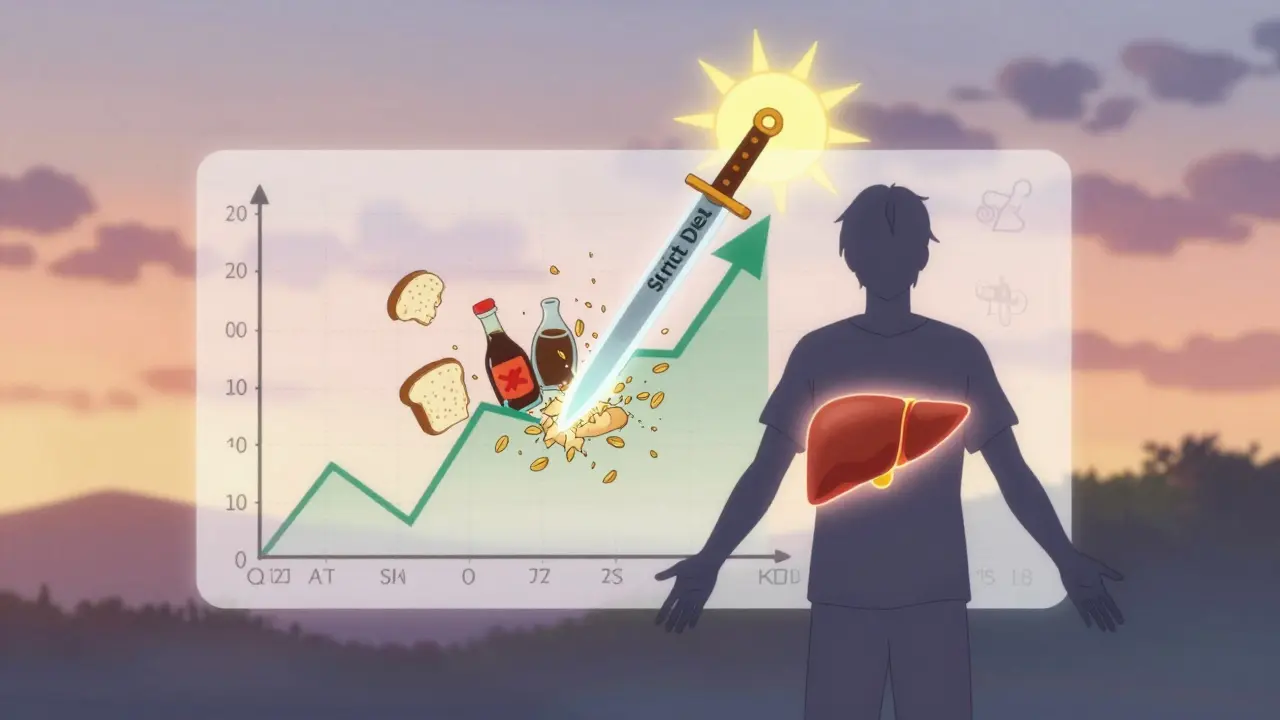
This is the good news: for most people, the liver heals - naturally. A 2015 study by Dr. Daniel Leffler tracked 100 celiac patients with elevated liver enzymes. After 18 months on a strict gluten-free diet, 79% saw their enzyme levels return to normal. Some saw improvement in as little as 6 months. It’s not magic. It’s biology. Remove the trigger - gluten - and the immune system stops attacking. The gut heals. Toxins stop flooding the liver. Nutrients get absorbed again. The liver, which is incredibly resilient, repairs itself. But here’s the catch: this only works if you go 100% gluten-free. Even small amounts - a crumb of bread, cross-contaminated oats, or soy sauce with hidden wheat - can keep the damage going.The Hidden Danger: Gluten-Free Junk Food
Many people think going gluten-free means they can eat more snacks, pasta, and cookies. But those products? They’re loaded with refined starches, sugar, and unhealthy fats. And they’re a recipe for MASLD. A 2023 study found that celiac patients who relied on packaged gluten-free foods were 3 times more likely to develop fatty liver than those who ate whole foods - even if they were the same weight. The fix? Ditch the gluten-free pizza crusts and cookies. Eat:- Vegetables and fruits
- Lean meats, fish, and eggs
- Quinoa, buckwheat, and brown rice
- Nuts, seeds, and legumes
- Healthy fats like olive oil and avocado
When to Get Tested - And What Doctors Miss
Most doctors still don’t check liver enzymes when diagnosing celiac disease. But that’s changing. In 2015, only 65% of clinics included liver tests in their celiac workups. By 2024, that number jumped to 92%. If you’ve been diagnosed with celiac disease, make sure your doctor orders:- ALT (alanine aminotransferase)
- AST (aspartate aminotransferase)
- ALP (alkaline phosphatase)
- GGT (gamma-glutamyl transferase)
- Albumin and bilirubin
What to Do If Your Liver Enzymes Don’t Improve
If you’ve been gluten-free for a year and your liver enzymes are still high, it’s time to dig deeper. Possible causes:- You’re still eating gluten (hidden sources are common)
- You have autoimmune hepatitis or another liver disease
- You’re eating too many processed gluten-free foods
- You have another condition like thyroid disease or hemochromatosis
The Bigger Picture: Why This Matters
Celiac disease isn’t just a digestive problem. It’s a whole-body condition. Your liver is one of the first organs to show the damage - and one of the first to heal when you fix the root cause. The research is clear: gluten-free diet = liver recovery for most. But it’s not automatic. You have to do it right. No shortcuts. No processed substitutes. No ignoring the signs. And if you’ve been told your liver issues are ‘just fatty liver’ - ask if you’ve been tested for celiac. You might be one of the 4.7% of people with cryptogenic cirrhosis who have an invisible trigger hiding in plain sight.What’s Next for Research
Scientists are now looking at genetic markers that predict who’s most at risk. People with two copies of the HLA-DQ2 gene (homozygous) are 2.3 times more likely to develop liver problems than those with just one copy. Trials are underway to test enzyme therapies that break down gluten before it reaches the gut - potentially protecting the liver from the start. And the European Association for the Study of the Liver now recommends screening all patients with unexplained liver disease for celiac disease. This isn’t just about diet. It’s about recognizing that celiac disease is a systemic illness - and your liver is part of the story.Can celiac disease cause permanent liver damage?
In most cases, no - if you go strictly gluten-free. Liver enzymes normalize in about 79% of patients within 18 months. But if celiac disease goes undiagnosed for years, or if you continue eating gluten, the inflammation can lead to fibrosis or even cirrhosis. Early diagnosis and strict diet adherence are key to preventing permanent damage.
Do I need a liver biopsy if I have celiac disease and high enzymes?
Not always. Most doctors start with blood tests and ultrasound. A biopsy is only recommended if enzymes stay high after 12 months on a gluten-free diet, or if other signs point to autoimmune liver disease. It’s not routine, but it’s important if things don’t improve.
Can a gluten-free diet cause fatty liver?
Yes - but only if you eat too many processed gluten-free foods. Many gluten-free breads, pastas, and snacks are high in sugar, refined starches, and unhealthy fats. These can lead to MASLD, even in people who are thin. Stick to whole foods: vegetables, lean proteins, fruits, and naturally gluten-free grains like quinoa and buckwheat.
How long does it take for liver enzymes to normalize after going gluten-free?
Most people see improvement within 3-6 months. By 12 months, 85% have normal levels. Full normalization often takes 12-18 months. If your enzymes haven’t improved after a year, your doctor should check for other causes like autoimmune hepatitis or continued gluten exposure.
Should I get tested for celiac disease if I have unexplained fatty liver?
Yes - especially if you have other symptoms like bloating, fatigue, or unexplained weight loss. About 4.7% of people with cryptogenic cirrhosis have undiagnosed celiac disease. A simple blood test for tTG-IgA antibodies can rule it in or out. It’s a quick test with huge implications.
Just found out my ALT was sky-high last checkup and no one mentioned celiac until I brought it up. Went gluten-free on a whim and my numbers dropped 40% in 3 months. No meds. No drama. Just food. My liver thanked me.
Stop overcomplicating it. Gluten is the trigger. Remove it. Watch it heal.
Interesting how you gloss over the fact that 79% normalization rate is from a single 2015 study with a tiny sample size. Where’s the RCT? The meta-analysis? The peer-reviewed replication? This reads like a wellness blog masquerading as science. Also, your ‘gluten-free junk food’ point is valid but doesn’t address the fact that 60% of celiac patients can’t afford whole-food diets. Classist advice.
They don’t want you to know this but Big Pharma and the gluten-free industry are in bed together. They make billions off your liver damage so you keep buying fake bread and enzyme supplements. The real cure? A clean diet, sunlight, and avoiding fluoridated water. Your liver isn’t broken-it’s being poisoned by the system. Read the 2022 whistleblower report from the NIH internal emails. It’s all there.
They’re lying to you. Wake up.
I was diagnosed with celiac in 2020 and my AST was 120. My doctor said ‘it’s probably just fatty liver.’ I cried in the parking lot. Went zero processed gluten-free, started eating salmon and kale daily, and got a dietitian. Two years later, enzymes normal. No biopsy. No meds. Just consistency.
It’s not magic. It’s not complicated. It’s just hard. And you’re worth the effort.
Anyone else here healing slowly? You’re not alone.
In India, celiac is still called ‘Western stomach problem’ and most doctors don’t test liver enzymes unless you’re jaundiced. I had elevated GGT for 4 years, thought it was from too much chai and fried food. Turned out I had silent celiac. Once I cut wheat, my liver bounced back faster than my yoga flexibility. Funny how the body knows what it needs if you just listen. Also, jowar roti > gluten-free bread any day. Whole grain, ancient, and delicious. Try it.
Food is medicine. Not a label.
Let me be clear: celiac disease is a systemic autoimmune disorder. The liver is not an afterthought. Elevated transaminases are a biomarker, not a coincidence. The data is robust. The mechanism is validated. The dietary intervention is proven. This is not opinion. This is clinical reality. If your provider dismisses liver enzymes in celiac patients, they are not up to date. Demand better. Your liver is not optional.
Why are we letting gluten destroy our health? This is what happens when you let foreign grains into your DNA. Our ancestors didn’t eat wheat until 10,000 years ago. That’s a blink. Your liver wasn’t designed for this. The government, the FDA, the cereal companies-they all profit while you pay with your organs. America’s liver is dying because we’re too lazy to eat like humans. Wake up. Stop eating processed garbage. Eat meat. Eat vegetables. Eat like your ancestors did.
Gluten is a bioweapon. The wheat industry added gluten enhancers in the 80s to make bread chewier. That’s when liver disease in celiac patients spiked. It’s not coincidence. It’s corporate sabotage. And they’re hiding it. I’ve seen 3 family members with liver fibrosis-all undiagnosed celiac. They’re poisoning us. Don’t trust the labels. Don’t trust the doctors. Burn your gluten-free pasta.
As a gastroenterologist with over 20 years of clinical experience, I must emphasize that the association between celiac disease and hepatic enzyme elevation is well-documented in peer-reviewed literature, including publications in the Journal of Hepatology and the American Journal of Gastroenterology. The pathophysiological mechanisms-leaky gut, molecular mimicry, and micronutrient deficiency-are robustly supported. Moreover, the efficacy of a strict gluten-free diet in normalizing liver enzymes is confirmed in longitudinal cohort studies with follow-up periods exceeding five years. I urge all clinicians to integrate liver function screening into standard celiac diagnostic protocols. Patient outcomes improve dramatically when this is prioritized.
My mom had cryptogenic cirrhosis for 7 years before they tested her for celiac. She was 68. We almost lost her. She went gluten-free and her liver healed so much the doctors called it a miracle. She’s hiking now. No transplant. No drugs. Just real food.
Don’t wait. Get tested.