
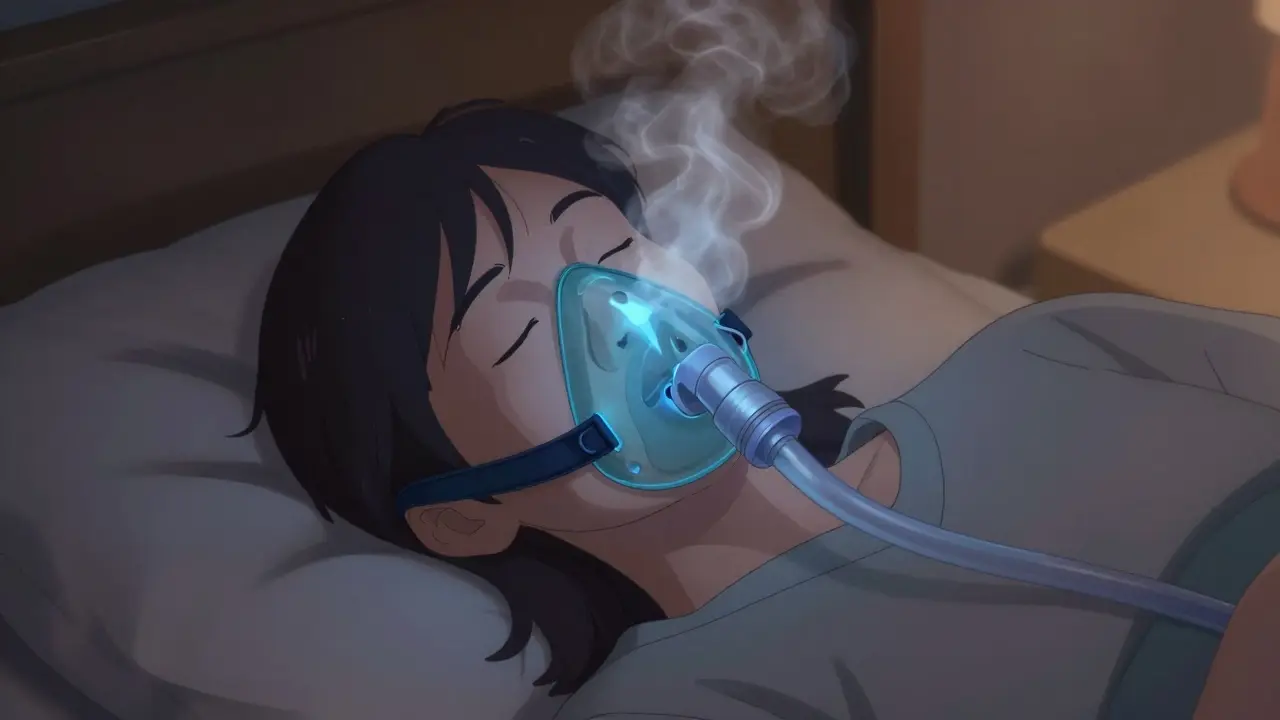
Why Your CPAP Isn’t Working (And How to Fix It)
You bought the CPAP machine. You followed the instructions. You’re using it every night. But you still wake up with a dry throat, your mask keeps leaking air, and the pressure feels like it’s crushing your chest. You’re not alone. Nearly half of CPAP users struggle with these exact problems - not because the machine is broken, but because the setup isn’t right for your body.
CPAP therapy is the most effective treatment for obstructive sleep apnea, cutting apnea events by 70-90% when used correctly. But if you’re dealing with dry mouth, leaks, or pressure that feels too high or too low, you’re not getting the full benefit. The good news? Most of these issues can be fixed without replacing your machine or giving up on therapy.
Dry Mouth? It’s Probably Not the Humidifier
Most people assume dry mouth means their humidifier isn’t working hard enough. So they crank the heat up to 6 or 7. That often makes things worse. The real culprit? Mouth breathing.
When you breathe through your mouth during sleep, the air from the CPAP doesn’t get warmed or moistened by your nasal passages. It rushes straight into your throat, pulling moisture out of your mouth and tongue. Studies show 42% of CPAP users experience dry mouth - and 67% of them are mouth breathers, according to user data from Reddit’s r/CPAP community.
Here’s what actually works:
- Switch to a full-face mask. These cover both your nose and mouth, so even if you open your mouth, the air stays contained. One user reported dry mouth vanished within three nights after switching.
- Use a chin strap. This simple nylon strap holds your jaw closed. It’s cheap, non-invasive, and used by 45% of mouth breathers who fix their leaks this way.
- Set your humidifier to level 3 or 4 (on a 0-6 scale). Too much heat causes condensation in the tube (rainout), which can drip and make you feel wetter, not drier. Level 3-4 hits the sweet spot for most climates, including Adelaide’s dry winters.
- Try heated tubing. ResMed and Philips both offer heated tubes that keep air warm all the way to your mask. Philips’ 2022 trial showed a 32% reduction in dry mouth with heated tubing alone.
Don’t just turn up the heat. Fix the root cause: mouth breathing.
Mask Leaks: It’s Not Always the Mask
Your CPAP machine beeps. The app shows a leak warning. You tighten the straps. The leak gets worse. You’re not doing anything wrong - you’re just chasing the wrong thing.
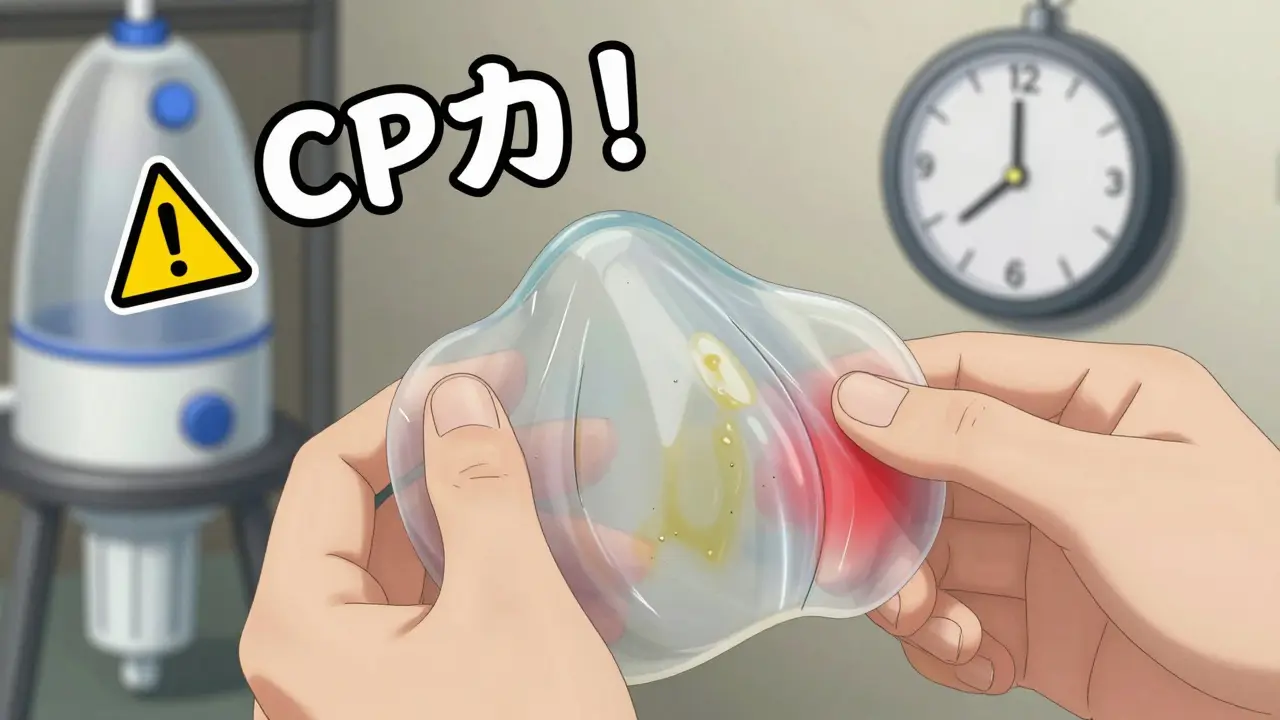
Mask leaks happen for three main reasons: wrong size, worn-out cushion, or poor headgear fit. The average user replaces their mask cushion every 3 months - but 72% of people wait until it’s cracked or visibly damaged. That’s too late.
Here’s how to fix leaks for good:
- Do the airflow test. With your CPAP running, gently adjust the headgear straps one at a time. Listen for the hiss. Stop when the noise drops. Most people need 3-5 small adjustments to get it right.
- Replace the cushion every 3 months. Even if it looks fine, silicone breaks down from oils in your skin. ResMed and Philips both recommend this timeline. A $30 cushion replacement can save you from $1,200 in lost therapy.
- Check your headgear. Straps stretch over time. If you’ve had your mask for over a year, the headgear might be loose even if the cushion is new. Order a replacement headgear set - they’re usually under $50.
- Don’t over-tighten. Tightening straps too much creates pressure points that make your skin swell. That causes new leaks. Aim for a seal that’s snug but doesn’t leave red marks.
Leak rates above 24 liters per minute (L/min) reduce treatment effectiveness, according to Harvard sleep expert Dr. David White. If your machine shows leaks over that, don’t ignore it. Adjust, replace, or get help.
Pressure Too High? Too Low? Don’t Guess - Adjust Smartly
Pressure settings are the most misunderstood part of CPAP therapy. Many users think higher pressure = better results. That’s not true. Too much pressure causes discomfort, dry mouth, and even aerophagia (swallowing air), which leads to bloating and gas.
Dr. Nancy Collop from Johns Hopkins says pressure adjustments below 5 cm H₂O can dramatically improve comfort without hurting effectiveness. One Reddit user, u/ExhaustedEngineer, had his pressure set at 14 cm H₂O - causing chest pain and insomnia. After his sleep specialist dropped it to 9 cm H₂O and turned on expiratory pressure relief (EPR), he slept through the night for the first time in years.
Auto-CPAP (APAP) machines like the ResMed AirSense 11 and Philips DreamStation 2 adjust pressure automatically. But they’re not magic. They need good data to work right.
- Use the machine’s built-in data. The AirSense 11 tracks your pressure needs every night. Log into your ResMed app and check your 30-day average. If it’s consistently hitting the max (say, 15 cm H₂O), your starting pressure might be too low.
- Don’t adjust pressure yourself. Most manufacturers void warranties if you override the settings beyond ±2 cm H₂O. Talk to your sleep specialist. They can re-titrate your pressure based on your actual sleep data.
- Try EPR or C-Flex. These features lower pressure slightly when you exhale. It feels like breathing out into a gentle breeze. Most users report better comfort with EPR enabled, even if their pressure stays the same.
- Watch for pressure spikes. If your machine shows sudden pressure jumps during sleep, it might be reacting to leaks or snoring. Fix the leak first - then check if pressure still spikes.
Pressure isn’t about power. It’s about precision. The right pressure is the lowest setting that keeps your airway open.
What You’re Probably Missing: Maintenance and Timing
CPAP machines are medical devices - not gadgets. They need care.
- Change your filter every 30 days. Foam filters trap dust and allergens. If you skip this, you’re breathing in particles that irritate your nose and throat.
- Wash your mask and tubing weekly. Soap and warm water. No bleach. Let everything air dry. Mold in your tubing? That’s a real risk. One user reported sinus infections after not cleaning his tubing for 6 months.
- Don’t skip the acclimation period. It takes 2-4 weeks to get used to CPAP. Your brain needs time to adjust to the airflow. Most people who quit do so before day 14. Stick with it. 78% of users master basic fixes within two weeks.
Also, don’t wait until you’re miserable to call your provider. ResMed offers 24/7 support with a 97% same-day response rate. Smaller DME providers? You might wait 2-3 days. If your machine is under warranty, use the manufacturer’s support. They’ve seen your exact issue before.

When to Seek Help - And When to Consider Alternatives
CPAP works for 85% of people with moderate to severe sleep apnea. But if you’ve tried everything - new mask, chin strap, humidifier settings, pressure tweaks - and you’re still miserable, it’s time to talk about alternatives.
- Oral appliances work for mild to moderate OSA. They’re less effective for severe cases, but 45-55% of users stick with them long-term because they’re more comfortable.
- Hypoglossal nerve stimulation (like Inspire) is a surgical implant for severe apnea. It costs $30,000-$40,000 and isn’t covered by Medicare unless you’ve failed CPAP. But for some, it’s life-changing.
- Positional therapy helps if you only apnea when you sleep on your back. A simple pillow or tennis ball sewn into your pajama back can help.
But don’t give up on CPAP too soon. The FDA says 31% of Medicare patients quit within a year - but 80% of those who stick with it for 6 months become long-term users. Your first month is the hardest. Your sixth month? You’ll forget you ever wore a mask.
Final Tip: Use Your Data
Your CPAP machine isn’t just a treatment device. It’s a data logger. Every night, it records:
- Leak rate
- Pressure used
- Hours worn
- AHI (apnea-hypopnea index)
Check it weekly. If your AHI is above 5, your therapy isn’t working well. If your leak rate is over 24 L/min, fix your mask. If you’re only using it 3 hours a night, you’re not getting the health benefits. Medicare requires 4+ hours per night for continued coverage - and your body needs it too.
CPAP isn’t perfect. But it’s the most proven, most effective tool we have for sleep apnea. The problems aren’t with the machine - they’re with the fit. Fix the fit, and you’ll sleep better than you have in years.
Why does my mouth feel dry even with a humidifier?
Dry mouth from CPAP is usually caused by mouth breathing, not insufficient humidification. Air escaping through your mouth dries out your throat. Switching to a full-face mask or using a chin strap solves this for most users. Adjusting your humidifier to level 3-4 and using heated tubing can also help.
How do I know if my CPAP mask is leaking too much?
Most machines flag leaks above 24 liters per minute (L/min) as problematic. If your device app shows consistent leaks over this, or you hear loud hissing, your mask isn’t sealing properly. Check the cushion for cracks, replace it if it’s older than 3 months, and adjust headgear straps using the airflow test: tighten slowly until the noise quiets.
Can I adjust my CPAP pressure myself?
Most manufacturers allow minor adjustments (±2 cm H₂O) through the menu, but going beyond that voids your warranty. Pressure settings should be determined by a sleep specialist using your therapy data. If you feel pressure is too high or low, contact your provider - don’t guess. A drop from 14 to 9 cm H₂O can make a huge difference in comfort.
How often should I replace CPAP parts?
Replace the mask cushion every 3 months, the headgear every 6 months, and the filter every 30 days (or every 90 days for HEPA filters). Tubing should be washed weekly and replaced every 6 months. Regular replacement prevents leaks, bacteria buildup, and reduced therapy effectiveness.
What if I still can’t tolerate CPAP after trying everything?
If you’ve tried full-face masks, chin straps, heated tubing, pressure adjustments, and still can’t use CPAP, talk to your sleep doctor about alternatives. Oral appliances work for mild to moderate sleep apnea. Hypoglossal nerve stimulation is an option for severe cases who can’t tolerate CPAP. Positional therapy may help if you only apnea on your back. Don’t give up - but do explore other options with your provider.
I used to hate my CPAP until I tried a chin strap. No more dry mouth. No more leaks. Just sleep. Game changer.
I can't believe people still think cranking up the humidifier fixes everything. It's not a space heater. It's a medical device. People need to stop blaming the machine and start thinking about their own breathing habits.
If you're leaking more than 24 L/min you're wasting your time and money. I had a 30 L/min leak for months because I thought tightening the straps would help. Turns out my cushion was cracked and my headgear was stretched out from a year of use. Replaced both for under $80 and now my AHI dropped from 12 to 1.5. Don't wait for the machine to yell at you. Check your parts every 90 days like they tell you. Your throat will thank you. Your partner will thank you. Your future self will thank you. This isn't a luxury. It's survival.
I find it profoundly concerning that so many users treat their CPAP like a consumer gadget. The notion that one can casually adjust pressure settings without clinical oversight is not only irresponsible-it is medically reckless. Manufacturers issue warnings for a reason. One must consult a qualified sleep physician before deviating from prescribed parameters. The human respiratory system is not a toy.
i just wanted to say thank you for this post. i was about to give up on cpap but the part about the 2-4 week acclimation period made me keep going. i still hate the mask but i sleep better than i have in 10 years. you saved me
Heated tubing was the missing piece for me. I was in Adelaide and winters are brutal. Humidifier on 6 just made my tube drip like a faucet. Switched to heated tubing and set humidifier to 3. No more rainout. No more dry throat. Just quiet nights. Seriously try it
I’ve been using a full-face mask for two years now. I used to be a nose breather but after a bad cold I started mouth breathing in my sleep. Didn’t even realize it. The chin strap was a joke. Full face? Perfect. No more waking up with cotton mouth. I wish I’d done this sooner.
Bro. The filter. The stupid filter. I skipped changing mine for 90 days because ‘it still looked clean’. Then I got a sinus infection that lasted six weeks. My nose felt like sandpaper every morning. Now I change it every 30 days like clockwork. It’s not glamorous. It’s not sexy. But it’s the reason I’m still alive to complain about my mask.
i think the biggest thing people miss is that cpap isn't about being perfect. it's about being consistent. even if you only get 4 hours some nights, that's still better than 0. i used to feel guilty if i took the mask off for 10 minutes to drink water. now i just put it back on. progress not perfection
I just wanted to say thank you for sharing this 🙏 I was on the verge of quitting CPAP after 3 months of misery. The part about EPR made me ask my doctor to turn it on. I cried the first night I slept through without waking up gasping. I’m not okay. I’m better. 💙
This whole guide is just corporate fluff. I’ve had the same mask for 18 months. Still works. Why waste money replacing parts? You’re just getting scammed by ResMed and Philips. My machine beeps? I ignore it. I sleep. That’s all that matters.
The truth is we’re all just trying to survive the night. The machine doesn’t care if you’re tired. The mask doesn’t care if you’re sad. The pressure doesn’t care if you’re lonely. But somehow… it still holds you together. That’s the quiet miracle of this thing. We don’t talk about that enough.