
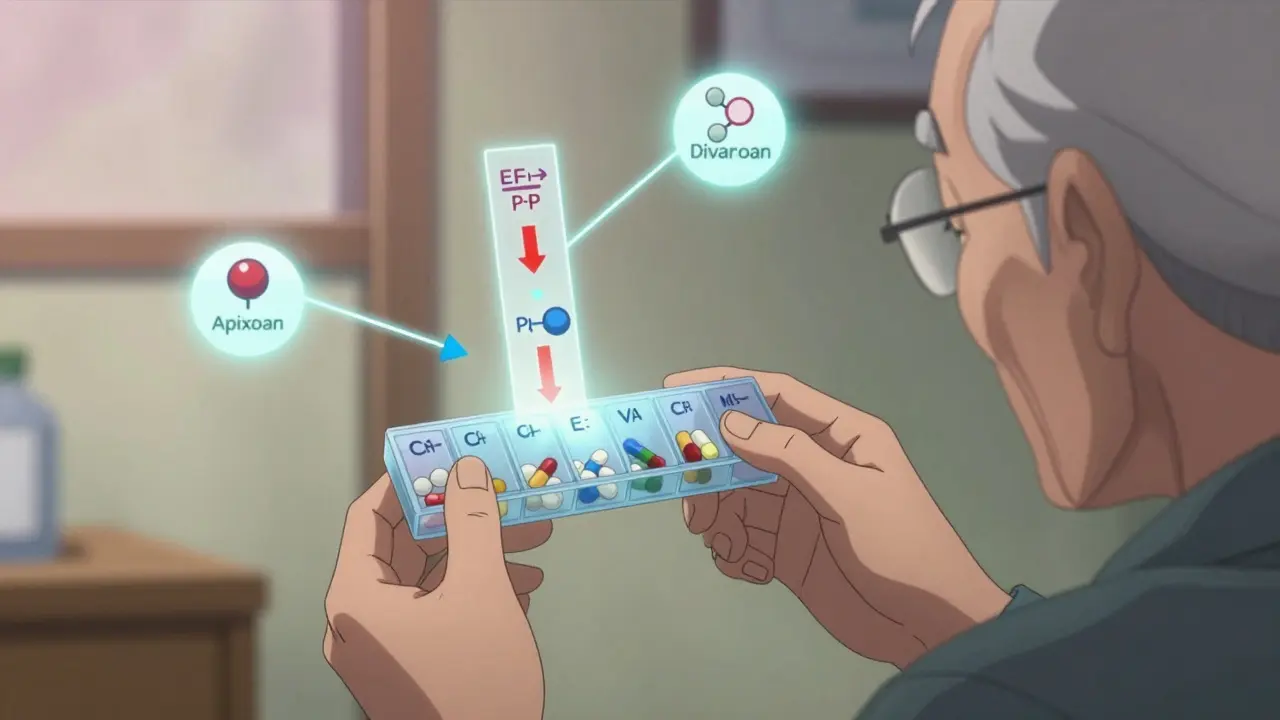
DOAC Interaction Checker
When you’re on a direct oral anticoagulant (DOAC) like apixaban, rivaroxaban, or dabigatran, you might think you’re safe from the messy drug interactions that come with warfarin. And yes, DOACs are simpler-no weekly blood tests, no strict veggie restrictions. But here’s the catch: DOAC interactions still happen. And when they do, they can turn a stable patient into someone in the ER with internal bleeding-or worse, a stroke.
Why DOAC Interactions Matter More Than You Think
Most people on DOACs are over 65. They’re managing atrial fibrillation, deep vein thrombosis, or recovering from joint surgery. That means they’re likely taking five, six, even ten other medications. Statins. Blood pressure pills. Arthritis painkillers. Anti-seizure drugs. Some of these don’t just sit beside your DOAC-they change how it works in your body. DOACs rely on two main systems to get cleared from your blood: the CYP3A4 enzyme and the P-gp transporter. Think of them as gates and factories. If something blocks the gate (an inhibitor), your DOAC builds up. Too much? Bleeding risk skyrockets. If something opens the gate wide (an inducer), your DOAC gets flushed out too fast. Too little? Clots form. This isn’t theoretical. A 2020 review by the American College of Cardiology found that nearly 80% of DOAC patients take at least five other drugs. And in real-world use, unrecognized interactions are one of the top reasons for avoidable bleeding or clotting events.Which DOACs Are Most at Risk?
Not all DOACs are the same. Their interaction profiles vary.- Apixaban: About 20-25% is processed by CYP3A4. P-gp is a bigger player. It’s the most forgiving of the group, but still vulnerable to strong inhibitors.
- Rivaroxaban: Half of it goes through CYP3A4. That makes it the most sensitive to drugs that affect this enzyme. Also heavily dependent on P-gp.
- Dabigatran: Almost entirely cleared by P-gp. No CYP3A4 involvement. So if you’re on something that blocks P-gp, dabigatran levels can spike fast.
- Edoxaban: Similar to apixaban-moderate CYP3A4, strong P-gp dependence. Dose adjustments are often needed with certain drugs.
- Betrixaban: Less commonly used, but follows the same rules as the others.
Top 5 Dangerous Drug Interactions
These are the ones you can’t ignore.1. Dronedarone (Multaq)
This antiarrhythmic drug is a double threat-it strongly blocks P-gp and moderately blocks CYP3A4. That’s a one-two punch for DOACs.- Dabigatran and rivaroxaban: Avoid completely. Studies show blood levels can jump by 200% or more.
- Edoxaban: Reduce dose to 30 mg once daily. Even then, monitor closely for bruising or dark stools.
- Apixaban: Use with caution. Some guidelines allow it, but only if renal function is normal and no other interacting drugs are present.
2. Amiodarone (Cordarone)
A common heart rhythm drug. It moderately blocks P-gp. Not as bad as dronedarone, but still risky.- Can raise apixaban and dabigatran levels by 30-50%.
- Watch for unexplained bruising, nosebleeds, or blood in urine.
- Check hemoglobin every 3 months if you’re on both.
3. Verapamil and Diltiazem (Calcium Channel Blockers)
Used for high blood pressure and angina. Both inhibit P-gp. Diltiazem also weakly blocks CYP3A4.- Dabigatran: Dose must be reduced to 110 mg twice daily for atrial fibrillation or clot treatment. Higher doses are unsafe.
- Rivaroxaban and apixaban: Usually okay at standard doses. But if you’re over 75, have kidney trouble, or take other meds, consider lowering the dose.
- Monitor for signs of bleeding for the first 2 weeks after starting verapamil.
4. Rifampin (Rifadin)
An antibiotic used for tuberculosis and some skin infections. It’s a strong inducer of CYP3A4 and P-gp.- Flattens DOAC levels. Rivaroxaban exposure can drop by 50%.
- High risk of clotting-stroke, pulmonary embolism, DVT.
- Never start rifampin with a DOAC. Switch to warfarin temporarily, or use a different antibiotic.
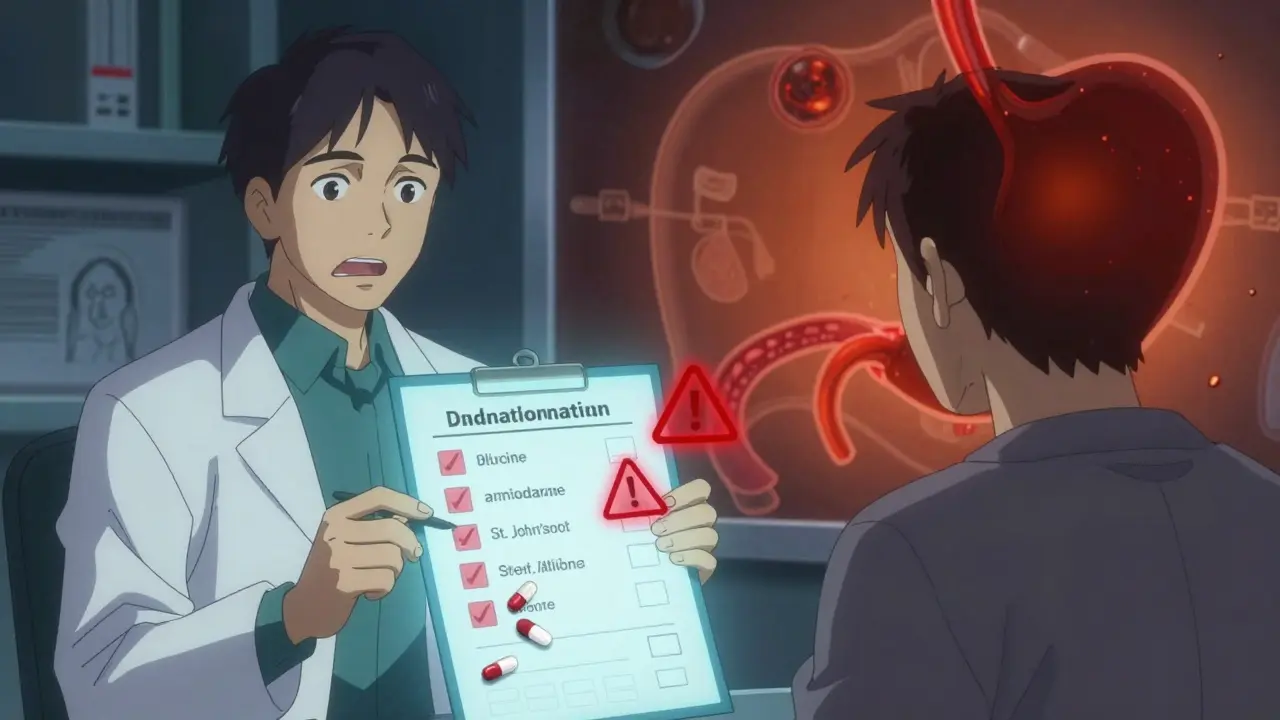
5. St. John’s Wort
This herbal supplement is sold as a natural antidepressant. But it’s a powerful inducer of CYP3A4 and P-gp.- Reduces DOAC levels by up to 60%.
- People think “natural” means safe. It’s not. This interaction has caused strokes in older adults.
- Ask every patient: “Are you taking any herbs or supplements?” Don’t assume they’ll mention it.
What About Painkillers and Antidepressants?
You don’t need a CYP3A4 or P-gp interaction to be in danger. NSAIDs like ibuprofen, naproxen, and celecoxib don’t change DOAC levels. But they irritate your stomach lining and stop platelets from working. Add that to a DOAC? Your risk of GI bleeding goes up by 2-3 times. Same with SSRIs like sertraline or fluoxetine. They affect platelet function. Studies show patients on DOACs plus SSRIs have a 40% higher risk of major bleeding, even if their INR is normal. Antiplatelet drugs like aspirin or clopidogrel? Avoid unless absolutely necessary-like after a stent. The triple combo (DOAC + aspirin + clopidogrel) is a recipe for bleeding. If you need it, keep it short-term and monitor like crazy.What About Kidney Function?
This isn’t just about drugs-it’s about your body’s ability to clear them. All DOACs are cleared, at least partly, by the kidneys. If your eGFR drops below 30, your DOAC builds up. That’s why doses are already lower for people with kidney disease. But here’s the problem: if you’re on a P-gp inhibitor like verapamil AND have kidney impairment? You’re getting hit from both sides. The drug isn’t being cleared fast enough, and it’s being forced into your bloodstream harder than normal. That’s why guidelines say: when in doubt, check renal function before starting a new drug. And if you’re on multiple interacting meds, consider switching to apixaban-it’s the safest in patients with moderate kidney issues.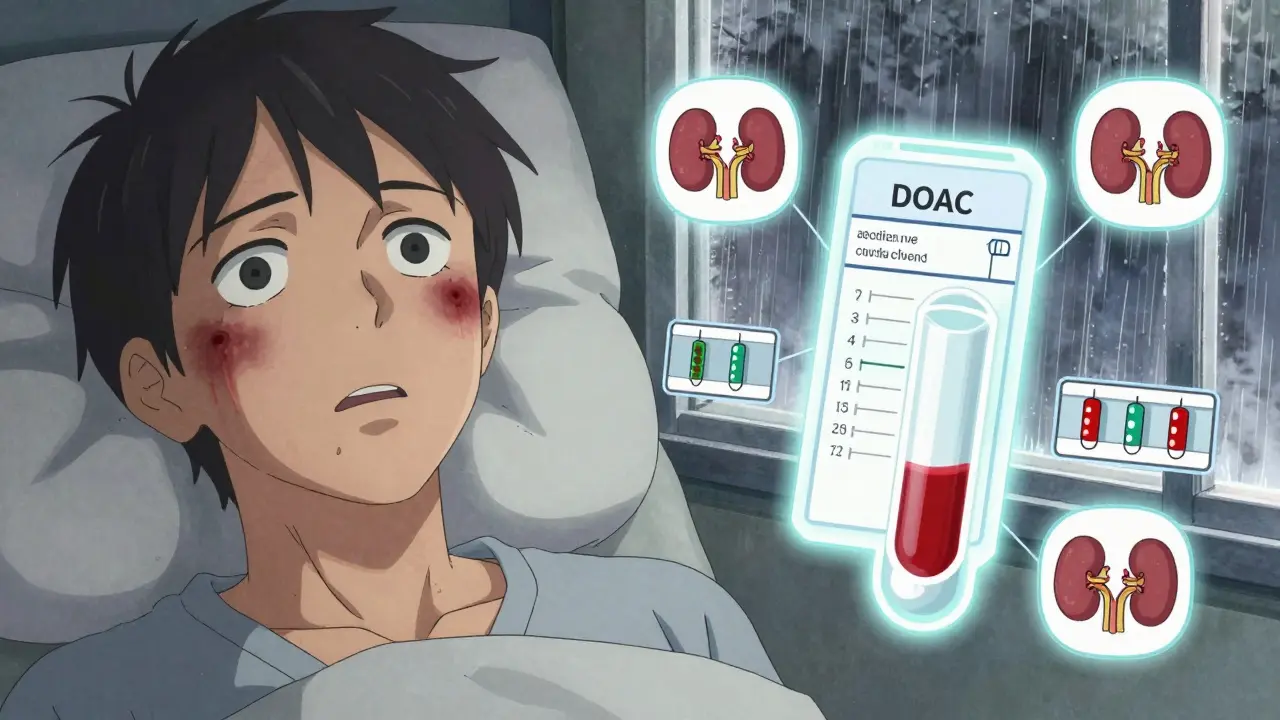
What Should You Do? A Simple Action Plan
You don’t need to memorize every interaction. Just follow this routine:- Get a full med list-prescriptions, OTCs, vitamins, herbs. Ask again at every visit.
- Check each new drug against your DOAC using a trusted source like the NHS SPS database or the Anticoagulation Forum guidelines.
- Don’t assume it’s safe just because it’s “common.” Even diltiazem, a routine blood pressure pill, can be dangerous with dabigatran.
- Adjust doses when needed. If your doctor prescribes dronedarone with edoxaban, the dose must drop to 30 mg. No exceptions.
- Watch for bleeding. Unusual bruising, pink urine, black stools, headaches, dizziness. Call your doctor immediately.
- Never stop or change your DOAC without talking to your provider. Even if you think a new pill is “just for a cold.”
What’s Changing in the Future?
Right now, we’re guessing. We don’t have blood tests to tell us exactly how much DOAC is in your system. But that’s changing. Researchers at the University Medical Center Utrecht are pushing for therapeutic drug monitoring for DOACs-like we do with warfarin or lithium. Imagine a simple blood test that tells your doctor: “Your rivaroxaban level is 20% too high.” That could prevent bleeding before it happens. The problem? We don’t yet have agreed-upon safe ranges for every DOAC in every situation. A level that’s safe for stroke prevention might be too low for treating a clot. And we don’t know how multiple drugs affect this balance. The future isn’t about avoiding interactions. It’s about managing them safely-with better tools, better data, and better communication between pharmacists, doctors, and patients.Bottom Line
DOACs are safer than warfarin-but they’re not risk-free. The biggest danger isn’t the drug itself. It’s the other pills you’re taking without realizing they’re changing how your blood thinner works. If you’re on a DOAC:- Keep a current list of everything you take.
- Ask your pharmacist to review it every time you get a new prescription.
- Don’t start any new supplement, herb, or OTC drug without checking first.
- Know the signs of bleeding and act fast.
Just had my pharmacist flag my dabigatran + diltiazem combo last week 😳 I had no idea! Now I’m on the 110mg dose and feel way calmer. So glad I asked! 💙
Ugh. Another ‘DOACs are safe’ article. People keep acting like they’re magic pills. No. They’re just less annoying than warfarin. But you still need to treat them like nuclear material. I’ve seen three elderly patients end up in the ER because they took ‘just one’ ibuprofen for their knee. And now their family blames the doctor. 😒
This is so important. If you’re on a blood thinner, your meds list isn’t just a list-it’s your safety net. Talk to your pharmacist. Every time. Even if it’s just a new vitamin. I used to think herbs were harmless. Now I know better. Stay safe out there.
St. John’s Wort?! I had no idea!! I’ve been taking it for months for my mood... I just thought it was ‘natural’ and ‘safe’... I’m going to stop it today and call my doctor. Thank you for this!! 🙏🙏🙏
Love this breakdown! So many people think ‘no blood tests = no risk.’ But the real risk is the invisible stuff-the pills you don’t even think about. Keep sharing this. Pharmacists need to be part of every care team. And patients? You’re not being annoying by asking. You’re being smart.
Interactions are just another symptom of a broken system where medicine treats symptoms not causes. Why are we giving elderly people 10 pills? Why not fix the root? The answer is money. Always money. The DOAC industry thrives on complexity. But we’re all just pawns.
THIS IS WHY PEOPLE DIE. YOU THINK YOUR DOCTOR KNOWS? THEY DON’T. THEY’RE OVERWORKED. YOU HAVE TO BE YOUR OWN ADVOCATE. I SAW MY GRANDMA BLEED OUT BECAUSE SOMEONE GAVE HER IBUPROFEN. NO ONE ASKED ABOUT HER MEDS. NO ONE. THIS IS MURDER BY NEGLIGENCE.
What about omeprazole? Does it do anything to DOACs? I’ve been on it for years and I’m on apixaban now and no one ever mentioned it
As someone who grew up in India where herbal remedies are part of daily life, I can’t tell you how many times I’ve seen families combine turmeric, ashwagandha, and guggul with blood thinners-no one even thinks to ask. This isn’t just a Western problem. It’s global. We need culturally competent education, not just clinical guidelines. The ‘natural = safe’ myth kills across borders.