

When you pick up a generic pill at the pharmacy, you expect it to work just like the brand-name version. You’re not buying a bargain-you’re buying the same medicine at a lower price. But what if the ad you saw online claimed the generic was less effective? Or worse-what if it implied it was dangerous? That’s not just misleading. It’s illegal. And it’s happening more often than you think.
What Counts as False Advertising in Generic Drugs?
False advertising in generic pharmaceuticals isn’t about lying outright. It’s about what’s left unsaid, what’s exaggerated, or how things are framed to create a false impression. The FDA and courts have clear rules: you can’t suggest a generic drug is inferior unless you have clinical proof. You can’t imply it’s less safe. You can’t use visuals or language that makes patients confuse it with a brand-name drug.
One common trick? Ads that say things like, “Still using the old version? New breakthroughs are here!” while showing the brand-name drug in bright colors and the generic in dull gray. No mention of bioequivalence. No mention that the FDA requires generics to match the brand within 80-125% of its active ingredient absorption. That’s not marketing-it’s manipulation.
Another tactic: ads that warn of “health alerts” or “safety concerns” around generics, even when the FDA has issued no such warnings. In 2024, the FDA reviewed over 1,200 patient complaints linked to these kinds of ads. Thirty-two percent of those patients stopped taking their medication-not because their doctor said to, but because they saw a scary video online. Some ended up hospitalized.
The Legal Framework: What Laws Are Being Broken?
There are three main laws that crack down on false claims about generic drugs:
- The Federal Food, Drug, and Cosmetic Act (FD&C Act)-This is the FDA’s main tool. It says all drug ads must give a “fair balance” between benefits and risks. If you highlight effectiveness but bury side effects in tiny text, you’re violating this law.
- The Lanham Act-This lets competing companies sue each other for false advertising. If a generic maker claims their drug is “just as good” without FDA-approved therapeutic equivalence data, the brand-name company can take them to court. In 2025, over 100 cease-and-desist letters were sent out under this law alone.
- State Consumer Protection Laws-Each state has its own rules. New York lets courts award triple damages and up to $1,000 per violation. California demands even stricter proof for cost-saving claims. Florida bans ads from using government logos or phrases like “health alert” unless backed by official data.
The big shift came in September 2025, when the White House directed the Department of Health and Human Services to target deceptive ads that push expensive brand drugs over cheaper generics. The memo called out ads that “inappropriately intervene in the physician-patient relationship”-meaning ads that make patients distrust their pharmacist’s recommendation.
Bioequivalence Isn’t a Buzzword-It’s the Law
Here’s the truth: a generic drug doesn’t need to be identical to the brand. It needs to be bioequivalent. That means when you take it, your body absorbs the active ingredient at the same rate and to the same extent as the brand-name version. The FDA requires this to be within 80-125% of the original drug’s performance.
But ads often say “FDA Approved” for generics like it’s a stamp of approval they earned separately. It’s not. All generics go through the Abbreviated New Drug Application (ANDA) process. They’re approved based on the brand’s data. Saying “FDA Approved” without clarifying that it’s a generic version is misleading-and has led to lawsuits.
Even worse? Ads for generics that treat narrow therapeutic index drugs-like levothyroxine (for thyroid), warfarin (blood thinner), or phenytoin (seizure control)-often fail to mention that even tiny differences matter. For these drugs, switching between brands and generics requires close monitoring by a doctor. But many ads make it sound like it’s a simple swap. That’s dangerous.
How Ads Trick You (And What to Watch For)
Here are five red flags in generic drug ads:
- “Why pay more?”-It’s okay to say a generic is cheaper. But if they say “save up to 80%,” they need hard data. FTC guidelines require proof. Most don’t have it.
- “The original formula is better”-This implies generics are inferior. They’re not. The FDA says they’re therapeutically equivalent unless proven otherwise.
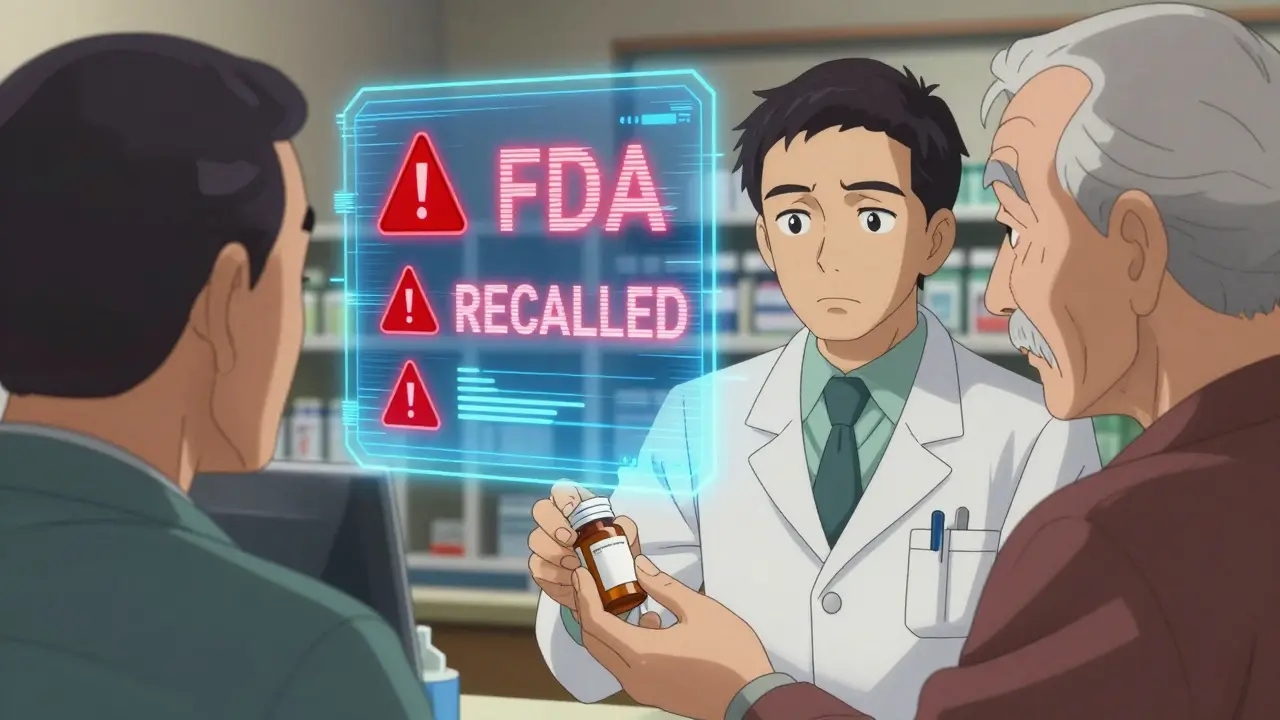
- “Newly recalled!”-Some ads falsely claim generics were recalled. The FDA has a public database. If a drug was recalled, it’s listed. Ads that use scare tactics without citing the FDA? Illegal.
- “Doctors don’t recommend generics”-This is pure fiction. Over 90% of prescriptions in the U.S. are filled with generics. Most doctors prefer them.
- “FDA approved for brand only”-This is a lie. If the generic is approved, it’s approved. Period.
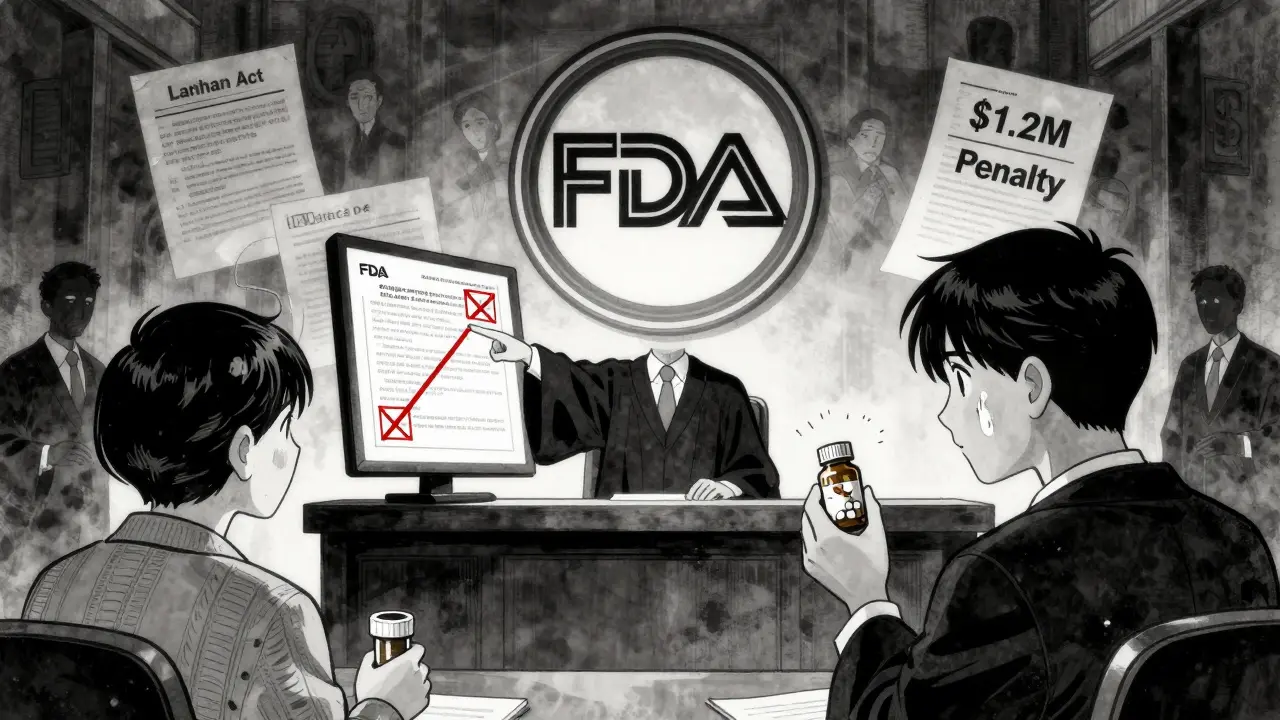
One real case: a digital ad for a generic version of a blood pressure drug showed a split screen-brand-name pill with a green checkmark, generic with a red X. The ad didn’t mention bioequivalence. The manufacturer got a cease-and-desist letter from the FTC. They had to pull the ad and pay $1.2 million in penalties.
Who’s Responsible? The Companies, the Agencies, and You
Big pharmaceutical companies spend millions on compliance. Top generic manufacturers like Teva and Sandoz have teams of 15-25 people just reviewing ads. They check every word, every image, every claim against FDA guidance, FTC rules, and 50 state laws. It’s expensive-but cheaper than a lawsuit.
Smaller companies? Not so much. Only 47% of smaller generic makers have full compliance systems in place, according to FDA data from October 2025. That’s where the risk lies.
The FDA’s September 2025 crackdown closed a major loophole: the “adequate provision” rule from 1997. Before, ads could say, “For full risk information, visit [website].” Now, all broadcast and digital ads must include the major risks right in the ad. No hiding. No links. No fine print.
And you? You’re not powerless. If you see a suspicious ad, report it. The FDA has a portal for consumer complaints. If you’re a patient who stopped a generic because of an ad-tell your doctor. And ask: “Was this drug proven to be different from the brand?”
What Happens If You Get Caught?
Penalties aren’t small. A single violation under New York’s consumer law can cost $1,000. Repeat offenses? Up to $10,000 per ad. Under the Lanham Act, competitors can sue for treble damages. In 2012, GlaxoSmithKline paid $3 billion for misleading claims about one drug. That’s the kind of warning that changes an industry.
But it’s not just about money. Reputation is everything in pharma. Once a company is labeled as deceptive, doctors stop prescribing their products. Pharmacies stop stocking them. Patients stop trusting them. That’s a loss no ad campaign can fix.
What’s Next? The Future of Generic Drug Ads
The FDA and FTC are moving toward tighter coordination. Draft legislation called the “Transparency in Drug Advertising Act” (H.R. 4582) is now under review. It would force all drug ads-brand or generic-to use the same format for risk disclosures: clear font size, same location, same language.
By 2027, enforcement actions are expected to rise 35% annually. Companies that invest in compliance now-like Pfizer’s $45 million ad review system-will thrive. Those that cut corners? They’ll get caught.
For patients, the message is simple: don’t trust ads. Trust your pharmacist. Trust your doctor. And if something sounds too scary or too good to be true? Check the FDA’s website. The truth is always there.
Can generic drugs be legally advertised as inferior to brand-name drugs?
No. Under FDA and FTC rules, generic drugs cannot be advertised as less effective, less safe, or inferior unless the manufacturer has clinical trial data proving it. The FDA requires generics to be bioequivalent to the brand-name drug. Any ad implying otherwise is considered deceptive and violates the Lanham Act and the Federal Food, Drug, and Cosmetic Act.
What does "bioequivalent" really mean for generic drugs?
Bioequivalent means the generic drug delivers the same amount of active ingredient into your bloodstream at the same rate as the brand-name drug. The FDA requires this to be within 80-125% of the original drug’s absorption levels. This ensures the generic works the same way in your body. It doesn’t mean the pills look the same or have the same inactive ingredients-it means the medicine does the same job.
Are all generic drugs FDA-approved?
Yes. Every generic drug sold legally in the U.S. must go through the FDA’s Abbreviated New Drug Application (ANDA) process and receive formal approval. The FDA doesn’t approve generics differently-it approves them based on the same safety and effectiveness standards as brand-name drugs. Any ad suggesting otherwise is false.
Can I trust generic drugs for serious conditions like thyroid or epilepsy?
Yes-for most patients. The FDA has established strict bioequivalence standards for narrow therapeutic index drugs like levothyroxine and phenytoin. However, because even small changes can matter in these cases, your doctor may choose to keep you on the same brand or generic consistently. Never switch without talking to your doctor, not because generics are unsafe, but because consistency matters for precise dosing.
What should I do if I see a misleading ad for a generic drug?
Report it. The FDA has a consumer reporting portal for misleading drug advertisements. You can also file a complaint with the FTC. If you stopped taking your medication because of the ad, tell your doctor immediately. Misleading ads have led to hospitalizations and worsening health conditions-your report could help stop others from being misled.
Why do some doctors still hesitate to prescribe generics?
Some doctors were trained when generics had more variability, or they’ve seen rare cases where switching caused issues-especially with narrow therapeutic index drugs. But today, over 90% of prescriptions in the U.S. are generics, and most doctors trust them. The hesitation often comes from patient concerns fueled by misleading ads, not clinical evidence. If your doctor is unsure, ask for the data behind their recommendation.
Oh wow, so now the FDA is our babysitter? Next they’ll be telling us how to breathe. If you’re too scared to take a generic because some ad looked sketchy, maybe your real problem is you don’t trust your own damn pharmacist. I’ve been on generics for 12 years-no hospital visits, no side effects, just cheaper pills that work. Stop letting marketers make you paranoid.
Great breakdown. From a regulatory standpoint, the bioequivalence threshold of 80-125% is statistically robust and validated across thousands of studies. The real issue is cognitive dissonance-patients equate ‘generic’ with ‘inferior’ due to branding psychology, not pharmacokinetics. The Lanham Act enforcement spike in 2025 reflects a systemic shift toward evidence-based advertising. Kudos to the FTC for closing the ‘adequate provision’ loophole. Pharma compliance teams are finally being held accountable.
This is why people are dying. People are dying because they believe lies on the internet. You think it’s just money? No. It’s your grandma skipping her thyroid meds because some YouTube ad scared her. And you’re out here arguing about ‘bioequivalence’ like it’s a math problem. It’s not. It’s life. Stop being so cold.
Honestly, this is one of the clearest explainers I’ve seen. I used to be super skeptical of generics too-until my doc switched me to one for my blood pressure and I didn’t even notice. No weird side effects, no crashes, just the same results for 1/5th the price. And yeah, those ads with the red X? Total BS. If you’re worried, talk to your pharmacist. They’re the real MVPs here. 🙌
It is indeed a matter of profound societal consequence that the dissemination of misinformation regarding pharmaceutical equivalence has reached such a critical juncture. The regulatory architecture underpinning the Abbreviated New Drug Application process, while technically sound, is often obfuscated by commercial actors who exploit linguistic ambiguity and visual semiotics to induce patient mistrust. One must consider not merely the legal statutes, but the epistemological rupture occurring between clinical reality and public perception-a chasm widened by algorithmic amplification of fear-based narratives. One might even posit that this constitutes a form of structural violence against public health autonomy.
Really good info! I live in India and we have so many fake generics here, but this post made me realize even in US it's not perfect. I always trust my doc and pharmacist, but now I know to check FDA site if something looks off. Thanks for sharing! 🙏
People still don’t get it. Ads don’t just mislead-they manipulate. That red X next to the generic? That’s not marketing. That’s emotional terrorism. And if you’re sitting here saying ‘just trust your pharmacist,’ you’re ignoring the fact that most patients don’t even know what a pharmacist is supposed to do. This isn’t about education. It’s about power. And the companies winning? They’re the ones making the ads.
Thank you for writing this. I’m a nurse, and I see this every day. Patients come in terrified because they saw a video saying generics cause seizures or heart attacks. We spend 20 minutes explaining bioequivalence and FDA standards. It’s exhausting. But if we can get one person to stop believing those ads, it’s worth it. Please keep sharing facts like this. 💙
How quaint. You think the FDA is some kind of guardian angel? Let me guess-you also believe the moon landing was real and that ‘natural’ doesn’t mean ‘poison.’ The bioequivalence range? A joke. The FDA approves generics based on data from the brand’s own trials. That’s not science-it’s corporate collusion. And don’t even get me started on the ‘90% of prescriptions are generics’ myth. That’s just industry propaganda dressed as public health.
Wait. So you’re saying the FDA says generics are equal, but then they also say for narrow therapeutic index drugs you shouldn’t switch? That’s not consistency. That’s contradiction. If they’re truly bioequivalent, why the hell are we being told not to switch? You’re just feeding me half the story to make the system look good. I’ve seen people crash after switching. This isn’t about ads-it’s about bad science being sold as truth.
Just wanted to add: if you’re on levothyroxine or warfarin, consistency matters more than brand. Switching between generics is fine if it’s the same manufacturer. But if your pharmacy swaps you to a different generic every time? That’s when problems start. Ask for a specific manufacturer-most pharmacies will honor it. And yes, it’s legal to request that.
I stopped taking my generic because of an ad. I ended up in the ER. I didn’t know what to believe. No one told me how to check if it was real. Now I’m on the brand again and I’m paying $400 a month. I’m not angry at the system. I’m angry that no one warned me.
Let’s be honest. The entire system is a performance. The FDA doesn’t ‘approve’ generics-they rubber-stamp them. The bioequivalence range? A statistical mirage. Real-world pharmacokinetics vary wildly between individuals, and the 80-125% window is a legal loophole disguised as science. The real crime isn’t the ads-it’s the fact that we’ve outsourced our health to a bureaucratic fiction. You don’t need to trust your pharmacist. You need to question everything.