
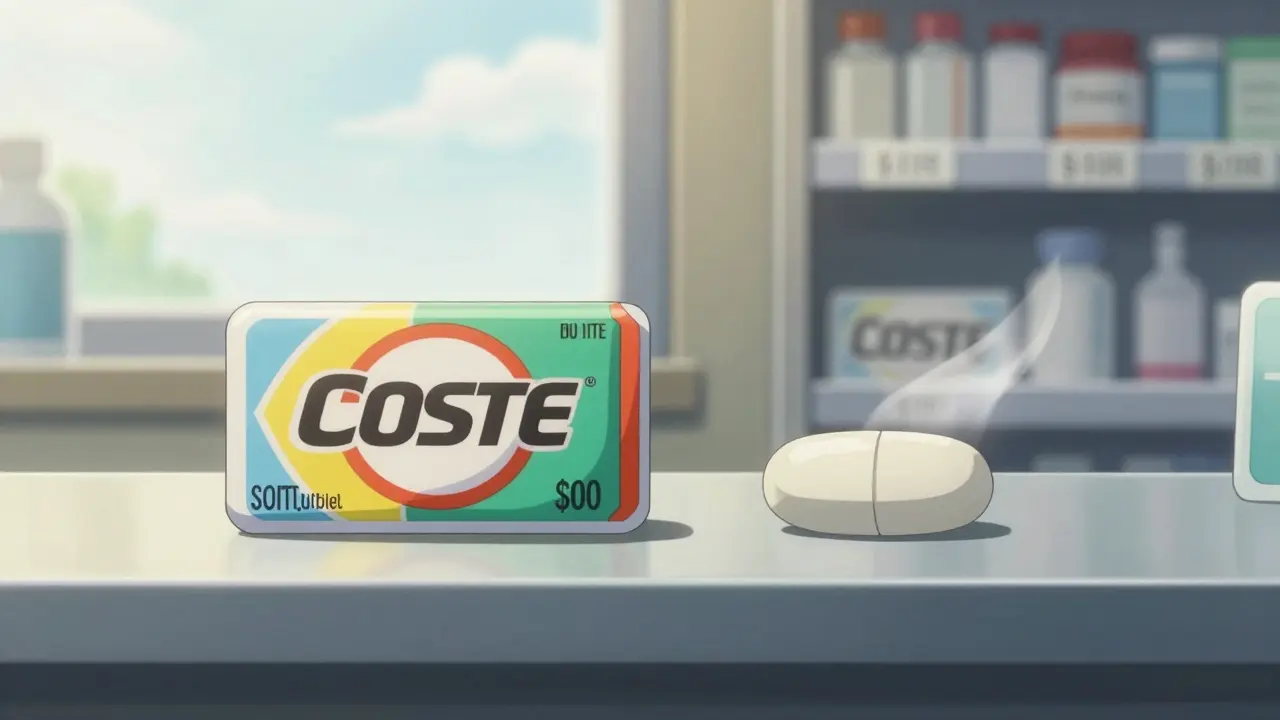
When you pick up a prescription, you might see two options: the familiar brand-name pill with a big logo, or a smaller, plain tablet with a generic label. The price difference can be shocking - sometimes generic drugs cost less than a dollar a day, while the brand version runs you $10, $20, or even $100. But are you really getting less for your money? Let’s cut through the noise and show you exactly how these two types of drugs compare - not just in price, but in effectiveness, availability, and real-world impact.
What Exactly Is a Generic Drug?
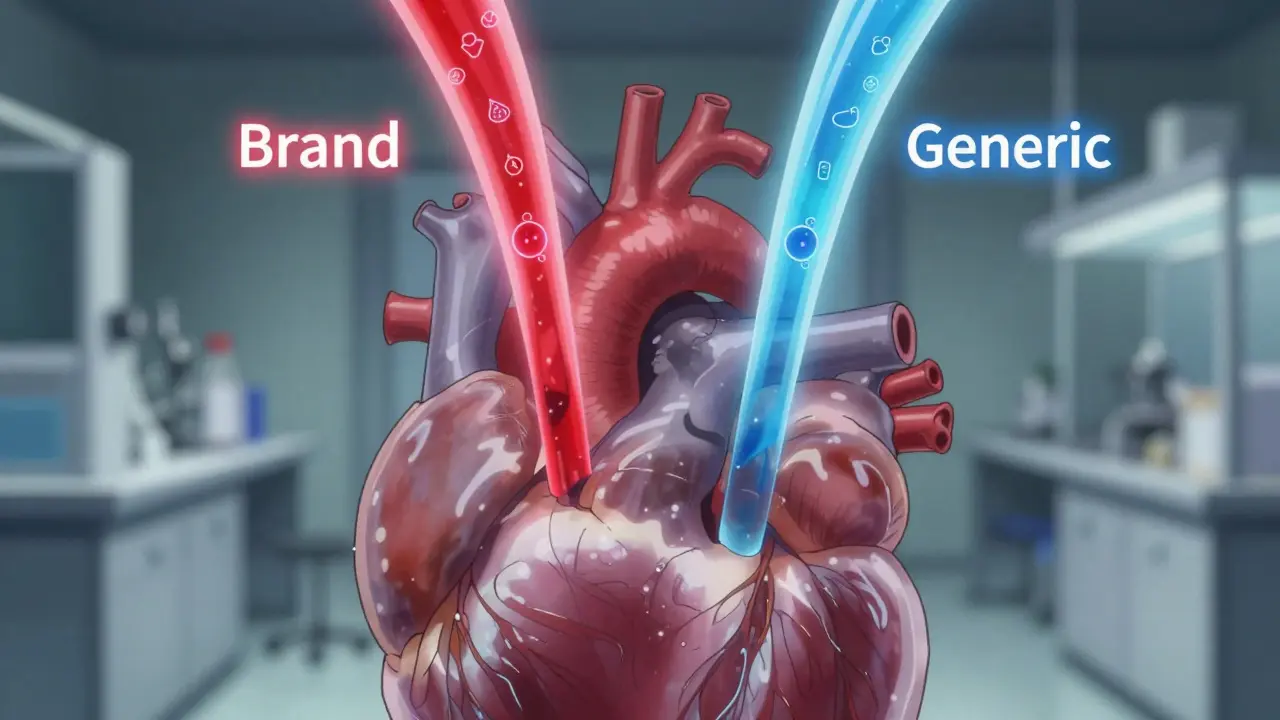
A generic drug isn’t a copy. It’s the same drug. Same active ingredient. Same dose. Same way it works in your body. The FDA requires generic manufacturers to prove their product is bioequivalent to the brand-name version. That means it delivers the exact same amount of medicine into your bloodstream at the same speed. The acceptable range? Within 80% to 125% of the brand’s performance. In plain terms: if the brand gets 100 units of medicine to your blood in an hour, the generic can deliver between 80 and 125 units in that same time. That’s not a guess. That’s science.
These standards aren’t loose. Generic drugs must match the brand in strength, purity, stability, and how they’re made. The same factories sometimes make both. The only differences? The inactive ingredients - things like dyes, fillers, or flavorings - and the packaging. That’s why a generic pill might look different or taste slightly different. But your heart, your blood pressure, your thyroid - they can’t tell the difference.
Why Are Generic Drugs So Much Cheaper?
The reason generics cost 79% to 85% less isn’t because they’re cheaper to make. It’s because they don’t have to pay for the original research.
Brand-name drug companies spend years and billions developing a new medicine. They run clinical trials, get patents, and fight to protect their market. Once that patent expires - usually after 10 to 12 years - other companies can step in. They don’t need to repeat expensive trials. Instead, they file an Abbreviated New Drug Application (ANDA) with the FDA. That’s why the system was created in 1984 under the Hatch-Waxman Act. It’s a smart balance: reward innovation, then open the door to competition.
Here’s where it gets interesting: the more generic makers enter the market, the cheaper prices drop. One competitor? Prices fall to about 90% of the brand’s original price. Three or four? Down to 60-70%. Five or more? Often below 50%. That’s why you’ll see a $120 brand-name pill become a $25 generic after one competitor, then drop to $8 after three companies start making it.
Real Numbers: The Cost Gap Today
In 2024, generics made up 90% of all prescriptions filled in the U.S. But they accounted for only 12% of total spending. That’s a $98 billion savings on 3.9 billion prescriptions - compared to $700 billion spent on just 435 million brand-name scripts. That’s not a rounding error. That’s a system working.
Take a common drug like atorvastatin (Lipitor). The brand cost over $100 a month before generics. Today, a 30-day supply of generic atorvastatin runs $5-$10 at most pharmacies. Same drug. Same effect. Same side effects. But now it’s affordable for millions.
Even more surprising? Brand-name prices are falling too - not because companies are being nice, but because they’re forced to. Bayer cut Nexavar’s list price by 50% in 2025 after the first generic arrived. Merck dropped Januvia prices by over 42%. Why? Because they knew the Medicare Inflation Reduction Act would force a 79% price cut on many of these drugs starting January 2026. They’re getting ahead of it.
Are Generics Really Just As Good?
Yes. But not everyone believes it.
A January 2025 survey of over 1,000 Americans found that 84% believe generics are just as effective. Yet 62% still trust brand-name drugs more. That gap between knowledge and belief is real. And it’s why 63% of people choose generics - not because they think they’re better, but because they can’t afford the brand.
Doctors, pharmacists, and the FDA all agree: generics are therapeutically equivalent. The American Medical Association endorses their use. The FDA says there’s no evidence generics are less safe. In fact, in 2024, the FDA inspected over 4,000 manufacturing sites - including many in India and China - and found that generic plants meet the same quality standards as brand-name facilities.
There’s one exception: drugs with a very narrow therapeutic index - like warfarin or levothyroxine - where tiny differences in dosage can matter. Even then, studies show generics perform just as reliably. Switching between brands and generics for these drugs is common and safe under medical supervision.
What About Quality and Safety?
There’s a myth that generics are made in less-regulated countries - so they’re riskier. That’s not true.
The FDA inspects every facility that makes drugs for the U.S. market - whether it’s in Indiana, Germany, or Mumbai. In 2024, over 60% of generic drug manufacturing happened outside the U.S. But every plant must pass the same inspections. No exceptions.
And here’s the kicker: generic manufacturers compete on price. If one company’s product has a defect, they lose customers fast. That’s why quality control is tighter than ever. The FDA has shut down dozens of foreign plants in the last five years for failing inspections. Brand-name drugs aren’t immune to this - they’ve had recalls too.
Why Do Some Generics Still Cost Too Much?
Not all generics are cheap. Sometimes, they’re not cheap at all.
When only one or two companies make a generic - often because the drug is hard to produce or has low demand - prices stay high. That’s why some older, obscure drugs - like the antibiotic clindamycin or the antifungal fluconazole - spiked in price a few years ago. No competition. No pressure.
But that’s changing. The market is getting smarter. More companies are entering the generic space. And when competition kicks in, prices crash. In 2025, 977 price changes were recorded for brand and generic drugs. More generics decreased in price than increased. Meanwhile, a few brand drugs like Revcovi saw price hikes - up 4.5% - because they still had no real competition.
That’s why it pays to shop around. A generic might cost $12 at Walmart, $8 at Costco, and $3 at a mail-order pharmacy. Always check. Your pharmacist can help you find the lowest price.
What’s Changing in 2025 and Beyond?
The Medicare Part D overhaul starting in 2025 will cap out-of-pocket drug costs at $2,000 per year. That’s huge. But it also means people will have more flexibility to switch between brands and generics.
Manufacturers are now using value-based pricing. Instead of just hiking prices, they’re lowering them gradually to stay competitive. Merck’s cuts to Januvia? That’s not charity. It’s strategy. They’re trying to stay in formularies before the 79% Medicare cut hits.
And here’s the quiet win: the U.S. spends 18% less on public-sector prescriptions than countries like Canada, Germany, or the UK - not because we pay less for brand drugs, but because we use so many cheap generics. It’s a system that works: high prices fund innovation. Low prices ensure access.
What Should You Do?
- Always ask your doctor or pharmacist: Is there a generic version?
- Don’t assume your insurance automatically picks the cheapest option. Ask them to switch you.
- Use pharmacy discount apps like GoodRx or SingleCare. They often beat insurance prices.
- If you’re on a chronic medication, ask about mail-order options. They usually have the lowest generic prices.
- If your generic seems different - changes in size, color, or how you feel - talk to your pharmacist. It’s rare, but sometimes the inactive ingredients cause a reaction.
You’re not getting a second-rate drug when you choose generic. You’re choosing the same medicine, at a fraction of the cost. And in a system where drug prices can break budgets, that’s not just smart - it’s essential.
Are generic drugs as effective as brand-name drugs?
Yes. Generic drugs contain the same active ingredient, in the same strength and dosage form, as the brand-name version. The FDA requires them to be bioequivalent, meaning they deliver the same amount of medicine into your bloodstream at the same rate. Studies consistently show they work just as well for treating conditions like high blood pressure, diabetes, depression, and infections.
Why do generic drugs look different from brand-name drugs?
The difference in color, shape, or size comes from inactive ingredients - like dyes, fillers, or coatings - which are not regulated the same way as active ingredients. These don’t affect how the drug works. By law, generic manufacturers can’t copy the exact appearance of the brand-name drug, so they make small changes to avoid trademark issues.
Can I switch from a brand-name drug to a generic?
In most cases, yes. Your doctor can write a prescription for the generic version, or your pharmacist can substitute it unless the prescription says "dispense as written." Always check with your provider if you’re switching for a drug with a narrow therapeutic index, like warfarin or thyroid medicine, but even then, switching is usually safe under supervision.
Why do generic drug prices vary so much between pharmacies?
Generic prices depend on competition, supply, and pharmacy pricing models. Large retailers like Walmart, Costco, and CVS often offer generics for $5-$10 a month through discount programs. Mail-order pharmacies and online services like GoodRx may offer even lower prices. Insurance formularies also affect cost - sometimes the brand is cheaper than the generic if your plan doesn’t cover the generic well.
Are generic drugs made in the U.S.?
Some are, but most are made overseas - in countries like India, China, and the Philippines. However, every facility that supplies drugs to the U.S. must pass strict FDA inspections. The FDA inspects both U.S. and foreign plants equally. There’s no evidence that overseas-made generics are less safe than those made in the U.S.
Will using a generic drug affect my insurance coverage?
Usually, it helps. Most insurance plans have lower copays for generics. Some plans won’t cover the brand unless you’ve tried and failed the generic first. If you’re paying a high out-of-pocket cost for a brand-name drug, switching to the generic could save you hundreds per year.
Final Thought
Choosing a generic isn’t about settling. It’s about choosing wisely. The science is clear. The savings are real. And the impact? Millions of people can afford their medicine because of it. You don’t need to pay more to get better results. Sometimes, the best choice is the cheaper one - and that’s exactly what generics are.
Generics work. Period. I've been on generic metformin for 8 years. Same results as the brand. My blood sugar? Stable. My wallet? Happy. No drama, no guesswork. Just science and savings.
I switched my mom to generic lisinopril last year after her prescription got denied. She was terrified - 'What if it doesn't work?' But within two weeks, her BP was better than before. She didn't even notice the difference. Now she refuses brand names. It's not a compromise. It's common sense.
I find it deeply troubling that we've normalized the idea that pharmaceutical innovation must be punished by generic competition. The original research was funded by private capital, risked over a decade, and now the system rewards free-riders. This isn't capitalism - it's a legalized plunder of intellectual property. The FDA's 'bioequivalence' standard is laughably loose. 80-125%? That's not equivalence. That's a lottery.
In India, where I'm from, generics are the only option for most people. We don't have the luxury of choosing brand names. But what's fascinating is how rigorously the Indian generic industry is regulated - many U.S. pharmacies source from the same plants that supply India. The stigma around 'foreign-made' is outdated. The science doesn't care where the pill was pressed. What matters is whether it works. And it does.
I'm sorry, but this entire article is dangerously misleading. You're acting as if generics are universally safe and effective - but have you seen the FDA's warning letters? In 2023, over 140 generic manufacturers received Form 483s for data integrity violations - and that's just the ones caught! The FDA inspects less than 5% of foreign facilities annually. You're telling people to trust a system that can't even monitor its own supply chain? This isn't empowerment - it's negligence dressed up as advocacy.
Let me ask you this - if generics are truly identical, why do they change manufacturers every 6 months? Why does the pill color change? Why does my pharmacy sometimes give me a different shape? It's not just inactive ingredients - it's a controlled substitution. Big Pharma and the FDA are in cahoots. They want you dependent on a rotating supply chain so you never notice the real issue: the active ingredient is being diluted. They're testing your body's tolerance. It's not science - it's social engineering.
I read the entire post - carefully - and I have to say, I’m genuinely impressed by how thoroughly the data was presented. However, I do have a nuanced concern: while the FDA’s bioequivalence standards are statistically sound, they do not account for individual pharmacokinetic variability. Some patients - particularly those with compromised liver function, elderly individuals, or those on polypharmacy regimens - may experience suboptimal therapeutic outcomes when switching between generics due to minute differences in dissolution rates. This isn't a flaw in the generic system per se, but rather a blind spot in the regulatory framework that assumes homogeneity across all populations. It's a systemic oversight that deserves more attention than it receives.
To the person above who said generics are a conspiracy - you're wrong. And to the person who said the FDA can't inspect foreign plants - you're misinformed. I work in pharma compliance. Every facility - whether in Mumbai, Shanghai, or Indiana - gets inspected the same way. Same checklists. Same inspectors. Same penalties. The FDA doesn't play favorites. If a plant fails, it's shut down. Period. The real problem? People don't shop around. A $12 generic at Walgreens is $3 at CVS with a coupon. It's not about trust. It's about effort.