
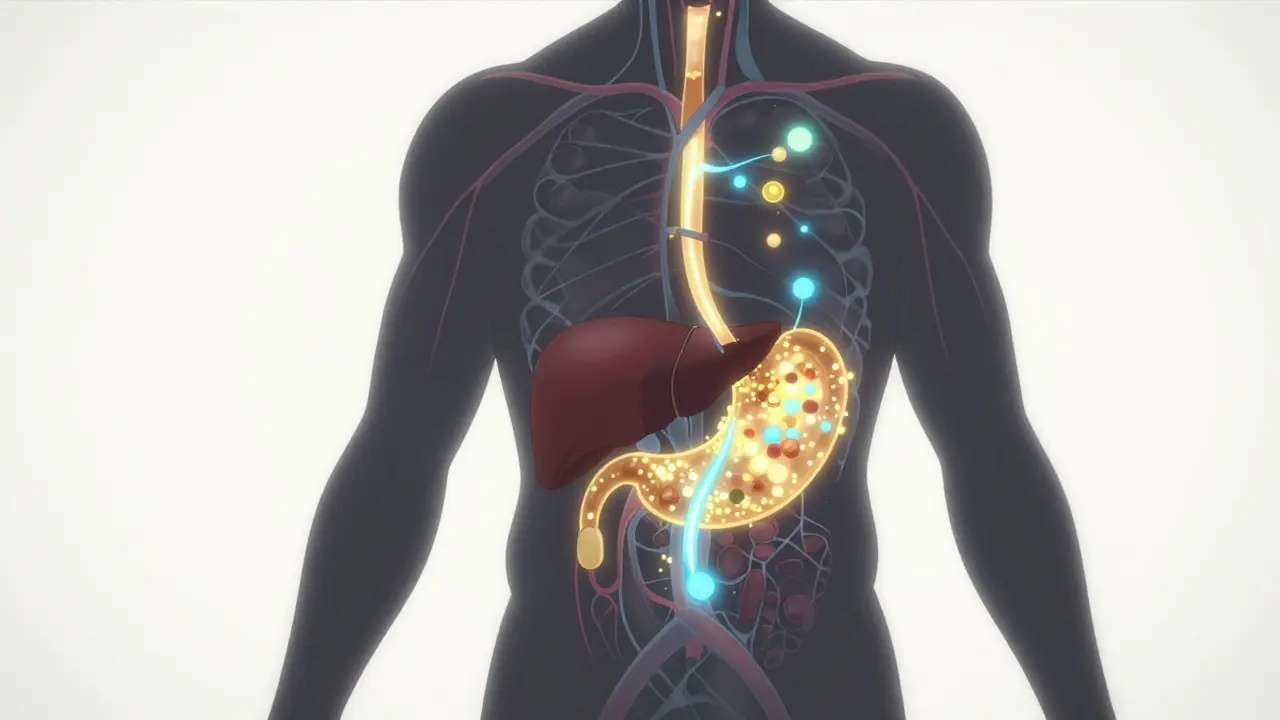
Ever wondered why some pills need to be taken with food while others must be taken on an empty stomach? Or why a single medication can treat both a headache and a fever? It all comes down to pharmacology basics-the science of how chemical substances interact with your body to create a healing effect. While it sounds like a complex academic subject, it is essentially a map of how a drug travels through your system and where it "plugs in" to fix a problem.
The Big Picture: What is Pharmacology?
At its core, Pharmacology is the study of how chemical agents, whether they are natural or synthetic, affect biological systems . Think of it as the bridge connecting basic biology and actual medical treatment. Without it, we would be guessing which chemicals work and at what dose. In fact, a 2021 analysis in Nature Reviews Drug Discovery showed that this field contributed to 92% of all FDA-approved drugs between 2010 and 2020.
To understand how a drug works, scientists split the process into two distinct phases: what your body does to the drug and what the drug does to your body. These are known as pharmacokinetics and pharmacodynamics.
Pharmacokinetics: The Journey Through Your Body
Before a medication can start working, it has to reach its target. Pharmacokinetics is the study of the drug's movement through the body. You can remember this using the acronym ADME, which describes the four stages every drug undergoes:
- Absorption: How the drug gets into your bloodstream. This is why some meds are injections (skipping the gut) and others are pills.
- Distribution: How the drug moves from the blood to the organs and tissues. Some drugs stay in the blood, while others cross the blood-brain barrier to affect the mind.
- Metabolism: How your body breaks the drug down. This mostly happens in the liver using enzymes like the CYP450 family, which act like a chemical processing plant.
- Excretion: How the drug leaves the body, typically through the kidneys (urine) or the digestive tract (stool).
This process is why dosing matters. If your kidneys aren't functioning perfectly, the "Excretion" phase slows down, and the drug can build up to dangerous levels. A 2023 study in JAMA Internal Medicine found that adjusting doses based on these pharmacokinetic principles reduced adverse drug events by 27% across thousands of patients.
Pharmacodynamics: The "Lock and Key" Mechanism
Once the drug arrives at its destination, Pharmacodynamics takes over. This is the study of the drug's actual effect on the body. Most drugs work by finding a specific protein-like a lock-and fitting into it like a key.
These "locks" are usually one of three things: receptors, enzymes, or transport proteins. About 60% of drugs target receptors. When a drug binds to a receptor, it usually acts in one of two ways:
- Agonists: These drugs mimic a natural substance and "turn on" the receptor to produce a response.
- Antagonists: These act like a broken key that fits in the lock but won't turn; they simply block other molecules from getting in. A classic example is Beta-blockers, which block receptors on heart cells to lower blood pressure and heart rate.
| Feature | Pharmacokinetics (PK) | Pharmacodynamics (PD) |
|---|---|---|
| Core Question | What does the body do to the drug? | What does the drug do to the body? |
| Key Process | ADME (Absorption, Distribution, Metabolism, Excretion) | Receptor binding and chemical interaction |
| Main Organs | Liver, Kidneys, Gut | Target cells, Brain, Heart, Lungs |
| Clinical Focus | Dosage and timing | Efficacy and side effects |
Mechanism of Action vs. Mode of Action
You might hear these terms used interchangeably, but they are different. The Mechanism of Action (MOA) is the specific, molecular-level interaction. The Mode of Action is the broader physiological result.
Take magnesium citrate, for example. Its mechanism of action is that it attracts water into the bowel (osmosis). Its mode of action is that it acts as a laxative to clear the intestines. One is the "how" at a chemical level; the other is the "what" at a body level.
Another example is Monoamine oxidase inhibitors (MAOIs). Their MOA is blocking the enzyme that breaks down serotonin and dopamine. The result (the mode of action) is an increase in neurotransmitters in the brain, which helps treat depression.
The New Era: Biologics and AI
Not all drugs are simple chemicals. Biologics are complex medicines made from living organisms. Unlike traditional drugs that might block a single receptor, biologics often interrupt entire immune system signaling pathways. These have become incredibly important, accounting for 35% of new drug approvals between 2015 and 2022.
We are also seeing a massive shift toward Personalized Pharmacology. Because our genes change how we metabolize drugs (specifically through the CYP450 enzymes), a dose that works for one person might be toxic for another. In fact, about 17% of people have genetic variations that significantly change how they respond to common medications.
Artificial intelligence is now accelerating this process. Tools like AlphaFold 3 can predict how a drug will bind to a protein with roughly 89% accuracy. This means scientists can design "perfect keys" for "specific locks" before they ever step foot in a lab, reducing the trial-and-error phase of drug development.
Why This Matters for Your Safety
Understanding these basics isn't just for doctors; it's a matter of safety. When you understand that two drugs might compete for the same metabolic enzyme in the liver, you understand why some combinations are dangerous. For instance, taking certain antidepressants (like SSRIs) with MAOIs can lead to serotonin syndrome-a dangerous condition caused by too much serotonin building up because the "off switch" (the enzyme) was blocked.
Always talk to your pharmacist about polypharmacy-the use of multiple medications. This is especially critical for adults over 65, as 32% of them take five or more medications. The more drugs in the system, the more complex the pharmacokinetic and pharmacodynamic interactions become.
What is the difference between an agonist and an antagonist?
An agonist is a drug that binds to a receptor and activates it, mimicking a natural chemical in your body to produce a biological response. An antagonist, on the other hand, binds to the receptor but does not activate it. Instead, it blocks other chemicals from binding, essentially "turning off" or preventing a response.
Why do some drugs have a "narrow therapeutic index"?
A narrow therapeutic index means there is a very small difference between the dose that is effective and the dose that is toxic. For these drugs, precise dosing and regular blood tests are required because a slight increase in concentration can lead to severe side effects.
How does the liver affect how medications work?
The liver is the primary site for drug metabolism. It uses enzymes (like CYP450) to chemically alter drugs so they can be more easily excreted by the kidneys. If the liver is damaged or if another drug blocks these enzymes, medications can stay in the system longer, potentially leading to overdose.
What are biologics?
Biologics are a class of large, complex molecules produced by living cells (like bacteria or yeast) rather than synthesized from chemicals. They are often used to treat autoimmune diseases and cancer by targeting specific proteins in the immune system.
Can genetics really change how a drug works for me?
Yes. Through a field called pharmacogenomics, we know that genetic variations can make some people "ultra-rapid metabolizers" (who process drugs too quickly for them to work) or "poor metabolizers" (who process drugs too slowly, leading to toxicity).
Next Steps for Better Medication Safety
If you are managing a complex medication regimen, consider these steps to ensure your pharmacological profile is optimized:
- Keep a Complete List: Include all prescriptions, over-the-counter meds, and supplements, as these can all interfere with liver enzymes.
- Ask About Timing: Specifically ask your doctor if a medication should be taken with food, as food can significantly alter the "Absorption" phase of pharmacokinetics.
- Monitor Organ Health: Since the liver and kidneys handle metabolism and excretion, keeping an eye on these organs ensures your body can clear medications effectively.
- Discuss Genetics: If you've had unusual reactions to medications in the past, ask your provider about pharmacogenetic testing to see how your body processes specific drug classes.
The breakdown of ADME is such a great way to visualize the process! It's honestly wild how much the liver's CYP450 enzymes dictate our response to everything from caffeine to heavy-duty prescriptions. For anyone struggling to remember, just think of the liver as the body's chemical customs office-checking, altering, and processing everything before it's allowed to move on or get kicked out!
Totally agree! It's so empowering when patients actually understand why their dosing schedule is so strict.
While the simplification is adequate for the masses, it completely glosses over the nuances of stereoisomerism and how chirality affects drug binding. One cannot simply describe a 'lock and key' without acknowledging that the spatial arrangement of the molecule determines whether it's a therapeutic agent or a toxic byproduct. It's basic medicinal chemistry, really, but I suppose the average reader isn't well-versed in organic synthesis.
Typical oversimplification. The post treats pharmacology like a linear path, but in reality, it's a chaotic dance of biochemical variables. We pretend we have control with these 'guides,' but nature always finds a way to ignore the textbook. Most of these 'AI predictions' are just educated guesses wrapped in fancy percentages anyway.
The mention of the narrow therapeutic index is a critical point that deserves more attention. For medications like warfarin or digoxin, the margin for error is incredibly slim, which is why consistent monitoring is non-negotiable. It is also worth noting that diet, such as vitamin K intake with blood thinners, can directly interfere with the drug's efficacy, effectively changing the pharmacodynamics in real-time. Proper education on these interactions can literally save lives by preventing accidental toxicity or treatment failure.
This makes me feel so much better about my meds!
I love how this explains things!!! 🌟 It's so cool that our genes play such a huge part in how we feel when we take medicine... like we're all just unique little chemical experiments!! 🧬✨ I've always wondered why my friend reacts so differently to the same dose of stuff than I do!!!
the concept of the blood brain barrier is really the most interesting part here... it creates such a rigid boundary between the physical and the mental state... making the chemistry of consciousness so difficult to manipulate without causing chaos elsewhere
It's really interesting to look at this from a mentorship perspective because so many people just take their pills without ever asking why they can't have a grapefruit juice with certain medications. If you look into the CYP3A4 enzyme, you'll find that grapefruit juice actually inhibits that specific enzyme in the gut, which means the drug doesn't get broken down as it should and ends up hitting your bloodstream in a much higher concentration than the doctor intended, which is a perfect real-world example of the pharmacokinetic principles mentioned here. I've seen so many elderly patients struggle with polypharmacy where they are taking five or six different things that all compete for the same metabolic pathway in the liver, and it just creates this cascading effect of side effects that look like new illnesses but are actually just drug-drug interactions. It really highlights why having a single pharmacist manage all your meds is so much safer than getting them from three different clinics. We need to move toward a more holistic view of how these chemicals interact over a lifetime rather than just treating the immediate symptom of the day.