
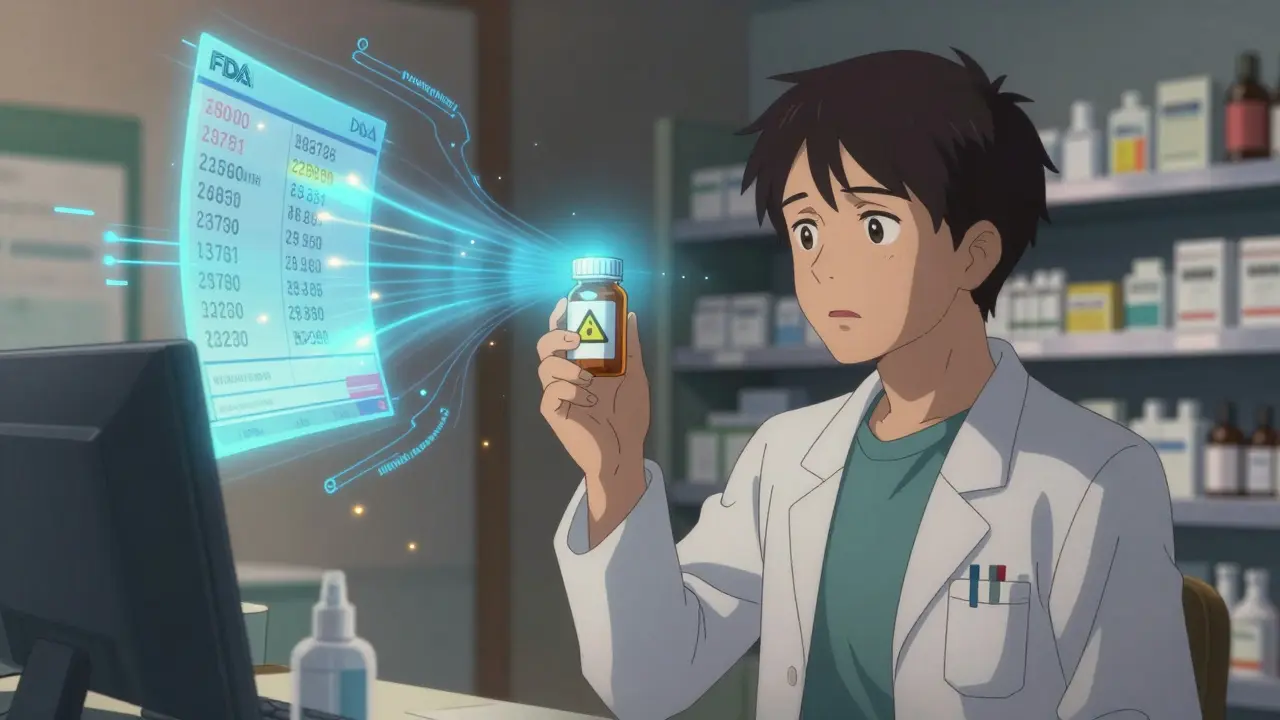
When you pick up a generic pill at the pharmacy, you expect it to work just like the brand-name version. But how do you know it’s safe? The FDA doesn’t retest every generic drug after it hits the market. Instead, it watches closely-using a system built on data, reporting, and real-world evidence. This isn’t just bureaucracy. It’s a living, breathing surveillance network that catches problems most people never hear about-until they affect someone they know.
Why Post-Approval Monitoring Matters
Generic drugs make up 90% of all prescriptions filled in the U.S. But they account for only about 23% of total drug spending. That’s because they’re cheaper. And that’s also why they’re so easy to overlook. Once a generic drug is approved, the FDA assumes it’s safe because it matches the brand-name drug in active ingredients, strength, and how fast it gets into your bloodstream. That’s called bioequivalence. But here’s the catch: bioequivalence is tested before approval. After that? The FDA doesn’t run new clinical trials. It relies on what happens in the real world.That’s where things can go wrong. A pill might look identical, but if the coating changes, or the filler is slightly different, it can affect how the drug is absorbed. For drugs with a narrow therapeutic index-like warfarin, levothyroxine, or lithium-even small changes can lead to serious side effects or treatment failure. One study found that 65% of potential therapeutic inequivalence signals weren’t fully investigated because of limited resources. That’s not because the FDA isn’t trying. It’s because the system has to prioritize.
The Tools the FDA Uses
The FDA doesn’t wait for problems to pile up. It uses multiple streams of data to find them early. The main one is the Drug Quality Reporting System (a centralized database for complaints about drug quality). Every year, between 45,000 and 60,000 reports come in-from pharmacists, doctors, patients, and manufacturers. These aren’t just vague complaints. They’re specific: tablets that don’t dissolve, liquids that form clumps, patches that fall off, or pills that look different from the last batch.These reports are analyzed using custom software built by the FDA’s Clinical Safety Surveillance Staff (a team of physicians, chemists, and data analysts focused on generic drug safety). The system looks for patterns: Is one manufacturer’s product causing 70% of complaints, even though it only holds 30% of the market? That’s a red flag. The FDA calls this the "Weber Effect"-when a new generic hits the market, reports spike by 300-400% in the first year. Why? Because everyone’s paying attention. Pharmacists are checking labels. Patients are calling in. Doctors are comparing experiences. That spike isn’t noise-it’s a signal.
Another key tool is MedWatch (the FDA’s voluntary reporting system for adverse events). In 2020, over 140,000 reports came in through MedWatch. About 68% of those came from healthcare professionals. Pharmacists made up 42% of those reports. That’s important. Pharmacists are often the first to notice a difference in how a drug behaves. They see patients who say, "This metformin doesn’t last all day," or "My thyroid pill feels different."
The FDA also pulls in data from Symphony (a prescription sales database tracking how many drugs are sold) and IMS Smart (a national sales and prescribing dataset). By comparing how many reports come in with how many prescriptions are filled, the FDA can tell if a problem is real or just a coincidence. If a drug is prescribed 10 million times a year and only 50 people report issues, that’s probably normal. If it’s prescribed 10 million times and 2,000 people report the same problem? That’s a signal.
What Kinds of Problems Are Found?
Most issues aren’t about the active ingredient. They’re about the rest of the pill. Here are the top complaints the FDA tracks:- Tablets not dissolving properly (17% of quality complaints)
- Precipitates in liquid medications (12%)
- Patches falling off prematurely (9%)
- Extended-release capsules releasing too fast
- Different tablet color or size causing patient confusion
One real case from 2019 involved levothyroxine. Over 200 patients reported symptoms like fatigue, weight gain, and heart palpitations after switching to a new generic version. The FDA investigated for 18 months before confirming a manufacturing issue. That’s too long. But it’s also why the system is being updated.

The Decision-Making Process
When a signal is found, it goes to the OGD Clinical Safety and Surveillance Committee (a monthly meeting of FDA experts from safety, quality, and surveillance teams). This group includes doctors, chemists, and data analysts. They don’t act alone. They work with the Office of Pharmaceutical Quality (responsible for manufacturing standards) and the Office of Surveillance and Epidemiology (tracks drug use across populations). Together, they decide: Is this a one-off? Or is it a pattern?If it’s a pattern, they issue a Health Hazard Evaluation (a formal assessment of risk level: remote, possible, or probable). They rate the severity too: mild, moderate, or severe. Based on that, they might ask the manufacturer to change the formula, issue a recall, or update the label. In 2021, this committee handled 120 to 150 such evaluations.
Most of the time, manufacturers fix the issue. According to industry data, 90% of signals are resolved through voluntary corrections. But that’s not always fast enough. The FDA admits there’s a 6- to 9-month lag in detecting therapeutic inequivalence. That’s why they’re testing new tools.
What’s Changing in 2025?
The system isn’t static. It’s evolving. In 2023, the FDA started using AI-powered algorithms (machine learning tools that reduce false positives by 27%) to filter noise from real signals. In 2024, they expanded the Sentinel Initiative (a network of 19 healthcare systems tracking over 100 million patients) to include more generic drugs. And in 2025, they plan to launch two major changes:- A mandatory bioequivalence study (required for drugs with narrow therapeutic index after approval)-this closes a major gap. Drugs like warfarin, digoxin, and levothyroxine will now be retested after they’re on the market.
- A patient-facing portal (allows direct reporting of therapeutic inequivalence)-so patients can say, "This generic isn’t working like it should," and their report goes straight into the system.
These changes are expensive. The FDA has allocated $220 million from its GDUFA program just for safety monitoring. But without them, the system can’t keep up with the growing number of complex generics-like inhalers, patches, and long-acting injectables-that are harder to test and easier to mess up.

What Patients and Providers Should Know
Most people assume the FDA checks every generic drug after it’s approved. It doesn’t. It watches. It waits. It analyzes. And sometimes, it’s too slow. If you notice a change in how your medication works-whether it’s a different side effect, less effectiveness, or a strange taste-report it. Use MedWatch. Talk to your pharmacist. Write down the lot number. That data matters.Doctors often misunderstand the system too. A 2018 survey found 63% believed the FDA does routine post-market bioequivalence testing. It doesn’t. That’s why so many cases slip through until patients get hurt.
The system works best for obvious manufacturing flaws. It’s weaker for subtle differences in how a drug affects you. But it’s getting better. And your voice-whether you’re a patient, a pharmacist, or a doctor-is part of that improvement.
Does the FDA test generic drugs after they’re approved?
No, the FDA does not routinely retest generic drugs after approval. Instead, it relies on post-market surveillance using real-world data from adverse event reports, manufacturing complaints, and prescription trends. Bioequivalence is only required before approval. However, starting in 2025, mandatory post-approval bioequivalence studies will be required for drugs with narrow therapeutic indices.
How do I report a problem with a generic drug?
You can report issues through the FDA’s MedWatch system online at fda.gov/medwatch or by calling 1-800-FDA-1088. Be sure to include the drug name, manufacturer, lot number, and details about what happened. Pharmacists and healthcare providers are encouraged to report as well-over 68% of reports come from professionals. Your report helps the FDA identify patterns and take action.
Why do some generic drugs seem to work differently than others?
Even though generics must match the brand-name drug in active ingredients, they can differ in inactive ingredients like fillers, coatings, or dyes. These can affect how fast the drug is absorbed. For drugs with a narrow therapeutic index-like thyroid medicine or blood thinners-even small changes can cause side effects or reduced effectiveness. That’s why the FDA tracks these differences closely.
Are generic drugs less safe than brand-name drugs?
Generally, no. Generic drugs are as safe as brand-name drugs. The vast majority of generics perform just as well. But because they’re made by many different manufacturers, quality issues can arise in specific batches or from certain companies. The FDA’s surveillance system exists to catch those rare cases before they affect large numbers of people.
What happens when the FDA finds a problem with a generic drug?
If a safety issue is confirmed, the FDA can require the manufacturer to change the formula, update the label, or recall the product. In most cases, the company acts voluntarily. If they don’t, the FDA can issue a mandatory recall. The agency also notifies healthcare providers and the public through safety alerts. Over 90% of identified issues are resolved through manufacturer corrections.
Man, I never realized how much goes into keeping generics safe. I thought once it got approved, it was just left alone. But this whole system? It’s like a silent watchdog that only barks when something’s seriously off. I’ve had my thyroid meds switch brands before and felt like a zombie for weeks-never connected it to the pill until now. The fact that pharmacists are the frontline sensors is wild. They’re the ones noticing the subtle shifts in how a drug hits you. And that Weber Effect? Totally makes sense. When a new generic drops, everyone’s eyes light up like they’re hunting for Easter eggs. It’s not paranoia-it’s survival. The FDA’s using AI now? That’s a game-changer. Reducing false positives by 27% means they can finally focus on real threats instead of chasing ghosts. I just hope the patient portal in 2025 isn’t buried under layers of bureaucracy. People need to report without jumping through hoops. My aunt almost died because her generic warfarin wasn’t working right, and no one took her seriously until she had a stroke. That’s not a glitch-it’s a failure of the system. We need more voices, not fewer. This isn’t just about pills. It’s about trust. And right now, trust is being rebuilt one report at a time.
so the fda doesnt test em after approval?? wow. guess thats why my generic xanax tastes like regret and a wet sock. 🤡
As someone who’s been on the same generic for 8 years, I can say this: consistency matters more than you think. I’ve switched between manufacturers before, and yeah-sometimes it felt like my body was confused. Not dramatic, but enough to notice. That’s why I always check the lot number now. It’s not paranoia. It’s self-preservation. I’ve got a friend with epilepsy who had a seizure after a batch change. Turned out the filler was different. Scary stuff. The FDA’s system isn’t perfect, but it’s better than nothing. And honestly? I’m glad they’re finally listening to patients. If you feel off after a refill, don’t brush it off. Write it down. Call your pharmacist. That little note could save someone’s life down the line. We’re all part of this network now.
Interesting read. I didn’t know pharmacists made up 42% of MedWatch reports. That’s huge. It makes sense though-they’re the ones handing out the pills, seeing the patterns. I’ve had patients come in saying, ‘This isn’t working like before,’ and I just assumed it was anxiety. But now I realize it might be the coating. I’m going to start asking about lot numbers. Also, the 6-9 month lag is concerning. That’s a long time for someone to be on a faulty dose. Glad they’re pushing for mandatory retesting on narrow-index drugs. Those are the ones that can quietly kill you. Hope the new portal is user-friendly. If it’s clunky, people won’t use it. And then we’re back to square one.
I work in a pharmacy and can’t tell you how many times I’ve had someone say, ‘This pill looks different.’ And honestly? I used to shrug it off. Now I stop. I check the manufacturer. I ask if they’ve noticed changes in side effects. Last week, a woman came in with her thyroid med-she said she’d been exhausted for weeks. Turned out it was a new generic. I flagged it. Two days later, the FDA sent out a notice about that batch. I didn’t think my little note mattered. But it did. That’s what this whole system is about. Small things, added up. I’m glad they’re finally giving patients a direct line. We’re not just consumers. We’re data points. And if enough of us speak up, maybe they’ll stop treating us like background noise.
Wow. So the FDA just ‘watches’? That’s it? No real testing? Sounds like they’re outsourcing safety to random people on the internet. And let’s be real-how many reports are just people who don’t like how their meds make them feel? This whole system feels like a Band-Aid on a bullet wound. They’re spending $220 million to fix something that shouldn’t exist in the first place. If generics are so damn different, why are they even allowed? Just make everyone pay for the brand-name. Problem solved. Also, ‘Weber Effect’? Sounds like a marketing term someone came up with after too much coffee.
This is actually one of the most important things I’ve read all year. I’ve been on levothyroxine for 12 years. I’ve switched generics five times. I’ve felt the fog, the weight gain, the panic attacks. I thought it was me. Turns out, it was the pill. The FDA’s system is flawed, but it’s the best we’ve got-and it’s getting better. The fact that they’re using AI and patient data? That’s revolutionary. We’ve been told for years, ‘Trust the system.’ But now, the system is asking us to help. That’s powerful. I’m telling everyone I know to report weird side effects. Not because we’re paranoid. Because we’re smart. And if enough of us do it, they can’t ignore us anymore. This isn’t just about pills. It’s about reclaiming control over our own health. You’ve got a voice. Use it.
Let’s deconstruct this with structural integrity. The FDA’s surveillance architecture is fundamentally reactive, predicated on stochastic signal detection from heterogeneous data streams-MedWatch, DQRS, Symphony, IMS Smart-which exhibit non-stationary variance and reporting bias. The so-called ‘Weber Effect’ is merely a manifestation of heightened surveillance sensitivity post-launch, not a biological phenomenon. The proposed AI filters reduce false positives by 27%? That’s statistically insignificant when the baseline noise-to-signal ratio is 12:1. Mandatory post-market bioequivalence studies for narrow-therapeutic-index drugs? Long overdue, but insufficient. What’s missing is real-time pharmacokinetic monitoring via wearable biosensors. Until we integrate continuous bioavailability tracking, we’re just rearranging deck chairs on the Titanic. Also, patient-reported portals? They’ll be flooded with psychosomatic noise. The real issue? Regulatory capture by generic manufacturers. The GDUFA funding is a slush fund disguised as safety. This isn’t oversight-it’s performative governance.