

Every year, over 23,000 people in the U.S. end up in the emergency room because a supplement they were taking reacted badly with a prescription drug. Many of these cases are preventable. The problem isn’t that people are taking too many supplements-it’s that they’re taking them without knowing how they might interact with their medications. If you’re a pharmacist, nurse, doctor, or even a patient managing multiple pills and powders, knowing how to check supplement interactions in clinical databases isn’t optional. It’s essential.
Why Supplement Interactions Matter More Than Ever
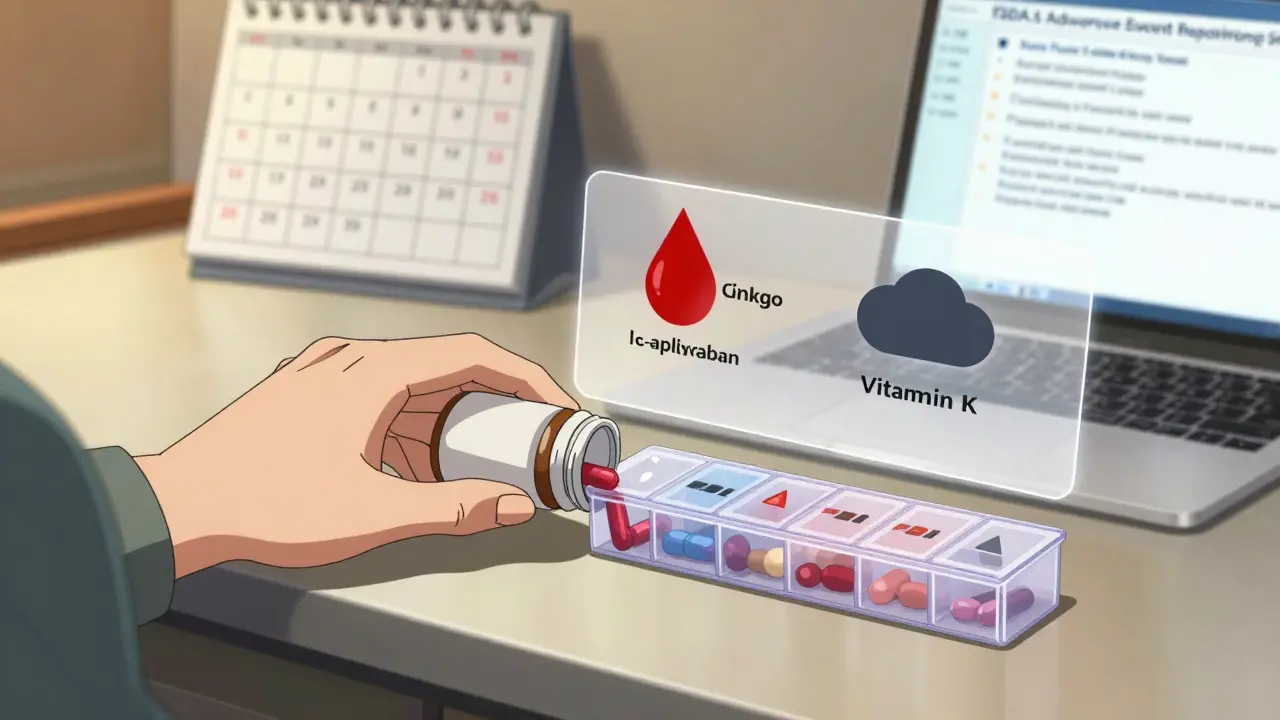
More than half of U.S. adults take at least one dietary supplement. Among people over 57, nearly half are on both a prescription drug and a supplement. That’s a lot of combinations. And most of them aren’t harmless. Take ginkgo biloba, for example. It’s often used for memory, but it can thin the blood. If someone’s on apixaban (Eliquis), a blood thinner, combining the two can lead to dangerous bleeding. A case at Johns Hopkins Hospital showed this exact scenario-caught in time because the pharmacist checked the interaction in NatMed. The issue isn’t just herbs. Even common vitamins like vitamin K can interfere with warfarin. Magnesium can reduce the absorption of antibiotics like tetracycline. And don’t forget about newer supplements like CBD. As of mid-2024, only 37% of commercial databases even list CBD-drug interactions, even though it affects the same liver enzymes as over 80% of prescription drugs.Which Databases Actually Work for Supplements?
Not all drug interaction tools are built the same. General databases like DrugBank or DDInter are great for drug-drug interactions but fall short when it comes to supplements. They might list “St. John’s wort” but not the specific brand your patient is using-or worse, miss the active ingredient entirely. The gold standard for supplement interaction checking is NatMed (formerly Natural Medicines). Here’s why:- Covers over 1,900 dietary supplements with detailed monographs
- Maps 51,000+ commercial products to their exact ingredients
- Has 94.3% inter-rater reliability among clinical pharmacists
- Provides mechanism of action for 98.7% of interactions
- Includes severity ratings: Contraindicated, Major, Moderate, Minor
Step-by-Step: How to Check a Supplement Interaction
Follow this process every time a patient tells you they’re taking something “natural.”- Ask the right question. Don’t say, “Do you take supplements?” Most people won’t say yes. Instead, ask: “What pills, powders, teas, or extracts do you take daily-even if they’re from the health store?” Studies show patients only disclose supplement use 37% of the time when asked vaguely.
- Get the full product name. Patients often say “milk thistle” or “turmeric.” But there are hundreds of brands. Ask for the bottle. Look at the Supplement Facts panel. Many products contain proprietary blends that hide the actual amounts. You need the exact ingredients, not just the supplement category.
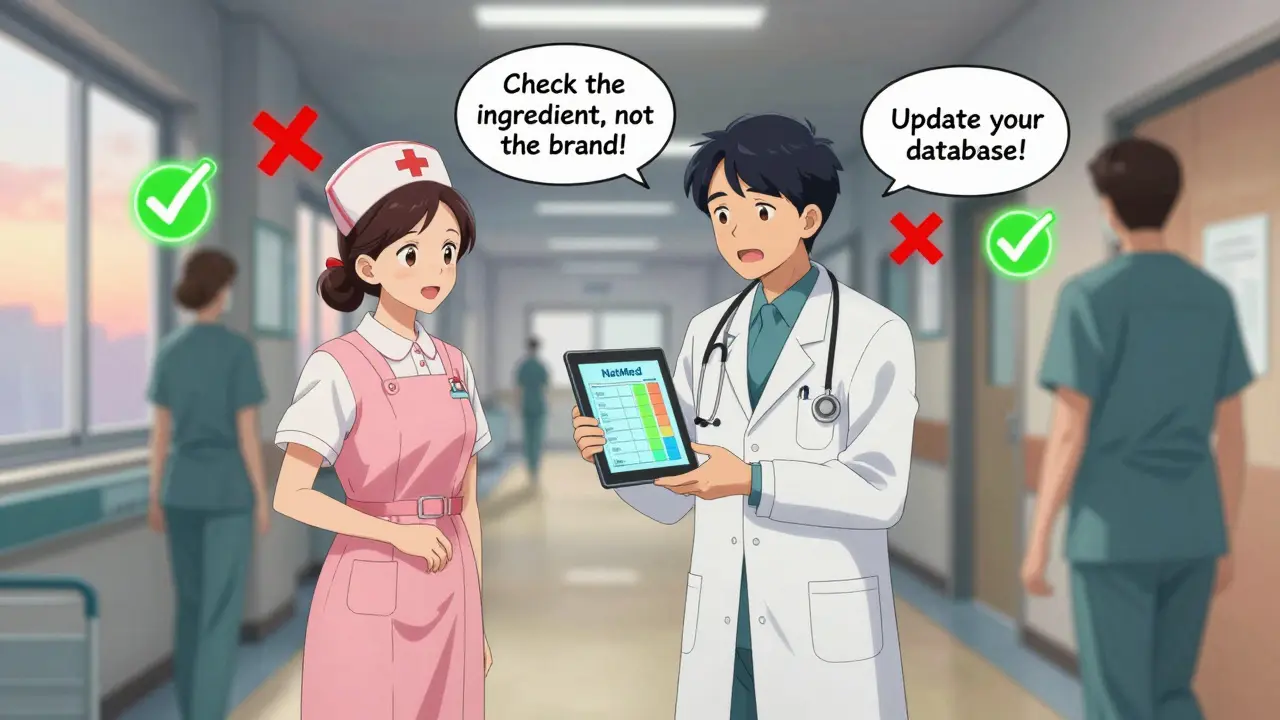
- Enter the active ingredient, not the brand. Type “silymarin” instead of “Milk Thistle Supreme.” Databases recognize ingredients, not marketing names. If you can’t find the brand, search by the ingredient. NatMed’s ingredient mapping works even if the product name isn’t in the system.
- Check all current medications. Don’t just look at the big ones. Include over-the-counter drugs, eye drops, patches, and even topical creams. A patient on a beta-blocker and a magnesium supplement might not realize the magnesium could reduce the drug’s absorption.
- Read the severity rating and management advice. NatMed doesn’t just say “possible interaction.” It tells you: “Monitor for increased bleeding risk,” or “Separate administration by 2 hours.” Some databases just warn. NatMed tells you what to do.
- Verify with the FDA’s database if needed. If the supplement has unlisted ingredients (which happens in 68% of cases, per FDA 2023 data), cross-check with the FDA’s Adverse Event Reporting System or the National Library of Medicine’s LiverTox database for liver-related risks.
Common Pitfalls and How to Avoid Them
Even experienced providers make mistakes. Here are the top three:- Assuming “natural” means safe. Just because something is sold in a health food store doesn’t mean it’s harmless. Kava kava can cause liver damage. Black cohosh can interact with hormone therapies.
- Missing hidden ingredients. Many “energy boosters” or “weight loss formulas” contain undeclared stimulants like synephrine or caffeine. Always check the label for “proprietary blend” and look up each component.
- Not updating your database. NatMed releases updates monthly. FDB updates quarterly. If you’re using an old version, you’re missing new data. In April 2024, NatMed added AI-powered name recognition that reduced false negatives by 37%. If your hospital hasn’t updated since 2023, you’re operating with outdated info.
What to Do When the Database Doesn’t Have the Answer
Sometimes, you’ll search for a supplement and get no results. That doesn’t mean it’s safe. It means the data isn’t there yet. In those cases:- Look up the active ingredient’s pharmacokinetics. Does it affect CYP3A4, CYP2D6, or P-glycoprotein? Those are the big enzymes involved in 62% of clinically significant interactions.
- Search PubMed for “[ingredient] + [drug] + interaction.” Even if it’s a case report, it’s better than nothing.
- Use clinical judgment. If the supplement is known to affect liver enzymes and the drug has a narrow therapeutic index (like warfarin, digoxin, or lithium), err on the side of caution.
- Document your reasoning. If you decide to continue the supplement, note why-and tell the patient to report any new symptoms.
What’s Changing in 2025?
The field is evolving fast. In 2024, the NIH allocated $8.2 million to expand LiverTox to include supplement-induced liver injury. FDB is rolling out automatic alerts in Epic EHR systems by Q3 2024. The FDA is piloting blockchain verification for supplement ingredients-with 42 manufacturers already participating. The American Medical Association passed Resolution 305 in 2022, pushing for routine supplement screening in all chronic care patients. Medicare and Medicaid are now penalizing hospitals for preventable adverse drug events. That means your hospital is more likely to require you to check supplements before prescribing.Final Tip: Make It Routine
Don’t wait for a crisis. Build supplement interaction checking into your standard workflow. Add it to your intake forms. Train your staff. Use standardized tools like the 10-item Supplement History Interview. The goal isn’t to scare patients away from supplements-it’s to help them use them safely. If you’re a clinician, your job isn’t just to prescribe. It’s to protect. And in 2025, that means knowing how to use these databases like a pro.Can I use free online tools to check supplement interactions?
Free tools like WebMD or Drugs.com offer basic interaction checks, but they’re not reliable for supplements. They often miss ingredient-specific data, don’t differentiate between brand formulations, and lack severity ratings. For clinical decisions, stick to evidence-based databases like NatMed or DrugBank. Free tools might be okay for personal curiosity, but not for patient care.
What if my patient won’t tell me what supplements they’re taking?
Use a non-judgmental approach. Say, “Many people take supplements without realizing they might interact with their meds. I’m asking because I want to make sure everything you’re taking is safe together.” Show them a list of common supplements (ginkgo, St. John’s wort, fish oil, etc.) and ask if they use any. Most will open up when they feel you’re helping, not judging.
Do I need to check supplements even if the patient is healthy?
Yes. Healthy people take supplements too-and many are on OTC meds like ibuprofen, antacids, or sleep aids. A 45-year-old runner taking magnesium for cramps and a daily aspirin could be at risk for stomach bleeding. Age and health status don’t eliminate risk. Supplement interactions can happen to anyone.
How often should I recheck supplement interactions?
Recheck every time the patient’s medication list changes-whether they start a new drug, stop one, or switch brands. Also recheck every 6 months if they’re on long-term medications. New interactions are discovered regularly. What was safe last year might not be today.
Are there any supplements that are always safe with any medication?
No. Even water-soluble vitamins like vitamin C or B-complex can interfere in specific cases. High-dose vitamin C can reduce the effectiveness of certain chemotherapy drugs. B vitamins can mask B12 deficiency, which can be dangerous if someone’s on metformin. There’s no universal “safe” supplement. Always check.
This is all fake. NatMed? That’s a Pharma shill tool. The real truth is the FDA bans 90% of effective supplements because they can’t patent them. You think they want you checking interactions? No-they want you dependent on their overpriced pills. I’ve seen it firsthand: my cousin took turmeric for arthritis and got kicked off opioids. The system hates natural healing. They’re scared of what happens when people stop buying their drugs. The database is a trap. Trust your body, not corporate monographs.
Oh wow, a 12-step guide to reading a supplement label. Did you also write a manual on how to breathe? I’m sure the 45-year-old runner who takes magnesium and aspirin didn’t know he should Google ‘silymarin CYP3A4’ before breakfast. Next up: ‘How to Chew Food Properly: A Step-by-Step Guide for Adults Who Forgot They Have Teeth.’
There’s a deeper truth here: we’ve outsourced our wisdom to databases because we’ve lost trust in our own intuition. We don’t ask ‘why’ anymore-we ask ‘what does the system say?’ But the body doesn’t speak in severity ratings. It speaks in fatigue, in rashes, in insomnia. The database tells you if it’s ‘Major’ or ‘Moderate.’ It doesn’t tell you when your soul is screaming to stop. Maybe the real interaction isn’t between turmeric and warfarin… it’s between modern medicine and the human spirit.
Agreed. The real issue is the assumption that all supplements need checking. Most are harmless. The real danger is polypharmacy, not fish oil. Focus on the high-risk combos: warfarin + vitamin K, statins + grapefruit, SSRIs + St. John’s. Everything else is noise.
I’ve used NatMed at my clinic for years. It’s not perfect, but it’s the best we’ve got. I don’t trust the free tools-they’re like using Yelp to diagnose appendicitis. The step-by-step guide is spot on. The biggest mistake I see? Clinicians asking ‘Do you take supplements?’ instead of ‘What’s in that bottle on your nightstand?’ Change the question, change the answer.
USA thinks it owns medical knowledge? Ha! In India, we’ve used ashwagandha for 5,000 years without a single database. You people panic over ‘proprietary blends’ while we treat hypertension with neem leaves and laughter. Your ‘gold standard’ is just corporate colonialism wrapped in a monograph. NatMed? More like NatMed-USA. Your ‘evidence’ is just patent lawyers with Excel sheets.
As a physician trained in both Western and integrative medicine, I appreciate the thoroughness of this guide. The emphasis on precise ingredient identification over brand names is critical. Many patients don’t realize that ‘Turmeric’ from one store may contain 95% curcumin, while another may contain 5% with fillers. This level of detail saves lives. Thank you for advocating for patient safety with nuance and rigor.
Wait so if I take magnesium and my blood pressure med… and I don’t know the brand… and the database doesn’t have it… and I’m not sure if it’s CYP3A4 or CYP2D6… and I didn’t check last year… and I’m 72… and I’m scared… and I just want to sleep… and I’m tired… and I don’t have time to read all this… and I didn’t even know I was supposed to… and now I’m crying… and I think I should just stop everything… and maybe I should just die…