

Every year, thousands of people in Australia receive the wrong medicine-or the right medicine in the wrong dose-because a simple mistake slipped through at the pharmacy. These aren’t rare accidents. They happen more often than you think, and most of the time, no one notices until it’s too late. You might assume the pharmacist checks everything. They do. But they’re human. They’re busy. And sometimes, the system fails. That’s why you need your own personal safety checklist for pharmacy visits. Not because pharmacists are careless. But because your health is worth double-checking.
Why You Can’t Rely on the Pharmacist Alone
Pharmacists are trained to catch errors. They use automated systems, double-checks, and strict protocols. But here’s the truth: even the best pharmacies make mistakes. A 2022 study from the Australian Institute of Health and Welfare found that nearly 1 in 20 medication errors in community pharmacies involved the wrong drug or dose being dispensed. Most of these weren’t due to negligence. They happened because the pharmacist was interrupted, the label was misread, or two similar-looking pills got mixed up. You’re not supposed to be the one fixing their mistakes. But if you’re taking multiple medications-especially for chronic conditions like diabetes, heart disease, or high blood pressure-you’re at higher risk. And if you’re elderly, have trouble reading small print, or speak English as a second language, you’re even more vulnerable. The system isn’t designed for you to catch errors. But you can still protect yourself.Your Personal Safety Checklist: 5 Simple Steps
You don’t need a fancy app or a medical degree. Just five steps, done every single time you pick up a prescription. Write them down. Keep them on your phone. Stick them on the fridge. Use them like a habit-like buckling your seatbelt.- Confirm your name and date of birth-out loud. When the pharmacist calls your name, don’t just walk up. Wait until they say your full name and date of birth. If they say “John Smith” and you’re “John Robert Smith,” speak up. Names get mixed up. Birth dates are often typed wrong in systems. This one step stops 30% of identity-related errors.
- Compare the pill to your last bottle. Don’t just take the new bottle and go. Hold it next to your last prescription. Look at the shape, color, size, and imprint (the letters or numbers on the pill). If it looks different, ask: “Is this the same medicine I had before?” Pharmacists expect this question. They’ve seen patients catch mistakes this way. If the pill changed, it might be a generic switch. But if the dose changed-say from 10mg to 20mg-that’s something you need to know.
- Read the label out loud. Don’t just glance at it. Say the drug name, dose, and instructions out loud. “I’m taking Lisinopril 10 milligrams, once a day, by mouth.” If you’re unsure about a word, ask. “Is this for high blood pressure?” “Does this interact with my heart medication?” Most people skip this step because they assume the label is correct. But labels can be misprinted. Or the wrong one can be stuck on.
- Ask about new or changed medicines. If you’ve been given a new drug, or if your dose changed, ask: “Why am I taking this now?” “What’s it supposed to do?” “What side effects should I watch for?” Don’t accept “It’s just to help your blood pressure.” Be specific. “I’m on warfarin. Does this new pill affect that?” Pharmacists are trained to explain this. If they brush you off, it’s a red flag.
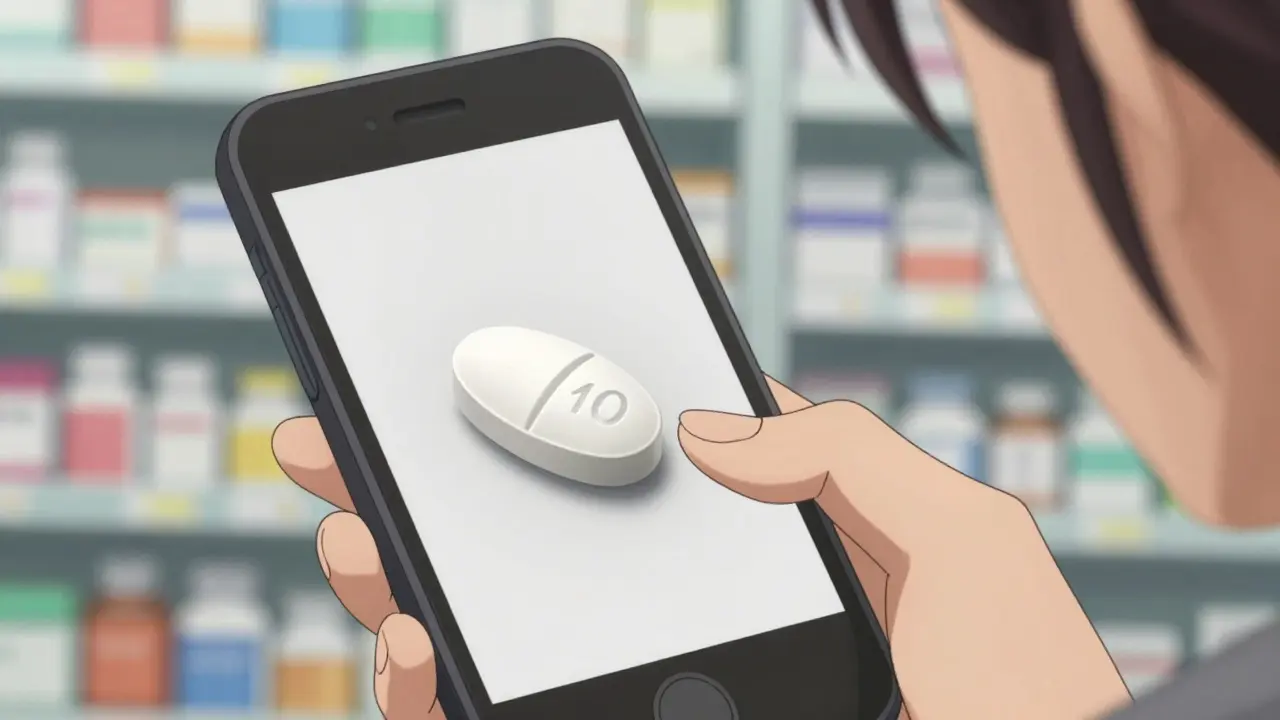
- Take a photo of the label and pill. Before you leave, snap a picture of the prescription label and the actual pill. Save it in a folder called “Medications.” You’ll need this if you go to the doctor, have an emergency, or need to call the pharmacy later. Photos beat memory. They’re your proof.
What to Do If Something Feels Off
You don’t have to be confrontational. But you do have to be firm. If something doesn’t feel right, say it clearly:- “I’ve taken this medicine for two years, and this pill looks different.”
- “My doctor prescribed 5mg, but this bottle says 10mg.”
- “I don’t remember being told about this new medicine. Can you check with my doctor?”
Common Mistakes People Make (And How to Avoid Them)
Most errors happen because people skip the basics. Here are the top three mistakes-and how to fix them:- Mistake: You pick up your prescription while distracted-on your phone, talking to someone, rushing to work. Fix: Pause. Put your phone away. Focus for 90 seconds. This isn’t a chore. It’s a life-saving habit.
- Mistake: You assume “generic” means “same.” Fix: Generics are safe, but they can look different. Always compare the pill shape and imprint. Don’t trust the name alone.
- Mistake: You don’t tell your pharmacist about over-the-counter meds or supplements. Fix: Bring a list. Include vitamins, herbal teas, painkillers, and even CBD oil. Many interactions happen because patients don’t mention these. Your pharmacist needs the full picture.
When to Bring Someone With You
If you’re over 70, have memory issues, or take five or more medications, bring a family member or friend. Even if they don’t know much about medicine, they can help you remember questions, spot differences, and take notes. Two sets of eyes are better than one. If you’re alone, use your phone’s voice recorder. Say: “Today I picked up Lisinopril 10mg. The pill is white, oval, with ‘10’ on one side.” Save it. You’ll thank yourself later.What’s Not on This Checklist (And Why)
You won’t see anything about checking expiration dates, storage temperatures, or DEA codes. That’s because those are the pharmacist’s job. You don’t need to know how to read a controlled substance log. You don’t need to check if the fridge in the pharmacy is at 2-8°C. Those systems exist to protect you. Your job isn’t to audit the pharmacy. Your job is to verify what you’re taking. This checklist isn’t about replacing professionals. It’s about adding a layer of personal safety. You’re not doing their job. You’re doing your own.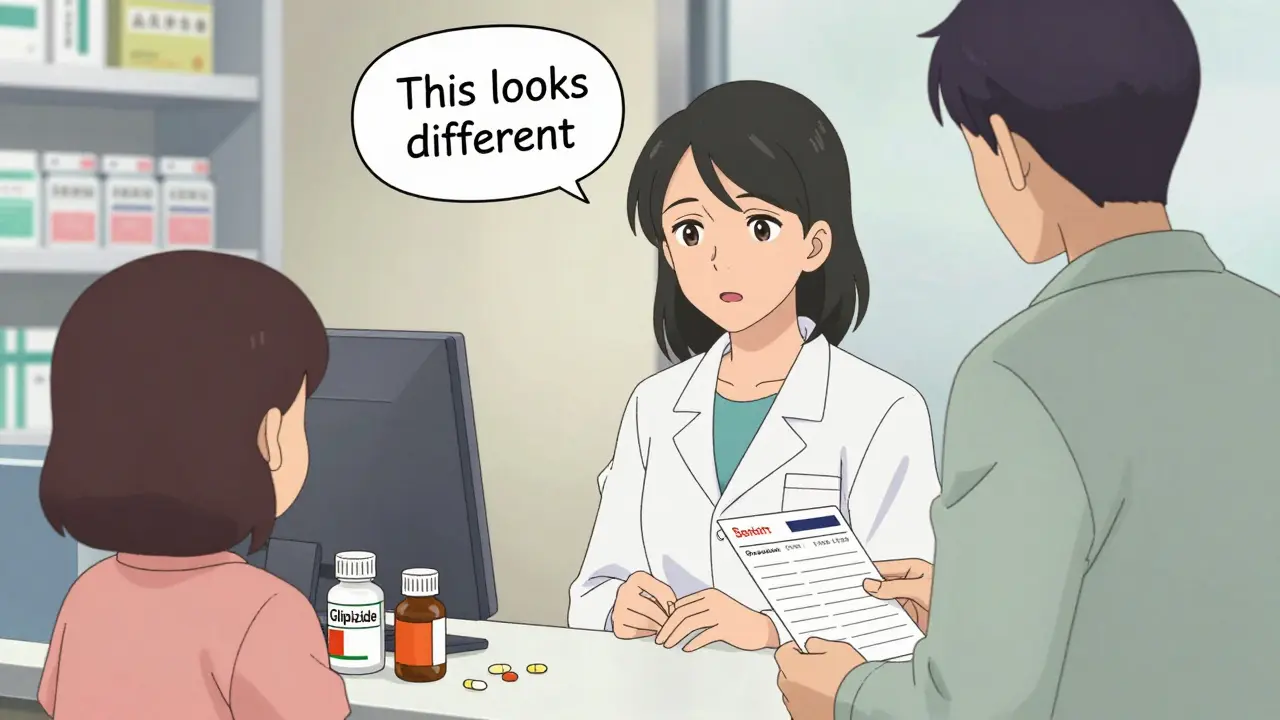
Real-Life Example: How a Photo Saved a Life
In Adelaide last year, a 78-year-old woman picked up a new prescription for “Metformin.” She didn’t think twice-until she took a photo of the pill. When she compared it to her last bottle, the shape was wrong. Her old pills were round. These were oval. She called the pharmacy. They checked. The label said Metformin. But the pills inside were actually Glipizide, a different diabetes drug. If she hadn’t taken that photo, she could have taken the wrong medicine for weeks. Glipizide can cause dangerous low blood sugar. She didn’t get sick. Because she checked.Start Today. No Excuses.
You don’t need to wait for a mistake to happen. Start now. The next time you go to the pharmacy, use this checklist. Even if you’ve never had a problem before. Even if you trust your pharmacist. You’re not being paranoid. You’re being smart. Medication errors don’t always cause immediate harm. Sometimes, they quietly damage your kidneys, your liver, or your heart over months. By then, it’s too late to trace it back. But if you catch it early-by asking a simple question, by comparing a pill, by taking a photo-you can stop it before it starts. Your health isn’t someone else’s responsibility. It’s yours. And you’re the only one who knows what your body feels like. Use that power.Do I really need a checklist if my pharmacist is careful?
Yes. Even the most careful pharmacists make mistakes. Human error, system glitches, and similar-looking drugs happen everywhere. A checklist isn’t about distrust-it’s about adding a safety net. You wouldn’t skip checking your seatbelt just because your car has airbags.
What if the pharmacy gets upset when I ask questions?
A good pharmacist will appreciate it. If they react negatively, it’s a red flag. You have the right to understand your medications. If they’re rude, ask to speak to the manager-or go to a different pharmacy. Your safety matters more than their convenience.
Can I use this checklist for over-the-counter medicines too?
Absolutely. Many people don’t realize that OTC drugs like ibuprofen, antihistamines, or sleep aids can interact with prescription meds. Always check the label, compare the pill if it’s new, and ask the pharmacist: “Is this safe with my other medicines?”
How often should I update my medication list?
Update it every time you start, stop, or change a medicine-whether it’s prescription, OTC, or supplement. Keep it in your wallet, phone, or with your medical records. Bring it to every doctor and pharmacy visit. It’s your best tool for preventing dangerous interactions.
Is there an app that can help me track my meds?
Yes, but don’t rely on them alone. Apps like Medisafe or MyTherapy can remind you when to take pills, but they can’t verify if the right medicine was dispensed. Use them alongside your checklist-not instead of it. Photos and direct verification are still your strongest defenses.
The structural asymmetry between institutional pharmacological oversight and individual epistemic agency is profoundly undertheorized in public health discourse. You're essentially retrofitting a cognitive audit protocol onto a system designed for throughput efficiency-this isn't just safety, it's epistemic resistance. The pill photograph isn't metadata; it's ontological documentation against algorithmic erasure. We're not just preventing dosing errors-we're reclaiming the phenomenology of pharmaceutical agency in a neoliberal healthcare apparatus that outsources responsibility to the patient while refusing to compensate them for the labor of vigilance.
LMAO 😂 so now we’re all pharmacists? Next they’ll make us check the pH of the IV bags and calibrate the fridge temps. My grandma takes 12 meds and she can’t even remember her own birthday. You think she’s gonna snap pics of her pills? Bro. Just let the pros do their job. The system isn’t broken-it’s just too good at not killing you. Stop making everything a dystopian thriller.
why do u gotta make it so hard? just ask if its right. why take a pic? its a pharmacy not a crime scene. also who has time for all this? i just grab my script and go. if i feel weird after i take it, i stop. done.
I’ve been a nurse for 22 years and I can’t tell you how many times I’ve seen patients catch errors that no one else noticed-because they were paying attention. I had a patient once who noticed her blood pressure med changed from blue to yellow and asked why. Turns out the pharmacy swapped her lisinopril for a different drug with a similar name. She didn’t know the difference, but she knew the pill looked wrong. That’s the whole point. You don’t need to be an expert-you just need to be awake. And yes, take the photo. Save it in a folder called ‘My Meds’ on your phone. I do it for my mom. She’s 81 and has six prescriptions. She doesn’t remember anything, but she remembers to take the photo. That’s enough. It’s not paranoia. It’s love. It’s care. It’s showing up for yourself when no one else will.
THIS IS A GOVERNMENT PLOY TO MAKE US OBSESS OVER OUR MEDS SO WE NEVER QUESTION WHY WE’RE ON THEM IN THE FIRST PLACE. THEY WANT US TO THINK THE PHARMACY IS THE PROBLEM, NOT THE FACT THAT WE’RE ALL ON 10+ DRUGS FOR ‘CONDITIONS’ THAT WERE CREATED BY BIG PHARMA. THE PILLS LOOK DIFFERENT BECAUSE THEY’RE NOT THE SAME DRUG-THEY’RE NEW FORMULATIONS DESIGNED TO KEEP YOU DEPENDENT. TAKE A PHOTO? YES. BUT ALSO ASK: WHY AM I ON THIS? WHO BENEFITS? THE SYSTEM ISN’T BROKEN-IT’S WORKING EXACTLY AS INTENDED. YOU’RE BEING MANIPULATED TO BELIEVE CHECKING PILLS IS THE SOLUTION. IT’S NOT. IT’S A DISTRACTION.
In India, we don’t need checklists because our pharmacists are trained properly and don’t rely on machines. In your country, you outsource everything to automation and then blame the pharmacist when it fails. You Americans turn every simple thing into a bureaucratic nightmare. Just trust the professional. If you’re too lazy to remember your own meds, that’s your problem. We don’t take photos of pills in Delhi. We know what we’re taking. And we don’t need a 10-step guide to take a pill. Your culture is sick. Fix your system, not your behavior.
While the intention behind this checklist is commendable, the implicit assumption that pharmacists are negligent is both inaccurate and dangerous. Pharmacists in the U.S. are held to rigorous standards under the Pharmacy Practice Act and are legally liable for dispensing errors. The real issue is underfunded staffing, not patient complacency. Rather than placing the burden of verification on patients, we should be advocating for increased funding, mandatory staffing ratios, and mandatory error-reporting transparency. This checklist, while well-meaning, is a Band-Aid on a hemorrhage.
just started doing the photo thing and honestly it’s so chill now 😊 i keep them in a folder called ‘meds’ and sometimes i look back at them and go wow i’ve been on this for 3 years huh. also my mom uses the voice recorder thing and it’s so sweet. she says ‘today i got my blood pressure pill, it’s white and round, says 10 on it’ and then she laughs. it’s not scary, it’s just… nice. like tucking yourself in at night. you’re not being paranoid, you’re being kind to yourself. 💕
Let’s be honest-this checklist is a performative gesture masquerading as safety. You’re not preventing errors; you’re performing patient autonomy for social validation. The real issue is the commodification of healthcare. The pharmaceutical-industrial complex profits from polypharmacy, and this checklist, while technically correct, absolves systemic actors of responsibility. The pill photo? It’s not a safeguard-it’s a digital receipt for your own complicity in a broken system. You’re not reclaiming agency-you’re becoming a self-regulating node in a surveillance capitalism model disguised as wellness. Stop patting yourself on the back for doing the bare minimum.
I’ve worked in community pharmacies across three states and I can tell you: the best pharmacists don’t mind these questions-they expect them. The checklist isn’t about distrust. It’s about shared responsibility. I’ve had patients bring in handwritten lists with supplements, herbal teas, even CBD oils-and that’s when I can actually do my job properly. One woman brought her entire medicine cabinet in a plastic bag. We found six interactions she didn’t know about. That’s not paranoia. That’s partnership. And yes, take the photo. I keep a binder of patient photos on file for emergencies. It’s not weird. It’s standard. You’re not overstepping-you’re helping us help you.
Enough with the checklist. This is ridiculous. You think your photo is going to stop someone from giving you the wrong pill? You’re not a detective. You’re not a pharmacist. You’re just a person who doesn’t want to be held accountable for their own ignorance. If you can’t remember what meds you’re on, maybe you shouldn’t be taking them. Stop making this about safety and start making it about personal responsibility. I’ve been on 8 prescriptions for 15 years and I’ve never once checked a pill. I don’t need a photo. I need a new doctor.