
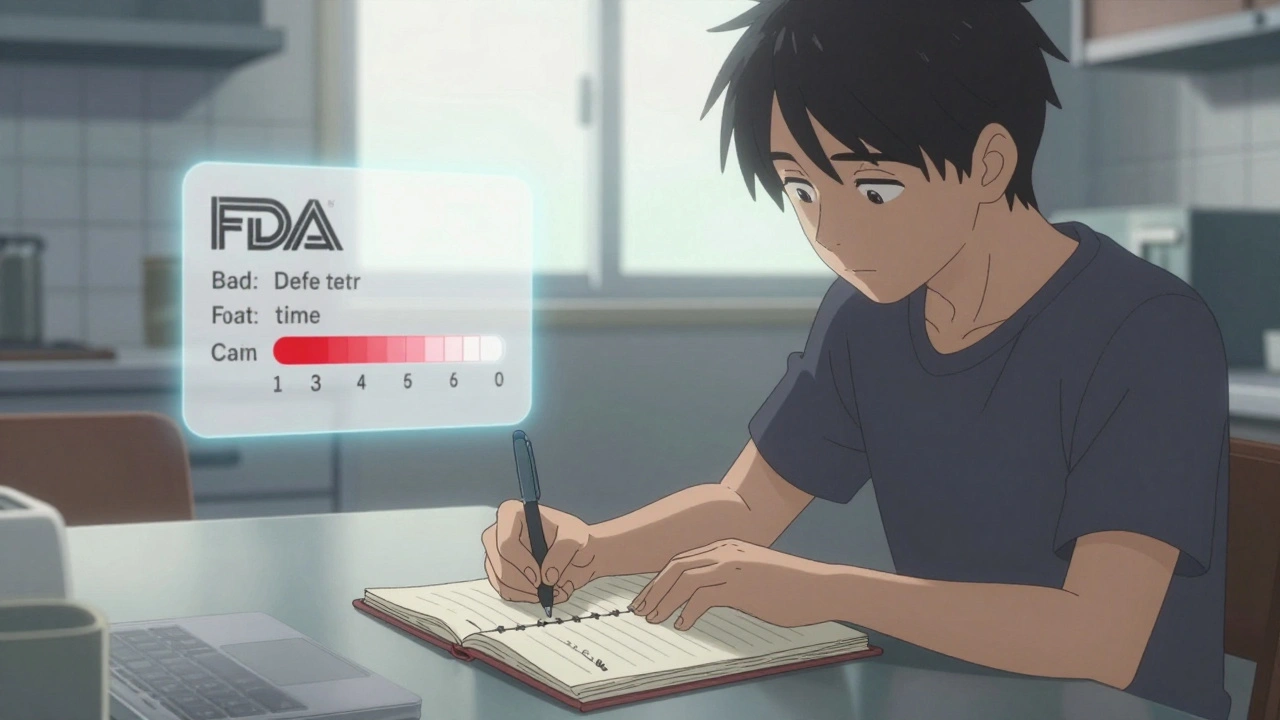
When you get a safety communication about a drug, medical device, or vaccine, it’s not just information-it’s a signal to pay attention. These alerts come from the FDA, CDC, or your doctor when something new is discovered: a rare side effect, a manufacturing flaw, or a pattern of adverse reactions. But knowing about the risk isn’t enough. Monitoring your symptoms is what turns awareness into protection.
What Counts as a Safety Communication?
A safety communication isn’t a warning label or a news headline. It’s an official notice from a trusted health authority-like the FDA issuing a notice about a recalled blood pressure medication, or the CDC alerting the public about unexpected side effects from a new flu shot. These messages tell you: something has changed, and you need to watch for specific signs. For example, in 2022, the FDA issued a safety communication about a batch of insulin pens that could deliver inconsistent doses. Patients using those pens were told to monitor for unexplained high or low blood sugar levels. That’s symptom monitoring in action.How to Start Monitoring: The Five Essentials
You don’t need a medical degree to monitor your symptoms. You just need a clear plan. Based on CDC and WHO guidelines, here’s what works:- Know what to look for. The safety communication will list specific symptoms. Don’t guess. If it says “unusual bruising,” don’t ignore a small bump-track it. If it mentions “shortness of breath during light activity,” note when it happens, how often, and how bad it feels.
- Know when to report. Some symptoms need immediate attention. Others can wait. The communication should say: “Call your doctor if you experience X within 24 hours.” If it doesn’t, assume any new or worsening symptom is worth reporting.
- Know how to record. Use a notebook, a notes app, or a printable checklist. Write down the date, time, symptom, severity (1-10 scale), and what you were doing. Example: “Dec 3, 8:15 AM, dizziness, 7/10, after taking morning pill.”
- Know who to contact. Is it your primary care doctor? Your pharmacist? The manufacturer’s hotline? Keep those numbers saved in your phone. Don’t wait until you’re panicked to look them up.
- Know why it matters. Monitoring isn’t just for you-it helps public health teams spot trends. If 50 people report the same rare reaction after a drug alert, that’s data that can lead to a recall or updated warnings.
Active vs. Passive Monitoring: Which One Fits You?
Not all monitoring is the same. There are two main types:- Active monitoring means someone checks in with you. This happens in high-risk situations-like after exposure to a contaminated medical device or a vaccine with known rare side effects. You might get daily texts asking, “Any new headaches? Fever? Skin rash?” This is common for healthcare workers or people in clinical trials.
- Passive monitoring means you check yourself and report only if something’s wrong. This is the norm for most patients after a low-risk alert. You’re not being called every day, but you’re still responsible for watching your body.
Most people will fall into passive monitoring. That doesn’t mean you’re off the hook. In fact, it’s harder-you’re the only one keeping track. A 2023 CDC study found that people who used simple daily checklists were 42% more likely to catch symptoms early than those who just relied on memory.
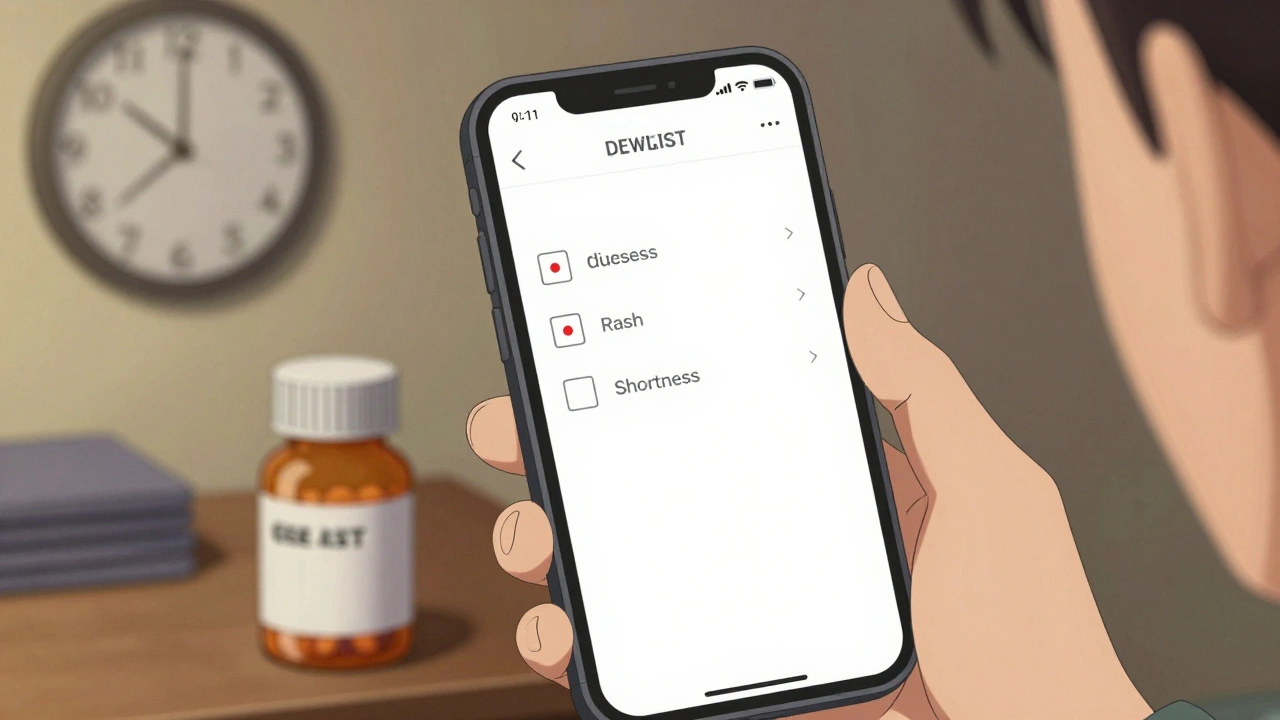
Tools That Help (And Tools That Don’t)
There are apps, websites, and paper tools for tracking symptoms. But not all are created equal.Good options:
- Printed CDC symptom checklists (free to download)
- Notes apps with date/time stamps (iPhone Notes, Google Keep)
- Simple digital trackers like Symptomate or v-safe (if they’re linked to your health provider)
Avoid:
- Apps that don’t explain what symptoms to track
- Tools that ask for personal health data without clear privacy policies
- Spreadsheets you don’t update regularly
One big mistake? People use fancy apps that look cool but don’t sync with real medical guidance. The CDC’s symptom list for drug reactions is based on years of clinical data. If your app doesn’t include those exact symptoms, it’s not helping you-it’s distracting you.
What to Do When You Notice Something
You’ve been tracking. You notice something new: a rash, nausea, confusion, or an irregular heartbeat. What now?- Don’t panic. Most alerts are for rare reactions. You’re more likely to have a normal side effect than a dangerous one.
- Check your log. Did this happen before? Did it go away? Is it getting worse?
- Call your doctor or pharmacist. Don’t wait for an appointment. Say: “I got the safety alert about [drug/device], and I’ve noticed [symptom] since [date]. Here’s what I’ve recorded.”
- Don’t stop your medication unless told to. Stopping suddenly can be dangerous. Let your provider guide you.
A 2022 study from the Veterans Health Administration found that patients who called their provider within 24 hours of noticing a symptom had a 58% lower chance of hospitalization than those who waited.
Common Mistakes (And How to Avoid Them)
People mess up monitoring in predictable ways:- “I didn’t feel sick, so I didn’t write it down.” Symptom severity isn’t the same as danger. A mild headache could be an early sign of a serious reaction.
- “I thought it was just stress.” New symptoms after a safety alert aren’t “just stress.” They’re data.
- “I forgot to check yesterday.” Don’t try to back-fill. Just start fresh today. Consistency matters more than perfection.
- “I didn’t report it because I didn’t want to bother anyone.” Your report helps others. It’s not a burden-it’s a contribution to safety.
What Happens After You Report?
Once you report a symptom, you’re not left alone. In most cases:- Your provider will review your log and decide if it’s related to the alert.
- They may order tests-blood work, an ECG, or imaging.
- If it’s confirmed as a reaction, they’ll report it to the FDA’s MedWatch system.
- You’ll get guidance: stop the drug? Switch to another? Monitor longer?
And here’s the quiet win: your report might help prevent someone else from getting hurt. In 2023, over 200,000 patient-reported symptoms led to updated safety labels on medications in the U.S. alone.
When to Stop Monitoring
Monitoring isn’t forever. Most safety communications include a timeline:- For drugs: 30 to 90 days after starting (or after the alert)
- For devices: until the issue is resolved or you stop using it
- For vaccines: 6 weeks to 3 months, depending on the reaction
If you’re unsure, ask your provider. Don’t assume it’s safe just because you haven’t had symptoms. Some reactions appear weeks later.
Final Tip: Make It Part of Your Routine
The best monitors aren’t the ones who remember everything. They’re the ones who built a habit. Put your symptom tracker next to your toothbrush. Set a daily reminder on your phone. Talk to a family member about what you’re watching for.Safety communications are meant to protect you. But they only work if you act. Monitoring your symptoms isn’t extra work-it’s your next line of defense. Do it consistently. Do it honestly. And know that your attention could be the reason someone else stays healthy.
What should I do if I miss a day of symptom tracking?
Don’t panic. Just start again the next day. Missing one day doesn’t ruin your tracking-it just means you lost one data point. Focus on consistency moving forward. If you’re worried about a symptom that might have occurred during the gap, mention it to your doctor when you report.
Can I use a fitness tracker or smartwatch to monitor symptoms?
Some smartwatches can track heart rate or sleep patterns, which might help if the safety alert mentions cardiac symptoms. But they can’t replace a symptom log. They don’t detect rashes, nausea, dizziness, or confusion. Use them as a supplement, not your main tool.
What if the safety communication doesn’t list specific symptoms?
If the alert is vague, contact your doctor or pharmacist. Ask: “What are the most common reactions I should watch for?” You can also check the FDA’s MedWatch site or the CDC’s safety alerts page for more details. Don’t guess-get clarification.
Are there any symptoms I should ignore?
No. Even if a symptom seems minor-like a mild headache or a small bruise-if it’s new and happened after the safety alert, write it down. Many serious reactions start small. Your job isn’t to diagnose, it’s to observe and report.
How long should I keep my symptom log?
Keep it for at least one year after the safety communication was issued. In case you need to refer back later, or if a new issue arises. If you’re on long-term medication or use a medical device, keep it indefinitely. Documentation can be critical if you need medical help years later.
Love this guide. I’ve been tracking my blood pressure meds after that recall last year, and writing down even tiny dizziness saved me from a fall. Just a notebook and a pen-no app needed. Consistency beats fancy tools every time.
Also, the part about not stopping meds unless told? Huge. I almost quit mine because I thought the headache was the drug. Turned out it was just stress. Good thing I wrote it down first.
Most people don’t even know what a safety communication is. They scroll past it like it’s an ad. You think your ‘mild headache’ is just stress? No. It’s your body screaming. And if you don’t log it, you’re not just risking yourself-you’re endangering public health. Wake up.
Don’t panic. Log it. Call your doctor. Stop overthinking. Just do it.
Oh my god, this is *exactly* the kind of actionable, clinically-grounded guidance we need in a world where wellness influencers are more trusted than the FDA. I’ve been using Symptomate since the insulin pen alert-it syncs with my EHR, tracks temporal clusters, and even auto-generates a PDF for my PCP. The CDC checklists? Cute. But if your tool doesn’t have AI-powered anomaly detection, you’re just collecting noise.
Also, why are we still using paper? This isn’t 2012. We’ve got wearable biosensors that can detect subclinical inflammation patterns. If you’re not integrating real-time vitals with symptom logs, you’re doing passive monitoring wrong.
I used to ignore small stuff till my aunt got hospitalized for something she thought was ‘just tiredness.’ Now I write everything down-even if it feels dumb. Like, ‘felt weird after pill at 2pm’-sounds silly, but when your doctor sees it’s every time you take the med? Boom. Pattern.
Also, the ‘don’t stop meds’ thing? So important. My cousin stopped her blood thinner because she read a Reddit post. She had a clot. Don’t be that person. Your log is your voice when you can’t speak.
So let me get this straight-you’re telling me I have to write down every time I feel a little off… just in case some bureaucrat in D.C. needs it? Wow. What a waste of time. But hey, if it helps someone else… I guess I’ll keep my little notebook next to my coffee mug. Just don’t ask me to use an app. I still use a flip phone.
One thing the guide doesn’t mention: the psychological burden of constant monitoring. It’s not just about logging symptoms-it’s about living with hypervigilance. I’ve had patients cry because they’re afraid to take their medication now, even when the risk is negligible. We need to balance vigilance with peace of mind.
Also, the 42% stat from the CDC study? That’s from a small sample. Replication studies are mixed. Don’t treat every number as gospel. Track, yes-but don’t let fear replace clinical judgment.
It is imperative to underscore that the utilization of non-validated digital symptom-tracking platforms constitutes a non-negligible risk to data integrity and patient confidentiality. The absence of HIPAA-compliant encryption, coupled with opaque data-sharing protocols, renders many consumer-facing applications ethically untenable as primary monitoring tools. One must defer exclusively to institutional- or provider-validated systems, lest one inadvertently compromise the integrity of pharmacovigilance data streams.
Thank you for this comprehensive, well-structured, and deeply necessary resource. As a healthcare worker in rural India, I see patients who receive safety alerts via WhatsApp forwards or YouTube videos-often misinterpreted or entirely incorrect. This guide should be translated into Hindi, Tamil, and Bengali, and distributed through primary health centers.
Also, I’ve started giving printed CDC checklists to every patient on new meds. One elderly man, who couldn’t use a phone, wrote down his symptoms in pencil on a grocery receipt-and brought it to his appointment. He caught a dangerous interaction early. That’s the power of simple tools, used with care.
And yes, if you miss a day? Start again. Don’t beat yourself up. Progress, not perfection. We’re all human. But your attention? That’s sacred. Don’t waste it.