
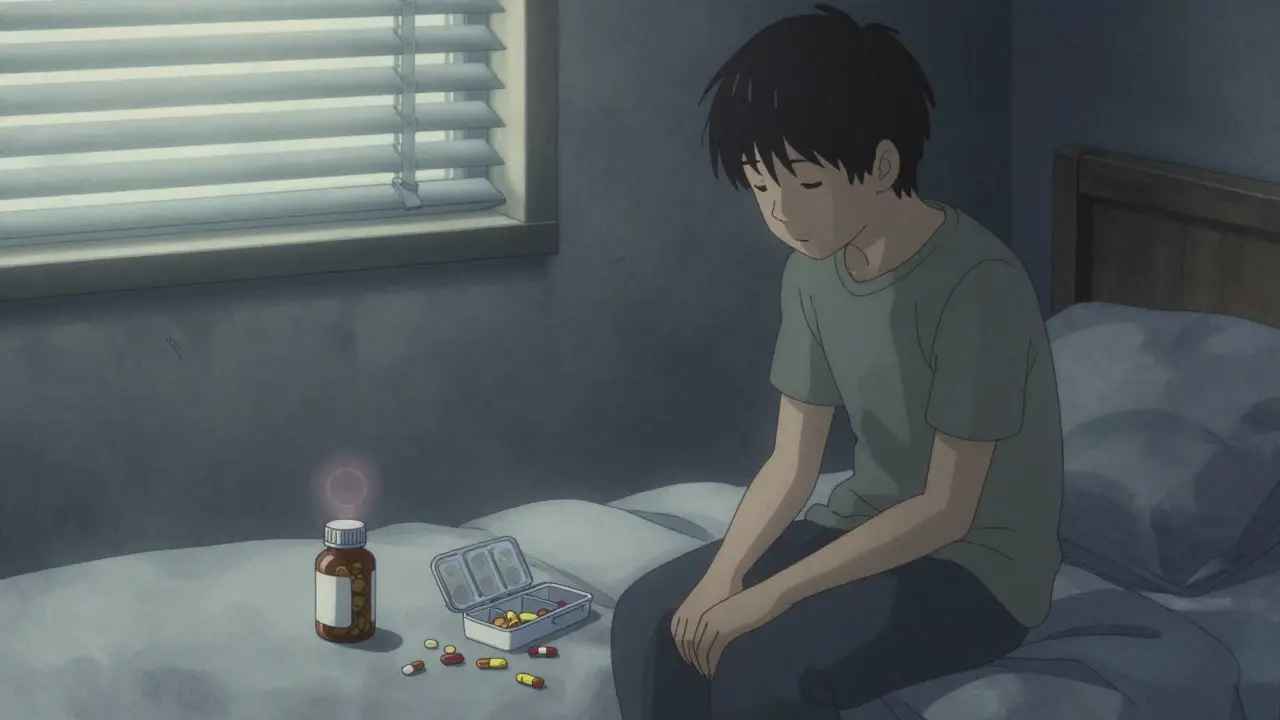
Depression doesn’t just make you feel low-it makes it harder to take your pills
If you’re managing a chronic illness like heart disease, diabetes, or high blood pressure, taking your meds on time isn’t optional. But what if you’re also battling depression? Suddenly, remembering to take your pills, opening pill bottles, or even believing the medicine will help feels impossible. This isn’t laziness or forgetfulness. It’s depression rewiring your brain’s ability to care for yourself.
Studies show people with depression are up to 2.3 times more likely to miss doses of critical medications like ACE inhibitors, beta-blockers, and diabetes drugs. In one study of heart failure patients, every point increase on a depression scale lowered the chance of taking meds correctly by 4% to 6%. That might sound small, but over weeks and months, it adds up to hospital visits, worsening symptoms, and even early death.
How depression quietly sabotages your medication routine
Depression doesn’t just make you sad. It attacks the parts of your brain responsible for planning, memory, and motivation. You might forget to take your pills-not because you’re careless, but because your brain can’t hold the task in mind. You might skip doses because the thought of opening a pillbox feels like climbing a mountain. Or you might stop taking your meds because you believe they won’t help anyway.
Research from Cambridge University found that 39.8% of patients with depression were classified as non-adherent-meaning they missed more than 20% of their doses. Another 54% were only moderately adherent. Only 6% took every pill as prescribed. The numbers don’t lie: depression and poor adherence go hand in hand.
And it’s not just about forgetting. Depression makes side effects feel worse. Someone on antidepressants might feel drowsy or have a dry mouth-side effects that are normal and temporary. But if you’re depressed, those same symptoms feel unbearable. You think, “This medicine is making me feel worse,” and you quit. A study in Spain found non-adherent patients reported significantly higher severity of side effects-even when doctors didn’t see any clinical reason for it.
Signs your depression is affecting your medication use
Here’s what to watch for:
- You’ve missed more than two doses in a week, even if you usually take your meds fine.
- You say things like, “What’s the point?” or “It won’t make a difference anyway.”
- You avoid picking up refills or say you’ll “start again next week.”
- You’ve stopped taking one or more meds without telling your doctor.
- You feel overwhelmed just thinking about your pill schedule.
- Your mood gets worse after starting a new medication-this doesn’t mean the drug is bad, it might mean depression is making side effects feel worse.
These aren’t just “bad habits.” They’re red flags. A 2023 study showed that patients who missed more than 20% of their doses in the first two weeks of treatment were nearly five times more likely to have their treatment fail entirely. That’s not coincidence. That’s depression in action.
The tools doctors use to spot the problem
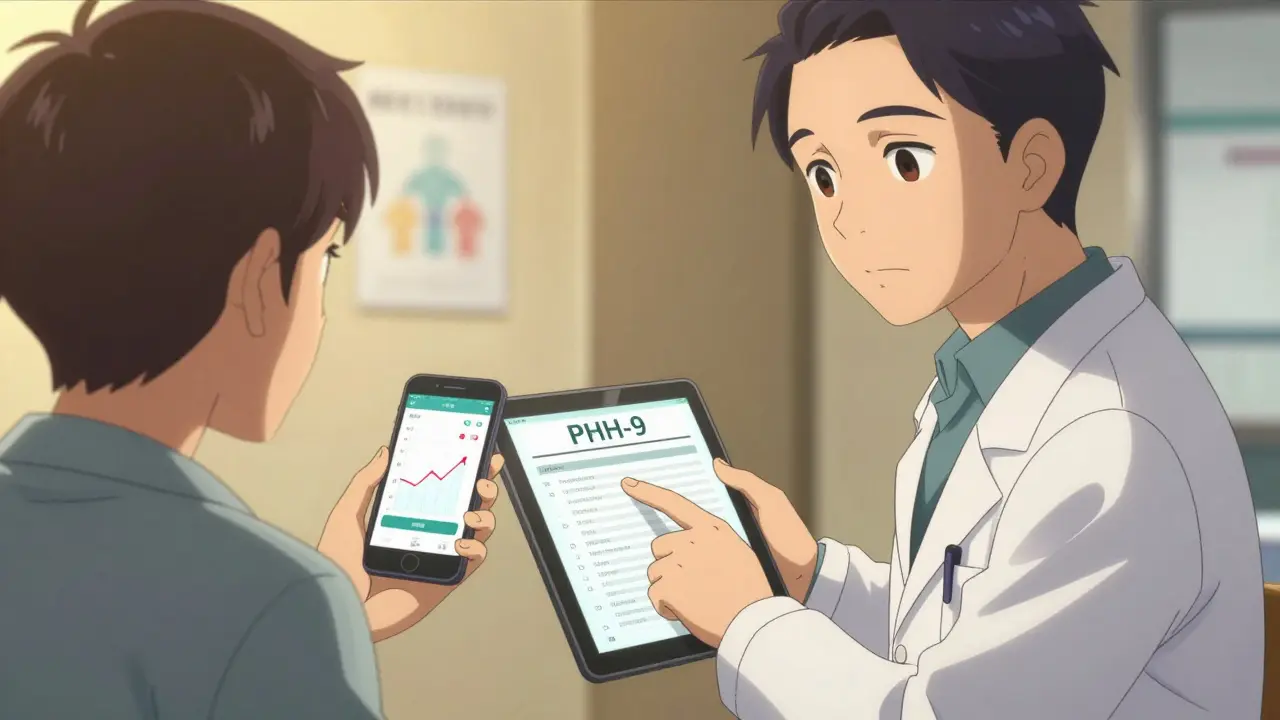
Doctors aren’t mind readers. But they have tools to find out if depression is getting in the way of your meds.
The PHQ-9 is a simple 9-question screen for depression. If your score is 10 or higher, you likely have moderate to severe depression-and that’s when adherence problems spike. For every 5-point increase on the PHQ-9, your chance of missing meds drops by 23%.
The MMAS-8 measures adherence directly. It asks eight questions like, “Do you ever skip doses?” or “Do you ever feel you don’t need your meds?” A score below 6 means you’re non-adherent. Below 8 means you’re only partly sticking to your plan. High adherence? Only a score of 8.
When you combine both tools-PHQ-9 for depression and MMAS-8 for adherence-doctors can predict adherence problems 37% more accurately than with either test alone. That’s why clinics treating heart disease, diabetes, and depression now use both.
Side effects aren’t the enemy-depression is
Many people stop taking antidepressants because of side effects: weight gain, fatigue, dry mouth, trouble sleeping. But here’s the catch: people with depression report side effects as more intense-even when the actual physical reaction is the same as someone without depression.
In Turkey, 83% of people taking SSRIs like sertraline or escitalopram stopped because of side effects. In Ethiopia, 57% stopped taking older antidepressants like amitriptyline for the same reasons. But when patients were asked to track their mood and side effects daily, they started to see a pattern: their low mood came before the side effects felt unbearable. The meds weren’t making them worse-their depression was amplifying the discomfort.
This is called “side effect mapping.” It’s a simple trick: write down your mood and your side effects each day. After a week, you’ll often see that the worst side effects happen on your worst mood days. That tells you: it’s not the drug. It’s the depression.
What you can do right now
You don’t need to fix everything at once. Start here:
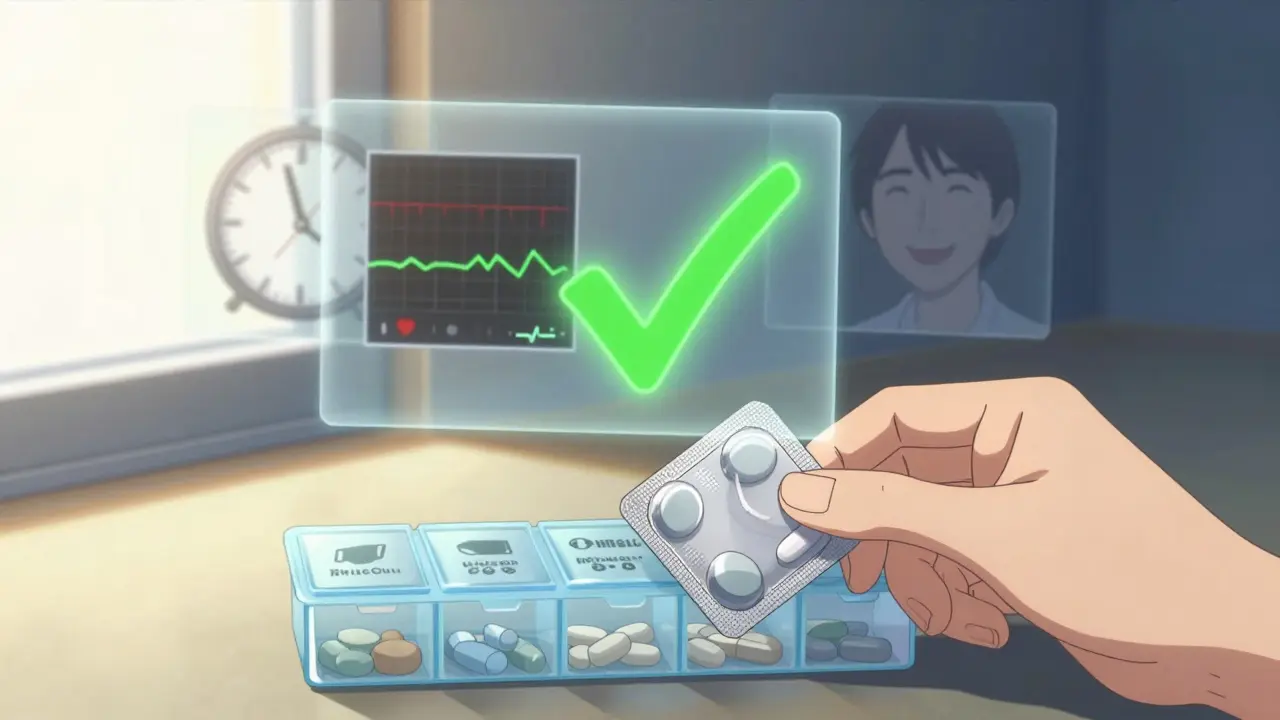
- Use a pill organizer with days of the week. Set a daily alarm on your phone labeled “Take meds.”
- Ask your pharmacist to put your meds in blister packs-they’re easier to open and harder to skip.
- Use a free app like Medisafe or MyTherapy to log doses. Many track your mood too.
- Tell your doctor if you’ve missed more than two doses in a week. Don’t wait for your next appointment.
- If you’re on antidepressants and feel worse, don’t quit. Call your doctor. There are other options.
One study called MAPDep showed that when patients and doctors worked together to track adherence, medication use went up by 28.5% in a year. That’s not magic. That’s teamwork.
Why this matters more than you think
Missing your meds because of depression isn’t a personal failure. It’s a medical issue. And it’s common. The World Health Organization calls it a global priority. By 2025, they’re funding new tools to help clinics in low-income areas spot and fix this problem.
But you don’t have to wait for new tech. You have power right now. If you’re struggling to take your meds, it’s not because you’re weak. It’s because depression is lying to you. It’s telling you that you’re not worth the effort. But you are. And your health depends on you fighting back-with the right tools, the right support, and the right help.
How do I know if my depression is making me skip my meds?
If you’ve missed more than two doses in a week, feel hopeless about your treatment, or say things like “Why bother?” even when you know the meds help, depression is likely playing a role. Use the PHQ-9 and MMAS-8 tools-your doctor can give them to you. A score of 10+ on PHQ-9 and under 8 on MMAS-8 means you need support.
Can antidepressants themselves cause non-adherence?
Not directly. But side effects like fatigue, weight gain, or dry mouth can feel unbearable if you’re depressed. That’s not the drug’s fault-it’s depression amplifying discomfort. Tracking your mood and side effects daily helps you tell the difference. Many people feel better after a few weeks once their depression lifts.
What if I stop taking my meds because I feel worse?
Don’t stop without talking to your doctor. Feeling worse early on is common with antidepressants-it doesn’t mean they’re not working. It often means your brain is adjusting. Stopping suddenly can make depression worse and increase the risk of relapse. Your doctor can adjust your dose or switch you to a different medication.
Are there apps that help track both mood and meds?
Yes. Apps like Medisafe, MyTherapy, and Moodfit let you log when you take your meds and how you’re feeling. Some even send reminders and show trends over time. One 2024 study found these apps predicted missed doses 72 hours in advance with 82% accuracy-helping you get support before you fall off track.
Can my doctor help me if I’m not taking my meds?
Absolutely. Doctors now know depression is a top reason for non-adherence. They can simplify your regimen, prescribe blister packs, connect you with a pharmacist, or refer you to a mental health specialist. Many clinics now screen for depression at every visit. You’re not alone-and you don’t have to figure this out by yourself.
What’s next? You’re not alone in this
Depression and medication adherence are linked-not because you’re failing, but because your brain is fighting two battles at once. The good news? We have tools now that work. Pill organizers, mood trackers, simple screens, and open conversations with your doctor can turn things around.
If you’re reading this and thinking, “I’ve been skipping my meds,” take a breath. You’re not broken. You’re human. And there’s a path forward. Start small. Talk to someone. Use one app. Set one alarm. Your health is worth it.
Let’s be real-depression doesn’t ‘make you forget’ your meds. It weaponizes your neurochemistry to convince you that survival is optional. You’re not lazy. You’re neurologically hijacked. The brain’s prefrontal cortex? Shut down. Motivation circuits? Offline. The fact that we still frame this as a ‘habit issue’ is medical malpractice disguised as wellness culture. You don’t need a pill organizer-you need a damn psychiatrist who understands that adherence isn’t about discipline, it’s about neuroplasticity and damn it, access to care.
I’ve been on beta-blockers for hypertension and sertraline for anxiety for three years. I didn’t realize how much my depression was making me feel like every pill was a betrayal-like taking them meant I was agreeing to keep living when I didn’t want to. The PHQ-9 screen saved me. Scored a 14. My doctor didn’t judge. Just handed me blister packs and said, ‘We’ll fix this together.’ I’m at 98% adherence now. It’s not magic. It’s just someone seeing you.
ok so like... i just stopped my meds for 3 weeks bc i felt like a zombie?? and then my bp went to 180/110?? and my dr was like ‘why’d you stop?’ and i was like ‘because i felt like death and also my tongue was dry??’ and she said ‘thats the depression talking’... and i was like... wait what?? is depression the villain now?? like... i just wanted to feel human again??
Girl. I’ve been there. You think you’re weak because you can’t open a pill bottle? Nah. You’re a warrior who’s been fighting an invisible war in your skull. Depression is a lying, manipulative, gaslighting sociopath that wears your own thoughts like a costume. I started using MyTherapy-logged every dose, every mood swing, every ‘I can’t today.’ After 4 weeks, I saw a pattern: my worst days weren’t the ones with side effects-they were the ones where I told myself ‘it doesn’t matter.’ That’s the lie. And you? You’re not the lie. You’re the truth fighting back. Keep going. You’re doing better than you think.
Canada’s got better access to mental health care than the U.S., but honestly? This whole ‘depression is making you skip meds’ narrative is just another way to medicalize weakness. People in my dad’s generation just took their pills because they were told to. No apps. No mood trackers. No PHQ-9. Just grit. Maybe we need less therapy and more ‘suck it up.’
PHQ-9 ≥10 + MMAS-8 <8 = clinical red flag. Not a suggestion. Not a ‘maybe.’ A diagnostic criterion. If your doctor isn’t screening for both, ask for it. Or find one who does. Your life depends on it.
I appreciate the science here, but I think the tone could be less clinical and more compassionate. Many people reading this are already drowning in guilt. Telling them they’re ‘neurologically hijacked’ might help some, but for others, it feels like another diagnosis to carry. Maybe we can say: ‘This isn’t your fault. You’re not broken. Help is here.’
I’m sorry, but if you can’t even take your pills, how are you supposed to be a responsible adult? This isn’t ‘depression,’ this is just poor life choices wrapped in a medical blanket. You’re not a victim-you’re a dropout. Get your act together.
Let me tell you something from India-where we don’t have access to apps or blister packs or even consistent electricity. I’ve seen grandmas with diabetes walk 5 kilometers every morning to get their insulin, even when they’re crying from depression. They don’t have PHQ-9 screens. They have love. They have family. They have neighbors who remind them. And they still take the pills. Because they know: if they stop, their child won’t have a mother. If you have an app, a phone, a doctor, a pill organizer-you have more than most. Don’t waste it. You’re not just fighting for yourself. You’re fighting for everyone who loves you, even if they don’t say it out loud. Start small. One pill. One day. One breath. You’re worth it. I believe in you. 💪❤️
Yo I was skipping my meds for months. Felt like trash. Then I started using Medisafe and set an alarm that says ‘YOU ARE STILL HERE.’ It’s dumb. It’s cheesy. But it works. Now I don’t skip. I’m alive. That’s the win. Don’t overthink it. Just hit the button. Then do it again tomorrow.
Depression is the silent thief. It doesn’t steal your money. It steals your will. And the saddest part? You don’t even notice it’s gone until you’re standing in front of your pillbox, staring at it like it’s a foreign object. I used to think I was lazy. Turns out I was grieving the version of myself that still believed in tomorrow. Took me two years to say that out loud. Now I use MyTherapy. I don’t track every pill-I track the days I felt like I mattered. And on those days? I took the meds. Because I remembered: I’m still here. 🌱