
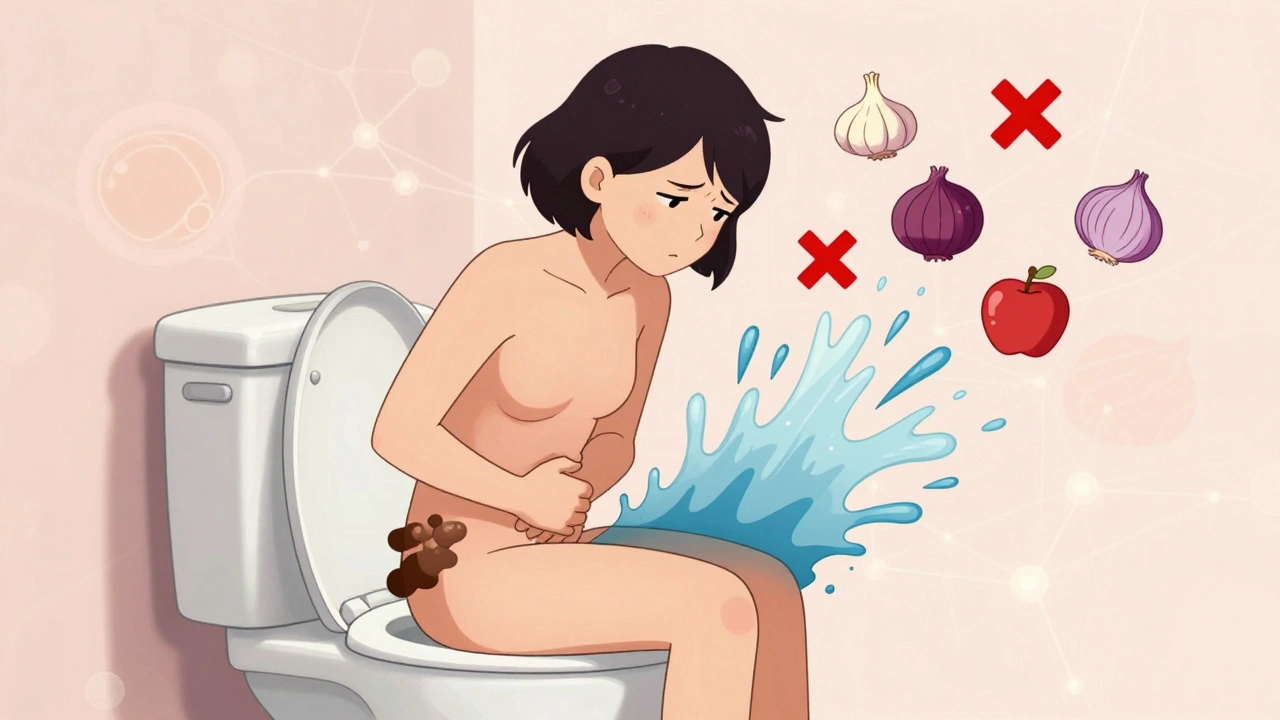
Living with IBS-Mixed means your gut doesn’t know what it wants. One day you’re stuck on the toilet for hours, straining with hard stools. The next, you’re racing to the bathroom, barely making it in time. This back-and-forth between constipation and diarrhea isn’t just inconvenient-it’s exhausting. And it’s more common than you think. About 1 in 5 people with IBS experience this mixed pattern, according to the American College of Gastroenterology. But most doctors treat it like two separate problems, not one complex condition. That’s why so many people end up cycling through medications that help one symptom but make the other worse.
What Exactly Is IBS-Mixed?
IBS-Mixed, or IBS-M, is diagnosed when you have abdominal pain at least once a week for three months, along with changes in bowel habits that include both constipation (Bristol Stool Scale types 1-2) and diarrhea (types 6-7) in at least 25% of your bowel movements. It’s not Crohn’s disease. It’s not ulcerative colitis. There’s no inflammation, no bleeding, no tumors. Your colon looks normal on a scope. But your gut is hypersensitive, moving too fast or too slow at random, and your gut bacteria are out of balance.
The Rome IV criteria, updated in 2016, officially recognized IBS-M as its own subtype. Before that, many people were misdiagnosed or told it was "just stress." Now we know it’s a real, measurable disorder rooted in brain-gut communication, motility issues, and microbial imbalance. The key? It’s not about curing it-it’s about managing the swings so they don’t control your life.
Why Standard Treatments Often Fail
Most medications are built for one type of IBS. Linaclotide helps constipation but can trigger diarrhea. Loperamide (Imodium) slows things down but can make you feel like you’re blocked up. A 2018 study showed that drugs like linaclotide helped only 22% of IBS-M patients, compared to 48% of IBS-C patients. That’s because treating constipation and diarrhea at the same time is like trying to drive with one foot on the gas and one on the brake.
Even over-the-counter solutions backfire. People take fiber supplements hoping to regulate things, but if they’re using insoluble fiber like wheat bran, it can spike gas and cramping. Others reach for magnesium citrate for constipation, only to wake up with explosive diarrhea a few hours later. The problem isn’t the meds-it’s the approach. You need a system that adapts, not a one-size-fits-all pill.
The Low FODMAP Diet: Your Best Shot
If you’ve tried everything and nothing sticks, the low FODMAP diet is your strongest tool. It’s not a weight-loss plan. It’s a scientific elimination protocol designed to identify which fermentable carbs trigger your gut. FODMAPs-fermentable oligosaccharides, disaccharides, monosaccharides, and polyols-are found in common foods like onions, garlic, apples, milk, wheat, and artificial sweeteners. They draw water into the gut and feed bacteria that produce gas, worsening both constipation and diarrhea.
A 2021 study in Gastroenterology tracked 215 IBS patients and found that 50-60% of those with IBS-M saw major improvement on the low FODMAP diet. That’s lower than the 70-75% seen in IBS-D, but still the highest success rate among dietary approaches. The trick? Don’t go low FODMAP forever. Do a strict 2-6 week elimination, then slowly reintroduce foods one at a time. Keep a food-symptom log. Note what you ate, when you ate it, and how your gut felt 2-24 hours later. Apps like Cara Care or Monash University’s FODMAP app make tracking easier than paper journals.
People on Reddit’s r/IBS community report the best results after 3-4 months. One user, u/SarahIBS2022, cut her symptom days from 25 to 8 per month after combining low FODMAP with daily peppermint oil capsules. The key? Consistency during elimination. Skipping a garlic clove or drinking a latte with milk can reset your progress.

Medications That Actually Work for IBS-M
There’s no FDA-approved drug made specifically for IBS-M. But some work better than others when used strategically.
- Antispasmodics like dicyclomine (10-20mg as needed) help with cramping and spasms. They don’t fix constipation or diarrhea, but they calm the gut’s overreaction-making other treatments more effective.
- Antidepressants, especially low-dose tricyclics like amitriptyline (10-25mg at night), are surprisingly effective. They don’t treat depression in IBS-M patients. They block pain signals from the gut to the brain and slow down gut motility. Studies show a 55-60% response rate in IBS-M, higher than in other subtypes.
- Peppermint oil capsules (enteric-coated, like IBgard) reduce bloating and pain in 68% of users. Take 1-2 capsules 20 minutes before meals. Avoid if you have heartburn.
- For constipation episodes: Use polyethylene glycol (Miralax, 17g daily) or magnesium citrate (150-300mg). Don’t use stimulant laxatives like senna-they can make diarrhea worse later.
- For diarrhea episodes: Loperamide (Imodium, 2-4mg as needed) is safe short-term. Don’t take it daily. It’s a band-aid, not a cure.
Many people find success by keeping both a laxative and an antidiarrheal on hand, switching based on symptoms. The goal isn’t to have perfect stools every day-it’s to reduce the extremes.
Stress Is the Hidden Trigger
More than half of IBS-M patients say stress makes their symptoms worse. That’s not coincidence. Your gut has its own nervous system-the enteric nervous system-and it’s wired directly to your brain. When you’re anxious, your gut slows down or speeds up unpredictably.
Cognitive Behavioral Therapy (CBT) isn’t just for mental health. A 2021 American Gastroenterological Association guideline gave CBT a strong recommendation for IBS-M, citing 12 studies showing a 40-50% drop in symptom severity. Online CBT programs like the one from Monash University or the IBS Network UK can be done at home. Even 8-12 weekly sessions make a difference.
Other stress-reducing tools help too: daily breathing exercises (try 4-7-8 breathing), yoga, or even 20 minutes of walking in nature. You don’t need to meditate for an hour. Just interrupt the stress cycle before it hits your gut.
What Doesn’t Work (And Why)
Many people waste months on things that sound logical but don’t help IBS-M:
- Eliminating gluten without celiac disease: Gluten isn’t the culprit unless you have celiac. Most people react to FODMAPs in wheat, not gluten.
- Drinking more water: It helps constipation, but won’t fix diarrhea or pain. You still need to address triggers.
- Probiotics without strain specificity: Not all probiotics are equal. Bifidobacterium infantis 35624 (Align) has some evidence for IBS-M. Others may make bloating worse.
- Overdoing fiber: Insoluble fiber (bran, whole grains) can inflame the gut. Stick to soluble fiber like psyllium husk (5g daily) if you need it.
Also, avoid trying to fix everything at once. Pick one thing-either diet, stress, or one medication-and stick with it for 4-6 weeks before adding another. Too many changes at once make it impossible to know what’s working.

Tracking Your Progress
You can’t manage what you don’t measure. Keep a daily log for at least 4 weeks. Track:
- Bowel movement (Bristol Stool Scale 1-7)
- Abdominal pain (0-10 scale)
- Food and drinks
- Stress level (low, medium, high)
- Medications taken
Use an app. Paper journals get lost. Apps like Cara Care, Bowelle, or even a simple Google Sheet with timestamps give you patterns you’d never see otherwise. A 2022 study found that people using apps improved symptoms 35% more than those using paper.
After 4 weeks, look for patterns. Do symptoms spike after coffee? After a bad night’s sleep? After eating out? That’s your roadmap.
What’s Coming Next
Research is moving fast. In 2023, a new drug called ibodutant showed 45% symptom improvement in IBS-M patients-nearly double the placebo rate. It targets nerve receptors in the gut and could be approved by 2026. Meanwhile, companies like Viome use AI to analyze your gut microbiome and give personalized food lists. Early results show 58% symptom reduction.
But the real breakthrough isn’t a pill. It’s understanding that IBS-M isn’t a flaw in your body-it’s a signal. Your gut is trying to tell you something. The goal isn’t to eliminate every symptom. It’s to build a life where your gut doesn’t run the show.
Final Takeaway
IBS-Mixed is hard. It’s messy. It’s unpredictable. But it’s manageable. The most successful people don’t find one magic solution. They build a system: low FODMAP diet for triggers, low-dose antidepressants for pain, peppermint oil for bloating, and stress tools to keep the nervous system calm. They track everything. They adjust slowly. And they stop blaming themselves.
You don’t need to be perfect. You just need to be consistent. One step at a time. One symptom at a time. And over months, not days, you’ll find your rhythm.
Can IBS-Mixed turn into Crohn’s disease or ulcerative colitis?
No. IBS-M is a functional disorder, not an inflammatory one. It doesn’t cause damage to the intestinal lining or increase cancer risk. While symptoms can feel similar, IBS-M doesn’t progress into Crohn’s or colitis. If you have blood in your stool, unexplained weight loss, or fever, see a doctor-those aren’t IBS symptoms.
How long does it take to see results with the low FODMAP diet?
Most people notice improvement within 2-6 weeks of strict elimination. Full benefits often take 3-4 months, especially after reintroducing foods. The key is patience during the reintroduction phase-rushing it can hide your triggers.
Should I take probiotics for IBS-Mixed?
Only specific strains have evidence: Bifidobacterium infantis 35624 (found in Align) and Lactobacillus plantarum 299v. Avoid multi-strain probiotics unless recommended by a dietitian-they can make bloating worse. Don’t expect miracles; probiotics are a support tool, not a cure.
Is IBS-Mixed caused by food intolerances?
Not exactly. It’s not like a peanut allergy. IBS-M is triggered by how your gut processes certain carbohydrates (FODMAPs), not by an immune reaction. You can often tolerate small amounts of trigger foods-especially after your gut settles. It’s about quantity and timing, not total avoidance.
Can stress alone cause IBS-Mixed symptoms?
Stress doesn’t cause IBS-M, but it’s the biggest trigger. Even people with well-managed diets will flare up during high-stress periods. That’s why combining stress reduction (like CBT or mindfulness) with diet and medication works better than any single approach.
Are there any new medications for IBS-Mixed?
Yes. Ibodutant, a neurokinin-2 receptor antagonist, showed 45% symptom improvement in phase 3 trials and could be approved by 2026. It’s designed specifically for mixed IBS and targets gut nerves directly. Until then, the best approach remains combining diet, stress management, and targeted symptom relief.
I’ve been on the low FODMAP diet for 5 months now-strict elimination, then slow reintroduction-and it’s the only thing that’s given me back my life. I used to cancel plans weekly. Now I eat out without panic. The key? Tracking. I use the Monash app religiously. No shortcuts.
It’s worth noting that the Rome IV criteria explicitly distinguish IBS-M from inflammatory bowel diseases-not just for diagnostic clarity, but to prevent unnecessary invasive testing. Many patients endure colonoscopies and biopsies because providers conflate symptom patterns with pathology. This post correctly emphasizes that IBS-M is functional, not structural.
Low FODMAP? Please. I tried that for two weeks and felt like I was eating cardboard. Then I just stopped stressing about it-and my gut improved. Maybe it’s not the food, maybe it’s the obsession. Also, why is everyone so obsessed with apps? Write in a notebook. It’s called analog. It still exists.
I live in Lagos and access to specialist care is hard, but I found that peppermint oil capsules helped more than anything else. I buy them online. The trick is to take them before meals, not after. Also, I drink warm water with lemon every morning-small thing, but it helps with the constipation days.
Low FODMAP? Lol. I tried it and ate nothing but chicken and rice for 6 weeks. Then I had a slice of pizza and cried. 🥲 I’m just gonna keep taking Imodium and pretending I’m fine. At least I don’t have to explain it to my boss anymore.
IBgard changed my life. 🤯 I take it before every meal now. No more bloating, no more panic. Also, I found out I’m sensitive to artificial sweeteners-stevia was killing me. Who knew? 😅
Let me be perfectly clear: this is not a dietary issue. It is a neurological dysregulation manifesting through gastrointestinal distress. The brain-gut axis is not a metaphor-it is a physiological pathway, and when it is chronically activated by stress, the colon becomes a chaotic orchestra without a conductor. Therefore, pharmacological intervention must be paired with neuromodulatory therapy. CBT is not optional. It is foundational.
People keep saying low FODMAP works but they forget the reintroduction phase is where the magic happens. I thought I was sensitive to onions but turns out I can have 1/4 tsp if I cook it slow. Same with apples-peeled and baked, fine. It’s not about fear, it’s about finding your edge
I’ve been doing this for 8 years. I’ve tried everything. The antidepressants? They made me feel like a zombie. The diet? I lost 20 pounds and still had diarrhea. I just want to feel normal again. Why does it have to be so hard?
Oh, so now we’re recommending amitriptyline like it’s a vitamin? Because clearly, the answer to chronic visceral hypersensitivity is to sedate the nervous system with a 1960s tricyclic. How very… elegant. I’m sure the FDA would approve this as a ‘lifestyle enhancement’ if it weren’t for the whole ‘side effects include dry mouth and suicidal ideation’ thing.
Consistency > perfection. Track your symptoms. Don’t chase a cure-build a system. Start with one change: either peppermint oil, or one stress practice, or one food elimination. Give it 4 weeks. Then layer. You don’t need to fix everything today. You just need to show up tomorrow.
It is, of course, entirely unsurprising that the most efficacious interventions remain those which are non-pharmacological, non-invasive, and predicated upon patient self-monitoring. One is, however, left to wonder why such interventions are not more widely disseminated within primary care settings, given their demonstrable efficacy and negligible cost. One might even posit that the medical industrial complex has a vested interest in the perpetuation of symptom-based pharmacotherapy.