
Linezolid Food Safety Checker
Check Food Safety During Linezolid Treatment
Enter a food name to see if it's safe to eat while taking linezolid. High-tyramine foods can cause dangerous blood pressure spikes.
When you’re prescribed linezolid for a stubborn infection like MRSA or VRE, your doctor focuses on killing the bacteria. But there’s another silent threat hiding in your fridge - one that can send your blood pressure soaring, land you in the ICU, or worse. It’s not the drug itself. It’s what you eat with it.
Why Linezolid Isn’t Just Another Antibiotic
Linezolid is a powerful antibiotic, approved by the FDA in 2000, used when other drugs fail. It works by stopping bacteria from making proteins - a clever trick that makes it effective against superbugs like methicillin-resistant Staphylococcus aureus. But here’s the twist: linezolid also blocks your body’s own enzymes - monoamine oxidase A and B - the same ones that break down tyramine, a naturally occurring compound in aged and fermented foods. This isn’t theoretical. In a 2006 study published in the British Journal of Clinical Pharmacology, healthy volunteers given linezolid showed an 85% increase in their sensitivity to tyramine - nearly as strong as a dedicated MAO inhibitor. That means even a small bite of the wrong cheese could trigger a dangerous spike in blood pressure.What Happens When Tyramine Meets Linezolid
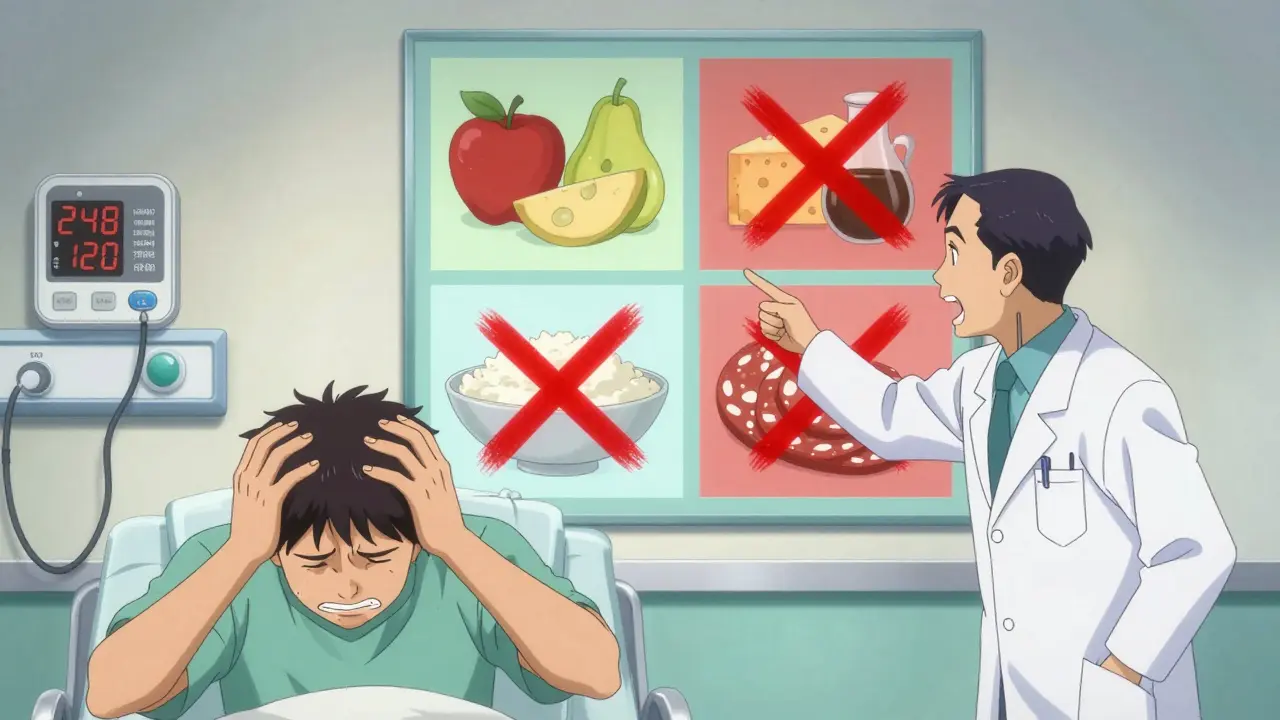
Your body normally uses MAO enzymes to clear tyramine from your bloodstream. When those enzymes are blocked by linezolid, tyramine builds up. That causes your body to release massive amounts of norepinephrine - a powerful stimulant that makes your heart race and your blood vessels constrict. The result? A hypertensive crisis. Symptoms come fast: pounding headache, blurred vision, chest pain, nausea, and a blood pressure reading that can hit 200/120 or higher. In one documented case, a patient’s systolic pressure reached 248 mmHg after eating aged cheddar. He needed ICU care. Another patient, after taking linezolid and consuming tap beer, had a systolic pressure of 230 mmHg - and stayed in the hospital for three days. These aren’t rare. Between 2018 and 2023, over 1,200 adverse events linked to linezolid and hypertension were reported to the FDA. At least three deaths have been tied directly to this interaction since 2018, according to the American Medical Association.Which Foods Are Dangerous?
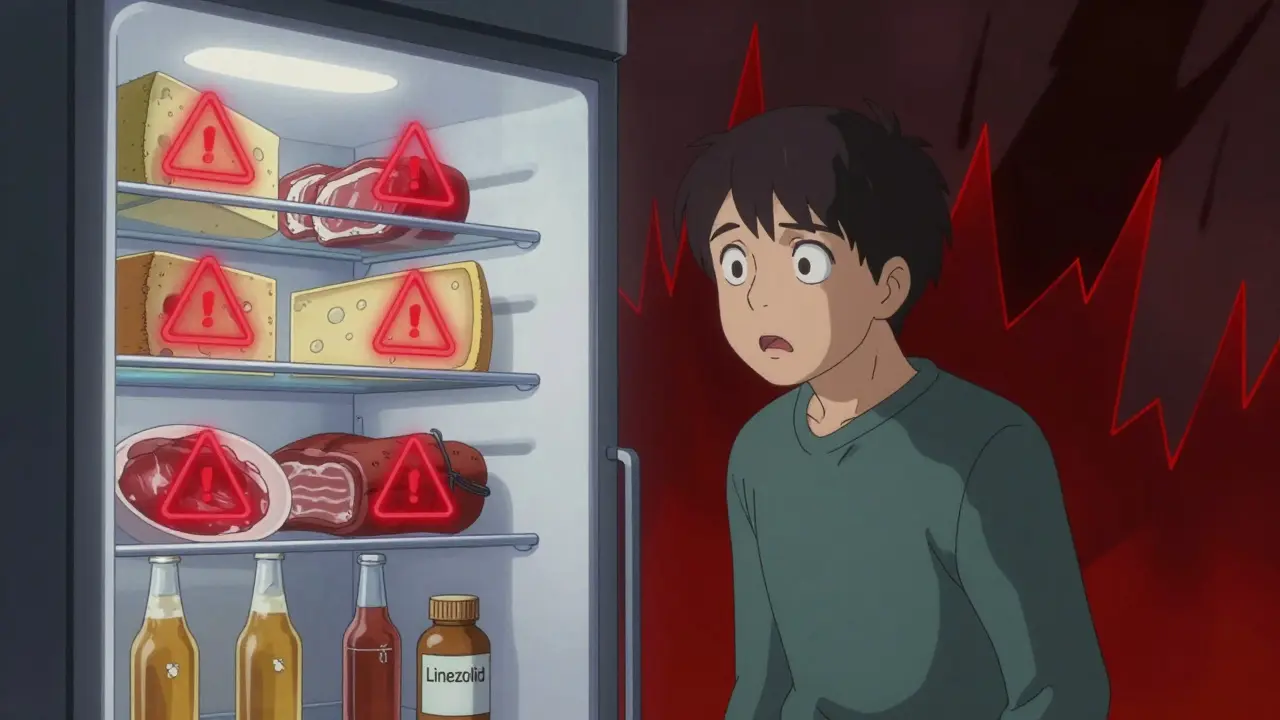
You don’t need to avoid all aged foods - just the ones that pack more than 100mg of tyramine per serving. Here’s what to skip:- Aged cheeses: Blue cheese (900-1,500mg/100g), cheddar, parmesan, gouda, Swiss. Even a single ounce of aged cheddar contains about 150mg.
- Fermented soy: Soy sauce, miso, tempeh, and fermented bean curd.
- Tap beer and draft wine: Especially unfiltered or unpasteurized. Tap beer can have 100-200mg per 100ml. Red wine varies from 5-100mg per 100ml.
- Dried, cured, or smoked meats: Salami, pepperoni, pastrami, corned beef, and liverwurst.
- Overripe or spoiled foods: Any fruit or vegetable left too long - bananas, avocados, figs, and tomatoes can develop high tyramine levels if not fresh.
- Yeast extracts: Marmite, Vegemite, and bouillon cubes.
What’s Safe to Eat?
You don’t have to starve. Most fresh foods are fine:- Fresh meat, poultry, and fish (not cured or aged)
- Fresh fruits and vegetables (except overripe ones)
- Low-fat dairy: milk, cottage cheese, ricotta, yogurt
- Instant coffee and decaf
- Store-bought pasteurized beer and wine (in moderation)
- Most breads, pasta, rice, and cereals
Why So Many People Get It Wrong
Here’s the scary part: most patients aren’t warned properly. A 2022 study in the Journal of Antimicrobial Chemotherapy found that only 43.7% of people prescribed linezolid received written dietary instructions. Even more troubling - 61.3% couldn’t name even one high-tyramine food after being told to avoid them. Doctors assume patients know. Pharmacists assume the doctor explained. Patients assume it’s just another food warning, like “avoid grapefruit with statins.” But this isn’t a mild interaction. It’s a medical emergency waiting to happen. Hospitals with formal protocols - like academic medical centers - see 82% compliance. Community hospitals? Only 57%. The difference? Visual aids. A picture of blue cheese with the label “150mg tyramine - DO NOT EAT” sticks better than a 10-page handout.Other Dangerous Interactions
Linezolid doesn’t just clash with food. It also reacts badly with:- Serotonin-boosting drugs: SSRIs (like fluoxetine), SNRIs (like venlafaxine), and even some herbal supplements like St. John’s wort. This can trigger serotonin syndrome - a life-threatening condition with high fever, confusion, and muscle rigidity.
- Decongestants: Pseudoephedrine, phenylephrine. Even a single dose of Sudafed can spike blood pressure dangerously.
- Dopamine or epinephrine: Used in emergency settings, but risky if you’re on linezolid.
What to Do If You Accidentally Eat Something Risky
If you eat aged cheese, drink tap beer, or take a decongestant while on linezolid:- Check your blood pressure immediately if you have a home monitor.
- Watch for symptoms: severe headache, chest tightness, rapid heartbeat, blurred vision, nausea.
- If your systolic pressure is above 180 mmHg - go to the ER. Don’t wait.
- Call your doctor or pharmacist. They may recommend monitoring or emergency treatment.
The Bigger Picture: Is Linezolid Still Worth It?
Yes - but only if used wisely. Linezolid is a lifeline for people with resistant infections. Without it, some patients would die. But its risks are real and underappreciated. Newer antibiotics like contezolid (currently in Phase III trials) are being developed to avoid MAO inhibition entirely. They’re expected to reach the market by late 2025. Until then, linezolid remains a critical tool - but one that demands respect. The FDA updated its labeling in 2019. The Infectious Diseases Society of America reinforced dietary guidelines in 2024. And yet, mistakes still happen. Why? Because we treat this like a footnote, not a core part of treatment.Final Checklist: Linezolid Safety Rules
Before you start:- Ask your doctor for a printed list of foods to avoid - don’t rely on memory.
- Get your blood pressure checked before starting linezolid.
- Review all your current medications with your pharmacist - including OTC and supplements.
- Stick to fresh, unaged, unfermented foods.
- Read labels on soups, sauces, and snacks - watch for “soy sauce,” “yeast extract,” or “aged.”
- Never take decongestants without checking with your doctor.
- Monitor your blood pressure twice daily if you have a history of high BP.
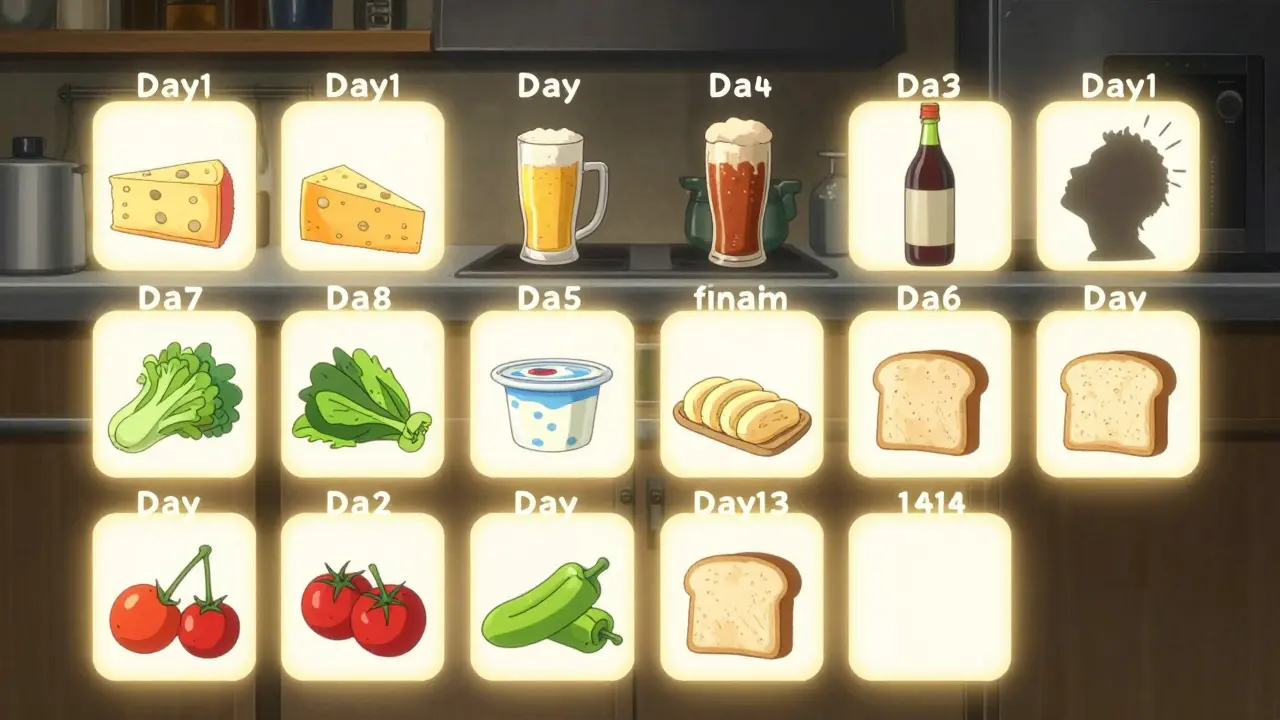
- Continue avoiding high-tyramine foods for 14 days.
- Don’t assume your body bounced back - enzyme recovery isn’t instant.
Frequently Asked Questions
Can I have a glass of wine while on linezolid?
Avoid all alcohol while on linezolid, especially tap beer, red wine, or unpasteurized varieties. Even small amounts of alcohol can increase tyramine absorption and raise blood pressure. Store-bought, pasteurized wine in moderation (one glass) may be acceptable for some patients, but only after discussing it with your doctor. When in doubt, skip it.
Is linezolid safe if I don’t have high blood pressure?
Yes - but that doesn’t mean you’re immune. Even healthy people with normal blood pressure can have dangerous reactions. The 2006 study showed that tyramine sensitivity varies by individual, not just by baseline BP. One patient in a case report had no prior hypertension but still developed a systolic pressure of 212 mmHg after eating aged cheese. Don’t assume you’re safe just because you’re healthy.
How long does linezolid stay in my system?
Linezolid’s half-life is about 5 hours, meaning most of it leaves your bloodstream in a day. But its effect on MAO enzymes lasts much longer - up to 5 days for full recovery. That’s why dietary restrictions continue for 14 days after your last dose. Your body needs time to rebuild the enzymes that break down tyramine. Rushing this increases your risk of a delayed reaction.
Can I take linezolid if I’ve taken an MAO inhibitor before?
No. If you’ve taken a classic MAO inhibitor like phenelzine or tranylcypromine in the past 14 days, linezolid is contraindicated. The combined inhibition can cause a severe, potentially fatal hypertensive crisis. Always tell your doctor your full medication history - even if it was years ago.
Are there any safe alternatives to linezolid?
Yes, depending on the infection. For MRSA, vancomycin or daptomycin are common alternatives. For VRE, teicoplanin or dalbavancin may be options. But linezolid is often chosen because it’s oral and effective against resistant strains. If you’re concerned about dietary restrictions, ask your doctor if a different antibiotic can be used - especially if you have trouble following strict diets or live alone.
What if I forget and eat blue cheese? Should I stop the antibiotic?
Don’t stop the antibiotic on your own. Stopping early can lead to treatment failure and antibiotic resistance. Instead, monitor your blood pressure closely. If it’s under 160/100 and you feel fine, contact your doctor for advice. If your pressure is above 180/120 or you have symptoms like headache or chest pain, go to the ER immediately. The risk of stopping antibiotics is often greater than the risk of one accidental food exposure - but only if you act fast.
Just got prescribed linezolid last week for a stubborn MRSA infection. This post saved my life. I was about to grab a slice of blue cheese pizza because ‘it’s just one bite.’ Now I’m eating plain rice and grilled chicken like a monk. Seriously, if you’re on this drug, treat it like a bomb squad protocol. No exceptions.
LOL at people who think ‘pasteurized wine’ is safe. 😏 Tyramine isn’t just in cheese - it’s in the *microbial residue* from fermentation. Even ‘store-bought’ wine has bioactive amines. You’re not ‘safe’ just because it’s labeled ‘past.’ That’s a placebo safety blanket. 🚨
OMG I just read this and my heart dropped. My uncle died from this. No one told him. He ate pepperoni on his pizza and collapsed at the grocery store. Please, if you’re on this med - tell everyone. Your grandma. Your roommate. Your dog. This isn’t a suggestion. It’s a lifeline.
Correct. The 14-day window is non-negotiable. MAO enzyme regeneration requires 72–120 hours, but neural receptor sensitization extends beyond. Ignoring this is not negligence - it’s biological arrogance.
It is both tragic and predictable that the general public treats medical warnings like dietary advice from a TikTok influencer. This is not a ‘maybe’ or a ‘probably.’ It is a pharmacological landmine. If you cannot follow basic medical instructions, perhaps you should not be entrusted with prescription medications at all.
Let’s be real - this isn’t about cheese. It’s about American healthcare’s failure to educate. We give people a 10-page PDF and expect them to memorize it like a college final. Meanwhile, the FDA knows 60% of patients can’t even spell ‘tyramine.’ This isn’t a drug issue. It’s a systemic collapse of patient literacy. We need mandatory video briefings. Not handouts. Videos. With emojis. Because apparently, that’s the only way people learn now.
I’m crying. I took linezolid last year and ate a slice of aged cheddar because I thought ‘it’s just one bite.’ I had a migraine so bad I vomited for 12 hours. My partner thought I was having a stroke. I didn’t tell anyone because I was too ashamed. Now I tell every person I meet. Please. Don’t be like me. Don’t wait until your eyes blur and your chest feels like it’s being crushed by a truck. Just don’t. I’m still scared to eat anything that’s been near a shelf for more than two days. 😭
Hey everyone - I know this sounds scary, but you’ve got this. I’ve been on linezolid twice now. First time? I panicked and ate nothing but boiled potatoes for two weeks. Second time? I made a color-coded fridge chart with sticky notes: GREEN = safe, RED = nuclear zone. I even took pics of my meals and sent them to my pharmacist. You don’t have to be perfect - just intentional. Small steps. One meal at a time. You’re not alone. I’m rooting for you.
There’s a middle ground here. Yes, the risks are real. But the fear-mongering? Overblown. I’ve seen patients avoid all protein for weeks because they thought ‘meat = danger.’ Fresh chicken? Safe. Eggs? Safe. Milk? Safe. The real enemy is misinformation. We need better labeling on grocery shelves - not just ‘avoid aged cheese’ but ‘this cheese = 150mg tyramine = potential ICU.’ Education, not fear. That’s the real fix.
Y’all are overthinking it. I ate a bag of chips with soy sauce on linezolid. No problem. Your body’s fine. Stop being so dramatic.
As a nurse who’s seen 17 linezolid-related hypertensive crises, I can tell you this: the most dangerous thing isn’t the cheese. It’s the silence. Patients don’t speak up because they think it’s ‘not a big deal.’ But when your BP hits 230, it’s the biggest deal. I hand out laminated cards with safe/unsafe foods. I make patients repeat the list back to me. I call them on day 3. Because if you don’t check in, someone might die. And that’s on all of us - doctors, pharmacists, patients. We’re all in this together. Don’t be silent.
Let’s not pretend this is about food. This is about control. The medical-industrial complex wants you afraid of cheese so you’ll keep taking expensive antibiotics instead of trying ‘natural remedies’ like garlic or fasting. Tyramine isn’t the villain - the profit motive is. They don’t want you to know that linezolid is just a slightly modified MAOI repackaged as a ‘superbug weapon.’ And they sure as hell don’t want you asking about contezolid. Keep eating the cheddar. Fight the system.