
Athlete Health Risk Calculator
What Athletes Are Really Taking-And What It Does to Their Bodies
Most people think performance-enhancing drugs are only for elite Olympians or pro athletes. But the truth? The biggest users today aren’t competing on TV-they’re lifting weights at the local gym, posting before-and-after photos on Instagram, and calling it "bio-hacking." Anabolic steroids, stimulants, and so-called "research chemicals" are now part of everyday fitness culture. And the health costs? They’re not theoretical. They’re showing up in emergency rooms, cardiologist offices, and mental health clinics across the country.
Take anabolic steroids. These aren’t magic pills. They’re synthetic versions of testosterone that force your body to build muscle faster than nature allows. A typical user might gain 4.5 to 11 pounds of muscle in just 10 weeks. Sounds great, right? But here’s what doesn’t get posted online: their heart grows 27% to 45% larger than normal. Their liver enzymes spike. Their natural testosterone production shuts down. And when they stop, they don’t just lose muscle-they lose motivation, energy, and sometimes, their sense of self.
The Hidden Costs of Quick Gains
It’s not just about muscle. The real damage is quieter, slower, and harder to spot until it’s too late.
Cardiovascular damage is the most dangerous side effect. Studies show steroid users have thicker heart walls, weaker pumping ability, and higher risks of heart attacks-even in people under 30. One study found that chronic users showed signs of heart aging equivalent to someone 10 to 15 years older. That’s not a metaphor. That’s measurable scarring in heart tissue.
Then there’s the liver. Oral steroids like Dianabol or Anadrol are especially toxic. Nearly 70% of users show elevated liver enzymes, a clear sign of stress or damage. Some end up with liver tumors or even liver failure. And it’s not just the liver. Kidneys struggle too. Creatinine clearance-a key measure of kidney function-drops by 15% to 25% in long-term users.
For women, the changes can be permanent. One in three female users experience voice deepening that never reverses. Clitoral enlargement happens. Facial hair grows. Menstrual cycles vanish. These aren’t side effects you can "cycle out" of. Once the damage is done, it’s often irreversible.
Stimulants: The Energy Trap
Then there are stimulants-caffeine, amphetamines, ephedrine. These aren’t always banned, but when used for performance, they cross a line. A 3 to 6 mg/kg dose of caffeine can improve reaction time by 8% to 12%. That’s the difference between winning and losing in a split-second sport.
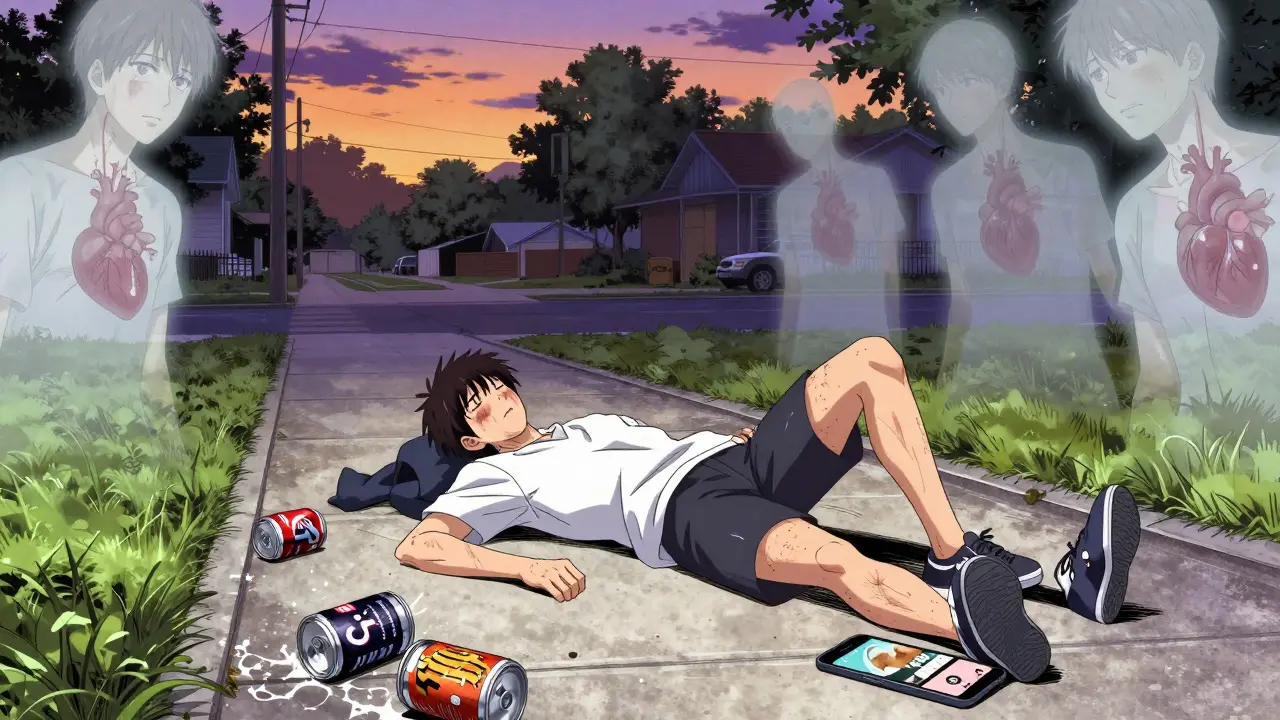
But push beyond that, and you’re playing Russian roulette with your nervous system. Energy drinks spiked with stimulants send over 2,000 people to U.S. emergency rooms every year. Heart palpitations. Seizures. Stroke. One athlete in his early 20s collapsed during a marathon after mixing pre-workout supplements with caffeine pills. He survived. But his heart never fully recovered.
And the mental toll? Just as bad. Users report severe mood swings-rage one day, crushing depression the next. When the drug wears off, dopamine levels crash. A 2022 study found 83% of recreational steroid users had mood swings severe enough to need therapy. Nearly 70% fell into clinical depression during their "off cycles." That’s not laziness. That’s neurochemistry breaking down.
Blood Doping and SARMs: The New Wild West
Blood doping-injecting your own blood or synthetic oxygen carriers to boost endurance-isn’t just for Tour de France riders anymore. Gym-goers are trying it to push through longer cardio sessions. The result? Thicker blood. Higher risk of clots. Stroke risk jumps sevenfold when hematocrit hits 50%. And it’s not detectable in standard drug tests.
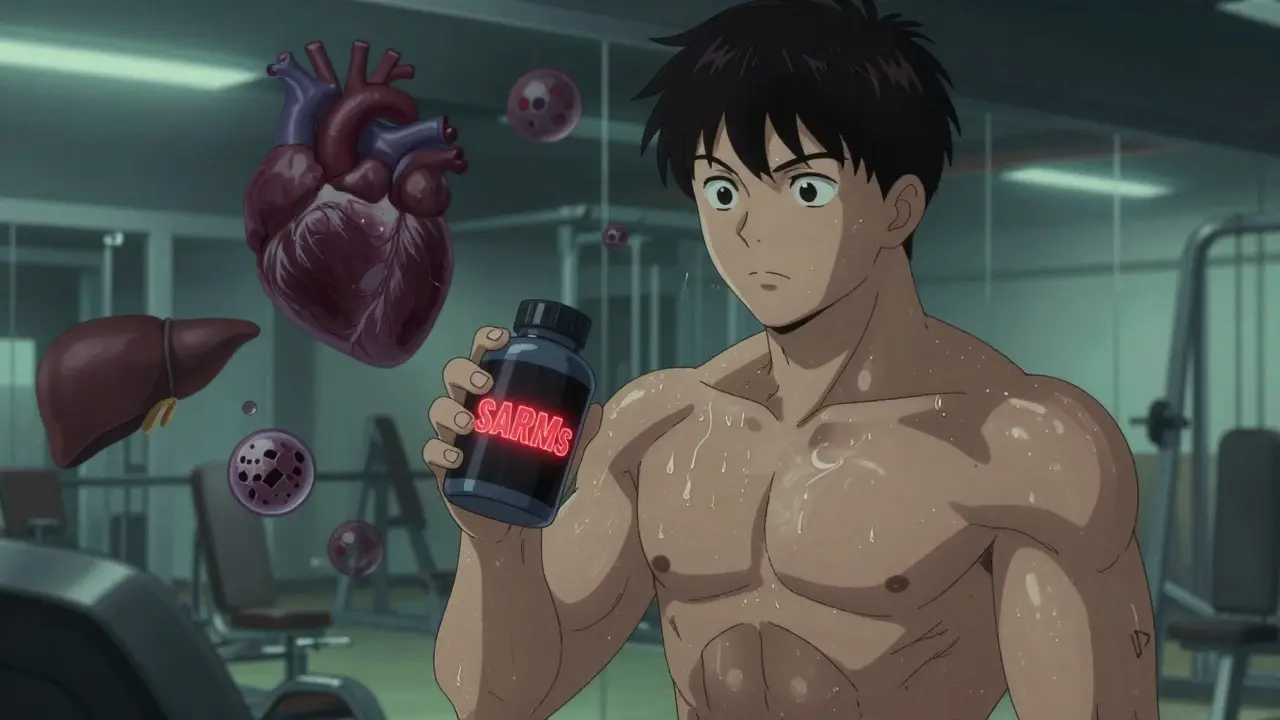
Then there’s SARMs-Selective Androgen Receptor Modulators. Marketed as "safer steroids," they’re sold online as "not for human consumption." The FDA tested over 100 products labeled as SARMs. 89% contained completely different, unapproved chemicals. Some had traces of anabolic steroids. Others had thyroid disruptors or even antidepressants. You don’t know what you’re taking. And no one’s checking.
The Myth of "Therapeutic Use Exemptions"
Some athletes think they can legally use banned substances if they have a prescription. Not true. WADA allows Therapeutic Use Exemptions (TUEs) only for documented medical conditions-like asthma or hormone deficiencies-with strict proof. You can’t get a TUE for "low energy," "low libido," or "wanting to look better." Yet, wellness clinics across the U.S. and Australia are offering "bio-identical hormone therapy" that includes banned steroids. Patients walk out thinking they’re getting treatment. They’re actually doping.
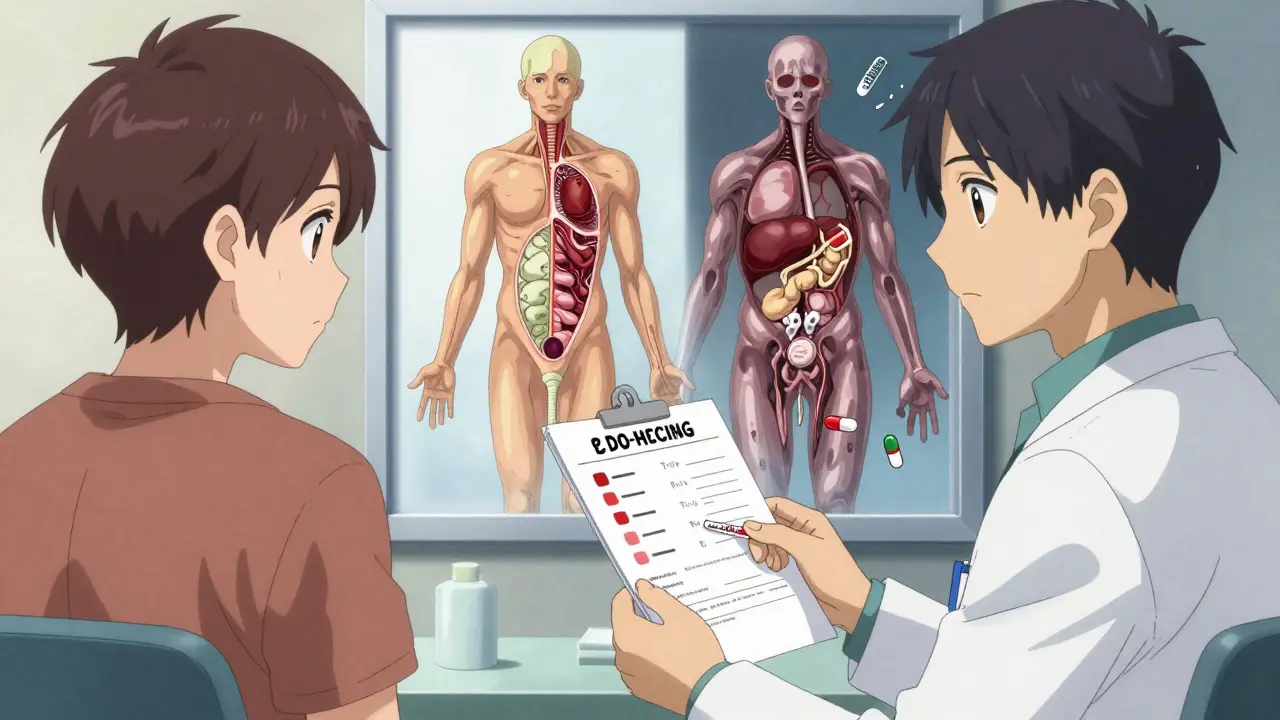
And here’s the scary part: most doctors don’t know. A 2021 study found that 7 out of 10 family physicians missed signs of steroid use in their patients. Why? Because users don’t tell them. And the symptoms-acne, mood swings, fatigue-are dismissed as stress, aging, or depression.
What Happens When You Quit?
Stopping doesn’t mean you go back to normal. For men, testosterone levels can stay suppressed for 6 to 12 months-or longer. Some never recover. A 2023 study found that 38% of long-term users developed permanent hypogonadism and needed lifelong testosterone replacement.
Women who stop may never get their periods back. Fertility can be permanently damaged. Testicular shrinkage is common-some men report testicle size dropping from the normal 15-25 mL down to 2-4 mL. Sperm counts fall below 1 million per mL. Normal is over 15 million.
And the mental withdrawal? It’s brutal. One Reddit user wrote: "I gained 25 pounds of muscle in 10 weeks. Lost it all in 8 weeks off. Then I couldn’t get out of bed for months. I thought I was broken. I was.”
Who’s Really Using These Drugs?
Elite athletes? They make up only 15% to 20% of users today. The rest? Recreational gym-goers. People who don’t compete, but want to look like they do. A 2023 University of Colorado study found that 60% to 80% of steroid users are non-competitive. That’s your neighbor, your coworker, maybe even someone you know.
And it’s getting younger. Pediatric cases of steroid-induced heart damage have doubled since 2018. Kids as young as 14 are showing up in hospitals with cardiomyopathy. They saw a TikTok video. Bought a bottle online. Thought it was safe.
The Bottom Line: It’s Not Worth It
There’s no safe way to use performance-enhancing drugs for non-medical reasons. The gains are real-but so are the risks. And they’re not just physical. They’re emotional, social, and lifelong.
You don’t need steroids to build strength. You don’t need stimulants to push harder. You don’t need blood doping to run farther. Natural training takes longer. It’s messier. It’s harder to show off on Instagram. But it’s the only way that doesn’t cost you your health.
The body adapts. Slowly. But it adapts sustainably. And when you stop, you don’t lose everything. You just keep what you earned.
What to Do If You’re Already Using
If you’re using these substances, you’re not alone. But you’re not safe either.
- Stop abruptly? Don’t. Withdrawal can be dangerous. Talk to a doctor who understands sports medicine-not just any GP.
- Get blood work. Check testosterone, liver enzymes, kidney function, and cholesterol. You need data, not guesses.
- Don’t hide it. Most doctors won’t judge. They’ve seen this before. But they can’t help if they don’t know.
- Seek mental health support. Mood crashes are real. Therapy isn’t weakness-it’s recovery.
- Find real community. Join a training group that values progress over pills. You don’t need to look like a bodybuilder to be strong.
There’s no shame in wanting to improve. But there’s a huge cost in cutting corners. Your body doesn’t care about your Instagram likes. It only cares if you’re still alive in 10 years.
Can athletes legally use steroids for medical reasons?
Yes, but only under very strict conditions. The World Anti-Doping Agency (WADA) allows Therapeutic Use Exemptions (TUEs) for documented medical conditions like hypogonadism or adrenal insufficiency. Athletes must provide multiple blood tests, specialist letters, and proof that no legal alternatives exist. TUEs are not granted for muscle gain, energy boosts, or anti-aging purposes.
Do all performance-enhancing drugs show up in drug tests?
No. Many substances, especially newer SARMs and peptide hormones, evade standard tests. Some can be detected only through advanced methods like steroid metabolism fingerprinting, which looks at how your body breaks down hormones. Even then, detection windows vary. Some steroids can be traced up to 18 months after last use. But underground compounds are constantly changing-faster than labs can catch them.
Are natural supplements like creatine or protein safe for athletes?
Yes. Creatine, protein powders, beta-alanine, and caffeine (within normal doses) are legal and backed by science. They don’t alter hormone levels or force unnatural changes. The problem comes when supplements are contaminated. One in five products sold as "natural" contain hidden steroids or stimulants. Look for third-party tested brands (NSF Certified, Informed-Sport) to reduce risk.
How long does it take to recover after stopping steroids?
Recovery varies. Muscle mass fades in 4 to 12 weeks. Testosterone levels usually bounce back in 3 to 6 months for short-term users. But for long-term users, recovery can take a year or more-and in 38% of cases, it never fully returns. Liver and kidney function often improve within months if use stops. Heart changes may partially reverse, but fibrosis (scarring) is usually permanent.
Can women recover from voice deepening caused by steroids?
No. Voice deepening from anabolic steroid use is typically permanent. The vocal cords thicken due to androgen exposure, and this change doesn’t reverse after stopping. Clitoral enlargement and facial hair growth may also persist. These are irreversible changes that happen early in use-sometimes within just a few weeks.
Why don’t more doctors catch steroid use in patients?
Because patients rarely admit to it. Many fear judgment or legal consequences. Also, symptoms like acne, fatigue, or mood swings are common and often misdiagnosed as stress or depression. Plus, newer compounds like SARMs don’t trigger traditional blood markers. A 2021 study found that 70% of family doctors missed signs of steroid use because they weren’t trained to look for them.
Just saw a guy at my gym take a pre-workout that looked like it came from a sci-fi movie. He said it was "legal." I told him his kidneys would disagree. He laughed. I haven't seen him in two weeks.
I used to think steroids were for bodybuilders on TV. Then my cousin started taking them to "get lean" and ended up in therapy. He’s been off for a year and still cries for no reason. It’s not just about muscle. It’s about losing yourself.
Don’t wait until it’s too late to ask for help. You’re not weak for needing it.
Oh please. You’re acting like people who take supplements are idiots. I’ve seen people who lift natural and look like they’ve never touched a dumbbell. Meanwhile, I’ve got a friend who’s on TRT and she’s stronger than half the gym. If you’re gonna judge, at least know what you’re talking about.
Not everything is black and white. Some of us are just trying to fix broken biology, not chase Instagram clout.
My brother did 12 weeks of SARMs. Lost 10lbs of fat. Gained 8lbs muscle. Then his liver enzymes went through the roof. He’s been off for 6 months. Still can’t sleep. Still feels empty. No one warned him. No one talks about this stuff. Just more posts of shredded guys with no context.
It’s not a lifestyle. It’s a slow suicide with a glow-up filter.
Let’s deconstruct the hegemony of naturalism, shall we? The very notion that "natural" is morally superior is a capitalist fantasy peddled by wellness influencers who sell $40 protein powders.
The body is a malleable system. Hormones are not sacred. Evolution didn’t design us for 8-hour workdays and 2000-calorie gym sessions. If we can genetically edit mosquitoes, why are we policing endocrine modulation?
The real crime isn’t steroid use. It’s the commodification of the body under late-stage capitalism, where your worth is measured in bicep circumference and your pain is monetized by pharmaceuticals.
Stop romanticizing suffering. The body doesn’t need to be "earned." It needs to be optimized. And if that requires a little chemical intervention, so be it. We’re already cyborgs. We just haven’t accepted it yet.
I get where everyone’s coming from.
I used to take stuff. Not steroids, but stimulants - Adderall for workouts, caffeine stacks, the whole thing. Thought I was being smart. Turns out I was just running on borrowed time.
When I stopped, I didn’t lose muscle. I lost joy. I stopped caring about lifting. Stopped caring about life. That’s when I realized: it wasn’t about the gains. It was about the escape.
There’s a quiet strength in showing up when you’re tired. In staying consistent when no one’s watching. You don’t need a pill to be strong. You just need to be honest with yourself.
And if you’re already using? You’re not broken. You’re just human. Talk to someone. Find a coach who gets it. You don’t have to do this alone.
Look. I’ve been coaching for 18 years. I’ve seen guys come in with veins popping, eyes glazed, sweating like they’re in a sauna. They say, "I just want to look good."
Then they leave six months later - weaker, depressed, scared. Their wives leave. Their kids don’t recognize them. Their doctors say, "We can’t fix this."
Here’s the truth: no one’s going to save you. Not a doctor. Not a supplement. Not a Reddit post.
But you can save yourself. Start by admitting you’re not okay. Then find someone who’s been there. Not a guru. Not a YouTuber. Someone real.
You don’t need to be the biggest. You just need to be alive tomorrow.
I’ve got your back. Just say the word.
Interesting how the article frames this as a moral issue. Let’s be honest - this isn’t about health. It’s about social control. The same people who condemn steroid use are the ones who profit from expensive gym memberships, protein shakes, and sleep trackers.
Meanwhile, the real health crisis is sedentary lifestyles and processed food. But that doesn’t sell ads.
Also, 38% of long-term users never recover testosterone? That’s a 62% success rate. Not bad odds for a drug that gives you a new body. Maybe we should be asking why more people aren’t doing it.
So let me get this straight - the article says steroids are bad, but creatine is fine? Interesting. So if I take a pill that boosts testosterone naturally, that’s "bio-hacking." But if I take one that *is* testosterone? That’s "doping."
Who decided that? A doctor? A scientist? Or some guy with a blog and a Patreon?
And why is it okay to take 1000mg of vitamin D a day but not 200mg of testosterone? Is it the word "synthetic"? Or is it just that the rich can afford TUEs and the rest of us have to "earn" our bodies the hard way?
Also - I’ve been natural for 7 years. I look like a potato. My wife says I need to "get some edge." Maybe I’ll try a SARM. At least then I’ll look like something other than a librarian who lifts.
As someone who works in sports medicine, I see this every week. The most dangerous part isn’t the drugs - it’s the silence.
Patients don’t come in saying, "I’m on SARMs." They say, "I’m tired all the time," or "I’ve been depressed since last summer." We run tests. We find liver damage. We find suppressed hormones. We ask. They lie.
Doctors aren’t the enemy. The stigma is.
If you’re using, please talk to someone who understands. Not a Reddit thread. Not a YouTube influencer. A real clinician who’s seen this before. You’re not alone. And you’re not a failure for needing help.
Recovery isn’t about going back to who you were. It’s about becoming who you can be - without chemicals.