
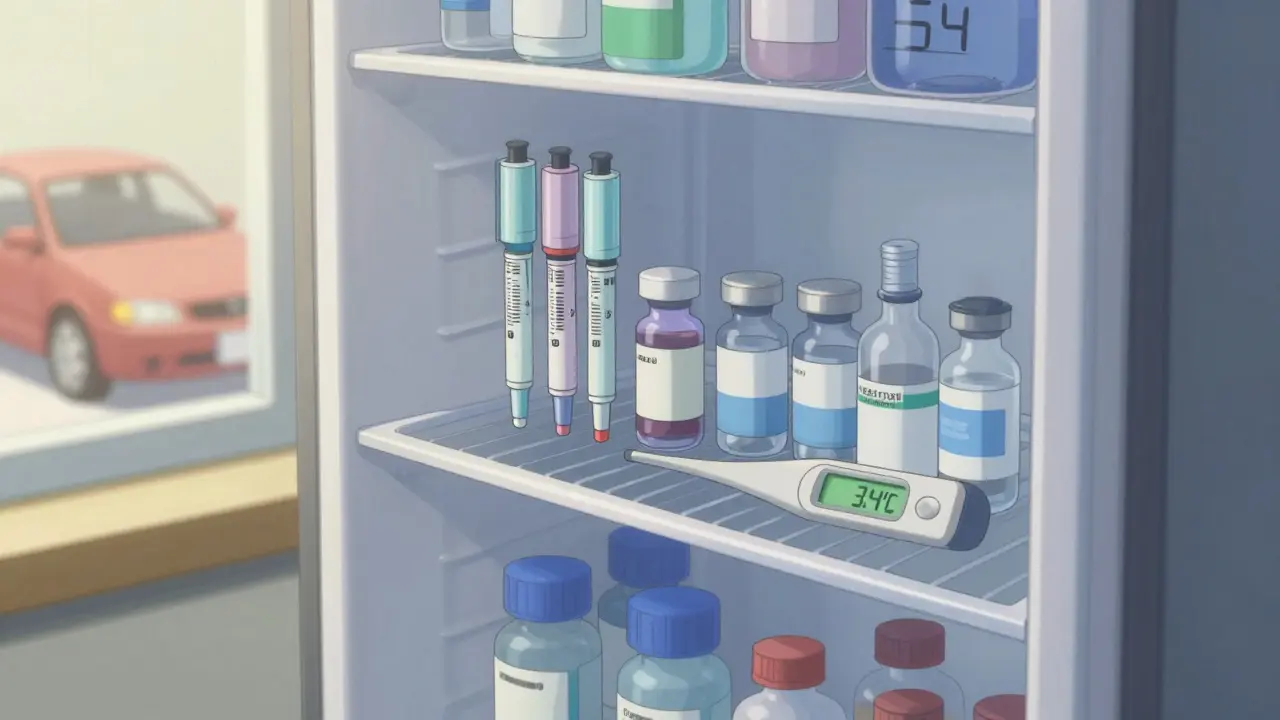
Why Some Medications Need the Fridge
Not all medicines are created equal when it comes to storage. While most pills and capsules are fine on your bathroom shelf, a growing number of prescriptions-especially those used for diabetes, autoimmune diseases, and cancer-must stay cold. These are called refrigerated medications, and if they’re not stored correctly, they can lose effectiveness-or even become dangerous.
Think about insulin. One dose that’s been left in a hot car or on a sunny windowsill might not lower your blood sugar at all. That’s not just inconvenient-it’s life-threatening. The same goes for biologics like Humira, Enbrel, or Remicade. These are complex protein-based drugs that break down quickly when exposed to heat. Even a few hours above 8°C (46°F) can start the damage. And freezing? That’s worse. Once frozen, insulin and many biologics are permanently ruined. Thawing them won’t fix it.
The science is clear: the only safe temperature range for most refrigerated medications is between 2°C and 8°C (36°F to 46°F). This isn’t a suggestion-it’s a requirement backed by the U.S. Pharmacopeia, the FDA, and the World Health Organization. Staying in this range keeps the molecules stable, prevents clumping, and ensures the drug does what it’s supposed to do.
What Medications Actually Need to Be Refrigerated?
It’s not just insulin. While that’s the most common one people know about, here’s the real list of medications that commonly need fridge storage:
- Insulin (Lantus, Humalog, NovoLog, Fiasp, and others)-refrigerate until first use, then can stay at room temperature (up to 30°C) for 28-30 days
- Biologic injectables (Humira, Enbrel, Stelara, Remicade, Ocrevus)-must stay between 2°C-8°C until opened; some can be kept at room temperature for up to 6 months after opening, but check your label
- Vaccines (Flu shots, COVID boosters, shingles, MMR)-strictly 2°C-8°C, no exceptions. Even brief exposure to room temperature can ruin them
- Some antibiotics (like reconstituted amoxicillin clavulanate or certain IV antibiotics)
- Eye drops (like certain glaucoma medications or post-surgery drops)
- Hormone injections (growth hormone, some fertility treatments)
Here’s the catch: labels vary. Some manufacturers say “refrigerate at all times.” Others say “refrigerate until opened.” Always read the package insert. If you’re unsure, call your pharmacist. Don’t guess.
Household Fridges Are Not Built for Medicine
Most people just toss their insulin or biologics into the main compartment of their kitchen fridge. That’s a problem. Household refrigerators aren’t designed for precision. The temperature swings wildly depending on where you put things.
Studies show the back of the fridge, away from the door, stays closest to the ideal 2°C-8°C range-around 3.4°C on average. But the door shelves? They can hit 11°C or higher, especially after opening the door. That’s way too warm. And the freezer compartment? Even a brief accidental freeze can destroy your medication. I’ve seen people store insulin in the door because it’s easiest. That’s a recipe for failure.
And what about power outages? If the power goes out for 6 hours in summer, your fridge might hit 15°C or higher. Your insulin? It’s degrading. Your vaccine? It’s useless. A 2022 study found that 15-25% of home-stored refrigerated medications experience at least one temperature excursion. That’s more than 1 in 5.
How to Store Medications Safely at Home
Here’s how to fix this:
- Put it in the back, not the door. Always store refrigerated meds on the middle shelf, toward the back of the fridge. Avoid the crisper drawers and door shelves.
- Use a standalone thermometer. Buy a digital thermometer with a memory function (around $30). Place it right next to your meds. Check it every morning. If it’s ever outside 2°C-8°C, move the meds and call your pharmacist.
- Don’t overstuff the fridge. Air needs to circulate. If your meds are buried under leftovers, they’re not getting consistent cooling.
- Label everything. Use masking tape and a marker to write the date you opened the vial or pen. Most opened products last 28-30 days. After that, toss it-even if it still looks fine.
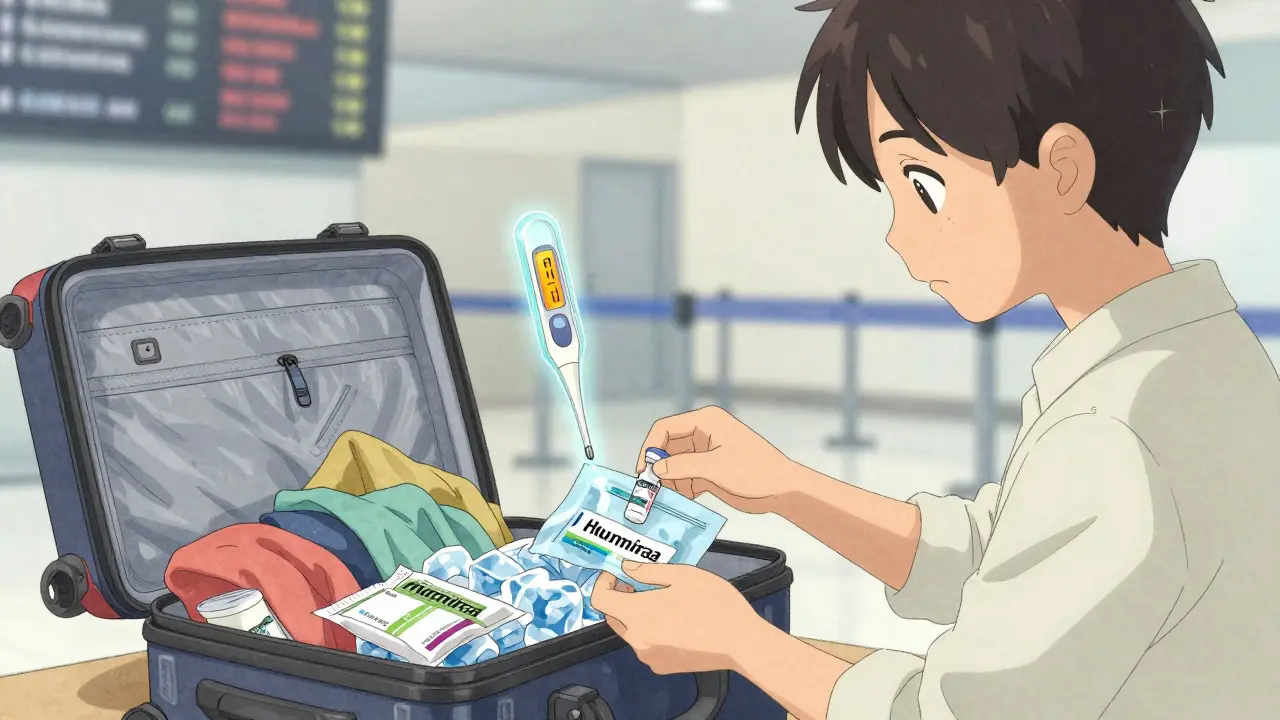
- Keep a backup plan. If you’re going on a trip, use a cooler with ice packs. For longer trips, consider a portable medication cooler (like TempAid or MediCool) that maintains 2°C-8°C for up to 48 hours.
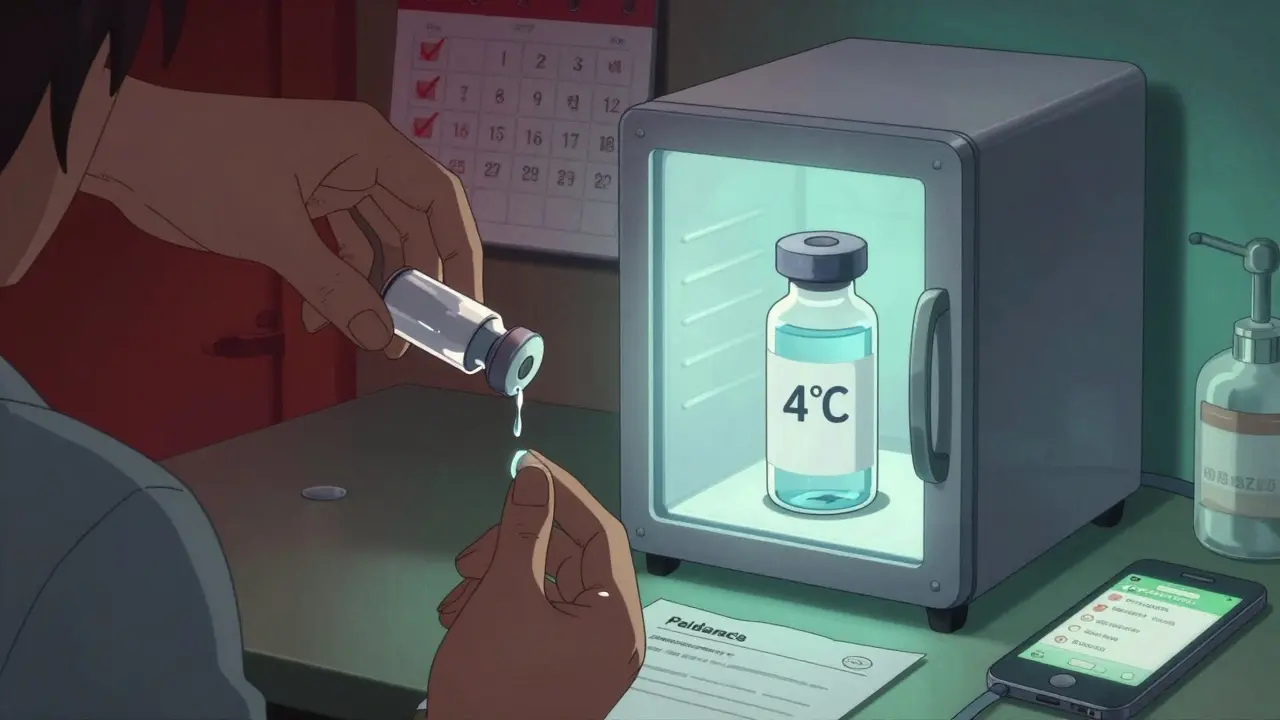
Some people buy a dedicated mini-fridge just for meds. It sounds extreme, but it’s not uncommon among people on multiple biologics. Basic models start at $150. They’re quiet, energy-efficient, and you can set them to exactly 4°C. No more guessing. No more door shelves. Just peace of mind.
What Happens When You Get It Wrong?
Let’s be blunt: getting storage wrong can kill you.
In 2021, the FDA documented a case where someone stored insulin in a warm car for two days. The insulin lost potency. The person didn’t realize it. Their blood sugar spiked. They ended up in the hospital with diabetic ketoacidosis. That’s not rare. A GoodRx survey of 1,247 insulin users found 68% had experienced at least one episode of unexplained high blood sugar they later linked to temperature exposure. Nearly a quarter saw visible changes-cloudiness, clumping, or crystals in the liquid. That’s your body telling you the drug is broken.
Biologics aren’t much safer. If your Humira or Stelara has been exposed to heat, your immune system might not respond. That means flare-ups. Hospital visits. Lost workdays. Higher costs. And no one will tell you it’s your fridge’s fault. They’ll just say your condition is worsening.
And here’s the scary part: once it’s damaged, you can’t tell just by looking. A vial can look perfectly clear but be 70% less effective. That’s why temperature monitoring isn’t optional-it’s essential.
Traveling With Refrigerated Medications
Traveling is one of the biggest risks. Airports, rental cars, hotel rooms-none of them are reliable for cold storage.
Here’s what works:
- Insulated travel bags with ice packs-buy ones designed for medications. Regular lunch coolers don’t cut it.
- Portable medication coolers-these use phase-change materials to hold steady temps for 24-48 hours. Brands like TempAid and MediCool are FDA-recognized.
- Never check your meds in luggage. Always carry them in your hand luggage. Checked baggage can sit in unheated cargo holds where it freezes-or in hot areas where it cooks.
- Keep your thermometer with you. If you’re flying, bring it in your carry-on. If the temp hits 10°C or above for more than 2 hours, call your pharmacy. Don’t use the meds.
Pro tip: If you’re flying internationally, carry a letter from your doctor explaining you’re carrying refrigerated medication. Some countries have strict rules. A letter avoids delays.
What to Do If Your Meds Freeze or Overheat
If your insulin or biologic gets frozen-even for an hour-throw it away. No exceptions. Freezing changes the protein structure. It can’t be undone. Thawing it won’t help. Using it could cause serious harm.
If it’s been left in a hot car or on a sunny windowsill for more than a few hours, don’t use it either. Even if it looks fine, the potency is likely gone. When in doubt, call your pharmacy. They can tell you if it’s still safe based on the temperature and duration of exposure.
Some newer insulin formulations (like Novo Nordisk’s newer versions) are more heat-tolerant-some can handle up to 37°C for 7 days. But unless your label says that, assume the old rules still apply. Don’t rely on rumors or Reddit posts. Read the official instructions.
Where to Get Help
You’re not alone. Many people struggle with this. The CDC has a free Vaccine Storage and Handling Toolkit that’s useful even for non-vaccine meds. It includes printable temperature logs and storage checklists.
NeedyMeds offers free digital thermometers to qualifying patients. Just apply online. Pharmacies like CVS and Walgreens often have cold storage bins in their pickup areas for emergency use. Ask.
If you’re on Medicare or Medicaid, ask about coverage for a dedicated medication fridge. Some plans cover it under durable medical equipment if your doctor writes a letter stating it’s medically necessary.
What’s Changing in 2025?
The landscape is shifting. More drugs are becoming biologics. By 2030, the American Society of Health-System Pharmacists predicts 30% of all prescriptions will need refrigeration. That’s up from about 18% today.
Newer insulin pens are being designed to last longer at room temperature. Some smart refrigerators now have dedicated medication zones that maintain exact 4°C with alarms. Samsung’s Family Hub fridge, for example, now includes a medication mode.
But here’s the truth: technology won’t fix human error. No smart fridge helps if you forget to check the temp. No new label matters if you don’t read it. The most important tool you have is awareness. And a thermometer. And the discipline to use them.
This is absolutely critical info-especially for those on biologics. I’ve seen too many patients ruin their vials by storing them in the door. The back shelf is non-negotiable. Also, the 2°C–8°C range isn’t arbitrary; it’s the thermal window where protein tertiary structures remain intact. Deviate even slightly, and you’re risking aggregation, denaturation, and loss of bioactivity. A digital logger with min/max tracking? Essential. I keep one next to my Humira. $30 well spent.
Funny how we’re told to treat medicine like it’s liquid gold, but the fridge is treated like a chaotic junk drawer. I’ve seen insulin next to last week’s leftover curry. No wonder people get unexpected highs. The real tragedy? Pharmacists are the only ones who care enough to warn you-and they’re not paid to babysit your storage habits.
If you can’t afford a mini-fridge for your meds, you shouldn’t be on them. This isn’t a luxury-it’s a medical necessity. Stop being lazy and get your act together.
The assertion that 15–25% of home-stored refrigerated medications experience temperature excursions is not merely statistically significant-it is a systemic failure of patient education, pharmaceutical labeling, and healthcare infrastructure. The FDA’s documentation of insulin-induced diabetic ketoacidosis cases due to thermal degradation is not anecdotal; it is a documented public health crisis. Furthermore, the absence of mandatory temperature-monitoring devices in home medical supply kits constitutes a dereliction of duty by regulatory bodies. Until pharmaceutical manufacturers are legally required to include integrated thermal sensors in all biologic delivery systems, this problem will persist, and patients will continue to suffer preventable harm.
You say 'read the label'-but have you ever actually read the label on a Humira pen? It’s printed in 5-point font, in a font that looks like it was designed by someone who hates humans. And the 'storage instructions' are buried under 17 pages of legal disclaimers about liability waivers and third-party manufacturers. So yes, I'm skeptical. Also, why is it that the only people who care about this are the ones who already have access to $150 mini-fridges? This is classist healthcare.
i think the fda just wants us to buy more meds. they made up the temp thing so we’ll keep buying new ones. my cousin swears his insulin worked fine after being in the car all day. he’s still alive. lol
Bro, I just got my Stelara in the mail and left it on the porch for 3 hours. 😅 It’s fine. I’m a warrior. 🛡️❄️🔥
Thank you for this. I’ve been storing my insulin in the fridge door because it’s easier to reach. I didn’t realize it was risky. I’ll move it tonight.
I would like to respectfully extend the scope of this discussion to include the ethical imperative of equitable access to temperature-controlled storage solutions. The recommendation to purchase a dedicated mini-fridge, while technically sound, is inherently exclusionary for populations without financial means, housing stability, or reliable electricity. The assertion that 'awareness and discipline' are sufficient remediation tools overlooks the structural inequities that render such discipline inaccessible. A more comprehensive public health strategy must include subsidized medical-grade refrigeration, community cold-storage hubs, and mandatory temperature-monitoring inclusion in all prescription packaging-regardless of patient socioeconomic status. This is not merely a clinical issue; it is a matter of distributive justice.