

Reporting Pathway Decider
Confused about where to submit your report? Answer a quick question to find the correct federal channel.
1. Did the issue occur after a VACCINE?
2. What type of product was it?
The Confusion Behind Safety Reports
Imagine you just finished taking a new prescription or received a vaccination. Suddenly, you feel something wrong-a rash, dizziness, or fatigue. Your instinct tells you to report it. But when you look for the right form online, the path splits into two confusing directions: MedWatch and VAERS. Both sound similar, and both involve federal agencies, yet sending your report to the wrong bucket changes how your data gets analyzed.
This confusion happens because the United States runs two parallel tracks for safety monitoring depending on whether the product was a vaccine or something else. Understanding which channel fits your situation matters. It determines who reviews your data, whether your report stays in the public database, and if it triggers further investigation.
Understanding MedWatch Scope
MedWatch is the FDA's voluntary reporting program for medical products and devices. The system captures issues with prescription drugs, biological products, combination products, dietary supplements, and medical devices. Also known as FDA MedWatch Program, it serves as the central intake hub for anything that does not qualify as a vaccine. Essentially, if you take a tablet, swallow a capsule, wear a pacemaker, or apply a cream, MedWatch is the destination for safety concerns.
The operational framework relies on specific FDA centers processing the data. The Center for Drug Evaluation and Research handles pharmaceuticals, while the Center for Devices and Radiological Health manages equipment issues. When a patient submits a report via the MedWatch portal, the agency routes the case to the appropriate division for review. Manufacturers have mandatory reporting obligations under different timelines, ensuring that serious incidents reach regulators quickly. For the average consumer, reporting remains voluntary, but the data contributes to post-market surveillance.
What Makes VAERS Different
VAERS is a national passive surveillance system operated jointly by CDC and FDA. Its focus is exclusively on vaccine adverse events. Anyone, including healthcare providers, vaccine manufacturers, patients, and parents, can submit a report regardless of their certainty about causation. This specificity is vital. If the adverse event follows a vaccination, it belongs here, not in the general MedWatch queue. The system was designed to detect early warning signs, known as safety signals, within the vast population receiving immunizations.
Unlike some private data platforms, VAERS maintains a standardized form updated over time. The current iteration includes fields for vaccine lots, timing of symptoms relative to injection, and pre-existing conditions. These details allow epidemiologists to spot clusters that wouldn't appear in standard clinical trials. Because vaccines are biologicals administered to large groups simultaneously, the reporting speed helps identify rare risks across diverse demographics faster than traditional studies could.
Comparing Operational Mechanics
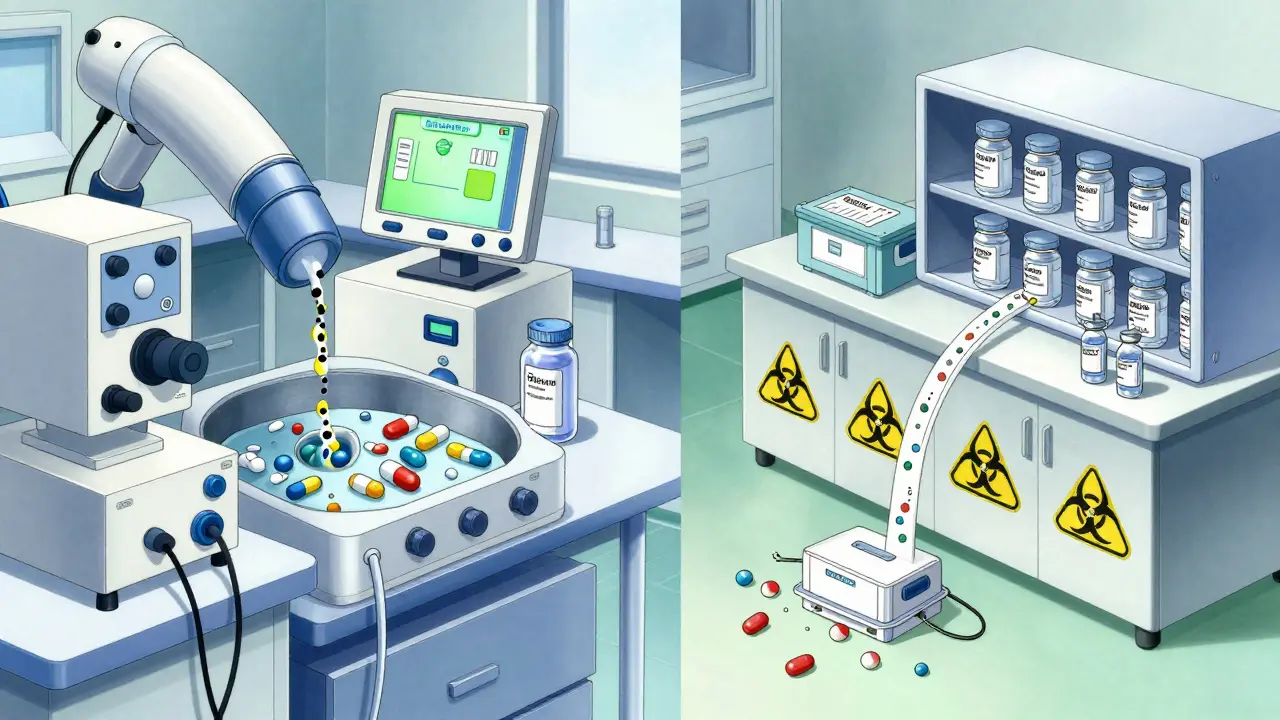
While both systems aim to protect public health, their mechanics diverge based on the regulatory needs of vaccines versus other drugs. Vaccines operate under biologic license regulations, whereas pills fall under drug approval statutes. Consequently, the data handling differs. Below is a breakdown of how these pathways compare for the average reporter.
| Feature | MedWatch | VAERS |
|---|---|---|
| Primary Product Type | Drugs, Devices, Food, Cosmetics | Vaccines Only |
| Oversight Agency | FDA Centers (CDER, CDRH) | FDA and CDC Jointly |
| Reporter Base | Public and Health Professionals | Public and Health Professionals |
| Primary Goal | Monitor broad product safety | Detect vaccine-specific signals |
| Causation Proof | No determination made | No determination made |
A critical similarity appears in the last row. Neither system decides if the product caused the harm upon receipt of a report. Both accept claims of association rather than confirmed causality. This distinction protects the systems from becoming legal tribunals. Instead, they act as listening posts for potential patterns that warrant deeper study.
Navigating Mandatory vs Voluntary Reporting
You might wonder why you should bother reporting if it's voluntary. The answer lies in the aggregate value. While individual citizens file voluntarily, manufacturers face legal mandates. Pharmaceutical packers and device facilities must notify the FDA of certain deaths or injuries linked to their products within specific timeframes, often forty-eight hours for severe events.
This dual structure creates a feedback loop. A spike in voluntary reports from patients often prompts the agency to request detailed records from manufacturers. If a manufacturer notices a trend internally, they must report it. If patients report it first, the agency investigates. For instance, a cluster of myocarditis cases reported through VAERS triggered immediate scientific inquiry, whereas isolated reports might have been dismissed without the signal accumulation. The system rewards participation because silence prevents the detection of rare but significant risks.

Data Limitations and Interpretation
One major caveat involves interpreting the numbers found in these databases. A high number of reports does not automatically mean the product is unsafe. Consider a popular vaccine administered to millions versus a niche medication taken by thousands. The sheer volume of doses naturally generates more reports simply due to probability. Furthermore, passive surveillance systems suffer from underreporting; experts estimate fewer than one percent of actual adverse events reach the database.
Bias also influences the data. People are more likely to report symptoms shortly after an intervention. If someone gets a flu shot and breaks their leg later, they may report the connection. The system accepts this ambiguity to cast a wide net. Subsequent validation occurs through systems like the Vaccine Safety Datalink, which uses controlled health insurance data to verify associations. Therefore, you should view initial reports as hypotheses, not proof of injury.
Supplementary Surveillance Tools
Neither MedWatch nor VAERS works in isolation. They sit alongside active monitoring networks that add layers of verification. The Clinical Immunization Safety Assessment project connects researchers to complex medical questions requiring deep expertise. Similarly, the Biologics Effectiveness and Safety system pulls data directly from electronic health records across major health maintenance organizations. These tools provide the statistical power needed to confirm or reject signals spotted in the voluntary reporting streams.
For patients, knowing this ecosystem exists adds confidence. When you file a report, it enters a broader network of scientific oversight. Even if your individual case doesn't result in a recall, it contributes to the long-term safety picture that keeps medicine effective for everyone else.
Can I report to both MedWatch and VAERS?
No. You must choose the correct system based on the product type. If the adverse event followed a vaccine, use VAERS. If it followed a drug or device, use MedWatch. Cross-reporting creates redundancy and confuses the tracking workflow.
Will reporting my side effects cost money?
Submitting a report is completely free. There are no fees associated with filing a complaint with either the FDA or the CDC through these official portals. You do not lose any medical benefits or compensation rights by filing a report.
Does a report prove the vaccine caused my illness?
No. Filing a report acknowledges a temporal relationship, not necessarily a causal one. The system collects data to investigate patterns. Determination of cause requires independent medical evaluation and clinical correlation by doctors.
Can I remain anonymous when reporting?
Yes. You can submit information without revealing personal identifiers. However, providing contact details allows investigators to reach out if they need more medical records to clarify the timeline or severity of the event.
What defines a serious adverse event?
Federal regulations define serious events as those resulting in death, hospitalization, life-threatening experiences, persistent incapacity, birth defects, or congenital anomalies. Minor reactions like short fever or redness at the injection site are also recorded but categorized differently.
Most people confuse these systems because they lack basic reading comprehension regarding regulatory frameworks. You cannot simply throw every adverse event into the same bucket if you want accurate data analysis. The distinction between biological licenses and drug statutes is fundamental to how the FDA processes safety signals. When citizens ignore these protocols they dilute the statistical power of the entire surveillance network. It is frustrating to see such elementary confusion persist online among adults who claim to care about public health. People seem unwilling to take five minutes to verify which form applies to their specific situation. Vaccine reports in MedWatch get lost in pharmaceutical queues while device issues end up in vaccine databases. This creates administrative bloat that wastes resources meant for actual investigations. Manufacturers have mandates but individuals rely on voluntary participation which requires discipline. If you report incorrectly you delay the very signal detection that keeps markets safe. The system relies on precision and your error introduces noise that obscures real risks. I expect better attention to detail from anyone claiming to participate in science. Ignorance is often cited as the primary reason for cross-reporting failures seen in historical case reviews. Do not complain about slow response times if you submitted the wrong documentation initially. Accuracy matters more than speed when building a case history for regulators.
Wow thanks for the lecture king of the world. I guess we are all just incompetent without your guidance. Maybe try typing less next time so others can breathe.
I know how scary it is when you feel unwell after taking medication or getting a shot. Everyone wants to do the right thing but the websites can feel really overwhelming. My friend had trouble finding the right form last month and ended up calling three different numbers before she figured it out. It takes courage to report side effects especially when you worry it might cause trouble for your doctor. The peace of mind comes from knowing you did your part even if nothing changes immediately. We should support each other through these confusing processes instead of judging people for trying. Small actions like filling out one box correctly add up to big changes in safety statistics over time. Feeling heard is important for patients dealing with unknown symptoms in their bodies. There is a lot of information here that is complex but understanding it helps reduce anxiety about the process. Please share your story if you ever struggled with the reporting path because you are not alone in feeling confused. Together we can learn how these tools work to protect future patients from potential harm. Compassion goes a long way when discussing medical safety topics with vulnerable people.
Valid point regarding anxiety.
The procedural distinctions are quite significant indeed!!! Furthermore; one must note the temporal relationship between administration and symptom onset. It is imperative that the reporter documents pre-existing conditions accurately. Without precise timelines the epidemiologists cannot spot clusters effectively. Both agencies prioritize data integrity above all else. Do not overlook the mandatory reporting obligations placed upon manufacturers. Patients provide the spark while companies provide the fuel. Collaboration ensures comprehensive safety coverage. One should verify contact details if possible for follow-up inquiries. Anonymity is allowed but transparency aids investigation. The system rewards participation because silence prevents the detection of rare but significant risks. Always review the definitions for serious adverse events before submitting.
Don't talk big just report. Many people are scared of government sites. Stop making it hard for normal folks. Just click submit button and go home. Too much stress reading your walls of text. Fix the web page not the person.
Great post love it 😍✨
Finally someone explains it without lying. The media tries to scare people with stats from these databases constantly. Knowing the difference saves time and nerves. Stop pretending these lists prove injury on their own face value. Use common sense when reading online health news articles daily.
It is truly shocking what we read today. Sometimes silence feels louder than the noise online. I sit back and watch people argue over forms. We need calm heads to solve these problems efficiently.
People are too lazy to read forms properly. They blame the agency for their own errors in classification. Responsibility starts at home with personal research habits. Why waste taxpayer money correcting preventable filing mistakes? Quality reporting requires effort from the individual patient too.
Everyone makes mistakes let us not be mean to those who struggle with the website. We should help them find the right place instead of shaming them. Patience is key when navigating complex government portals. Kindness creates a better environment for reporting bad health experiences. We all benefit when data gets entered correctly eventually. Let focus be on safety not blaming the messenger who calls in.
From a pharmacokinetics perspective the passive surveillance architecture captures spontaneous AEFA metrics effectively. Real-world evidence generated here supplements controlled clinical trial data significantly. Passive monitoring offers high external validity despite inherent underreporting bias factors. Epidemiological triangulation becomes possible when integrating VAERS with VSD and BES platforms. Signal detection algorithms rely on volumetric thresholds to trigger downstream verification studies. Pharmacovigilance professionals analyze temporal clustering patterns for dose-response relationships. Regulatory science depends on this raw intake for post-market risk assessment protocols. Understanding the denominator effect clarifies why absolute numbers may appear inflated initially. Risk-benefit ratios require longitudinal observation beyond initial submission windows. Biologic license holders must adhere to strict notification timelines for serious events. Data cleaning processes filter duplicate submissions to maintain database hygiene standards.
you miss the nuance of the epistemology involved in surveillance. technical terms obscure the deeper truth about causality claims. philosophy of science demands we question the underlying assumptions of passivity. reporting is performative rather than purely factual in nature. observers shape the reality of safety signals by participating actively.
Just remember free to report. No fees attached to these official forms. Contact info helps them call you later if needed. Keep it simple and honest with your symptoms listed.