
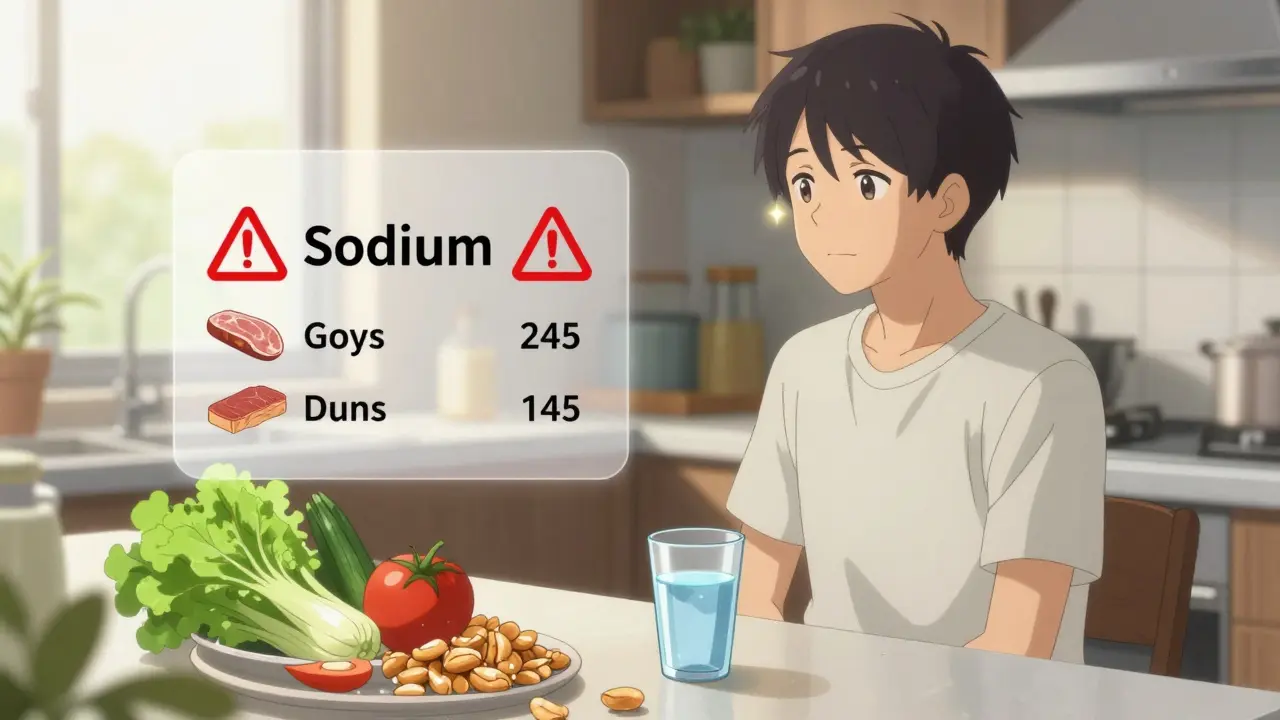
When your world spins out of nowhere, your ear feels plugged, and your hearing dips in and out, it’s not just bad luck. It’s Meniere’s disease - a disorder of the inner ear that doesn’t have a cure, but sodium restriction and smart fluid balance can cut attacks in half. For many people, the simplest, safest, and most effective treatment isn’t a pill. It’s what’s on your plate.
Back in 1929, doctors noticed something strange: when patients with Meniere’s held onto too much water, their symptoms got worse. That led to a simple idea - if you reduce salt and drink the right amount of water, you might calm the chaos in your inner ear. Decades later, that idea isn’t just theory. A February 2024 study of 50 patients showed that sticking to 1,500 mg of sodium a day and drinking 35 ml of water per kilogram of body weight improved hearing, cut vertigo episodes by nearly 60%, and made tinnitus much quieter. No drugs. No surgery. Just food and water.
Why Salt Makes Meniere’s Worse
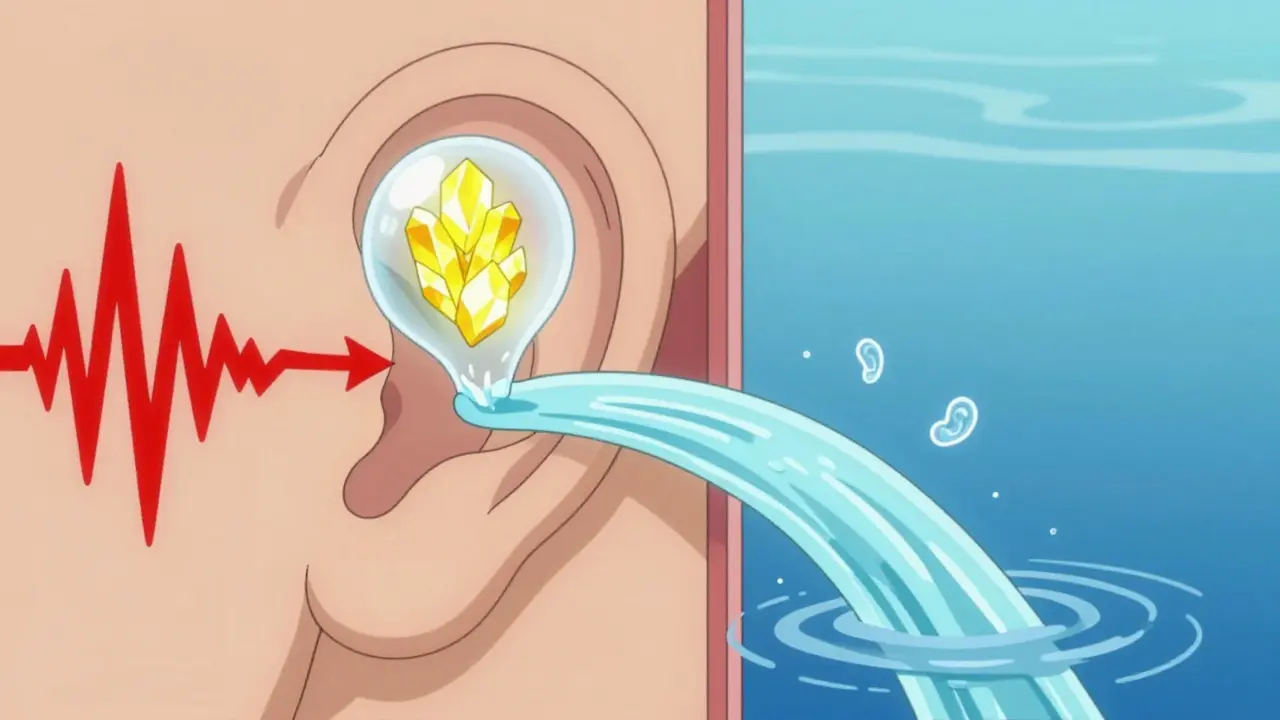
Your inner ear has a fluid called endolymph. It’s supposed to stay at a steady pressure so your balance and hearing systems work right. But when sodium builds up in your blood, your body holds onto extra water. That extra fluid pushes into the inner ear, swelling the endolymph like a balloon overfilled with air. That’s when you feel dizzy, your ears ring, and your hearing muddies.
Sodium doesn’t just come from the salt shaker. In fact, 77% of the sodium most people eat comes from packaged foods, restaurant meals, and condiments. A single slice of deli meat can have 500 mg. A cup of canned soup? 800 mg. A bag of pretzels? 450 mg. That’s more than half your daily limit before you even sit down for dinner.
Doctors don’t agree on one exact number, but nearly every major guideline - from the American Academy of Otolaryngology to the Mayo Clinic - says to aim for 1,500 to 2,000 mg of sodium per day. That’s less than one teaspoon of table salt. For comparison, the average American eats over 3,400 mg daily. You’re not just cutting back. You’re cutting out two-thirds of what you’re used to.
How Much Water Should You Drink?
Here’s where most people get it wrong. You might think, “If salt causes fluid buildup, I should drink less water.” But that’s the opposite of what works.
Your body needs steady hydration to flush out sodium naturally. If you don’t drink enough, your kidneys hold onto sodium to conserve water - making the problem worse. The 2024 study found that 35 ml of water per kilogram of body weight was the sweet spot. For a 70 kg (154 lb) person, that’s about 2.5 liters a day - roughly 10 glasses. Not more. Not less. Just enough to keep your inner ear fluid balanced.
Spread it out. Drink a glass when you wake up. Have one before each meal. Sip through the afternoon. Don’t chug at night - that can mess with sleep and cause nighttime fluid shifts. And skip sugary drinks, alcohol, and caffeine. These shrink blood vessels in the inner ear, making symptoms flare.
What to Eat: A Real-World Guide
You don’t need to become a nutritionist. You just need to know what to avoid and what to choose instead.
- Avoid: Canned soups, processed meats (bacon, ham, salami), frozen meals, soy sauce, ketchup, mustard, pickles, chips, crackers, and fast food. These are sodium bombs.
- Choose: Fresh vegetables, fruits, plain rice, unsalted nuts, skinless chicken, fish, eggs, plain yogurt, and unsalted butter. Cook with herbs, lemon, garlic, black pepper, and vinegar instead of salt.
- Read labels: Look for “low sodium” or “no salt added.” Anything over 400 mg per serving is too high. Remember: serving sizes are often smaller than you think. A “single serving” of pasta sauce might be half a cup - but you eat a full cup.
- Dine smart: Ask restaurants to hold the salt. Order grilled or steamed dishes. Skip sauces. Choose side salads with oil and vinegar instead of bottled dressings.
One patient I spoke with - a 58-year-old teacher from Adelaide - switched from canned tuna to fresh salmon, swapped her morning bagel for oatmeal with cinnamon, and started cooking with lemon zest instead of salt. Within three weeks, her dizzy spells dropped from four times a week to once every two weeks. Her hearing didn’t fully bounce back, but the ringing? Gone for hours at a time.
What About Diuretics and Other Treatments?
Doctors often prescribe diuretics - pills like hydrochlorothiazide - to flush out fluid. They work for about half of patients, but they come with risks: low potassium, dehydration, kidney stones, and fatigue. And they don’t fix the root cause. You’re still eating salty food, just trying to wash it out.
Dietary changes? No side effects. No prescriptions. No clinic visits. A 2018 study found that 68% of people who stuck to under 3 grams of sodium a day saw major symptom improvement - without any drugs. Compare that to intratympanic steroid injections, which cost hundreds per shot and require repeated visits, or gentamicin, which can permanently damage hearing.
That’s why every major guideline - including the 2020 American Academy of Otolaryngology update - puts dietary changes first. Before pills. Before shots. Before surgery. Diet is the foundation.
The Hard Truth: Why Most People Fail
This isn’t easy. The same study that showed 68% improvement also found that 22% of people couldn’t stick with it. Why? Because salt is everywhere. And it’s addictive.
After a few days without salt, food tastes bland. You miss the flavor. Social events become stressful. You don’t want to be the person who says, “No, I can’t have that.”
But here’s the trick: it gets better. Within 4 to 6 weeks, your taste buds reset. You start noticing natural flavors - the sweetness in tomatoes, the earthiness in mushrooms, the tang in citrus. You don’t miss salt. You just don’t need it.
Start slow. Cut out one high-sodium food this week. Next week, replace another. Use apps like MyFitnessPal to track sodium. Aim for 2,000 mg first. Then work down to 1,500. You don’t have to be perfect. You just have to be consistent.

What the Science Still Doesn’t Know
There’s a gap. The 2024 study was small. Only 50 people. And while it’s the best evidence we have, there’s still no large-scale randomized trial proving this works for everyone. Some experts argue that sodium restriction helps mostly people with stage 2 or 3 Meniere’s. Others believe it’s about how your body handles aldosterone - a hormone that regulates salt and water. One theory says low-salt diets boost aldosterone, which helps the inner ear drain fluid better. Another says it’s just about reducing total fluid pressure.
What we do know: if you’re not doing this, you’re missing the most accessible, safest, and cheapest treatment available. And new research is coming. The NIH is running a 300-person trial right now, comparing 1,500 mg versus 2,300 mg sodium limits over 12 months. Results are due in late 2025.
Until then, the evidence we have is strong enough to act on.
Key Takeaways
- Limit sodium to 1,500-2,000 mg per day - less than one teaspoon of salt.
- Drink 35 ml of water per kilogram of body weight daily - spread evenly.
- Avoid processed foods, condiments, canned goods, and restaurant meals.
- Cook with herbs, lemon, garlic, and spices instead of salt.
- Diuretics help, but diet is safer, cheaper, and more sustainable.
- It takes 4-6 weeks for your taste buds to adjust. Stick with it.
Can I still eat out if I have Meniere’s disease?
Yes, but you need to be strategic. Skip fried foods, sauces, and soups. Ask for grilled or steamed options. Request no added salt. Choose plain rice, steamed vegetables, and lean proteins. Avoid bread baskets and chips. Many restaurants now list sodium content online - check before you go.
Is low sodium the same as a low-carb or keto diet?
No. Low sodium is about salt and fluid balance. Keto and low-carb diets focus on reducing carbs. You can do both, but they’re not the same. Some keto foods - like deli meats, cheese, and canned fish - are very high in sodium. Always check labels, even on “healthy” low-carb snacks.
How long does it take to see results from a low-sodium diet?
Most people notice fewer vertigo attacks within 4 to 8 weeks. Hearing and tinnitus improvements may take longer - up to 3 to 6 months. Consistency matters more than perfection. Even cutting sodium by half can reduce attack frequency.
Can I use salt substitutes like potassium chloride?
Use caution. Potassium chloride is a common salt substitute, but it can be dangerous if you have kidney problems or take certain blood pressure meds. Always talk to your doctor before using it. In most cases, it’s safer to use herbs and spices than to rely on substitutes.
Does caffeine make Meniere’s worse?
Yes. Caffeine narrows blood vessels in the inner ear, which can trigger or worsen vertigo and tinnitus. Cut back on coffee, energy drinks, and even chocolate. If you must have caffeine, limit it to one small cup in the morning - and never after 2 p.m.
If you’re tired of dizziness, muffled hearing, and ringing in your ears, the answer isn’t always a pill. Sometimes, it’s just a different way of eating. Start today. Cut one high-sodium food. Drink your water. Give it six weeks. You might be surprised how much better you feel.