

Methotrexate-NSAID Risk Calculator
Assess Your Risk
Your Risk Assessment
When you're managing rheumatoid arthritis with methotrexate, pain relief is often necessary. But if you reach for an over-the-counter NSAID like ibuprofen or naproxen, you could be putting your kidneys-and your whole body-at risk. This isn’t just a theoretical concern. It’s a real, documented danger that has sent people to the hospital and even caused deaths. The problem isn’t that either drug is unsafe on its own. It’s what happens when they’re taken together: methotrexate levels spike, kidney function drops, and toxicity can follow fast.
How Methotrexate Works and Why It’s Dangerous with NSAIDs
Methotrexate is a drug that blocks folate metabolism. At low doses-usually 5 to 25 mg once a week-it’s used for autoimmune diseases like rheumatoid arthritis. At high doses, it kills rapidly dividing cells, making it a cancer treatment. Either way, your kidneys are responsible for clearing it from your blood. About 80% of methotrexate leaves your body through urine, mostly by active secretion in the kidney tubules.
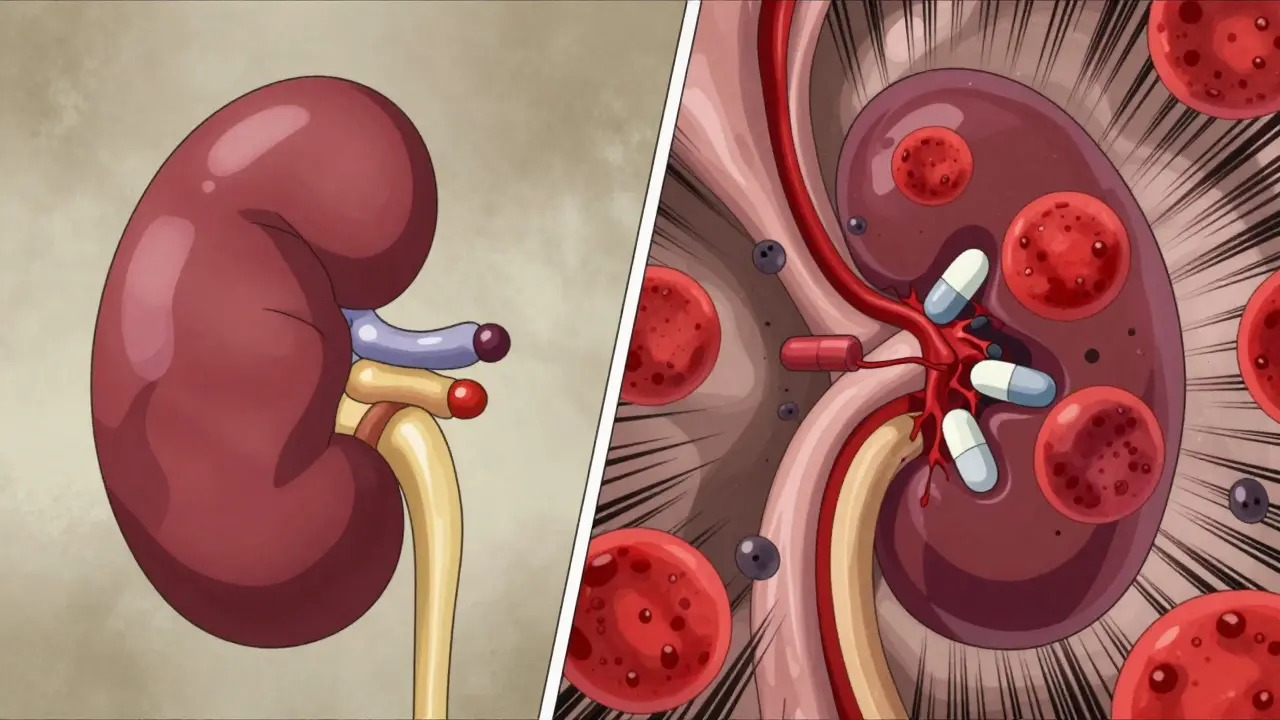
NSAIDs-like ibuprofen, naproxen, diclofenac, and celecoxib-work by blocking enzymes called COX-1 and COX-2. These enzymes make prostaglandins, which help keep blood flowing to your kidneys. When NSAIDs reduce prostaglandins, your kidneys get less blood. That’s fine for a healthy person taking an occasional pill. But for someone on methotrexate, it’s a problem. Less blood flow means less methotrexate gets filtered out.
Studies show that NSAIDs can reduce methotrexate clearance by 25% to 40%. In some cases, especially with ketorolac, levels can rise by 50%. That’s not a small increase. It’s enough to push someone from a safe range into toxic territory. And because methotrexate follows nonlinear kinetics-meaning its clearance slows down as levels rise-the effect isn’t linear. A small drop in kidney function can cause a big jump in drug concentration.
The Real Risk: High-Dose vs. Low-Dose Methotrexate
Not all methotrexate users face the same level of danger. The risk changes dramatically depending on whether you’re on high-dose or low-dose therapy.
High-dose methotrexate-used in cancer treatment, often above 500 mg/m²-is extremely sensitive to interactions. When NSAIDs are added, the risk of life-threatening toxicity, including kidney failure and bone marrow suppression, jumps by nearly five times. The FDA and EMA both warn that NSAIDs should be avoided entirely in high-dose regimens unless absolutely necessary. Even then, methotrexate levels must be checked at 24, 48, and 72 hours after administration.
For low-dose methotrexate users-most people with rheumatoid arthritis-the data is more mixed. A large 2019 study of over 4,000 patients found no significant increase in adverse events when NSAIDs were used with normal kidney function. But here’s the catch: that study only looked at people with healthy kidneys. When researchers examined patients with early kidney impairment (eGFR 45-59 mL/min), the risk of acute kidney injury tripled. And in patients over 65, mortality risk rose by 2.8 times.
The bottom line? If your kidneys are working well, occasional NSAID use may be manageable. If they’re not, even a small dose of an NSAID can be dangerous.
Which NSAIDs Are the Most Dangerous?
Not all NSAIDs are created equal when it comes to interacting with methotrexate.
- Ketorolac is the worst offender. It’s a potent inhibitor of renal prostaglandins and can increase methotrexate levels by up to 50%. It’s rarely used long-term, but if someone gets it after surgery or a bad injury, the risk spikes.
- Ibuprofen and naproxen are common and carry moderate risk-typically increasing methotrexate levels by 25-30%.
- Diclofenac is similar in risk to ibuprofen, but it’s more likely to be prescribed for chronic use, which increases cumulative exposure.
- Celecoxib, a COX-2 selective inhibitor, shows the lowest interaction potential, raising methotrexate levels by only 10-15%. It’s not risk-free, but it’s the safest option if an NSAID is truly needed.
What’s surprising is that even “mild” NSAIDs like aspirin can interfere, especially at higher doses. The key isn’t just the drug-it’s how much you take, how often, and whether your kidneys are already under stress.
Who’s Most at Risk?
Some people are far more vulnerable than others. The biggest risk factors include:
- Age over 65-kidney function naturally declines, and drug clearance slows.
- Pre-existing kidney disease-even mild impairment (eGFR <60) doubles or triples the risk.
- Dehydration-low fluid intake reduces kidney perfusion, making the interaction worse.
- Diabetes or high blood pressure-both damage kidneys over time, making them less able to handle extra stress.
- Genetic factors-a 2023 study found that 15% of Caucasians carry a gene variant (SLC19A1 80G>A) that makes them absorb methotrexate more efficiently and clear it slower, making NSAID interactions far more dangerous.
One study found that 78% of serious cases involved patients who hadn’t had a kidney test in the past 30 days. That’s not coincidence. It’s negligence. Methotrexate toxicity often shows up silently-no pain, no warning. By the time someone feels sick, their white blood cell count may have crashed or their creatinine has spiked.
What Happens When Toxicity Occurs?
Signs of methotrexate toxicity include:
- Severe fatigue or weakness
- Mouth sores or ulcers
- Nausea, vomiting, diarrhea
- Unexplained bruising or bleeding
- Fever or infection (due to low white blood cells)
- Decreased urine output or swelling (signs of kidney failure)
In one Reddit post, a patient described taking naproxen for knee pain, then developing nausea and a white blood cell count of 1.8 × 10⁹/L-far below the normal range of 4-11. It took two weeks of leucovorin (a rescue agent) to recover. That’s not rare. The FDA’s adverse event database recorded three deaths between 2018 and 2022 directly linked to this combination.
What’s worse? Many patients don’t know they’re at risk. A 2023 survey on CreakyJoints found that 62% of people taking methotrexate were prescribed NSAIDs without being warned about the interaction. That’s a failure of communication-and it’s preventable.
How to Stay Safe: Practical Guidelines
If you’re on methotrexate and need pain relief, here’s what actually works:
- Test your kidney function first. Get an eGFR and serum creatinine before starting any NSAID. Repeat it 48-72 hours after starting the NSAID. If creatinine rises more than 25%, stop the NSAID.
- Avoid NSAIDs if your eGFR is below 60. The American College of Rheumatology says this clearly: don’t use them.
- If you must use an NSAID, pick celecoxib. It has the lowest interaction risk. Use the smallest dose for the shortest time possible.
- Don’t take NSAIDs on the same day as methotrexate. Space them out by at least 12 hours to avoid peak concentration overlap.
- Monitor your blood counts. Get a CBC every 2-4 weeks when starting NSAID therapy. A drop in white blood cells or platelets is an early warning sign.
- Stay hydrated. Drink plenty of water, especially if you’re active or in hot weather.
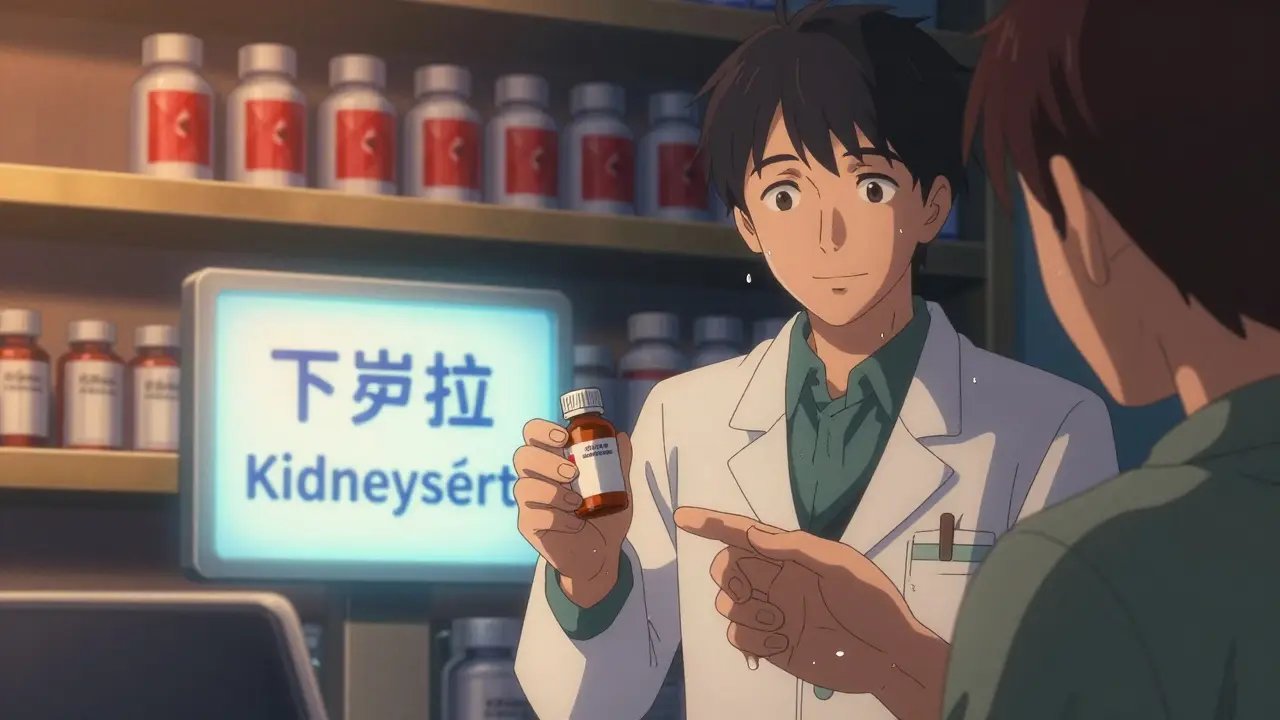
- Ask your pharmacist. A 2023 study showed pharmacist-led interventions reduced interaction rates by 63% through simple screenings and patient education.
For chronic pain, consider alternatives: acetaminophen (up to 3 grams daily), physical therapy, or disease-modifying drugs like hydroxychloroquine or sulfasalazine to reduce inflammation at its source.
What’s Changing in 2026?
Regulators are catching up. The FDA now requires all methotrexate labels to include clear warnings about NSAID interactions. The EMA has standardized monitoring protocols across Europe. But the real breakthrough is on the horizon: point-of-care methotrexate level testing devices are in phase 3 trials. These could let doctors check your methotrexate concentration in minutes-like a glucose meter for blood sugar.
Meanwhile, pharmacogenomics is revealing why some people are more vulnerable. If you have the SLC19A1 80G>A variant, your body holds onto methotrexate longer. In the future, genetic testing may become part of routine care before starting methotrexate.
But for now, the safest approach hasn’t changed: know your kidney function. Don’t guess. Don’t assume. Test. Monitor. Communicate.
When to Call Your Doctor
Call your provider immediately if you experience any of these after starting an NSAID:
- Feeling unusually tired or weak
- Sores in your mouth or throat
- Fever or signs of infection
- Little or no urine output
- Unexplained bruising or bleeding
Don’t wait for symptoms to get worse. Early detection saves lives.
Man, I had no idea NSAIDs could mess with methotrexate like that. I’ve been popping ibuprofen every other day for my back pain and just assumed it was fine since I’m not on chemo. Guess I’m scheduling a kidney test this week-better safe than sorry. 🤕
So much of medicine feels like guesswork until you get slapped in the face by a toxicity warning. I love how this breaks it down without fearmongering. Also, the part about pharmacogenomics? That’s the future right there. We’re not all the same-why do we treat us like we are? 💭❤️
Wait-so you’re telling me my 68-year-old dad, who’s been on methotrexate for 12 years and takes naproxen like it’s candy, is basically playing Russian roulette with his kidneys?!?!!?!!?!!? I’m calling his rheumatologist RIGHT NOW.
Of course the FDA didn’t warn us sooner-big pharma’s got too many lobbyists. And don’t even get me started on how they let celecoxib get labeled ‘safer’-it’s just a corporate trick to sell more pills. Wake up, people! This is all a scam to keep you dependent on drugs!! 🇺🇸🔥
While the general sentiment of this post is commendable, one must observe that the phrase ‘mild’ NSAIDs is semantically incoherent in a pharmacokinetic context. Aspirin, even at low doses, exhibits non-selective COX inhibition and thus cannot be classified as ‘mild’-it is merely less potent in its anti-inflammatory effect, not its renal impact. Precision in language is not pedantry; it is clinical necessity.
My grandma’s on methotrexate and she swears by that cheap naproxen from the dollar store. Told her about this-she said, ‘If it’s gonna kill me, at least I won’t be in pain.’ I cried. Then I made her an appointment. No one should have to choose between comfort and survival.
Just wanted to add-my pharmacist actually flagged this interaction when I picked up my methotrexate script last month. She printed out a one-pager on NSAID risks and gave it to me with a smile. Small acts like that save lives. We need more of those in healthcare.
It’s pathetic how people still think OTC means ‘safe.’ You wouldn’t take random vitamins from a gas station and expect your liver to thank you-why is this any different? You’re not a child. You’re an adult with a smartphone. Look up the drug interaction checker. It’s literally one Google search. If you can’t be bothered to protect yourself, don’t blame the system when your kidneys give out.