
Immunosuppressant Drug Level Checker
Check Your Drug Levels
When you're on immunosuppressive drugs-whether after a kidney transplant or managing lupus or rheumatoid arthritis-your body is walking a tightrope. Too much suppression, and you’re at risk for serious infections or even cancer. Too little, and your immune system attacks your new organ or your own tissues. The difference between success and failure isn’t just the drug dose. It’s monitoring.
Why Monitoring Isn’t Optional
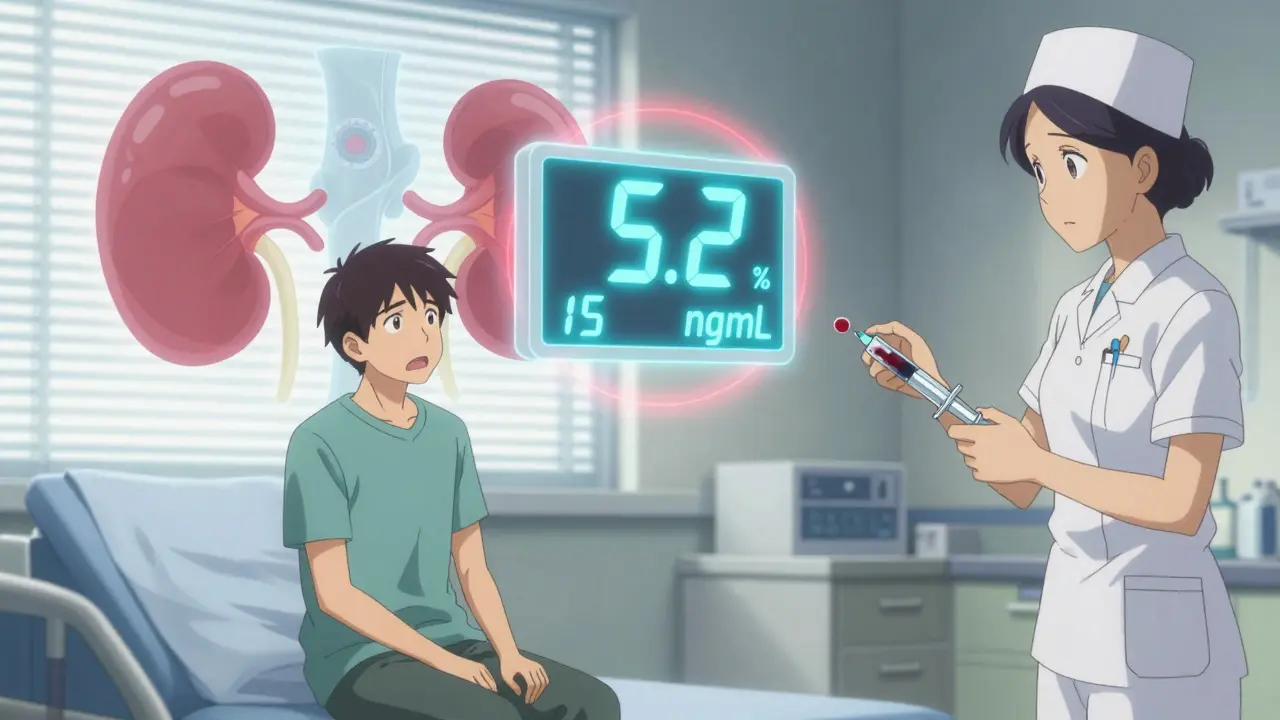
Immunosuppressants like tacrolimus, cyclosporine, and mycophenolate don’t work like antibiotics. You can’t just take a pill and wait for results. These drugs have a razor-thin window between helping and harming. For example, tacrolimus levels below 5 ng/mL might let your body reject a transplanted kidney. Levels above 15 ng/mL? That’s when kidney damage, nerve problems, or diabetes start showing up. And here’s the kicker: two people taking the exact same dose can have completely different blood levels. One might be perfectly safe. The other could be heading for organ failure. That’s why monitoring isn’t just good practice-it’s life-saving. Studies show that patients who get regular drug level checks have 37% fewer acute rejections and 22% better five-year graft survival than those on fixed doses. This isn’t theory. It’s data from the American Society of Transplantation, backed by real outcomes in hospitals across the U.S., Europe, and Australia.Therapeutic Drug Monitoring: The Backbone of Safe Treatment
Not all immunosuppressants need the same kind of tracking. Corticosteroids like prednisone? You don’t check blood levels. Belatacept? No routine monitoring needed. But for calcineurin inhibitors and mTOR blockers, it’s non-negotiable. For tacrolimus, doctors check the trough level-the lowest point in your blood, just before your next dose. In the first three months after a transplant, the target is 5-10 ng/mL. After that, it drops to 3-7 ng/mL. Too high? You risk kidney damage. Too low? Rejection looms. Cyclosporine is trickier. Some centers still use just the trough (C0), but the smarter approach is the C2 test-measuring levels two hours after dosing. Studies show C2 levels correlate with rejection risk far better than troughs alone (r=0.87). A C2 above 200 ng/mL in the first month? That’s a red flag for toxicity. Mycophenolic acid (MPA) is another challenge. Its levels swing wildly because of how your gut and liver handle it. Just checking the trough? That’s like guessing your car’s fuel level by looking at the dashboard light. The real measure is the area under the curve (AUC)-how much drug your body is exposed to over 12 hours. An AUC between 30 and 60 mg·h/L gives you an 85% chance of staying rejection-free in the first year. But AUC testing takes multiple blood draws over hours. Most clinics can’t do it routinely-yet. The gold standard for measuring these levels is liquid chromatography-tandem mass spectrometry (LC-MS/MS). It’s accurate to 95-98%. But it costs $150-$250 per test. Many labs still use cheaper immunoassays. They’re faster and cheaper-$50-$100-but they can overestimate levels by 15-20% because they mistake drug metabolites for the active drug. That’s dangerous. One false high reading could lead to a dangerous dose reduction. One false low? You could miss a rejection.Routine Blood Work: Catching the Hidden Side Effects
Drug levels tell you about the medicine. Routine labs tell you about your body’s response. Every 1-3 months, you’ll likely get a full blood count, kidney and liver function tests, electrolytes, calcium, magnesium, phosphate, uric acid, and fasting glucose. Why? Because these drugs don’t just affect your immune system. Cyclosporine and tacrolimus both wreck your kidneys over time. A 30% rise in creatinine? That’s not normal-it’s a warning. Tacrolimus also spikes blood sugar. About 30% of patients develop new-onset diabetes after transplant. That’s why fasting glucose checks are mandatory. Sirolimus and everolimus? They’re notorious for raising cholesterol and triglycerides. Up to 75% of patients need statins. They also cause low white blood cell counts and, rarely, lung inflammation called pneumonitis. That’s why a chest X-ray might be ordered if you develop a dry cough or shortness of breath. Mycophenolate? It kills bone marrow. About 25-30% of patients get leukopenia. 20-25% get anemia. 10-15% get low platelets. If your hemoglobin drops or your white count crashes, your dose might need adjusting-or stopping. Magnesium? Cyclosporine makes you lose it. Up to 60% of patients become hypomagnesemic. That can cause muscle cramps, irregular heartbeats, or seizures. You’ll need supplements if levels dip below 0.7 mmol/L. Lipid panels? Checked every six months. High cholesterol isn’t just a heart risk-it’s linked to faster graft failure.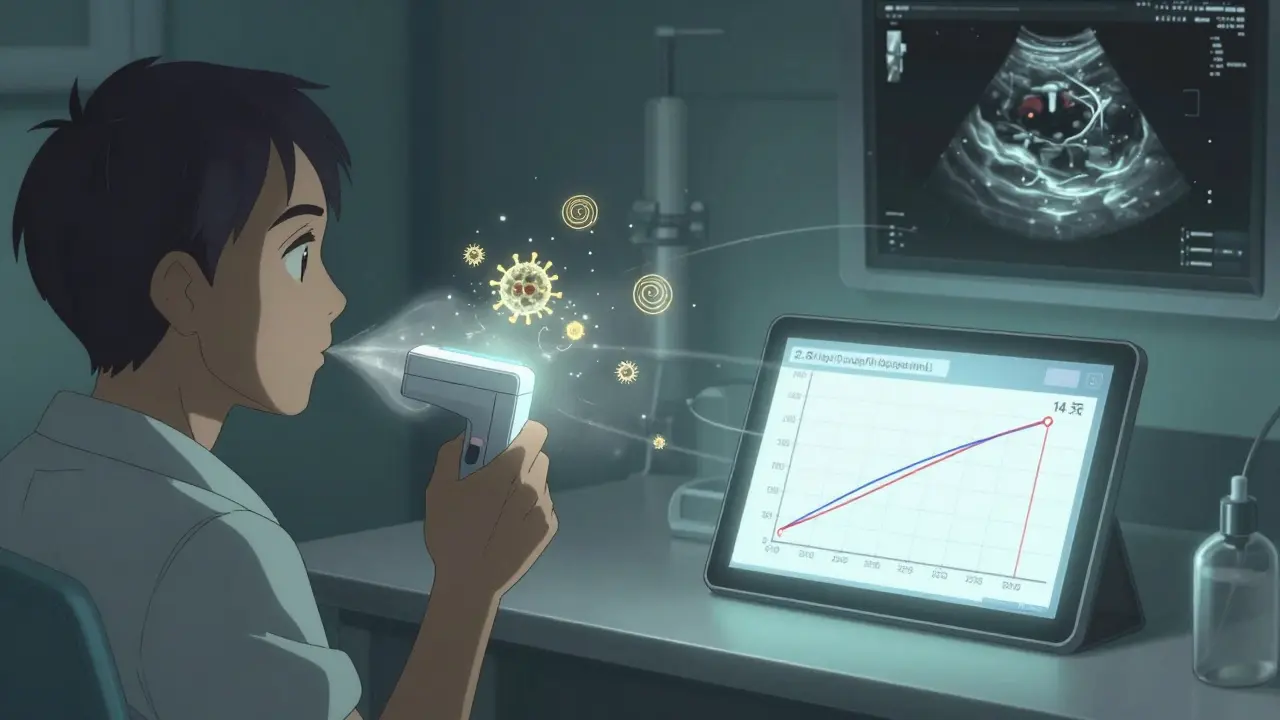
Imaging: Seeing What Blood Tests Can’t
Blood tests show chemical changes. Imaging shows structural damage. After transplant, you’ll get a renal ultrasound at least once a year. It checks for blockages, fluid collections, or reduced blood flow to the kidney. If your creatinine suddenly jumps, an ultrasound is the first imaging step-before you assume it’s rejection. If you’re on sirolimus and develop a persistent cough or low oxygen, a chest X-ray or CT scan might be needed. Pneumonitis from sirolimus looks like pneumonia on imaging-but antibiotics won’t help. Only lowering the drug does. Corticosteroids? They eat your bones. After one year of daily prednisone, bone density scans (DEXA) are recommended. Osteoporosis can develop silently. A fracture from a minor fall isn’t just bad luck-it’s a side effect of therapy. In rare cases, if rejection is suspected but blood tests are unclear, a biopsy of the transplanted organ is still the definitive test. But imaging helps decide when to do it.The Future Is in the Virus: TTV as an Immune Meter
Here’s one of the most exciting shifts in monitoring: using a virus you didn’t know you had. Torque Teno Virus (TTV) infects nearly everyone. In healthy people, it’s harmless and silent. But in transplant patients? It multiplies like crazy when your immune system is suppressed. And here’s the magic: the more TTV in your blood, the weaker your immune system is. Research shows TTV levels directly mirror drug exposure. A TTV load between 2.5 and 3.5 log10 copies/mL in months 4-12 after transplant is the sweet spot. Below that? Your immune system is too suppressed-you’re at high risk for rejection (hazard ratio 3.2). Above that? You’re too suppressed-you’re at high risk for CMV, BK virus, or even lymphoma (hazard ratio 2.7). The TTVguideIT trial, running across 12 countries, is testing whether adjusting drug doses based on TTV levels reduces both rejection and infection. Early results? A 28% drop in infections and a 22% drop in rejection episodes. That’s huge. This isn’t science fiction. It’s happening now. France’s TAOIST trial starts in 2024 to test TTV in long-term patients. AI models are already being trained to predict rejection 14 days in advance by combining TTV levels, tacrolimus concentrations, and lab trends-with 87% accuracy.Barriers and Real-World Challenges
This all sounds perfect. But reality is messier. A 2022 survey of 150 transplant centers found that 68% had no consistent monitoring rules between their kidney, liver, and heart transplant teams. Only 42% used standardized protocols for mycophenolate. Why? Cost. Labs say LC-MS/MS is too expensive. Staff are overworked. Some nurses don’t know when to draw C2 levels. Patients face their own struggles. The average transplant recipient gets 12-18 blood tests in the first year. Many feel anxious, exhausted, or even depressed. One patient in Adelaide told me, “I dread the needle more than the surgery.” The solution? Dedicated immunosuppression teams. Centers with pharmacists, nurses, and doctors working together-reviewing results within 24 hours-have the best outcomes. They don’t just track numbers. They adjust therapy based on context: a recent infection, a new medication, a missed dose.
What’s Next? Point-of-Care and AI
The future is faster, smarter, and less invasive. Point-of-care devices for tacrolimus and cyclosporine are in phase 2 trials. Imagine getting your level checked in the clinic while you wait-no lab delay, no waiting days for results. FDA approval could come by 2026-2027. Even wilder? Exhaled breath analysis. Researchers are detecting metabolites of immunosuppressants in your breath. No needles. Just a puff into a device. Still in preclinical testing, but the potential is real. And AI? It’s not replacing doctors. It’s giving them superpowers. Algorithms that see patterns in your data before you do. That predict rejection before you feel sick. That tell you: “Your dose is fine, but your TTV is dropping. Let’s talk about reducing your mycophenolate.”Bottom Line: Monitoring Is Personalized Medicine
This isn’t about checking boxes. It’s about tailoring your care to your body. Your genetics. Your lifestyle. Your response. The goal isn’t to keep drug levels in a textbook range. It’s to keep your immune system balanced-strong enough to protect you, weak enough to let your transplant survive. If you’re on immunosuppressants, ask your team: “What are we measuring, and why?” Don’t accept vague answers. Demand to know your tacrolimus level, your TTV if it’s offered, your bone density results. Track your own labs. Bring them to appointments. You’re not just a patient-you’re the most important part of the team. The science has moved far beyond “take your pill and come back in three months.” We now have tools to see inside your immune system. The question isn’t whether you should monitor. It’s whether you’re monitoring smartly.How often do I need blood tests while on immunosuppressants?
In the first 3-6 months after transplant, you’ll typically need blood tests every 1-2 weeks. After that, it tapers to every 2-4 weeks, then monthly. By year one, most patients are tested every 6-12 weeks, unless there’s a change in health or medication. Routine labs (like kidney and liver function) are checked every 1-3 months. Drug levels (like tacrolimus) are checked at least monthly in the first year, and sometimes more often if levels are unstable.
Can I skip my blood tests if I feel fine?
No. Many problems-like rising creatinine, early signs of diabetes, or low white blood cell counts-don’t cause symptoms until they’re advanced. A patient in Adelaide had no symptoms but a tacrolimus level of 22 ng/mL. His kidneys were already damaged. By the time he felt tired, it was too late to reverse it. Monitoring catches issues before you feel them.
What’s the difference between trough and C2 levels?
Trough (C0) is the lowest level-measured just before your next dose. C2 is measured two hours after taking your drug. C2 gives a better picture of how much drug your body is absorbing and how fast it’s being cleared. For cyclosporine, C2 is more accurate at predicting rejection than trough levels alone. Tacrolimus is usually monitored at trough because it’s more stable in the blood, but C2 can be used in complex cases.
Why do some labs use cheaper tests instead of LC-MS/MS?
Cost and access. LC-MS/MS is accurate but expensive-$150-$250 per test. Immunoassays cost $50-$100 and are faster. Many hospitals use them because insurance doesn’t always cover the more expensive option. But immunoassays can overestimate levels by up to 20% because they detect inactive metabolites. If your level looks high but you’re not having side effects, ask if your lab uses LC-MS/MS.
Is TTV monitoring available everywhere?
Not yet. TTV testing is still mostly in research centers and large transplant hospitals. It’s not FDA-approved for routine use in the U.S. as of early 2026, though it’s used in Australia and parts of Europe under research protocols. The TTVguideIT trial ends in 2026, and if results are strong, widespread adoption could follow. Ask your transplant team if they’re offering it as part of a trial or clinical program.
What happens if my drug level is too high or too low?
If your level is too low, your doctor may increase your dose to prevent rejection. If it’s too high, they’ll reduce your dose to avoid toxicity-like kidney damage, tremors, or high blood sugar. But it’s not just about the number. They’ll look at your symptoms, other lab results, and recent illnesses. A slightly high level with no side effects might be okay. A normal level with new kidney damage might mean you need a different drug. Adjustments are always personalized.
Yo so i just read this like 3x and still think its wild how we’re basically playing god with drugs that can kill you if you sneeze wrong. Like who decided 5-10 ng/mL is the ‘safe’ zone? Some guy in a lab coat with a coffee stain on his shirt? 😅
Accurate therapeutic drug monitoring is non-negotiable in immunosuppressed patients. The data supporting trough-level tracking for calcineurin inhibitors is robust and reproducible across international cohorts. Neglecting this protocol increases rejection risk by over 30%.
Let me ask you something-why is it that only in the West do we believe that measuring TTV is ‘cutting-edge’? In India, we’ve known for decades that viruses don’t lie. The pharmaceutical industry suppresses this because they profit more from endless blood tests than from a simple viral marker. You think LC-MS/MS is expensive? Wait till you see the bill for the ‘research’ that keeps it alive.
lol i just got my labs done and my doc said my tac level was ‘fine’ but i’ve been dizzy for a week. guess im just too sensitive to science
This is so helpful!! 🙌 I’ve been keeping a little notebook of my labs and it’s crazy how much difference it makes when you bring it to appointments. You’re not just a patient-you’re the CEO of your own body! 💪❤️
TTV as an immune meter? How poetic. The virus that silently colonizes humanity now becomes our guardian angel in the age of immunosuppression. Truly, the universe has a sense of humor. 🤖🧬
As someone from a culture where ‘take your medicine and don’t ask questions’ is the norm, this post changed my perspective. Asking ‘why’ isn’t being difficult-it’s being alive. Thank you for this. 🌏
The emphasis on personalized monitoring is refreshing. Too often, protocols are applied like cookie cutters. The fact that two people on identical doses can have wildly different outcomes underscores the biological uniqueness of each patient. This isn’t just medicine-it’s individualized biology.
Isn’t it ironic that we’ve reduced the human immune system to a series of log10 values and AUC curves? We’ve turned a miracle of evolution into a spreadsheet. The real question isn’t whether we’re monitoring enough-it’s whether we’ve forgotten what we’re monitoring for. The soul? The self? The quiet hum of a body trying to survive?
While the science here is compelling, I must note: the emotional toll of this constant surveillance is rarely addressed in clinical guidelines. One patient said they dreaded the needle more than the surgery. That’s not a side effect-it’s a systemic failure. We measure drugs, but we don’t measure despair.
TTV? Sounds like a new K-pop band. But seriously-this is the future. Why do we need 12 blood draws when a virus is already screaming at us? Also, why is this not in every clinic yet? Because money > science. Again.
Just got my first TTV test back and it was in the sweet spot! Felt like winning the lottery. Keep doing the work, your body’s thanking you. 🙏
Umm no. TTV is just a distraction. Real doctors use creatinine and tac levels. This is just pharma’s new money-maker wrapped in sci-fi. Stop buying into tech-washing.