
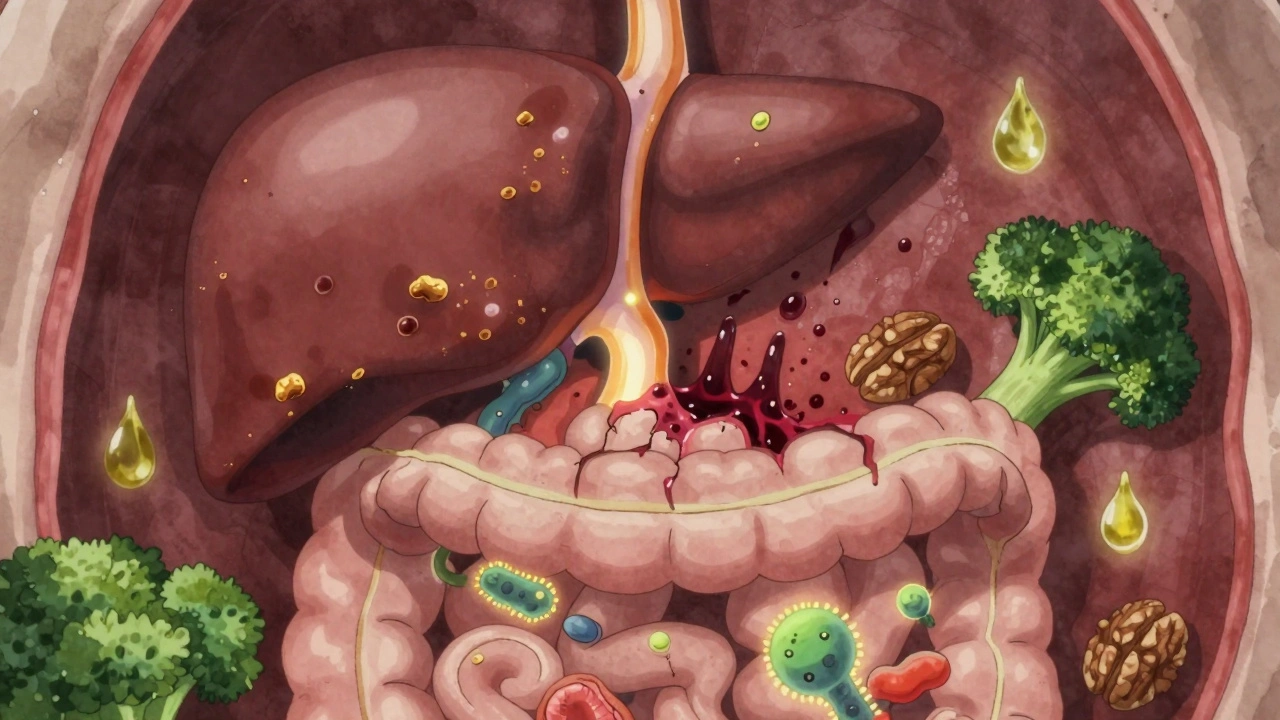
When your liver starts storing too much fat-not because you drink alcohol, but because of what you eat and how your gut behaves-it’s not just about being overweight. It’s about your gut. Nonalcoholic fatty liver disease (NAFLD), now called metabolic dysfunction-associated steatotic liver disease (MASLD), affects nearly one in three adults worldwide. And the real problem isn’t just the fat in your liver-it’s the broken communication between your gut and your liver.
The Gut-Liver Connection You Can’t Ignore
Your gut and liver are connected by a highway called the portal vein. Every time you eat, nutrients, toxins, and bacteria from your intestines flow straight to your liver. Normally, your gut lining acts like a fence-keeping bad stuff out. But in NAFLD, that fence gets leaky. Studies show about 90% of people with NAFLD have a damaged gut barrier. That means endotoxins like LPS (lipopolysaccharide) slip through and trigger inflammation in the liver. In fact, LPS levels in NAFLD patients are 2.3 times higher than in healthy people. This isn’t random. Your gut bacteria are out of balance. Healthy guts have a wide variety of microbes. NAFLD patients often have less diversity-fewer good bugs, more bad ones. Some studies show more Bacteroidetes and fewer Firmicutes. Others point to spikes in Proteobacteria and Fusobacteria. The exact mix varies by population, but the pattern is clear: the wrong bugs are in charge. These bad bugs don’t just sit there. They make things worse. They turn your food into harmful metabolites. They break down bile acids in ways that confuse your liver’s fat-burning signals. And they produce far less butyrate-the good short-chain fatty acid that keeps your gut lining strong and tells your liver to stop storing fat. NAFLD patients have 58% less butyrate in their stool than healthy people.Diet Is the Most Powerful Tool You Have
You can’t fix NAFLD with pills alone. You need to change what’s going into your gut. The best evidence points to one diet: the Mediterranean diet. A 6-month trial with 70 NAFLD patients showed that eating a Mediterranean diet-rich in olive oil, vegetables, nuts, fish, and whole grains-plus 30 grams of walnuts daily cut liver fat by 32%. Walnuts aren’t just healthy fats. They’re packed with fiber and polyphenols that feed good gut bacteria. That’s the key: it’s not just what you avoid-it’s what you feed your microbes. Cut out added sugar. Fructose, especially from soda and processed snacks, is a major driver of liver fat. Limit it to under 25 grams a day. That’s about one can of soda. Replace it with whole fruit. The fiber in fruit slows sugar absorption and feeds good bacteria. Eat more fiber. Aim for 25-30 grams a day. That means beans, lentils, oats, broccoli, apples, and whole grains like barley and quinoa. Fiber isn’t just for digestion-it’s fuel for your gut bugs. More fiber = more butyrate = stronger gut lining = less liver inflammation. Choose healthy fats. Swap butter and fried foods for olive oil, avocados, and fatty fish like salmon. These fats reduce inflammation and improve insulin sensitivity, which helps your liver stop hoarding fat.Weight Loss Isn’t Optional-It’s the Cure
Losing weight is the single most effective treatment for NAFLD. And you don’t need to drop 50 pounds. Losing just 5-7% of your body weight improves liver fat in 81% of people. Lose 10%, and nearly half of those with the more serious form-NASH-see their liver inflammation and scarring reverse. How? Because weight loss reduces fat in your liver, lowers insulin resistance, and helps your gut lining heal. It also changes your microbiome. One study found that after weight loss, the ratio of good to bad bacteria shifted back toward normal. The trick? Don’t crash diet. Aim for 0.5-1 kg (1-2 lbs) per week. That’s a daily calorie deficit of 500-750 calories. Combine it with movement-even a daily 30-minute walk helps. People who combine diet and exercise lower their liver enzyme ALT by 28 units, while those who only diet drop it by 15.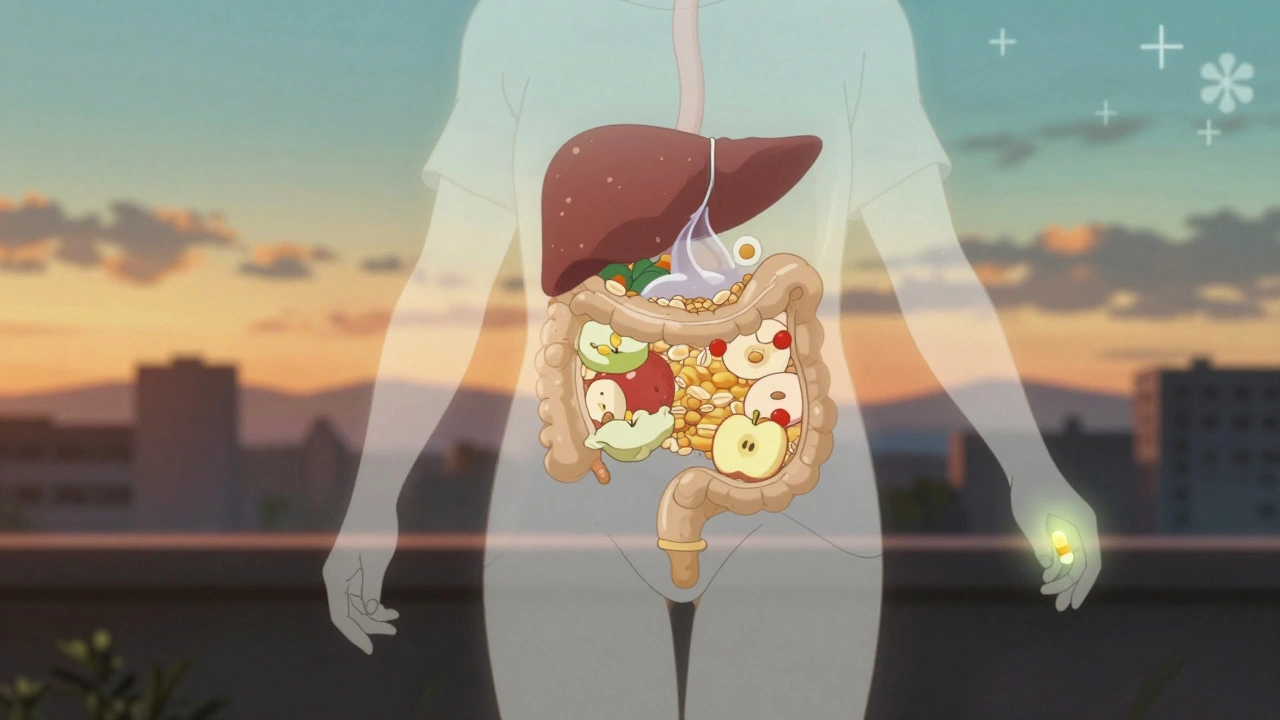
Probiotics and Prebiotics: Helpful, But Not Magic
Probiotics won’t fix NAFLD alone. But they can help-especially when paired with diet and weight loss. A 24-week study with 100 NAFLD patients found that taking a daily probiotic blend (Lactobacillus rhamnosus GG, Bifidobacterium longum, and Streptococcus thermophilus) reduced liver fat by 23% and ALT levels by 31%. That’s nearly as good as losing 10% of body weight. Prebiotics work too. Inulin and fructo-oligosaccharides (FOS) are fibers that feed good bacteria. Taking 10 grams of inulin a day for 12 weeks boosted butyrate by 47% and lowered liver stiffness by 15%-a sign of less scarring. Not all probiotics are equal. Look for multi-strain formulas with at least 10^9-10^10 CFUs per dose. Strains like Lactobacillus reuteri NCIMB 30242 have been shown to help regulate bile acids, which directly affect liver fat. But here’s the catch: 22% of people in trials quit probiotics because of bloating or gas. Start low. Take one capsule a day for a week, then increase. And always pair them with fiber-rich food.What Doesn’t Work (And Why)
Fasting diets like 5:2 are popular on Reddit, and many people report feeling better. But there’s no solid proof they reverse liver damage better than steady calorie control. And they’re hard to stick with long-term. Fecal microbiota transplants (FMT) sound futuristic. Early trials show small improvements in liver enzymes, but no real change in liver tissue. It’s still experimental. And no, liver cleanses, detox teas, or miracle supplements do anything. They’re expensive and risky. Stick to food.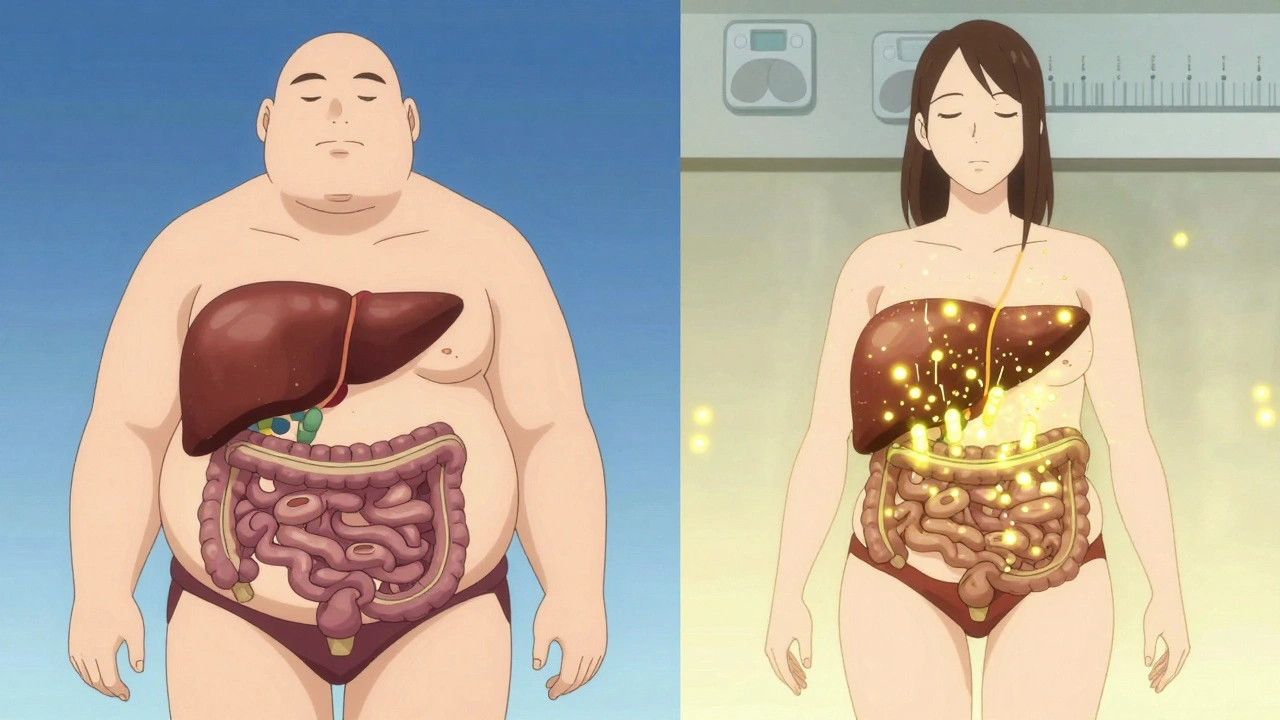
Real People, Real Results
In a Mayo Clinic program, people who lost 7-10% of their weight with structured support-diet, exercise, counseling-kept their liver healthy 68% of the time two years later. Those who tried to lose weight on their own? Only 29% stayed in remission. Why? Because change is hard. Social events, cravings, stress eating-they all trip people up. The most successful people don’t go cold turkey. They swap. Replace white bread with sourdough. Swap soda for sparkling water with lemon. Eat an apple before lunch to curb hunger.What’s Next?
The future of NAFLD treatment is personal. Scientists are working on tests that analyze your gut bacteria to predict your risk and suggest the best diet for your microbiome. By 2030, this could be standard practice. For now, the path is simple: eat real food, lose weight slowly, feed your gut bugs, and move every day. You don’t need a fancy supplement. You don’t need a miracle. You just need consistency.How to Start Today
- Swap one sugary drink for water or herbal tea.
- Add one serving of vegetables to every meal.
- Walk for 30 minutes after dinner.
- Try a handful of walnuts or almonds as a snack.
- Track your weight weekly-not daily.
Swap soda for sparkling water + lemon. Done. My liver feels lighter already. 🍋
Ugh, another ‘eat salad and cry’ post. Like I don’t already know what’s ‘healthy.’ But my stress-eating? My trauma? My 3am ice cream binges? Nah. This doesn’t apply to me. 😔
Love this breakdown. Seriously. The part about butyrate? Mind blown. I started eating more oats and lentils last week and my bloating is down. Not magic, just science. 🙌
Y’all are acting like the liver is some mystical temple. It’s an organ. It’s dumb. It doesn’t care about your trauma or your ‘gut feelings’-it cares about fructose, insulin, and endotoxins. Feed it good stuff, it stops screaming. Stop treating it like a therapist. 🤓
I tried the walnuts. I ate 3. They tasted like dirt. Now I feel guilty AND gross. Why does everything healthy have to taste like punishment? 😭
While the metabolic implications of gut-liver axis dysregulation are well-documented, the reductionist framing of dietary intervention as a panacea neglects the complex interplay of epigenetic, socioeconomic, and neuroendocrine factors. One cannot presume behavioral compliance as a biological variable. The data, while compelling, remains correlational in nature.
Let’s be honest: this entire post is a capitalist scam disguised as wellness. You think eating quinoa will fix your broken biology? The liver doesn’t care about your Instagram diet. It cares about the 20 years of cortisol, sleep deprivation, and pharmaceuticals you’ve ignored. This isn’t a fix. It’s a Band-Aid on a severed artery.
India: 70% people eat dal roti. No soda. No processed food. Yet NAFLD rising. Why? Stress. Sleep. Genes. Not just diet. Simple.
so i tried the walnuts and like… i think i ate like 15? and now my stomach feels like a balloon?? maybe i did it wrong?? 🤔
Oh great. Another ‘just lose weight’ sermon. Meanwhile my thyroid is broken, my meds make me hungry, and my therapist says I’m not ‘emotional eating’-I’m surviving. Thanks for the guilt, internet.
Butyrate levels? LPS? Bacteroidetes? Bro you sound like a pharma ad. Just eat less sugar. End of story.
Can we talk about how wild it is that our gut bugs literally control our liver? Like… we’re just hosts in a microbial economy? 🤯 I’m low-key obsessed now. Also, anyone else notice how much better you feel after a week of no sugar? It’s like your body sighs.
It’s fascinating how society has reduced a complex metabolic disorder to a moral failing wrapped in a Mediterranean diet pamphlet. The real issue isn’t your gut flora-it’s the systemic neglect of public health infrastructure, the commodification of wellness, and the erasure of trauma-informed care. You cannot ‘eat your way out’ of structural violence. This post, while scientifically accurate, is dangerously reductive.
Of course you’re all here to pat yourselves on the back for eating kale. Meanwhile, the real problem is that Big Pharma doesn’t want you to know that weight loss is the only ‘cure’-because pills are more profitable. You’re not special. You’re just lucky you didn’t inherit the bad genes.
Just started walking after dinner. Already slept better. 🌙