
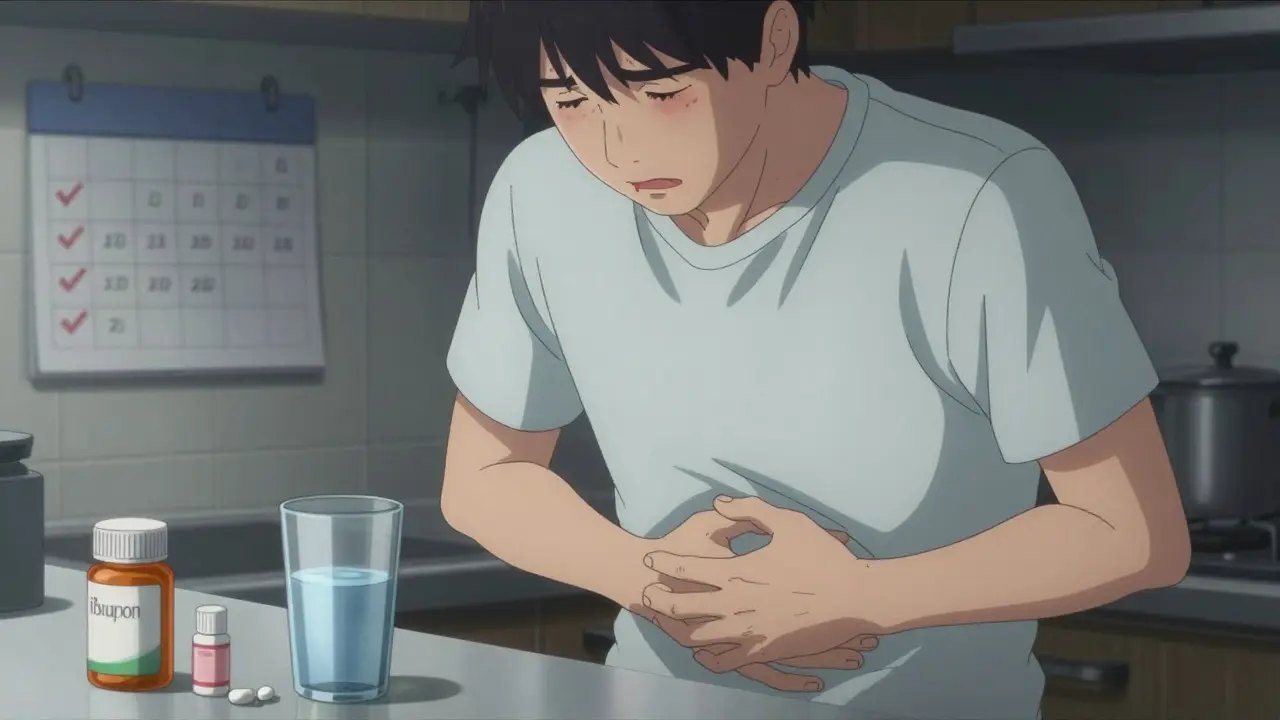
Most people think of NSAIDs as harmless pain relievers-ibuprofen, naproxen, aspirin. You grab them off the shelf for a headache, a sore back, or menstrual cramps. But what if taking just a little too much-or even the right dose over time-could quietly tear up your insides? NSAID overdose isn’t always about swallowing a whole bottle. Sometimes, it’s about daily use, hidden combinations, and ignoring silent warning signs. And the biggest danger? Gastrointestinal bleeding.
How NSAIDs Actually Damage Your Gut
NSAIDs work by blocking enzymes called COX-1 and COX-2. COX-2 causes pain and inflammation. COX-1 protects your stomach lining by making mucus and keeping blood flowing to keep the tissue healthy. When you take NSAIDs, you shut down both. That’s why your pain goes away-but so does your stomach’s natural defense system.The damage doesn’t wait for symptoms. Studies show that up to 70% of people who take NSAIDs long-term have visible damage in their stomach or intestines during an endoscopy-erosions, ulcers, tiny bleeds. Yet only about 10% feel any discomfort. That’s the silent problem. You might not know anything’s wrong until you start vomiting blood, passing black tar-like stools, or suddenly feel dizzy from internal blood loss.
It’s not just the stomach. NSAIDs hurt the entire digestive tract-from the esophagus down to the colon. They can cause bleeding in the small intestine and even lead to colitis or leaky gut. Most research focuses on the upper GI tract, but lower GI bleeding from NSAIDs is more common than doctors used to think.
Who’s at the Highest Risk?
Not everyone who takes NSAIDs bleeds. But some people are walking into danger without realizing it.- People over 65: Your stomach lining thins with age. Your kidneys clear drugs slower. Even a regular dose becomes riskier.
- Those with a past ulcer or GI bleed: If you’ve had one before, you’re five times more likely to have another when taking NSAIDs.
- People on blood thinners: If you’re taking aspirin (even low-dose for heart protection), clopidogrel, warfarin, or any antiplatelet drug, NSAIDs double your bleeding risk. The combination is deadly. One study found patients on both aspirin and NSAIDs had a 5.6% chance per year of a serious upper GI event.
- Those with H. pylori infection: This common stomach bacteria multiplies the risk. If you have it and take NSAIDs, your chance of bleeding goes up 1.2 times.
- People taking multiple NSAIDs: Ibuprofen + naproxen? Aspirin + celecoxib? That’s not extra pain relief-that’s extra damage.
And here’s the kicker: many of these people don’t even know they’re at risk. They think, “I’m just taking one aspirin a day for my heart,” or “I only take ibuprofen when I need it.” But “when I need it” can turn into “every day.” And over-the-counter doesn’t mean safe.
The Myth of “Safe” NSAIDs
You’ve probably heard that “coated” or “enteric” aspirin is gentler on the stomach. Or that “COX-2 inhibitors” like celecoxib are safer. Neither is true in high-risk cases.Enteric-coated aspirin doesn’t reduce bleeding risk. It just delays when the drug hits your stomach-so it still damages your gut lining. COX-2 inhibitors (coxibs) might cause fewer ulcers than traditional NSAIDs… but only if you’re not also on aspirin. When you combine them, the protection disappears. In fact, one study showed people on both aspirin and a coxib had a 7.5% annual risk of upper GI bleeding-worse than some regular NSAIDs.
There’s no magic pill that makes NSAIDs safe if you’re in a high-risk group. The only proven protection? Proton pump inhibitors (PPIs) like omeprazole or pantoprazole. But even PPIs don’t fully protect the small intestine. They help the stomach, but not the rest of the gut.
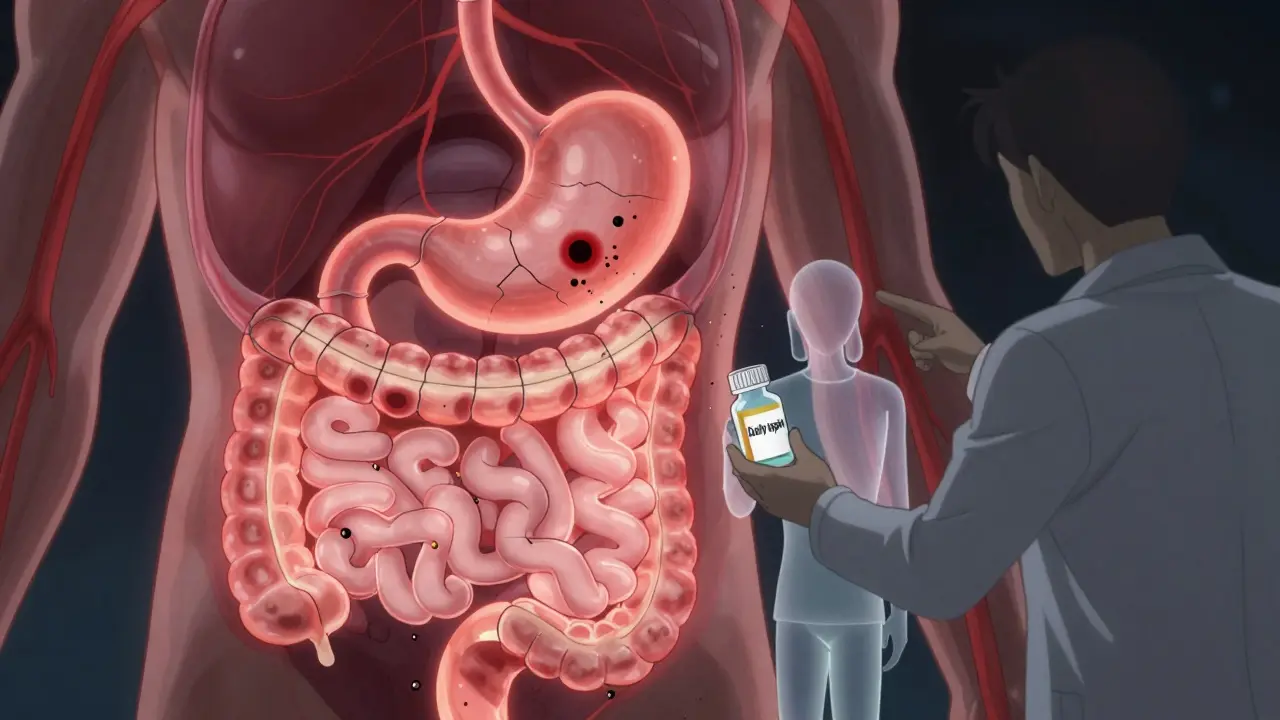
What Does NSAID-Induced Bleeding Look Like?
It doesn’t always scream for help. Sometimes, it whispers.- Black, tarry stools (melena): This is classic upper GI bleeding. The blood has been digested, turning it dark.
- Red blood in stool: Could be lower GI bleeding-colon or rectum.
- Unexplained fatigue, dizziness, pale skin: Signs of anemia from slow, hidden blood loss.
- Vomiting blood: Bright red or coffee-ground-looking material.
- Stomach pain that doesn’t go away: Not just indigestion-constant, burning, or sharp.
Here’s the scary part: over 60% of people who become anemic from NSAID use show no visible ulcer or lesion on endoscopy. The bleeding is happening in places doctors can’t easily see-like the small intestine. Blood loss is slow. Hemoglobin drops gradually. You feel tired. You think you’re just getting older. But your body is quietly starving for iron.
What to Do If You Think You’re Bleeding
If you notice any of these signs, stop taking NSAIDs immediately. Don’t wait. Don’t “see how it goes.”- Call your doctor or go to the ER. Don’t rely on a pharmacist or online search. GI bleeding can be life-threatening within hours.
- Do not take more NSAIDs. Even one more tablet can make bleeding worse.
- Do not take antacids or Pepto-Bismol to “mask” symptoms. They might make you feel better temporarily but won’t stop the bleeding.
- Bring your medication list. Include every pill, supplement, and OTC drug. Many don’t realize that even a daily low-dose aspirin counts.
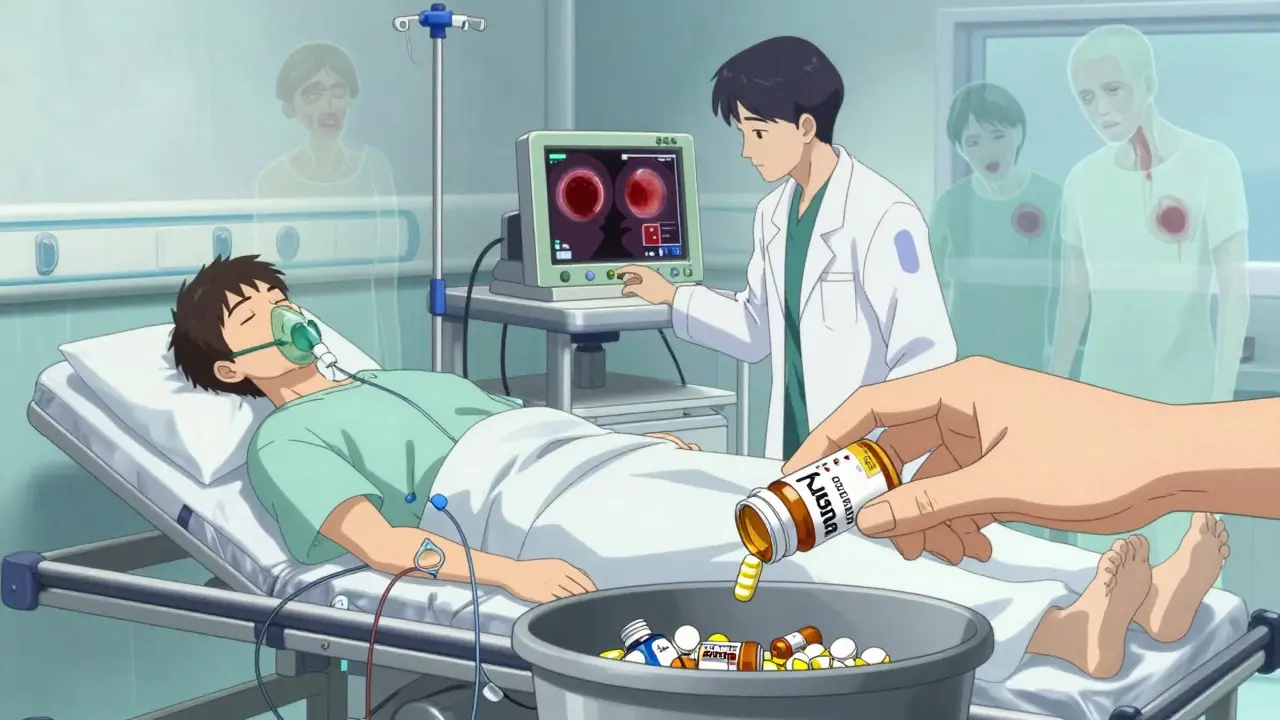
Hospital treatment usually involves stopping NSAIDs, giving IV fluids, blood transfusions if needed, and urgent endoscopy to find and stop the bleeding source. In severe cases, surgery is required.
How to Prevent This From Happening
Prevention is simple-but it takes awareness.- Never take NSAIDs without knowing your risk. If you’re over 60, have a history of ulcers, or take blood thinners, talk to your doctor before using them.
- Use the lowest dose for the shortest time. No more than 10 days in a row without medical advice.
- Never combine NSAIDs. Don’t take ibuprofen and naproxen together. Don’t take aspirin and ibuprofen on the same day.
- Ask if you really need NSAIDs. For chronic pain, are there safer options? Physical therapy? Acetaminophen? Topical creams?
- Get tested for H. pylori if you’ve had ulcers or frequent indigestion. Eradicating it reduces bleeding risk.
- If you’re on low-dose aspirin for heart health, don’t add NSAIDs unless your doctor says it’s absolutely necessary-and even then, they should prescribe a PPI.
And if you’re taking NSAIDs regularly, ask your doctor for a hemoglobin test once a year. It’s cheap, quick, and can catch silent bleeding before it becomes an emergency.
The Bottom Line
NSAIDs are not harmless. They’re powerful drugs with serious side effects that most people ignore because they’re available without a prescription. But that doesn’t mean they’re safe for everyone.Every year, thousands are hospitalized for GI bleeding caused by NSAIDs. Many of these cases are preventable. The biggest risk isn’t taking too much at once-it’s taking too much over time, without knowing you’re in danger.
If you’re on NSAIDs regularly, especially if you’re older or on other medications, talk to your doctor. Ask: “Could this be hurting my gut?” Don’t assume it’s fine because you don’t feel pain. The damage doesn’t always announce itself. And by the time it does, it might be too late.
Can taking one ibuprofen tablet cause GI bleeding?
A single tablet is unlikely to cause bleeding in a healthy person. But if you have risk factors-like being over 65, having a past ulcer, or taking blood thinners-even one dose can trigger bleeding. The risk builds over time, not just from overdose.
Is aspirin safer than other NSAIDs for the stomach?
No. Aspirin is actually one of the most common causes of NSAID-related GI bleeding, even at low doses. It irreversibly blocks COX-1, which protects the stomach lining. Many people think low-dose aspirin is harmless, but it increases GI bleeding risk 2 to 4 times. Enteric-coated versions don’t reduce this risk.
Can I take Tylenol instead of NSAIDs to avoid stomach bleeding?
Yes, acetaminophen (Tylenol) is generally safer for the stomach because it doesn’t affect COX enzymes in the gut. It doesn’t cause ulcers or GI bleeding. But it’s not without risks-high doses can damage the liver. Always follow dosage limits, and don’t use it if you have liver disease.
Do I need a PPI if I take NSAIDs occasionally?
If you’re young, healthy, and take NSAIDs only once in a while-no, you don’t need a PPI. But if you’re over 60, have a history of ulcers, or take other medications like blood thinners, even occasional use can be dangerous. Talk to your doctor. They may recommend a PPI or suggest avoiding NSAIDs entirely.
How do I know if I’m bleeding internally from NSAIDs?
Signs include fatigue, dizziness, pale skin, shortness of breath, or unexplained weakness-not just black stools or vomiting blood. Many people with NSAID-induced bleeding don’t have obvious symptoms. A simple blood test for hemoglobin can detect hidden blood loss before it becomes an emergency.
Are there natural alternatives to NSAIDs for pain?
Yes. For joint or muscle pain, options include physical therapy, heat/cold therapy, topical capsaicin, turmeric (curcumin), and omega-3 supplements. For headaches, magnesium, riboflavin (B2), or acupuncture may help. Always discuss alternatives with your doctor, especially if you have chronic pain or other health conditions.
Bro, I just took 2 ibuprofen for my back and now I’m side-eyeing my whole medicine cabinet 🤯😭. India’s got like 500mg packs everywhere - no one talks about this. My uncle died from a silent bleed. Don’t be him.
lol so NSAIDs are bad? shocker. i’ve been takin ibuprofen since highschool and im fine. ur just fearmongerin. also who uses ‘melena’ in a reddit post? 🤡
It is my considered and meticulously researched opinion that the prevailing cultural normalization of nonsteroidal anti-inflammatory drug usage - particularly in the context of over-the-counter accessibility and the concomitant erosion of medical gatekeeping - constitutes a profound public health failure, one which is exacerbated by the pervasive misinformation propagated through digital platforms that equate convenience with safety, thereby fostering a dangerous illusion of pharmacological benignity among populations demonstrably unversed in gastrointestinal physiology.
Oh wow. Someone finally wrote the truth without sugarcoating it like a pharmaceutical ad. You know what’s worse than NSAIDs? The doctors who hand them out like candy while ignoring the fact that their patients are bleeding internally and calling it ‘just aging.’ You’re not old - you’re being poisoned by placebo medicine and lazy prescribing. Wake up.
This is such a needed post. I used to pop Advil like M&Ms until I started feeling like a ghost - pale, tired, dizzy. Got my hemoglobin checked and it was 8.5. Turned out I’d been bleeding slowly for 8 months. Now I take Tylenol, stretch, and do yoga. Life’s better. You’re not weak for asking for help - you’re smart.
Wait - so enteric-coated aspirin doesn't work? But I've been told that for years... and what about the small intestine? Nobody talks about that... and if PPIs don't protect it... then what? And why isn't this in the packaging? Why isn't there a warning label? This is insane. I need more data. Where's the study? Link it. I need to see the numbers. This changes everything.
Ohhh so the ‘I just take one a day’ crowd is the real villain? 😂 Classic. You people are the reason ERs are full. ‘But it’s OTC!’ - yeah, so is rat poison if you call it ‘mouse killer.’ You’re not special. You’re just slow to die.
COX-1 inhibition leads to reduced prostaglandin E2 synthesis in gastric mucosa, resulting in diminished mucus secretion and decreased mucosal blood flow. This creates a pro-ulcerogenic environment. The incidence of NSAID-induced GI injury is dose- and duration-dependent, with a threshold effect observed after 7–14 days of continuous use. Lower GI involvement is underdiagnosed due to limited endoscopic access and lack of routine screening in asymptomatic users.
They don’t want you to know this… Big Pharma and the FDA are in cahoots. 🕵️♀️ Why do you think PPIs are prescribed with NSAIDs? To cover up the damage. They make more money off the side effects than the painkillers. You’re being experimented on. Get off the grid. Drink ginger tea. 💪🍵
My grandma took ibuprofen every day for 15 years. One day she just passed out. Turned out she’d been bleeding inside for over a year. No pain. No warning. Just… gone. Don’t be like her. Talk to your doctor. Seriously. Your body’s not a robot.