
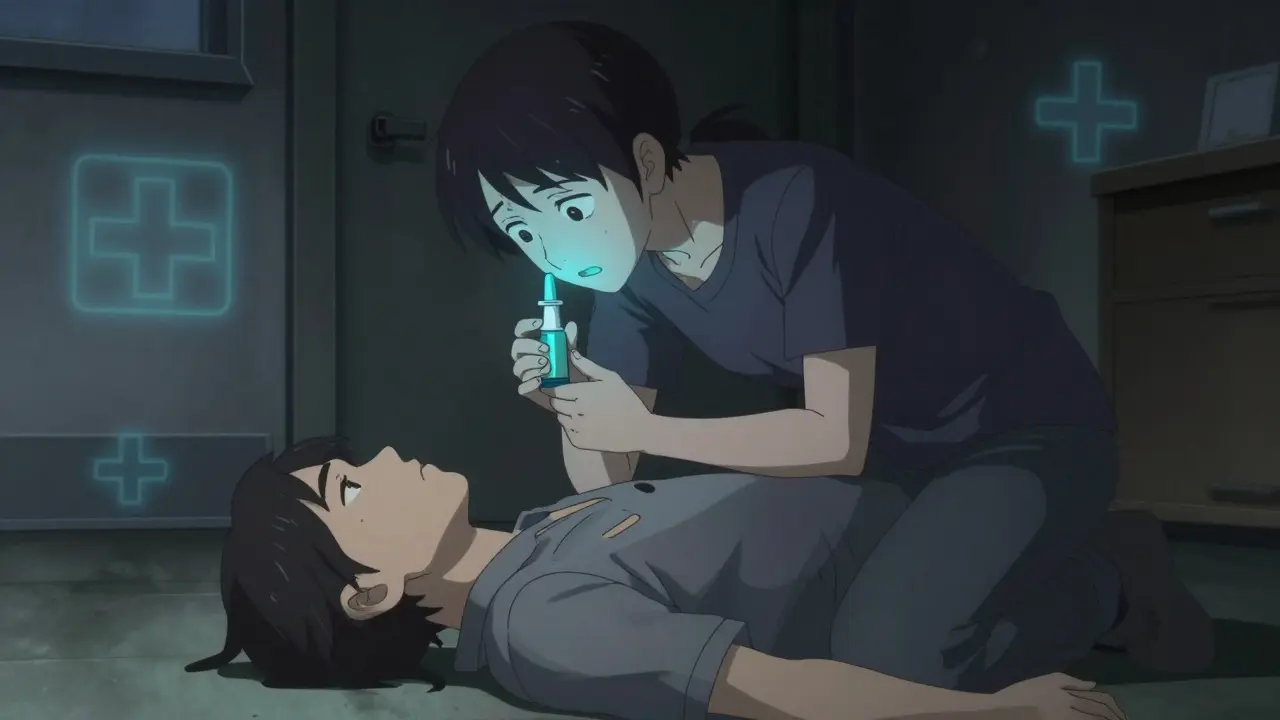
When someone overdoses on opioids, time isn’t just a factor-it’s the only thing standing between life and death. Breathing slows. Then stops. The brain starts to shut down. And if no one acts, it’s over in minutes. But here’s the truth: naloxone can bring someone back. Not always. Not perfectly. But often enough to make a difference. And you don’t need to be a doctor to use it.
What Happens During an Opioid Overdose?
Opioids-whether prescription painkillers, heroin, or fentanyl-bind to receptors in the brain that control breathing. Too much, and those signals get drowned out. The person stops breathing. Not because they’re asleep. Not because they’re passed out. Because their body literally forgets how to breathe.This isn’t a guess. It’s science. The preBötzinger complex, a tiny cluster of nerve cells in the brainstem, handles the rhythm of breathing. Opioids slam the brakes on it. Studies show breathing can drop below 12 breaths per minute-sometimes as low as one breath every 3 to 5 seconds. Normal is 12 to 20. When it falls below that, oxygen stops reaching the brain. Brain damage begins after just 4 minutes. After 10, it’s often permanent.
And it’s getting worse. In 2023, over 87,000 people in the U.S. died from opioid overdoses. Fentanyl, a synthetic opioid 50 to 100 times stronger than morphine, is in nearly 8 out of 10 illicit drugs tested. You can’t see it. You can’t smell it. One pill, one bag, one shot-and it’s enough to stop someone’s breathing.
How to Spot an Opioid Overdose
You don’t need a medical degree to recognize the signs. If you see three of these, assume it’s an overdose:- Unresponsive. Shout their name. Shake their shoulders hard. No reaction. Not even a groan. This isn’t sleep. This is unconsciousness.
- Abnormal breathing. Slow, shallow, or stopped. Fewer than 2 breaths every 15 seconds. Or worse-long pauses between breaths.
- Cyanosis. Lips, fingernails, or skin turning blue, purple, or gray. For people with darker skin, it may look ashen or grayish, not blue.
- Pinpoint pupils. Pupils shrink to tiny dots, like needles.
- Cold, clammy skin. Sweaty, pale, and cool to the touch.
- Gurgling or snoring. A wet, rattling sound-like they’re drowning in their own saliva. This means airways are blocked.
Don’t wait for all of them. If you see two, especially unresponsiveness and bad breathing, act. Don’t think it’s just drunk. Don’t assume they’ll wake up. Don’t leave them alone.
What Naloxone Does-and Doesn’t Do
Naloxone is not a cure. It’s a reset button. It works by kicking opioids off the brain’s receptors. It doesn’t sedate. It doesn’t energize. It doesn’t make someone feel good. It just forces the body to start breathing again.It’s been around since 1961. But in the last decade, it’s become a lifeline. Today, it comes in two main forms: a nasal spray (like Narcan) and an injectable shot. Both work fast. Nasal spray hits the bloodstream in 5 to 10 minutes. Injection hits in 2 to 5.
Here’s the key: naloxone has no effect on alcohol, cocaine, meth, or benzodiazepines. That means if you’re unsure whether it’s an opioid overdose, give it anyway. It won’t hurt. It won’t make things worse. It might save a life.
But here’s the catch: naloxone only lasts 30 to 90 minutes. Fentanyl? It can last 3 to 6 hours. That means the person can stop breathing again after naloxone wears off. You can’t just walk away after one dose.
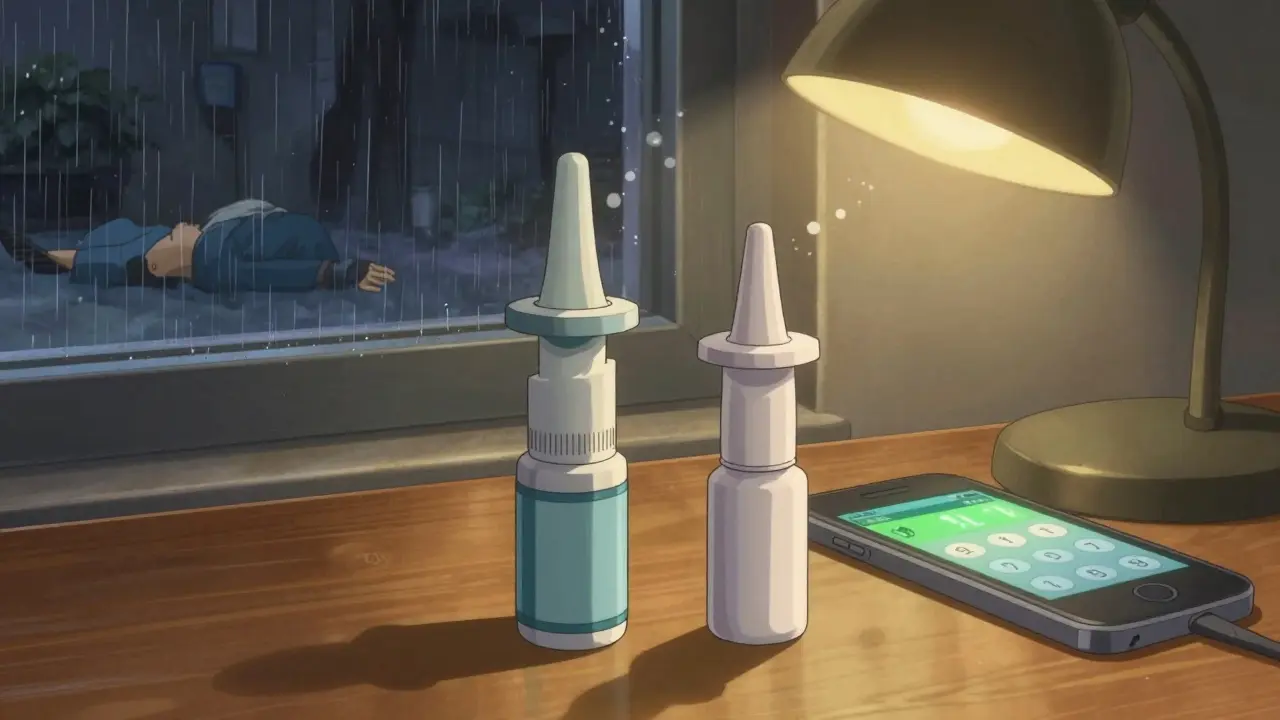
How to Use Naloxone: A Step-by-Step Guide
Follow these four steps. No training required. Just do it.- Call 911. Right now. Don’t wait. Don’t think. Call before you do anything else. Say: “I think someone overdosed on opioids. They’re not breathing.”
- Give naloxone. For nasal spray: Tilt the head back. Insert the nozzle into one nostril. Press the plunger firmly. That’s one dose. If no response in 2 to 3 minutes, give a second dose in the other nostril. For injection: Inject into the outer thigh, through clothing if needed. Push the plunger until it clicks. One dose. Wait. Repeat if needed.
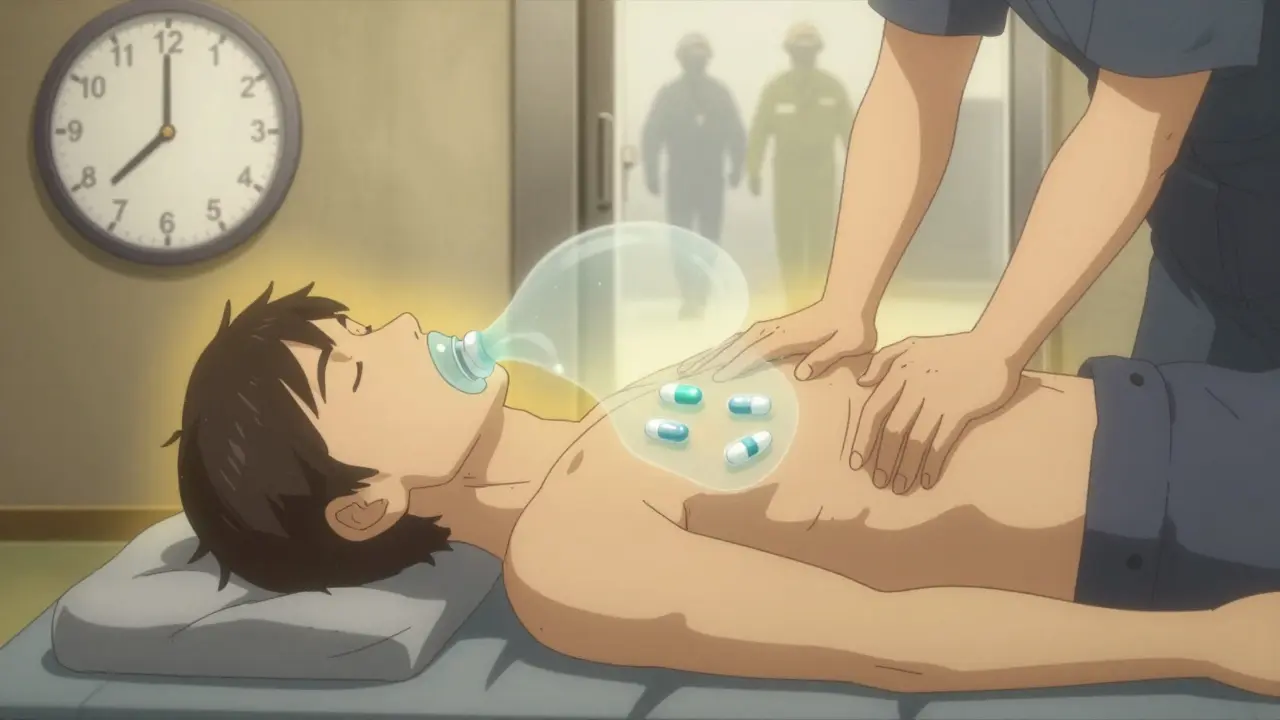
- Start rescue breathing. While waiting for naloxone to work, give breaths. Tilt the head back, lift the chin. Pinch the nose. Give one breath every 5 seconds-about 12 breaths per minute. Watch for the chest to rise. Keep going until they breathe on their own or help arrives.
- Stay with them. Even if they wake up, don’t leave. They can slip back into overdose. Put them in the recovery position: on their side, one leg bent, head tilted slightly down. This keeps the airway open and prevents choking if they vomit.
Practice with a trainer device. Many community groups give them out for free. You can’t be nervous when it’s real. You need to move without thinking.
What Not to Do
People make mistakes in panic. Don’t make these:- Don’t put them in a bath. “Soaking them in cold water” is a myth. You risk drowning.
- Don’t give them coffee or water. They can’t swallow safely. You’ll choke them.
- Don’t slap or shake them hard. That won’t wake them. It might hurt them.
- Don’t wait to see if they “sleep it off.” They won’t. Breathing will stop.
- Don’t leave them alone. Even if they’re awake, they need medical care. Rebound overdose is real.
Why Naloxone Works-And Why It’s Not Enough
Naloxone has reversed over 27,000 overdose deaths in the U.S. since 2019. In Rhode Island and Massachusetts, bystander use cut overdose deaths by nearly half. Pharmacies now hand out over a million doses a year. In 2023, the FDA approved the first generic nasal spray-cutting prices by 40%.But naloxone doesn’t fix addiction. It doesn’t stop fentanyl from flooding the streets. It doesn’t give people access to treatment. Dr. Nora Volkow of the National Institute on Drug Abuse says it clearly: “Naloxone alone can’t solve the crisis.”
That’s why co-prescribing matters. If a doctor gives someone more than 50 morphine milligram equivalents a day, they should also give naloxone. That’s now standard in 49 U.S. states. But only 1 in 4 people at risk actually have it on hand.
And cost is still a barrier. Kits range from $25 to $130. Storage matters too. Naloxone degrades above 40°C (104°F). If it’s left in a hot car or a sunlit drawer, it might not work.
Where to Get Naloxone
In the U.S., you can get naloxone without a prescription at any pharmacy. In Canada, it’s available over the counter too. Community centers, syringe programs, and libraries often give it out for free. Some cities have installed naloxone dispensers in public restrooms. You can order it online from trusted groups like Next Distro or the Harm Reduction Coalition.If you’re worried about cost, ask: “Do you have a generic version?” It’s just as effective and often half the price.
What Happens After Naloxone?
Even if the person wakes up, they need to go to the hospital. Why? Because:- Naloxone wears off. Opioids don’t.
- Fentanyl can cause pulmonary edema-fluid in the lungs.
- They may have taken other drugs too.
- They need help getting into treatment.
Good Samaritan laws protect people who call 911 for an overdose. In all Canadian provinces and 47 U.S. states, you won’t be arrested for possession if you’re seeking help. That’s not a loophole. It’s a lifeline.
Final Thought: You Don’t Need Permission to Save a Life
You don’t need to be trained. You don’t need to be a nurse. You don’t need to understand the chemistry. You just need to act.One person in Texas used Narcan on her brother. He woke up coughing 90 seconds later. The EMTs said if she’d waited two more minutes, he’d have been gone.
Another in Massachusetts reversed three overdoses in one year-two of them with fentanyl. She didn’t have a degree. She had a nasal spray and the courage to use it.
That’s what naloxone is: a tool. A simple, powerful, life-saving tool. And if you have it, you’re not just a bystander. You’re the reason someone wakes up.
Can naloxone be used on someone who didn’t take opioids?
Yes, and it’s safe. Naloxone only works on opioid receptors. If someone didn’t take opioids, it won’t do anything. It won’t make them sick. It won’t cause harm. If you’re unsure whether it’s an opioid overdose, give it anyway. The risk of not acting is far greater.
How long does naloxone take to work?
Nasal spray usually starts working in 2 to 5 minutes. Injection works faster-often within 2 minutes. But it can take up to 10 minutes for full effect. Keep giving rescue breaths while you wait. Don’t assume it failed if they don’t wake up right away.
Do I need more than one dose of naloxone?
Yes, often. Especially with fentanyl. One dose may not be enough. If breathing doesn’t improve after 2 to 3 minutes, give a second dose. Use the other nostril for nasal spray, or inject another dose in the other thigh. Some overdoses require three or more doses. Keep giving it until help arrives.
Can I reuse a naloxone spray?
No. Each nasal spray is single-use. Once the plunger is pressed, it’s done. Don’t try to refill it. If you need another dose, use a new device. That’s why carrying two doses is recommended.
Is naloxone covered by insurance?
Many insurance plans cover naloxone with no copay. Medicaid and Medicare often cover it fully. If you’re uninsured, ask for the generic version-it’s cheaper. Many pharmacies offer discounts, and community programs give it away for free. Don’t let cost stop you from having it on hand.
How do I store naloxone properly?
Keep it at room temperature, between 15°C and 30°C (59°F to 86°F). Don’t leave it in a hot car, in direct sunlight, or in a freezer. Check the expiration date. If it’s discolored or has particles, don’t use it. Replace it before it expires. Many programs offer free replacement kits.
I live in Winnipeg and we got these nasal sprays at the library like it was toilet paper. Free. No questions. My buddy used one on his cousin last winter - woke up coughing like a damn steam engine. That thing’s a miracle.
People act like it’s magic, but it’s just science with a pulse. Keep ‘em stocked.
Naloxone isn’t a cure. It’s a bridge. And right now, we’re building bridges over a chasm we refuse to fill. The real tragedy isn’t the overdose - it’s that we treat this like an emergency instead of an epidemic.
In Nigeria, we don’t have access to naloxone - not because we don’t need it, but because it’s not prioritized. I’ve seen people die from opioid overdoses here, and no one even knows what it is. This post? It’s a lifeline. Thank you for writing it. We need this knowledge transferred - not just in the U.S., but everywhere.
I carry two doses in my purse. One for me. One for someone else. Doesn’t matter who. If you’re breathing, I’m not letting you go.
I used to think naloxone was overhyped... until I saw it work on my cousin. He was dead to the world. 90 seconds later? He sat up and asked for pizza. 🙏❤️
The fact that we still have to argue about whether naloxone should be available without a prescription is the real crisis here. We arm people with guns and deny them the tools to stop death. Logic doesn’t work here. Compassion has to.
The preBötzinger complex is not merely a neural cluster; it is the biological locus of autonomic respiratory rhythmogenesis. Opioid-induced suppression of this structure represents a pharmacologically induced cessation of homeostatic regulation - a failure of the body’s most fundamental self-sustaining mechanism. Naloxone, as a competitive mu-opioid receptor antagonist, does not restore function; it temporarily reinstates the conditions under which function may resume.
I must respectfully challenge the assertion that naloxone is universally effective. A 2022 study published in the Journal of Addiction Medicine indicates that in cases involving polypharmacy - particularly with benzodiazepines - naloxone alone may be insufficient to restore respiratory drive. Furthermore, the claim that it 'won't hurt' if administered incorrectly is misleading. In patients with opioid dependence, it can precipitate acute withdrawal, which, while not lethal, can induce violent agitation and self-harm. This is not a panacea. It is a pharmacological intervention with clinical implications.
I’ve had naloxone in my car for two years. Never had to use it. But I sleep better knowing it’s there. Like a fire extinguisher. You don’t need it every day. But you’ll regret not having it when you need it.
i just read this and i think its so cool that you can just give someone narcan like its a candy bar lmao like wow america is wild
I used to think saving someone from an overdose was noble... until I realized how many times I’ve been the one they come back to. The same person. The same cycle. The same empty apartment. The same silence after the sirens.
It’s not a victory. It’s a loop. And I’m tired.
they say naloxone saves lives but what about all the people who get revived and go right back to using? its just delaying the inevitable
I’m from Nigeria, and I’ve watched too many young people vanish because of pills they didn’t even know were laced. We don’t have naloxone here. We don’t have education. We don’t even have the words to say ‘overdose’ without shame. This article? It’s not just information - it’s a mirror. And it’s showing me what’s missing.
I’m translating this into pidgin English. I’m printing it. I’m handing it out at bus stops. I’m teaching my nieces how to use a nasal spray. Because if we wait for governments to act, we’ll be waiting forever.
One of my friends lost her brother last year. He was 21. He took a pill because his friend said it was ‘just painkillers.’ No one told him about fentanyl. No one told him about breathing. No one told him about naloxone.
So I’m telling you now: if you have this knowledge, you have power. Use it. Share it. Carry it. Even if you’re scared. Even if you’re not trained. Even if you’re not a doctor.
Because sometimes, the only thing standing between life and death isn’t a hospital - it’s you.
I work in a community clinic. We hand out naloxone kits with a hand-written note: 'You didn’t ask for this. But you’re brave enough to use it.' That’s all we need to say.