
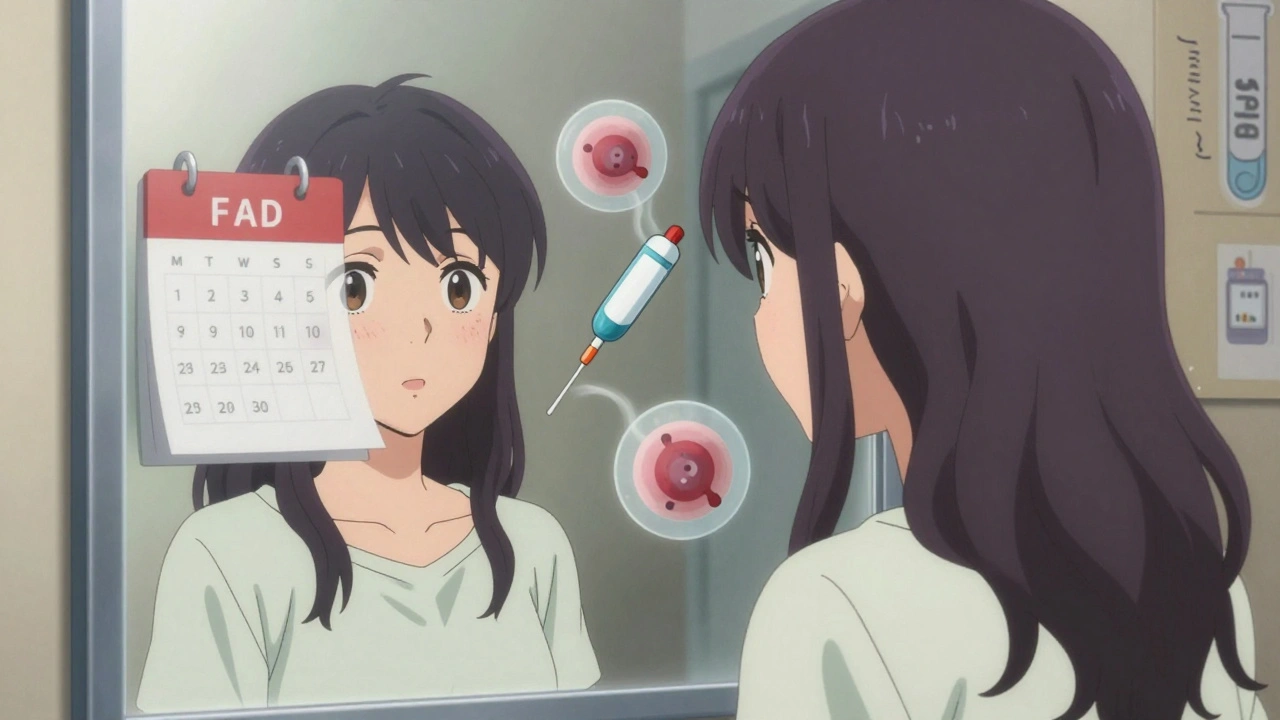
What Is Polycystic Ovary Syndrome (PCOS)?
Polycystic Ovary Syndrome, or PCOS, isn’t just about cysts on the ovaries. That’s a common misunderstanding. It’s a hormonal imbalance that affects how your body makes and uses sex hormones, especially androgens like testosterone. About 1 in 10 women of childbearing age have it, and many don’t even know they have it until they try to get pregnant. Symptoms often start in the teens - irregular periods, acne, unwanted hair growth - but it can take years to get a proper diagnosis. The average delay? Two to three years. By then, the hormonal chaos has already started affecting more than just your cycle.
The Hormonal Imbalance Behind PCOS
At the core of PCOS is a broken feedback loop between your brain, ovaries, and pancreas. Your pituitary gland sends out luteinizing hormone (LH) and follicle-stimulating hormone (FSH) to tell your ovaries when to release an egg. In PCOS, LH stays too high while FSH stays normal or low. That imbalance stops follicles from maturing properly. Instead of one egg being released each month, dozens of tiny follicles build up - visible on ultrasound as "polycystic" ovaries.
But the bigger problem is insulin. Around 70% of women with PCOS have insulin resistance, meaning their bodies don’t respond well to insulin. The pancreas compensates by pumping out more insulin. High insulin levels directly tell the ovaries to make more testosterone. At the same time, insulin lowers SHBG - the protein that binds testosterone and keeps it inactive. So your free testosterone levels can be 1.5 to 2 times higher than normal. That’s why you see hirsutism, acne, and thinning hair.
Progesterone? It’s almost always low because you’re not ovulating. Without ovulation, there’s no corpus luteum to make progesterone. That means your uterine lining keeps building up under estrogen’s influence, with no progesterone to balance it. That’s why periods become irregular, heavy, or stop altogether - and why long-term risk of endometrial cancer rises.
Fertility Challenges in PCOS
If you’re trying to get pregnant and have PCOS, the main issue is simple: you’re not ovulating regularly, or sometimes at all. That’s why PCOS is the number one cause of anovulatory infertility. But here’s the good news: most women with PCOS can get pregnant with the right treatment. It’s not about fixing your ovaries - it’s about fixing the hormonal signals that control them.
Weight plays a big role. If you’re overweight, even a 5-10% drop in body weight can restart ovulation in up to half of women. That’s not about being "thin" - it’s about improving insulin sensitivity. A 180-pound woman losing 10 pounds can see her cycle return without any medication. That’s powerful.
First-Line Fertility Treatments
When lifestyle changes alone aren’t enough, doctors start with oral medications. Clomiphene citrate (Clomid) has been the go-to for decades. It tricks your brain into thinking estrogen is low, so it pumps out more FSH to stimulate ovulation. About 70% of women on Clomid will ovulate, and 30-40% will get pregnant within six cycles.
But here’s what many don’t know: letrozole (Femara), originally a breast cancer drug, now outperforms Clomid for PCOS. In the landmark PPCOS-II trial, women taking letrozole had higher ovulation rates (88% vs. 70%) and better live birth rates (27.5% vs. 19.1%). That’s why major guidelines now recommend letrozole as first-line for women with PCOS trying to conceive - even over Clomid.
Metformin, a diabetes drug, is often added in. It doesn’t work well on its own for ovulation - only 15-40% of women ovulate with metformin alone. But when paired with Clomid, pregnancy rates jump by 30-50%, especially in women with high insulin levels or BMI over 35. It’s not magic, but it helps your body respond better to other treatments.
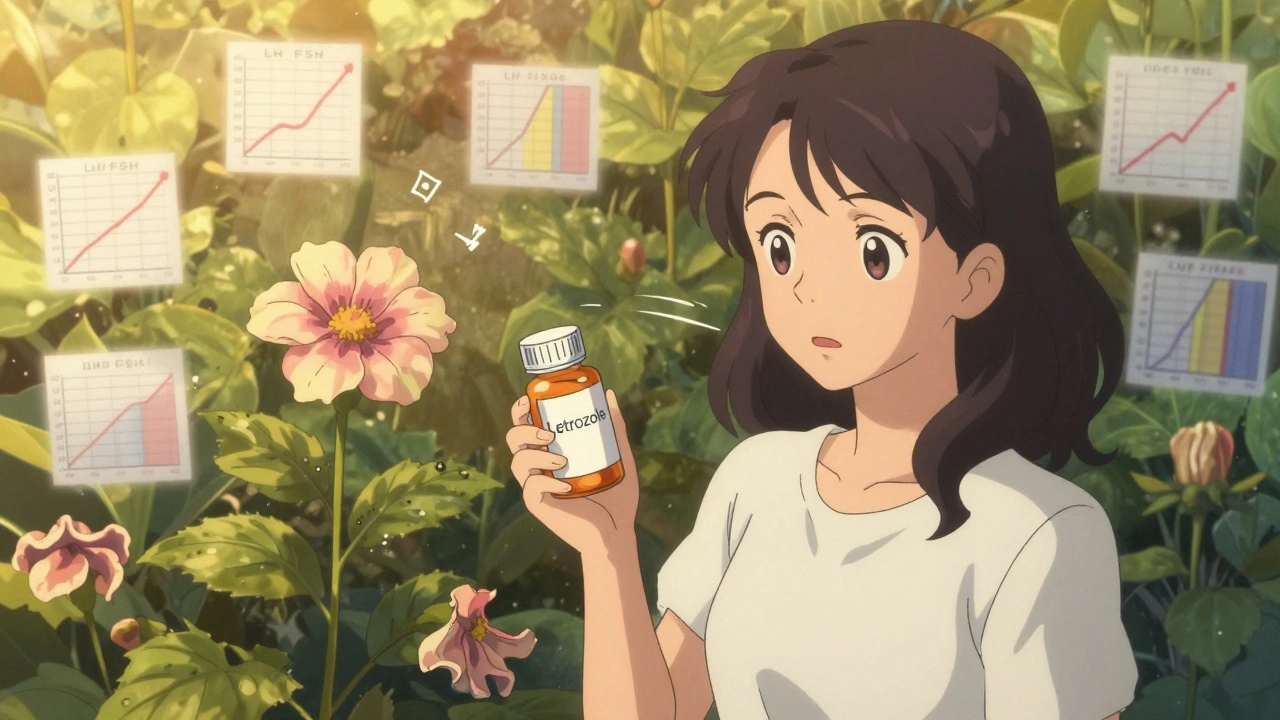
When Medications Don’t Work
If you’ve tried three to six cycles of letrozole or Clomid without success, the next step is injectable gonadotropins. These are FSH and LH hormones you give yourself daily. They directly stimulate the ovaries. Success rates are higher - about 15-20% per cycle - but so are the risks. About 1 in 5 women will get multiples (twins or more), and 5-10% risk ovarian hyperstimulation syndrome (OHSS), where ovaries swell painfully and fluid leaks into the abdomen.
IVF is usually saved for cases where there’s another infertility factor - blocked tubes, male factor, or if you’re over 35 and time is short. But even with IVF, PCOS changes the game. You need lower doses of stimulation drugs because your ovaries are extra sensitive. Your risk of OHSS is still higher than average - 10-20% versus 1-5% in non-PCOS patients. That’s why experienced fertility clinics use specific protocols like GnRH antagonists and coasting to reduce that risk.
Lifestyle Isn’t Optional - It’s Foundational
Too many women are told to "just lose weight" without being shown how. That’s not helpful. The real key is consistent, sustainable changes. The Diabetes Prevention Program model works: 150 minutes of moderate exercise per week (brisk walking, swimming, cycling) plus a 500-750 calorie daily deficit. Do that for six months, and 60% of women lose 5-10% of their weight. Of those, 44% start ovulating again.
Diet matters too. Low-glycemic index foods (whole grains, legumes, non-starchy veggies) keep insulin levels steady. Studies show switching to a low-GI diet cuts insulin levels by 30% compared to standard diets. The DASH diet - designed for high blood pressure - also improves menstrual regularity by 35% in 12 weeks. Cut out sugary drinks, refined carbs, and processed snacks. Focus on protein, fiber, and healthy fats.
And don’t ignore stress. Chronic stress raises cortisol, which worsens insulin resistance and disrupts your HPO axis even more. Yoga, mindfulness, or even 10 minutes of deep breathing daily can help. Sleep matters too - poor sleep increases hunger hormones and makes insulin resistance worse.
What No One Tells You About Metformin
Metformin is often prescribed, but many women stop taking it because of stomach issues. Nausea, bloating, diarrhea - up to 50% experience them. But here’s the trick: start low. Take 500 mg once a day with dinner for a week. Then increase to 500 mg twice a day. After two weeks, go to 500 mg three times a day. Most side effects fade by week 4. Extended-release versions cause fewer stomach problems. And if you’re not taking it with food, you’re doing it wrong.
Also, metformin isn’t just for fertility. It lowers your long-term risk of type 2 diabetes - which affects half of women with PCOS by age 40. It improves cholesterol and may reduce miscarriage risk. If your doctor prescribes it, stick with it. The benefits go far beyond trying to get pregnant.

Emotional Health and the Hidden Costs of PCOS
PCOS doesn’t just affect your body - it affects your mind. Between 30% and 50% of women with PCOS experience depression or anxiety. Why? Hormones, yes - but also the frustration of being dismissed by doctors, the weight stigma, the feeling that your body is "broken." A 2022 survey found 78% of women felt judged about their weight during medical visits. That’s not healthcare - that’s harm.
Find a provider who treats you as a whole person. Ask for mental health screening. Join a support group. The r/PCOS subreddit has over 145,000 members sharing real stories - like one woman who waited four years and saw five doctors before getting diagnosed. You’re not alone.
The Future of PCOS Care
Things are changing. The FDA approved the first digital therapeutic for PCOS in 2022 - an app called Femaloop that gives personalized diet and exercise plans based on your symptoms. In trials, it improved menstrual regularity by 28% in six months. AI tools are being developed to predict PCOS from blood tests and ultrasound images with 92% accuracy.
And the big shift? Doctors are finally seeing PCOS as a metabolic disorder, not just a fertility problem. That means annual glucose checks, lipid panels, and blood pressure monitoring - even if you’re not trying to get pregnant. Your future heart health depends on it.
What to Do Next
If you suspect you have PCOS, get tested. Blood work should include testosterone, LH, FSH, insulin, glucose, and thyroid function. An ultrasound isn’t always needed - especially if you’re under 18. Focus on symptoms and labs first.
If you’re trying to conceive:
- Start with lifestyle changes - weight loss, movement, low-GI diet.
- Ask your doctor about letrozole - not Clomid - as first-line.
- If you have insulin resistance, ask about metformin alongside letrozole.
- Track ovulation with kits or apps - timing matters.
- If no success after 6 cycles, move to gonadotropins or IVF with a specialist who knows PCOS.
And remember: PCOS doesn’t mean you can’t have a baby. It means you need a different roadmap. With the right care, most women with PCOS do get pregnant. And even if you don’t want kids now, managing your hormones today protects your health for decades to come.
I had no idea letrozole was better than Clomid for PCOS... my doc just threw Clomid at me and said 'good luck'. 😅 Thanks for the info, this actually makes sense now.
I waited five years for a diagnosis. Five. Five doctors. Three ultrasounds. One said it was 'just stress.' I cried in the parking lot. This post? It felt like someone finally saw me.
The metabolic aspect of PCOS is so under-discussed. It’s not a 'women’s issue'-it’s an endocrine and metabolic disorder that affects cardiovascular health, diabetes risk, and mental well-being. Proper screening should be standard, not optional. And yes, metformin is not just for fertility-it’s preventative medicine.
So let me get this straight-you’re telling me I’m supposed to ‘just lose weight’ and everything magically fixes itself? Meanwhile, I’m on 3 medications, have a thyroid condition, and my cortisol is through the roof. Thanks for the oversimplification. 🙄
Letrozole outperforms clomid?? wild. my dr still prescribes clomid like its 2005 lmao
I’ve been on metformin for 3 years. The stomach stuff sucked at first, but once I switched to extended-release and took it with food? Total game changer. Also, my acne cleared up. Didn’t expect that.
I lost 12% of my body weight and started ovulating again. No meds. Just walking 45 mins a day and cutting out soda. I’m not saying it’s easy-but it’s possible. And yes, I still have acne. But I’m pregnant. So… yeah.
This is the most comprehensive explanation I’ve ever read. In Nigeria, most doctors still think PCOS is just about irregular periods. No one talks about insulin or mental health. Thank you for sharing this.
Actually, I think you're missing the point about letrozole. It's not that it's better-it's that the studies were funded by pharmaceutical companies who own the patent and wanted to push it over clomid, which is generic. Also, letrozole is off-label for PCOS in the US, so insurance often won't cover it unless you jump through hoops. And don't forget, the PPCOS-II trial had a small sample size and excluded women over 38. So take it with a grain of salt. Also, I read the original paper and the statistical significance was borderline. And what about the long-term effects on fetal development? Nobody talks about that. I mean, really, do we know?
My sister had PCOS. She started walking every morning, ate more beans and eggs, and stopped drinking juice. In 6 months, her period came back. She didn’t need pills. You don’t have to be perfect. Just start somewhere.
The conflation of metabolic dysfunction with reproductive pathology is a reductive anthropological fallacy. One cannot reduce the phenomenology of female endocrine dysregulation to a binary of 'weight loss = cure.' The neoliberal imperative to optimize the female body as a reproductive instrument perpetuates epistemic violence against those who do not conform to the heteronormative fertility paradigm.
It is deeply concerning that this post casually endorses off-label pharmaceutical use without sufficient regard for the ethical implications of prescribing letrozole-a known aromatase inhibitor-to otherwise healthy women of reproductive age. The potential for teratogenic effects, even if statistically low, cannot be ethically dismissed under the guise of 'improved live birth rates.' One must question the integrity of clinical guidelines that prioritize quantitative outcomes over qualitative, long-term maternal and fetal safety.