
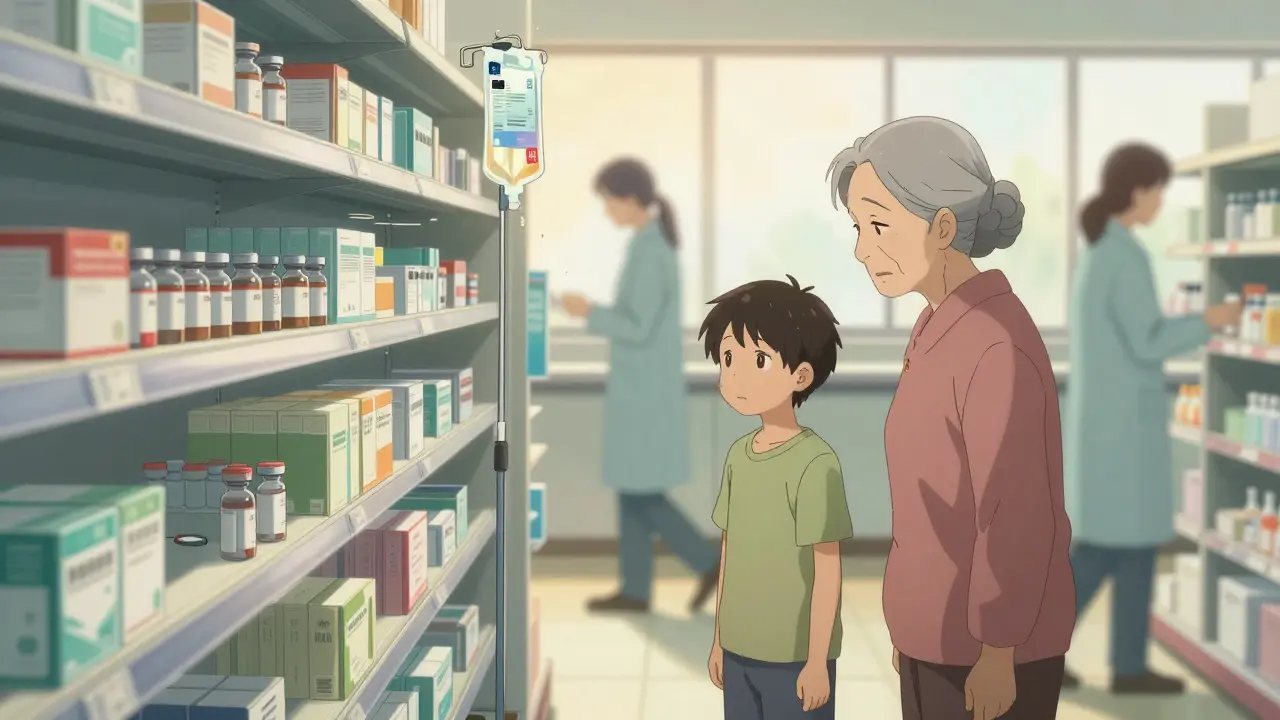
When you walk into a pharmacy and find your usual prescription out of stock, or your doctor tells you a treatment is delayed because the raw materials aren’t arriving, you’re not just experiencing a minor inconvenience. You’re feeling the direct impact of pricing pressure and shortages in the health care system. These aren’t abstract economic terms-they’re real, daily challenges that raise costs, delay care, and force hard choices on patients and providers alike.
Why Health Care Isn’t Immune to Supply Chain Chaos
Health care doesn’t operate in a vacuum. Even though it’s often seen as a protected sector, it relies on the same global supply chains as everything else. Insulin vials, surgical gloves, antibiotics, IV fluids, even the plastic tubing used in dialysis machines-all of it comes from factories, ports, and shipping lanes that got jammed during the pandemic and haven’t fully recovered. Between 2020 and 2022, global supply chain pressure hit a record high, according to the San Francisco Federal Reserve. The Global Supply Chain Pressure Index (GSCPI) jumped from a pre-pandemic average of 0.15 to 3.88 in December 2021. That’s over 25 times higher. And while the index has since eased, it’s still 15-20% above pre-pandemic levels through 2025, meaning the pressure isn’t gone-it’s just changed shape. In health care, this meant shortages of critical items. In 2021 and 2022, the U.S. saw widespread shortages of injectable antibiotics like ampicillin and cefazolin. IV bags, which are essential for hydration and delivering medications, were so scarce that hospitals rationed them. The FDA recorded over 200 active drug shortages in 2022, up from about 100 in 2019. These weren’t random glitches. They were systemic failures tied to concentrated manufacturing. Over 80% of active pharmaceutical ingredients (APIs) for U.S. drugs are made overseas, mostly in India and China. When lockdowns hit those regions, production froze. When shipping ports backed up, deliveries stalled. And when energy prices spiked-thanks to the Ukraine war and gas shortages in Europe-manufacturers faced higher costs just to keep the lights on.How Pricing Pressure Turns Into Higher Bills
When supply drops and demand stays steady-or even grows-the price goes up. That’s basic economics. But in health care, that simple rule has outsized consequences. Take insulin. In 2021, the cost of a single vial of insulin in the U.S. averaged $98. By 2023, some patients were paying over $130, even with insurance. Why? Because the companies that make the raw materials faced higher energy and logistics costs. Those costs didn’t vanish-they got passed down the chain. Manufacturers raised prices. Distributors added markups. Pharmacies followed suit. Patients, especially those without good coverage, ended up footing the bill. The same pattern played out with generic drugs. A 2022 study by the American Journal of Managed Care found that 62% of generic drug price hikes between 2020 and 2022 were directly linked to supply chain disruptions. For a patient taking multiple generics-say, for blood pressure, cholesterol, and diabetes-their monthly drug bill could jump by $40-$60 in just two years. That’s not a small amount. For someone on a fixed income, it means choosing between medication and groceries. And it’s not just drugs. Medical devices like pacemakers, ventilators, and even simple catheters saw price increases of 12-18% during peak shortage periods. Hospitals, facing their own cost pressures, passed those increases on to insurers-and ultimately, to patients through higher copays and deductibles.Shortages Don’t Just Raise Prices-They Delay Care
A shortage isn’t just about higher prices. It’s about waiting. And in health care, waiting can be deadly. In 2022, a nurse in Texas told a reporter her hospital had to cancel 17 elective surgeries in one month because they couldn’t get the IV fluids needed to keep patients stable during operations. In Australia, where I live, several public hospitals in South Australia delayed cancer treatments in late 2022 because they couldn’t secure the chemotherapy drugs they needed. These weren’t rare cases. The Institute for Supply Management found that 76% of health care suppliers reported disruptions in late 2021. For many, it wasn’t just one drug-it was a cascade. No IV fluid? Can’t run dialysis. No sterile tubing? Can’t do routine procedures. No gloves? Can’t safely see patients. The ripple effects were brutal. Emergency rooms got backed up because patients couldn’t be discharged without the follow-up supplies they needed at home. Primary care clinics had to reschedule appointments because they couldn’t get the test kits for diabetes or cholesterol. Patients with chronic conditions-diabetes, heart failure, kidney disease-were the hardest hit. Their care isn’t optional. When the supply chain breaks, they’re the ones who suffer the most.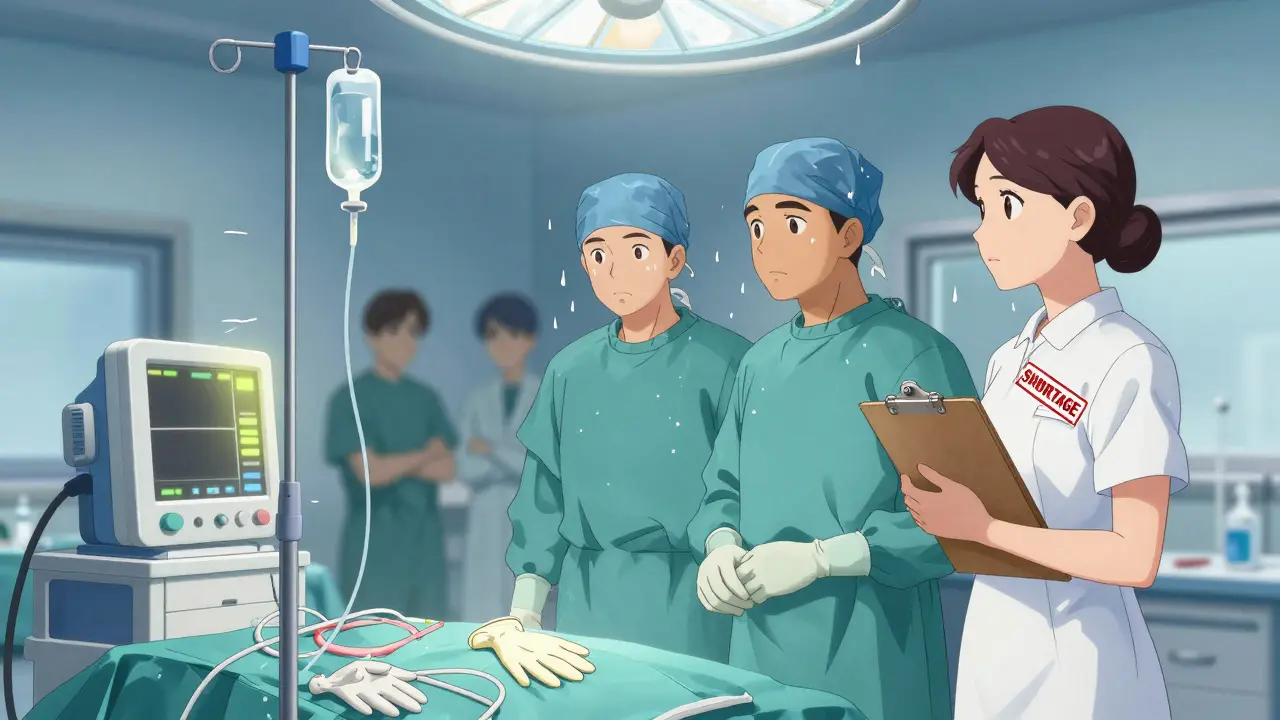
Why Policy Fixes Often Make Things Worse
Governments tried to fix this. Some capped drug prices. Others tried to stockpile supplies. But many of these interventions made shortages worse. In the UK, the government imposed an energy price cap on utilities in 2021 to protect households. That sounds good-until you realize that 14 pharmaceutical manufacturers in the UK rely on natural gas to produce medicines. When they couldn’t pass on rising energy costs, they cut production. Between August and December 2021, 27 small energy suppliers failed. The same thing happened in the health supply chain: companies that couldn’t afford to keep making drugs shut down. The result? More shortages, not fewer. Price controls don’t fix broken supply chains. They just hide the problem until it explodes. As Harvard economist Martin Weitzman showed in his research on price distortion, when prices are artificially held low, consumers don’t reduce demand-they panic. They hoard. They buy extra. That’s exactly what happened with insulin in the U.S. in 2022. When news broke that prices might rise further, patients started buying three months’ supply at once. Pharmacies ran out faster. Shortages got worse.What’s Working: Real Solutions from the Front Lines
The good news? Some providers and companies are finding ways to adapt. One major hospital network in Ohio switched from relying on a single supplier for IV fluids to working with three different manufacturers across three continents. That’s called dual-sourcing. It’s not cheap-it adds 8-10% to procurement costs-but it reduced their risk of total shutdown by 65%. Another hospital in California invested in digital supply chain tracking tools. They could now see exactly where their drugs were in transit-and predict delays before they happened. That cut their inventory stockouts by 28%. In Europe, Germany temporarily relaxed competition rules in 2021 to let pharmaceutical companies share production data and coordinate distribution. Within six weeks, pharmaceutical shortages dropped by 19%. That’s proof that collaboration-even among rivals-can save lives. And then there’s nearshoring. Companies are starting to move production closer to home. A U.S.-based medical device maker moved its plastic component manufacturing from China to Mexico. Yes, it cost 12% more. But delivery times dropped from 45 days to 12 days. And when a fire hit a factory in Asia in 2023, they didn’t lose a single order.What Comes Next: The New Normal in Health Care Supply Chains
The pandemic didn’t create these problems-it exposed them. Long before 2020, the health care system had been built for efficiency, not resilience. It was optimized to keep costs low, not to handle shocks. Now, the shift is happening. Gartner predicts that by 2025, 60% of major health care companies will use digital twin simulations to model supply chain risks. That means they’ll be able to test how a war, a storm, or a labor strike would affect their drug supply before it happens. That’s not science fiction-it’s already being piloted in Australia, Canada, and the U.S. But technology alone won’t fix this. We need policy that encourages diversity in sourcing, rewards transparency, and stops punishing companies that try to build backup systems. We need insurers to stop penalizing providers who pay a little more for reliable supplies. And we need patients to understand that when a drug is cheap, it’s often because someone else is paying the hidden cost-through delayed care, rationing, or worse. The truth is, health care can’t be cheap if it’s going to be safe. The era of ultra-low prices on drugs and supplies is over. The question now isn’t whether prices will rise-it’s whether we’re ready to pay for reliability, resilience, and real access to care.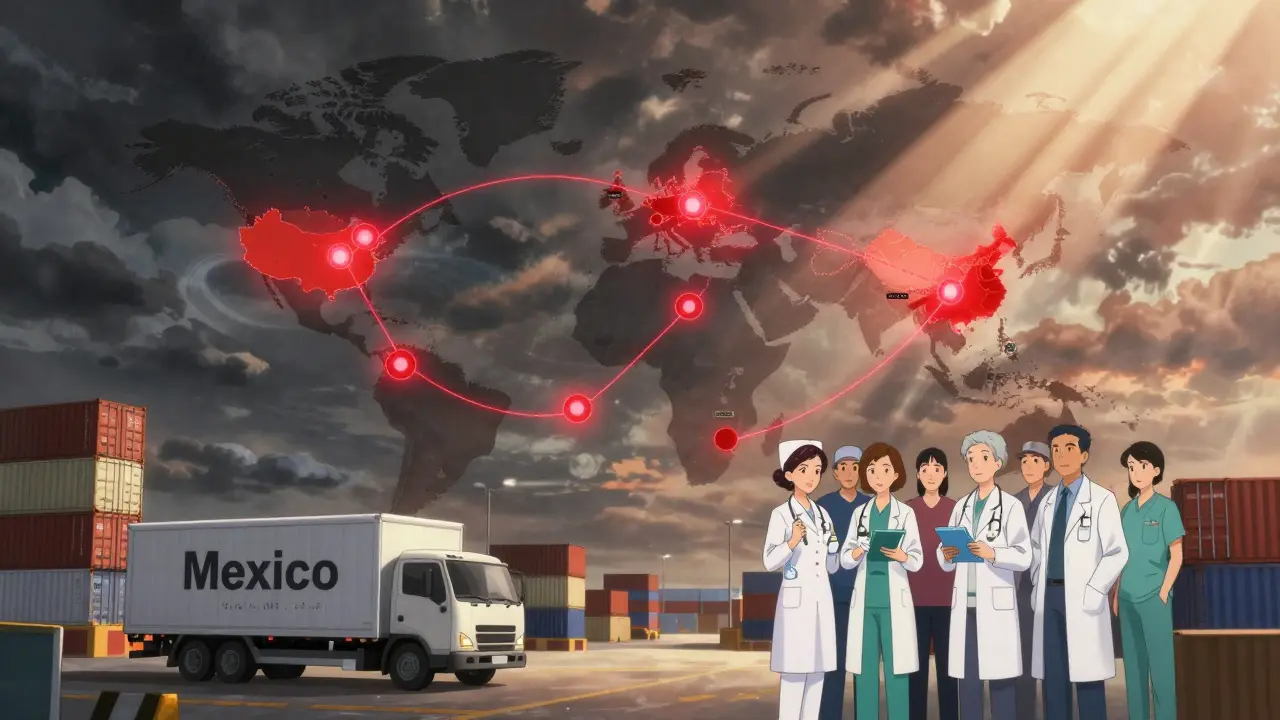
What Patients Can Do Right Now
You can’t control global supply chains. But you can protect yourself.- Ask about alternatives. If your medication is out of stock, ask your doctor if there’s a therapeutically equivalent version from a different manufacturer.
- Plan ahead. If you’re on a chronic medication, keep a 30-day supply on hand. Don’t wait until you’re out.
- Check for patient assistance programs. Many drugmakers offer discounts or free medication for low-income patients. Don’t assume you don’t qualify.
- Report shortages. If your pharmacy runs out, tell them. The more reports they get, the more likely they are to prioritize your medication.
- Stay informed. The FDA and WHO both publish lists of active drug shortages. Bookmark them.
What Providers and Policymakers Need to Do
Health systems can’t fix this alone. We need systemic change:- Invest in domestic manufacturing. Governments should offer tax incentives for companies that produce critical drugs and devices locally.
- Require supply chain transparency. Hospitals and insurers should be required to report where their drugs come from-and how many suppliers they use.
- End artificial price caps on essential goods. Let prices reflect real costs. That’s the only way to signal where investment is needed.
- Support workforce training. We need more skilled workers in pharmaceutical manufacturing, logistics, and supply chain management. That’s not a luxury-it’s infrastructure.
Why are drug shortages still happening in 2026 if the pandemic is over?
The pandemic exposed deep weaknesses in global health supply chains, but it didn’t fix them. Many manufacturers still rely on single-source suppliers in just two countries. Geopolitical tensions, climate disruptions, and labor shortages continue to create bottlenecks. Even though global supply chain pressure has eased since 2022, it’s still 15-20% above pre-pandemic levels through 2025. This isn’t a temporary glitch-it’s a structural vulnerability.
Can price controls solve drug shortages?
No. Price controls make shortages worse. When manufacturers can’t raise prices to cover rising costs for energy, labor, or shipping, they cut production. They shut down lines. They stop making less profitable drugs. The UK saw 27 energy suppliers fail in late 2021 after a price cap prevented them from passing on rising costs. The same thing happened with pharmaceuticals. Prices need to reflect real costs to keep supply flowing.
Why are generic drugs so vulnerable to shortages?
Generic drugs are made on thin margins. Companies compete on price, not reliability. Most are produced in just a few factories overseas. If one factory has a fire, a labor strike, or a regulatory issue, there’s no backup. And since generics make up 90% of prescriptions, even a small disruption affects millions of patients. Between 2020 and 2022, over 60% of generic drug price hikes were tied to supply chain problems.
Is nearshoring a realistic solution for health care supplies?
Yes, but it’s not perfect. Moving production closer to home-like from China to Mexico or Poland-adds 8-12% to costs. But it cuts delivery times from weeks to days and reduces the risk of total supply failure. Companies that adopted nearshoring during the pandemic saw 40% fewer disruption days. For critical drugs and devices, that trade-off is worth it.
How can I tell if my medication is at risk of shortage?
Check the FDA’s Drug Shortages page or the WHO’s Essential Medicines list. If your drug is a generic, made overseas, or used for a chronic condition, it’s more vulnerable. Talk to your pharmacist-if they’ve had to switch brands recently, it’s a sign the supply is unstable. Don’t wait until you’re out to ask questions.
This isn't supply chain stuff. This is capitalism eating its own children.
They optimized for profit, not people. Now we're paying with our lives.
Of course it's happening. We outsource everything to China and India and then act shocked when it breaks. Wake up, America. We built a house of cards and now we're surprised it collapsed.
The FDA’s drug shortage list? Total propaganda. They know 80% of APIs come from hostile nations and still won’t admit we’re dependent on enemy supply chains. This is a national security crisis disguised as a healthcare issue.
I’ve been telling people for years: cheap meds are a lie. There’s no such thing as free. Someone’s always paying - and it’s not the CEOs. It’s the diabetic grandma choosing between insulin and her heating bill. We’re not broken. We’re just being honest now.
I’ve been on insulin for 12 years. Last month, my pharmacy switched me to a different brand - no warning, no explanation. I had to call three other pharmacies before I found the same one. My co-pay went from $15 to $87. And now I’m supposed to be ‘grateful’ for the ‘options’?
dude the iv bag shortage was wild last year. i work in er. we had to use saline in plastic water bottles just to keep people alive. no joke.
Hey - if you’re reading this and you’re scared about your meds? You’re not alone. Talk to your pharmacist. Ask about patient assistance. Check the FDA site. You’ve got power. Don’t let them make you feel helpless.
They told us globalization was the future. Now we’re watching people die because a factory in Gujarat had a power outage. This isn’t economics. This is a moral failure dressed in PowerPoint slides.
Price controls? That’s like putting duct tape on a ruptured artery. The market doesn’t lie. If it costs $150 to make a vial of insulin because energy’s $200 a barrel and shipping’s a nightmare, then guess what? It’s gonna cost $150. Pretending otherwise just means someone else dies quietly.
The systemic inefficiencies in pharmaceutical vertical integration are a textbook case of principal-agent misalignment. Manufacturers externalize cost volatility while internalizing profit retention, creating a perverse incentive structure that prioritizes shareholder yield over therapeutic continuity. This is not a market failure - it’s a structural pathology.
I read this whole thing. I’m just… tired. I don’t even know who to be mad at anymore. The Chinese factories? The U.S. politicians? The CEOs? The pharmacies? It’s like blaming a single raindrop for the flood.
They’re using this to push vaccines. You think the shortages are accidental? Look who benefits. Big Pharma owns the FDA. The whole thing’s a psyop. I’ve got my garlic and my vitamin C. You should too.
While the article presents compelling evidence of systemic fragility, I would respectfully suggest that any policy response must be grounded in empirical data, stakeholder collaboration, and long-term resilience metrics - not ideological posturing. The path forward requires nuance, not outrage.