
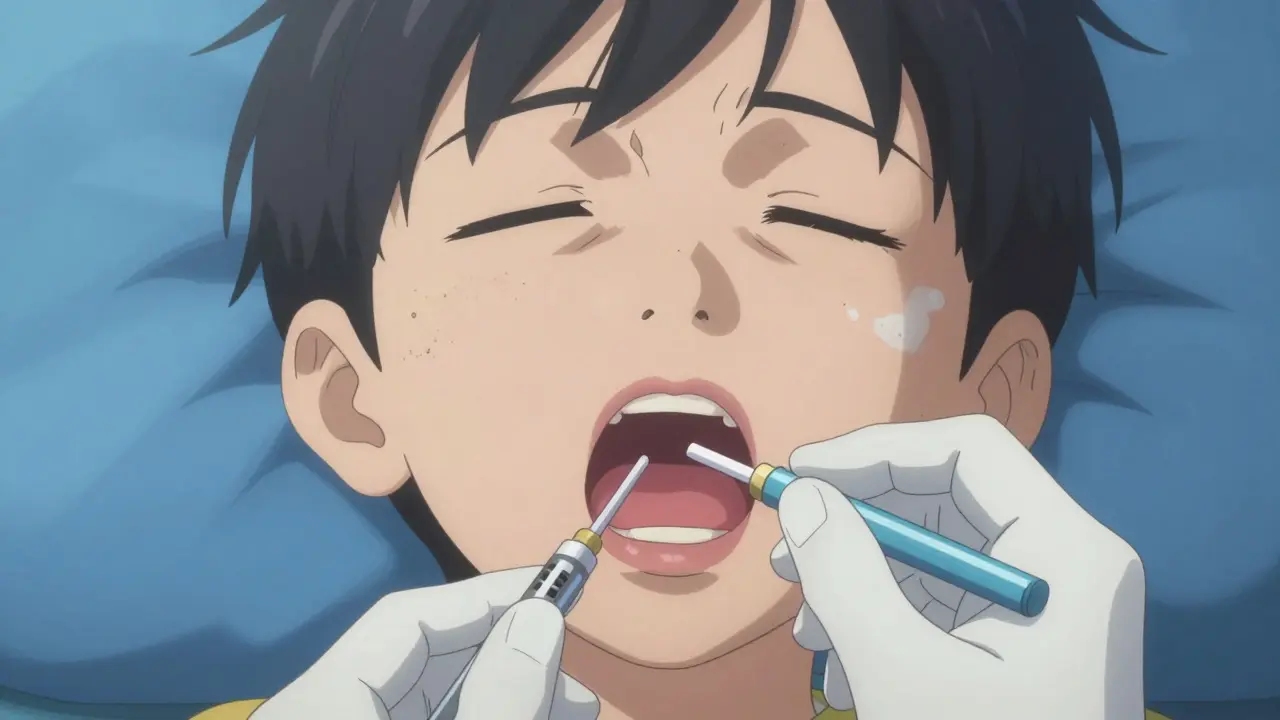
Strep throat isn't just a sore throat-it's a bacterial infection that can lead to serious complications like rheumatic fever if left untreated. Over 15 million people visit doctors each year in the US for this condition, yet many confuse it with viral sore throats. Understanding strep throat diagnosis is critical because antibiotics only work for bacterial infections.
What Is Strep Throat?
Strep throat is a bacterial infection caused by Group A Streptococcus (Streptococcus pyogenes). It's highly contagious and spreads through respiratory droplets. Unlike viral sore throats from colds or flu, strep throat requires antibiotics to prevent complications like rheumatic fever.
Group A Streptococcus (GAS) is a type of bacteria that causes strep throat and other infections. It's most common in children aged 3-9, but adults can get it too. Symptoms include sudden sore throat, fever over 100.4°F (38°C), and swollen lymph nodes.
Recognizing Strep Throat Symptoms
Strep throat symptoms come on quickly. Key signs include:
- Sudden severe sore throat with pain when swallowing
- Fever above 100.4°F (38°C) in 85% of cases
- White patches or pus on tonsils (70% of cases)
- Tender swollen lymph nodes in the neck (60% of cases)
- Palatal petechiae (small red spots on the roof of the mouth) in 15% of cases
Crucially, no cough or runny nose-these suggest a viral infection instead. UC Davis Health notes that the absence of cough has 90% specificity for bacterial pharyngitis.
How Strep Throat Is Diagnosed
Doctors use the Centor criteria to assess the likelihood of strep throat:
- Absence of cough (1 point)
- Tender anterior cervical lymph nodes (1 point)
- Fever over 100.4°F (38°C) (1 point)
- Tonsillar exudate or swelling (1 point)
A score of 3 or higher means a 40-60% chance of strep throat, requiring testing.
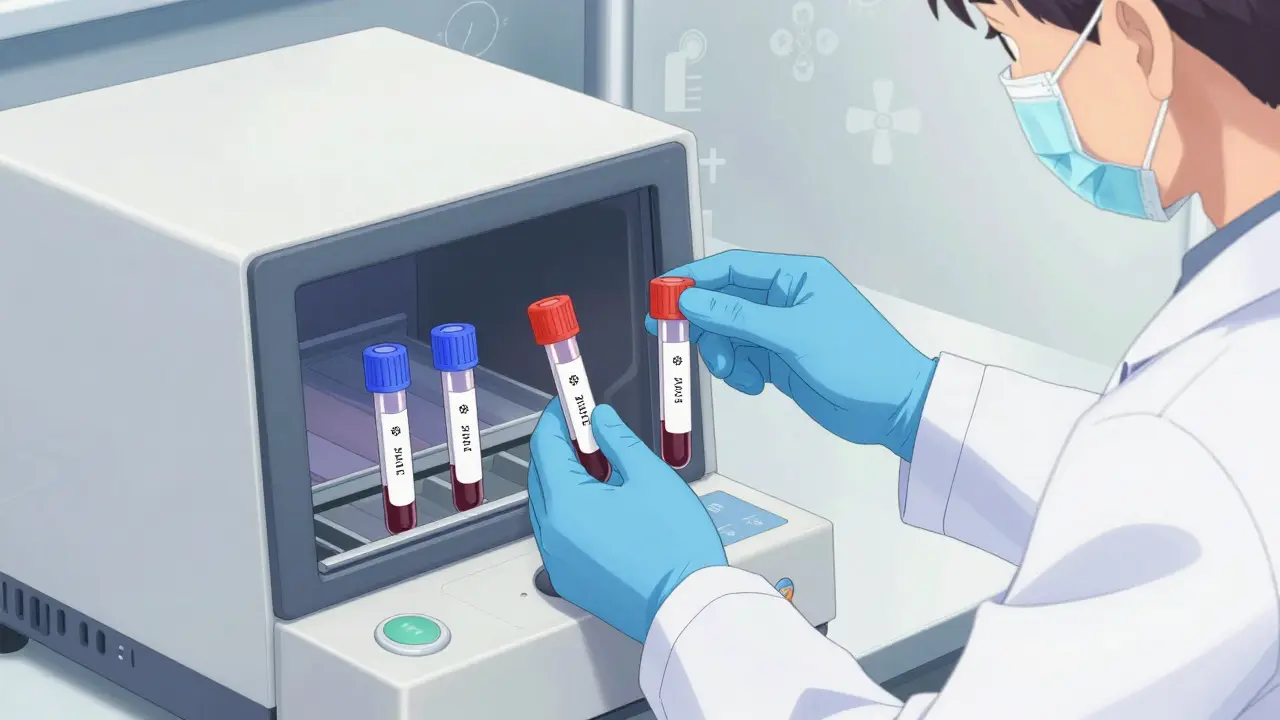
Diagnostic tests include:
| Test Type | Time to Result | Sensitivity | Specificity | Best For |
|---|---|---|---|---|
| Rapid Antigen Detection Test (RADT) | 10-30 minutes | 85-95% | >95% | Quick initial screening |
| Throat Culture | 24-48 hours | 90-95% | N/A | Confirming negative RADT in children |
| PCR Testing | 24-48 hours | 95-98% | High | High accuracy when rapid tests are negative |
CDC guidelines recommend RADT as the first test. For children and adolescents with negative RADT, a throat culture is needed to rule out strep due to higher complication risks.
Antibiotic Treatment for Strep Throat
First-line antibiotics for strep throat are Penicillin V or Amoxicillin. Penicillin V is taken twice daily for 10 days. For adults: 500 mg twice daily. For children: 250 mg twice daily. Amoxicillin is often preferred for kids because it tastes better and requires fewer doses-once daily up to 1000 mg.
For penicillin-allergic patients, alternatives include:
- Cephalexin (20 mg/kg twice daily, max 500 mg per dose)
- Clindamycin (7 mg/kg three times daily, max 300 mg per dose)
- Azithromycin (12 mg/kg once daily for 5 days, max 500 mg)
Antibiotics reduce symptom duration by about 16 hours and cut transmission risk by 80% within 24 hours. Crucially, they must be taken for the full 10 days even if symptoms improve. Stopping early leads to relapse in 5-15% of cases and increases antibiotic resistance.
Recovery Timeline After Treatment
With proper antibiotic treatment, symptoms typically improve within 24-48 hours. You're no longer contagious after 24 hours on antibiotics, so kids can return to school or work then. However, complete recovery takes 7-10 days, and you must finish the full antibiotic course to prevent relapse.
Without antibiotics, strep throat symptoms may last 7-10 days, but you remain contagious for up to two weeks. CDC data shows 25% of rapid test false negatives occur in children under 5 due to lower bacterial load. Always follow up with your doctor if symptoms persist beyond 48 hours of starting antibiotics.
Common Mistakes to Avoid
Many patients make critical errors when treating strep throat:
- Stopping antibiotics early when symptoms improve-this happens in 40% of parents' cases and increases relapse risk
- Sharing antibiotics or using leftover ones (12% of adults do this per CDC survey)
- Asking for antibiotics for viral sore throats-30% of outpatient antibiotics are unnecessary
Dr. David T. Huang of UC Davis Health warns: 'The key differentiator is the absence of upper respiratory symptoms like cough or congestion. When these are present, strep is unlikely.' Using antibiotics for viral infections contributes to antimicrobial resistance, which the CDC calls a major public health threat.
When to See a Doctor
Seek medical attention immediately if you experience:
- Fever lasting more than 48 hours after starting antibiotics
- Difficulty swallowing or breathing
- Rash, joint pain, or swelling
- Abdominal pain (more common in children)
These could signal complications like peritonsillar abscess (1-2% of cases) or rheumatic fever, which affects 3% of untreated cases. Rheumatic fever can cause permanent heart damage and is a leading cause of heart disease in children worldwide.
How long is strep throat contagious?
You're contagious until 24 hours after starting antibiotics. Without antibiotics, you can spread the infection for up to two weeks. Always stay home during this time to prevent spreading strep to others.
Can strep throat occur without a fever?
Yes, but it's rare. Fever occurs in 85% of confirmed cases. If you have a sore throat without fever, it's more likely viral. Always get tested if strep symptoms are present.
What happens if you don't finish antibiotics?
Stopping antibiotics early leads to relapse in 5-15% of cases and increases antibiotic resistance. Always complete the full course even if you feel better. The CDC reports that 40% of parents discontinue antibiotics too soon.
Are there alternatives to antibiotics for strep throat?
No. Strep throat is bacterial and requires antibiotics. Viral sore throats don't need antibiotics. Using antibiotics unnecessarily contributes to resistance. Always confirm diagnosis with a test before taking antibiotics.
How can I prevent spreading strep throat?
Wash hands frequently, avoid sharing utensils or drinks, and stay home for 24 hours after starting antibiotics. Cover your mouth when coughing or sneezing. These simple steps reduce transmission risk significantly.
My kid got strep throat last year. Doctor prescribed penicillin. Mom stopped after 5 days because symptoms improved. Recurrence happened a week later. Now I know to finish all meds. Don't take chances with strep. It's serious. Always complete the course.
Strep throat is a national emergency! We must take antibiotics seriously! The CDC guidelines are clear! Ignoring them is dangerous! Americans need to be informed! This is why we need strong leadership! The left is downplaying this! It's all part of the socialist agenda! We must act now!
I don't think antibiotics are necessary for strep. Natural remedies work better! 🤷♀️ Plus, antibiotics mess up your gut. Maybe the real issue is vaccines? 🤔
The entire strep throat narrative is a fabrication by Big Pharma. There is no such thing as Group A Streptococcus-it's a myth created to profit from our fears. The CDC is complicit in this deception, as are all mainstream medical institutions. They want us to believe that antibiotics are the only solution, but the truth is they destroy our microbiome and weaken our immune system. This is part of a larger scheme to control public health. Natural alternatives like honey, garlic, and herbal teas are far more effective. The government suppresses this information to maintain their monopoly. You must question authority and seek the truth. Trust me, I've done extensive research. The data is clear. This is not a coincidence. It's a calculated move by the elite. Do not fall for this scam. Your health is in your hands. Research independently. The truth will set you free.
Strep throat is bacterial, so antibiotics are necessary. But it's important to confirm with a test first. Many people self-diagnose and take antibiotics unnecessarily. That contributes to resistance. Always get tested. If it's strep, complete the course. If viral, antibiotics won't help. We need better education on this. It's a common mistake.
You're an idiot for suggesting natural remedies for strep. It's a bacterial infection. Antibiotics are the ONLY solution. Ignoring medical advice is reckless. You're putting others at risk. Your 'natural' nonsense is dangerous. The CDC has guidelines for a reason. You clearly don't know what you're talking about. Stop spreading misinformation. People die from untreated strep. You're a liability. Get your facts straight before commenting.
Antibiotics essential. 💊
Hey, I get where you're coming from. Antibiotics are crucial for strep. But we need to educate people better. Maybe a public health campaign? Let's work together to spread awareness. It's important for everyone to know the facts. No room for guesswork here. We can do this!
Public health campaigns are necessary. Misinformation spreads quickly. We must prioritize education. Antibiotics save lives. Never take them without prescription. It's a moral duty to follow guidelines. This is non-negotiable. Our nation's health depends on it.
Strep throat is a government plot to control us. They want us to take antibiotics so they can track us through our microbiome. The CDC is part of the conspiracy. Always question authority. The real cure is ozone therapy. Don't trust the doctors. They're in on it. The truth is hidden. You have to fight for your health.