
Medication Sync Refill Calculator
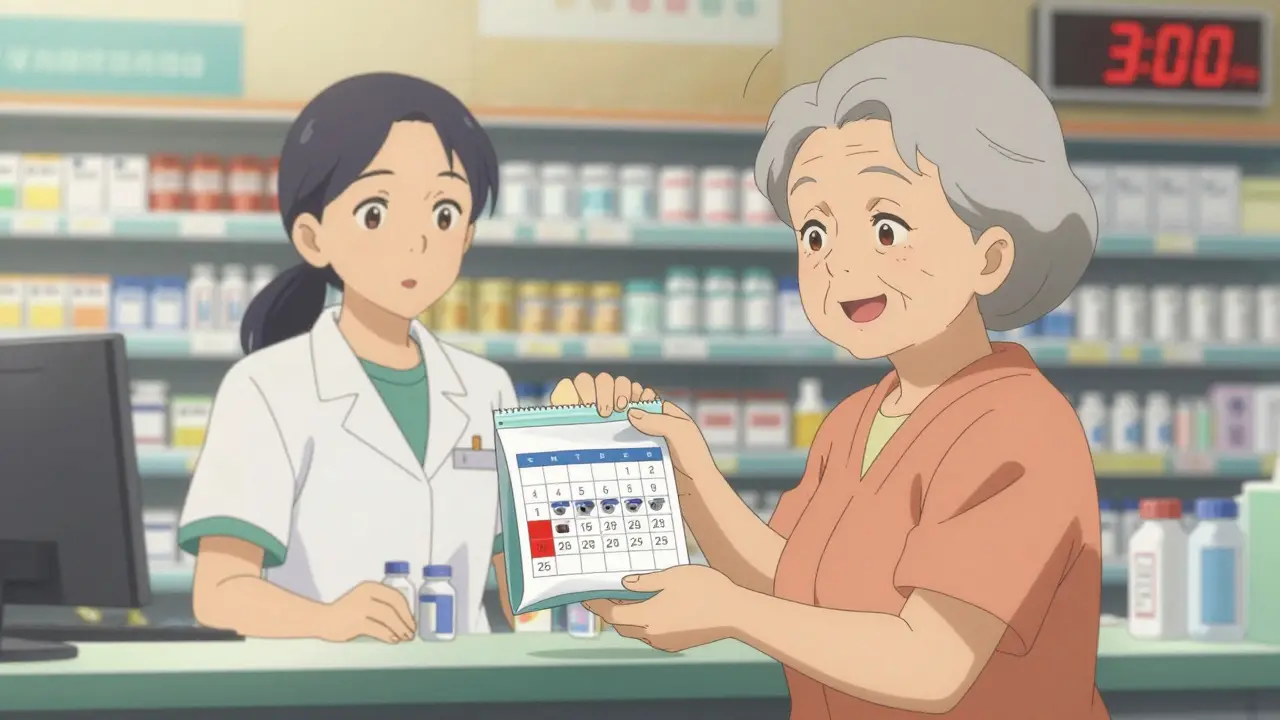
This calculator helps you understand how many of your medications can be synchronized to a single refill date. Enter your current medications and their refill intervals to see if you're a good candidate for medication synchronization and how many refills are needed to align them.
Your Medication Schedule
Your Synchronization Results
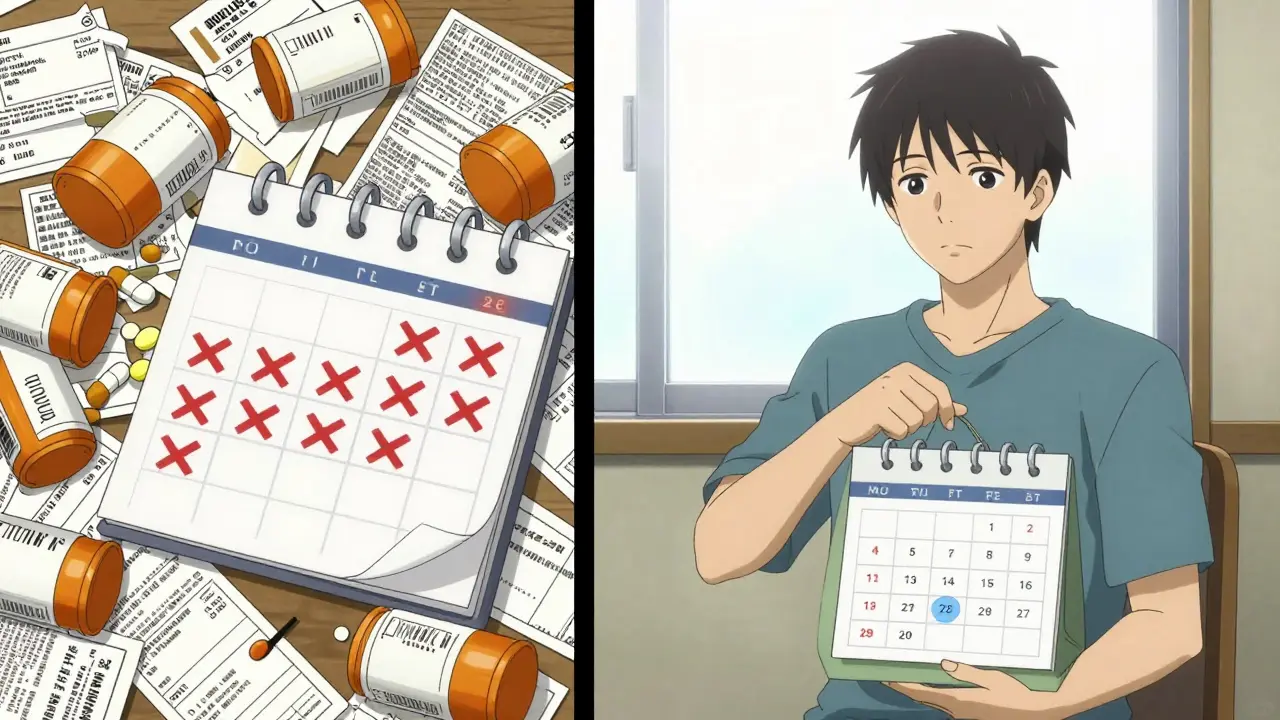
Imagine taking five different medications for high blood pressure, diabetes, cholesterol, arthritis, and thyroid issues. Each one has a different refill date-some every 30 days, others every 45 or 60. You forget one. You miss a doctor’s appointment. Your insurance won’t cover an early refill. Suddenly, you’re running low on your blood pressure pill, and you skip a day. Then another. Before you know it, you’re in the emergency room with a spike in blood pressure that could’ve been avoided.
This isn’t rare. Nearly two-thirds of Americans don’t take their medications as prescribed. And the cost? Over $300 billion a year in avoidable hospital visits, complications, and lost productivity. The biggest reason? Medication synchronization-or the lack of it.
What Is Medication Synchronization?
Medication synchronization (or med sync) is a simple idea with powerful results: all your maintenance prescriptions are aligned to one monthly pick-up date. Instead of juggling five different refill reminders, you get them all on the same day-every month. It’s not about getting more medicine. It’s about getting the right medicine, at the right time, without gaps.
This isn’t new. A community pharmacist in Long Beach, California, started this in 1995 to help patients who kept missing doses. Today, it’s a standard service in most community pharmacies across the U.S. The American Society of Health-System Pharmacists (ASHP) defines it clearly: "The process of aligning a patient’s medication fills so that they can all be conveniently picked up on the same day."
It works best for people managing chronic conditions-like diabetes, heart disease, asthma, or depression-who take daily medications for months or years. It doesn’t apply to short-term prescriptions like antibiotics or as-needed inhalers. Those stay on their own schedule.
Why Gaps in Therapy Are Dangerous
Missing even one or two doses of a blood pressure or diabetes medication might not feel like a big deal. But over time, those small gaps add up. Blood pressure spikes. Blood sugar fluctuates. Inflammation flares. The body doesn’t recover the way it should.
Studies show that patients who miss doses regularly are 2.5 times more likely to be hospitalized. For seniors, the risk is even higher. One ASHP case study found that caregivers reported a 40% drop in missed doses after implementing med sync. That’s not just convenience-it’s safety.
And it’s not just about forgetting. Insurance rules, pharmacy logistics, and confusing refill schedules all contribute. A prescription written for a 30-day supply with only one refill? That’s a ticking clock. If you don’t get to the pharmacy on day 28, you’re out of meds by day 31. No warning. No backup. Just a gap.
How Medication Synchronization Works
Getting started is easier than you think. Here’s how it works step by step:
- Identify eligible medications-Only maintenance drugs count. Think daily pills for chronic conditions. Not antibiotics, pain relievers, or rescue inhalers.
- Choose an anchor date-You and your pharmacist pick one day each month when you’ll pick up all your synced meds. It could be the first Monday, the 15th, or the last Friday-whatever works for your schedule.
- Adjust refill dates-Your pharmacist will work with your doctor to extend prescriptions to 90-day supplies where possible. If a prescription only has a 30-day supply, they’ll do a "short fill"-give you enough for now, then adjust the next refill to match your anchor date. This is legal, documented, and common.
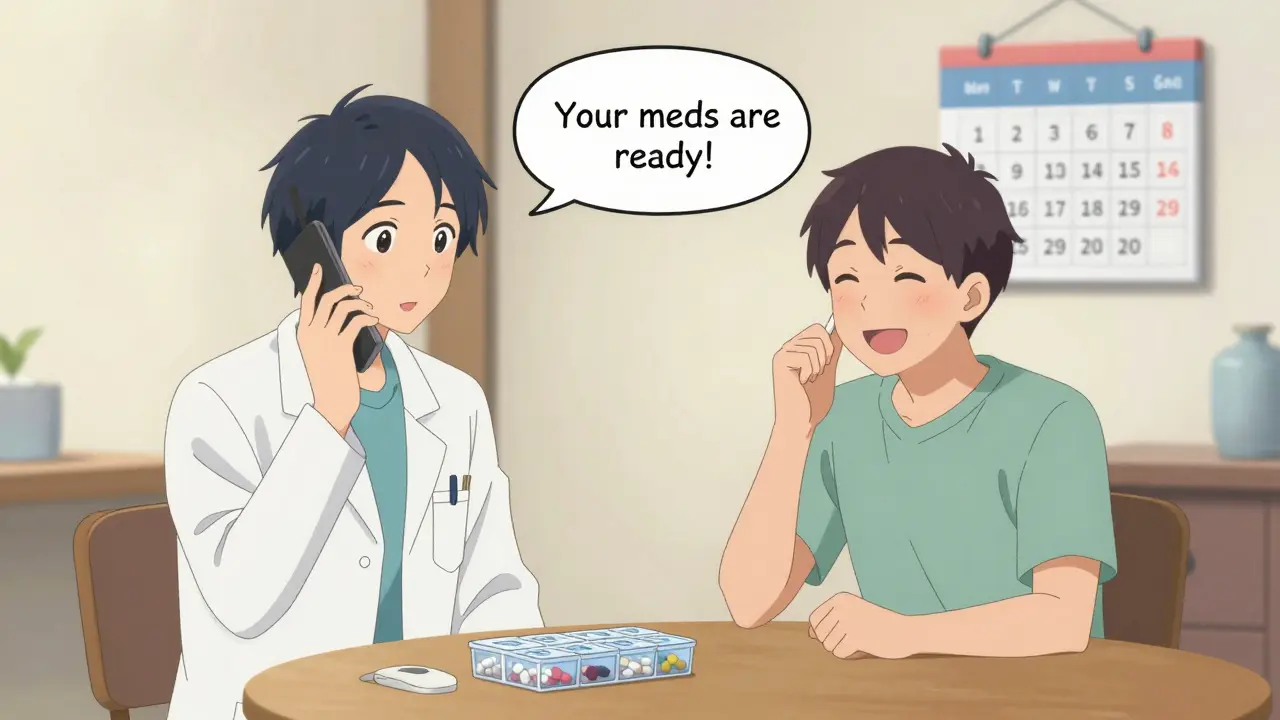
- Set up reminders-Your pharmacy will call or text you before your pick-up day. They’ll check if your meds changed, if you’re having side effects, or if you need a new prescription.
- Get all meds on one day-No more rushing between pharmacies or forgetting which med is due when. Everything’s ready.
Some pharmacies use digital tools to track this. Others still use paper files and phone calls. Either way, the goal is the same: eliminate the chaos.
Who Benefits the Most?
Med sync isn’t for everyone-but it’s a game-changer for certain groups:
- Seniors who have trouble driving or remembering multiple refill dates
- Patients on three or more daily medications
- Busy professionals who can’t take time off during the workday
- Caregivers managing medications for a loved one
- People who’ve been hospitalized due to missed doses
A 2022 survey of 1,200 patients using med sync found that 78% reported better adherence. Sixty-three percent cut their pharmacy visits from 12.4 per year down to just 4.2. That’s less time waiting, less stress, and more peace of mind.
What Doesn’t Work in Med Sync?
Not every prescription can be synced. Here’s what stays separate:
- As-needed medications (like albuterol inhalers or nitroglycerin for chest pain)
- Antibiotics or short-term courses
- Medications with unstable dosing (e.g., warfarin that needs frequent lab checks)
- Prescriptions with no refills or only a 30-day supply that can’t be extended
If your doctor writes a 30-day script with no refills, that breaks the cycle. That’s why med sync only works when pharmacists and doctors work together. Many pharmacies now reach out to prescribers to ask for 90-day prescriptions with four refills (90 x 4). That’s the sweet spot-it gives you six months of coverage without needing a new visit.
Common Challenges and How to Solve Them
Med sync sounds perfect-but it’s not without hurdles.
Insurance won’t cover early refills. Some Medicare Part D plans restrict refills before 75% of the supply is used. That can delay synchronization. Solution: Your pharmacist can file a one-time exception request. Many do this routinely.
Doctors won’t write 90-day prescriptions. About 22% of pharmacies report this as a barrier. Solution: Ask your pharmacist to contact your doctor’s office. Many now have templates ready to send.
You get less medicine at first. During the initial sync, you might get a partial fill to align dates. This confuses people. Solution: Your pharmacist should explain this upfront. It’s temporary-just a one-time adjustment.
You forget to call or show up. If you miss your pick-up day, your meds might not be ready next month. Solution: Set a phone reminder. Or ask your pharmacy to hold your meds for a week if you’re away.
How to Get Started
Here’s what to do today:
- Make a list of all your daily medications.
- Check your last refill dates. Are they spread out?
- Call your pharmacy. Ask: "Do you offer medication synchronization?" If they say no, ask if they can start.
- Bring your list to your next doctor visit. Say: "I’d like to sync my refills. Can you write 90-day prescriptions with refills?"
- Once set up, keep your phone number and emergency contact updated with your pharmacy.
Independent pharmacies are more likely to offer personalized sync plans. Chain pharmacies often have automated systems. Either way, the service is free. No extra cost. No hidden fees.
The Bigger Picture: Why This Matters
Med sync isn’t just about convenience. It’s a safety net. It turns passive medication use into active care. When your pharmacist calls you every month to check in, they’re not just dispensing pills-they’re preventing emergencies.
By 2025, Medicare plans may start rewarding pharmacies that enroll 40% or more of their chronic medication patients in med sync. That’s because the data is clear: fewer gaps mean fewer hospital stays. The Congressional Budget Office estimates that if seniors use med sync consistently, Medicare could save $4.2 billion a year by 2027.
For you? It means fewer doctor visits. Fewer scary health scares. More time focused on living-not managing pills.
Can I sync all my prescriptions?
No-only maintenance medications taken daily for chronic conditions. As-needed drugs like inhalers, pain relievers, or antibiotics don’t fit the sync model. Your pharmacist will help you sort which ones qualify.
Is medication synchronization free?
Yes. There’s no extra charge for the service. It’s part of the pharmacy’s patient care program. You still pay your usual copay for each medication.
What if I travel or go on vacation?
Tell your pharmacy in advance. Many can mail your meds or arrange a refill at a nearby pharmacy. Some even offer a one-month emergency supply if you’re away longer than expected.
Do I need to see my doctor to start med sync?
Not always, but it helps. Your pharmacist can often adjust refill dates without a new prescription. However, for 90-day supplies, your doctor may need to update your prescriptions. Ask your pharmacy to handle the communication.
How long does it take to get synced?
Most patients are fully synced within 2-4 weeks. The first month might involve partial fills to align dates, but after that, you’ll get all your meds on your chosen day every month.
Can I change my anchor date later?
Absolutely. If your schedule changes-say, you start a new job or move-you can call your pharmacy and pick a new day. Just give them a few days’ notice.
Next Steps: Don’t Wait for a Crisis
If you’re on multiple medications, don’t wait until you miss a dose or end up in the hospital. Talk to your pharmacist today. Ask if they offer med sync. If they don’t, ask why-and if they’d consider starting.
This isn’t just about refills. It’s about control. It’s about safety. It’s about knowing that your meds are ready, your pharmacist is watching out for you, and you’re not fighting a broken system.
One sync date. One conversation. One less thing to worry about.
I used to juggle 7 meds across 5 different refill dates-total chaos. My grandma almost ended up in the ER because she missed her blood pressure pill for three days. Then we switched to med sync at her local pharmacy, and it was like flipping a switch. Now she gets everything on the first Friday of every month, and they even call to check in. No more panic buys at 10 PM. Life changed.
Of course this works in the U.S.-we’ve got the infrastructure. Try getting this kind of care in a third-world country where pharmacists don’t even have computers. This isn’t innovation, it’s basic hygiene. If you can’t manage your meds, maybe you shouldn’t be allowed to live alone. Just saying.
Oh wow, so the solution to modern suffering is… more scheduling? We’ve outsourced our brains to pharmacies now? Next they’ll sync our tears with our Netflix queues. The real problem isn’t refill dates-it’s that we’ve turned human health into a spreadsheet. But hey, at least we’re efficient while dying.
OMG YES. I’ve been syncing since 2021. My pharmacist is basically my therapist now. She remembers my dog’s name and asks if I’ve been sleeping. 🥹 Also, 90-day scripts = less trips = more time to sip matcha latte in peace. Pharmacy staff deserve a Nobel. 🏆
This made me tear up a little. My mom’s on six meds and used to forget half of them. After med sync, she started smiling again. Not because she’s fixed-but because she finally felt seen. That’s the magic here. It’s not about pills. It’s about dignity.
My dad’s in his 80s and hates pharmacies. But when they told him he could get everything on a Friday afternoon while grabbing coffee, he said yes. Now he calls them his ‘med crew.’ They even send him a little card on his pick-up day. Small things, right? But they matter.
My pharmacy does this but they never explain the partial fills. I thought I was getting scammed until I asked. They were super cool about it. Just tell people upfront: you’ll get less at first. That’s all it takes.
If you’re on multiple meds and haven’t tried this-you’re doing yourself a disservice. Talk to your pharmacist today. It’s free. It’s easy. It’s life changing. No excuses.
YES YES YES!! I’m a nurse and I’ve seen too many seniors crash because of missed doses. Med sync is the quiet hero of healthcare. Tell your pharmacist you want it. Don’t wait for them to ask you. 💪❤️
It’s funny how something so simple-aligning dates-can fix a system designed to confuse. We overcomplicate health. We make it transactional. But med sync? It’s relational. The pharmacist remembers you. That’s the real medicine.
People who don’t take their meds are just lazy. Why should pharmacies bend over backward for people who can’t follow basic instructions? This is enabling.
my dr said no to 90 day refills so i asked the pharmacist to call em. they did. 2 days later it was done. no big deal. just talk to people. they wanna help.
Let me be clear: this isn’t just a convenience-it’s a public health imperative. I’ve seen patients die because their warfarin was out for 72 hours, or their insulin ran out during a weekend. Med sync isn’t optional. It’s a baseline standard. Every pharmacy should be required to offer it. No exceptions. And yes, it’s legal, ethical, and cost-effective. The fact that we still treat this as a "nice-to-have" is a moral failure. Insurance companies fight it because they don’t understand prevention-they only understand billing codes. But pharmacists? They’re on the front lines. They see the gaps before they become crises. They’re not just dispensing pills-they’re holding people together. And if your pharmacy doesn’t offer this? Ask why. Push harder. Call your state pharmacy board. Write your senator. This isn’t about refills. It’s about whether we value human life enough to make it simple. Stop waiting for a crisis. Start asking for a solution. Today.