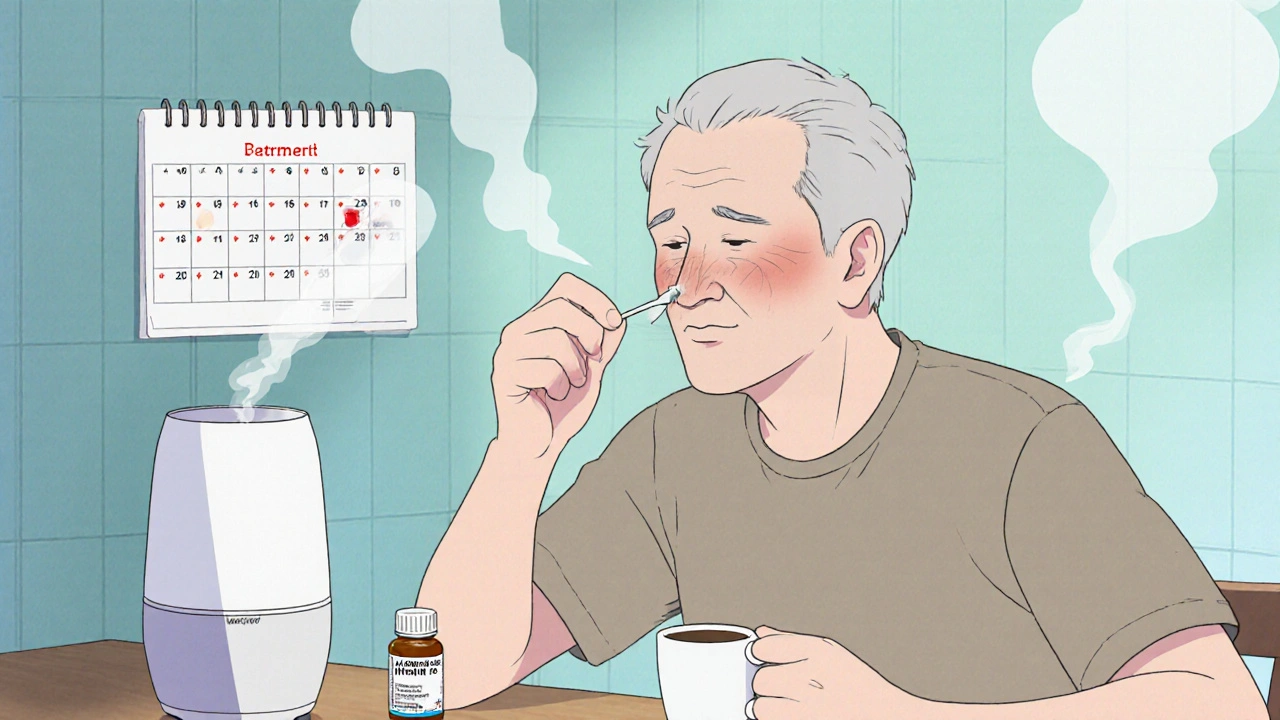
When your nose starts bleeding, it’s usually not life-threatening—but it can be scary. A nosebleed, a sudden flow of blood from the nasal passages, often caused by dry air, trauma, or high blood pressure. Also known as epistaxis, it’s one of the most frequent reasons people visit urgent care. Most nosebleeds come from the front of the nose, where blood vessels are thin and easy to irritate. You might get one after picking your nose, blowing too hard, or walking into a dry room in winter. It’s not rare—it happens to nearly everyone at some point.
But not all nosebleeds are the same. If you’re over 50 and get frequent nosebleeds without injury, it could be tied to high blood pressure, a condition that puts extra stress on delicate nasal vessels. People on blood thinners like warfarin or dabigatran also bleed more easily—something we’ve seen in posts about anticoagulant safety. And if your nosebleeds come with headaches, vision changes, or trouble breathing, that’s a red flag. It could point to a tumor, a deviated septum, or even a rare vascular disorder. The key is knowing when it’s just dry air and when it’s something deeper.
Stopping a nosebleed is simple: sit up, lean forward (don’t tilt your head back!), and pinch the soft part of your nose for 10 minutes. Use a cold pack on your bridge if you have one. Avoid lying down, blowing your nose, or checking if it’s stopped too soon. If it doesn’t stop after 20 minutes, or if you’re swallowing a lot of blood, get help. Some people use saline sprays or humidifiers to prevent recurring ones—especially in winter. Others need a doctor to cauterize the vessel. There’s no one-size-fits-all fix, which is why we’ve gathered real cases and practical advice from people who’ve dealt with this daily.
What you’ll find below isn’t just theory. We’ve pulled together posts that dig into the real causes—like how steroid creams can dry out your nasal lining, how certain antibiotics affect clotting, and why seniors are more prone to bleeding. You’ll see what works, what doesn’t, and what to ask your doctor before you assume it’s just "normal." This isn’t about fear—it’s about knowing when to act and when to relax.