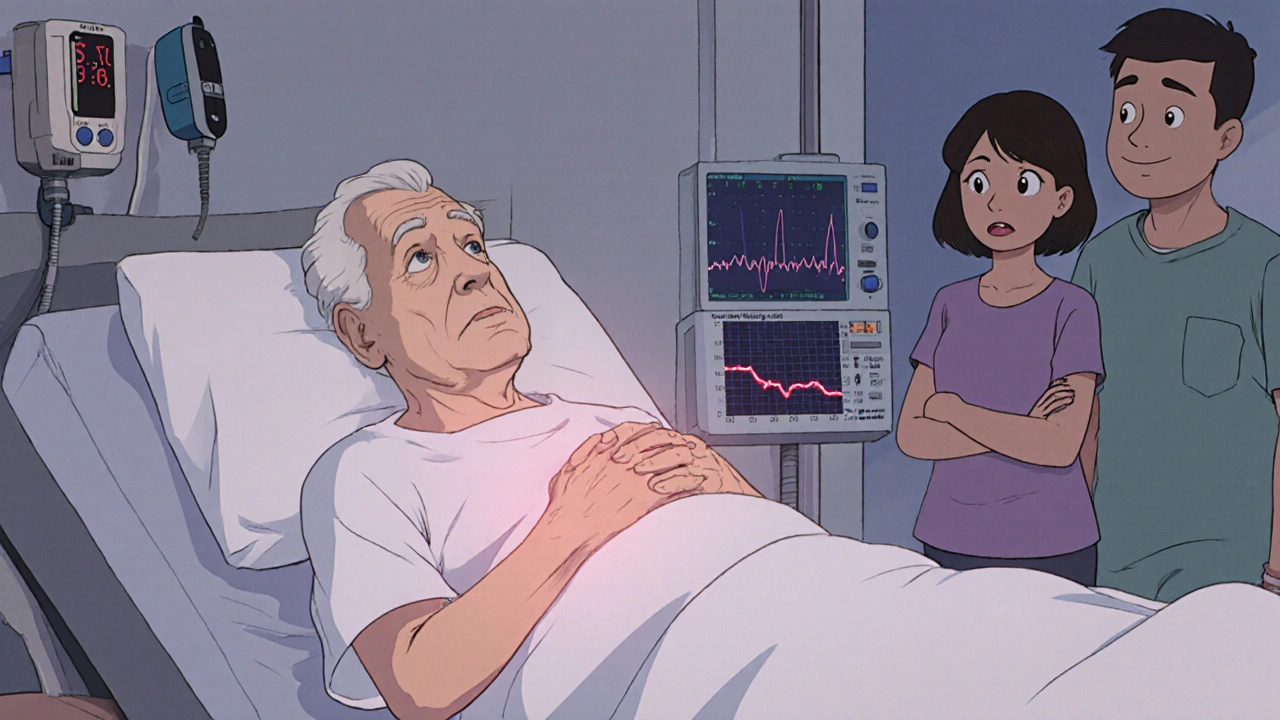
When it comes to overdose signs in elderly, the subtle, often mistaken symptoms of drug toxicity in older adults. Also known as medication toxicity in seniors, it’s not always about a single pill gone wrong—it’s usually a mix of prescriptions, supplements, and changing body chemistry. Older adults don’t process drugs the same way they did at 30. Their kidneys and liver slow down. Their muscle mass shrinks. Their brain becomes more sensitive to sedatives. A dose that was fine at 50 can become dangerous at 75. And because many seniors take five or more medications daily—a condition called polypharmacy, the use of multiple medications by a single patient, often leading to harmful interactions—the risk of accidental overdose grows quietly, without warning.
Common triggers? Painkillers like oxycodone or acetaminophen, sleep aids like zolpidem, blood thinners like warfarin, and heart meds like digoxin. But the signs? They don’t look like movies. No screaming, no foaming at the mouth. Instead, you’ll see confusion that comes and goes, unsteady walking, sudden drowsiness, slurred speech, or a drop in appetite. Maybe they’re falling more often. Or they’re unusually quiet, not answering questions they used to answer without thinking. These aren’t just "getting old"—they’re red flags. medication overdose, an unintentional or intentional intake of a drug beyond the recommended dose, leading to harmful effects in seniors often hides behind symptoms that doctors dismiss as dementia or depression. But it’s not always the brain. Sometimes it’s the drugs.
What makes this worse? Many seniors don’t know what they’re taking. Pill organizers get mixed up. Family members add supplements "just to help." Pharmacies fill prescriptions without checking for interactions. And because seniors are less likely to report side effects—afraid of being told to stop their meds—they suffer in silence. The result? A quiet, creeping overdose that only becomes obvious when it’s too late. The good news? You don’t need to be a doctor to spot the warning signs. If your parent or loved one suddenly seems "off," check their meds. Look for new prescriptions, changes in dosage, or over-the-counter drugs they started taking. Keep a list. Talk to their pharmacist. Ask if any of the meds are known to cause dizziness, confusion, or low blood pressure in older adults.
There’s no single test for overdose in the elderly. It’s a puzzle. But the pieces are there—if you know where to look. The posts below cover real cases, real drugs, and real mistakes that led to hospital visits. You’ll find what medications are most likely to cause trouble, how to tell the difference between normal aging and drug toxicity, and what steps to take before emergency services arrive. This isn’t about fear. It’s about awareness. And awareness can mean the difference between a minor adjustment and a life saved.