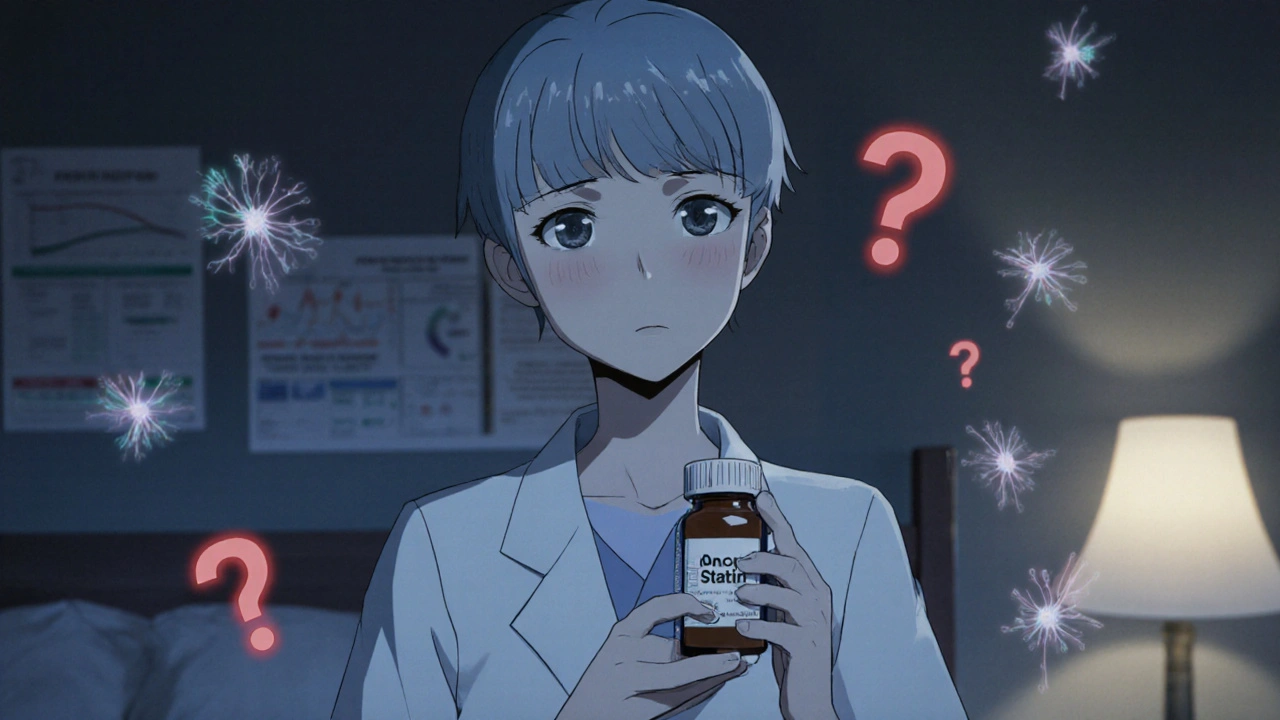
When it comes to lowering cholesterol, statins, a class of drugs used to reduce LDL cholesterol and prevent heart attacks and strokes. Also known as HMG-CoA reductase inhibitors, they're among the most prescribed medications in the world—but not without risks. Millions take them daily, but many don’t know the real trade-offs. Statins aren’t magic pills. They work, yes, but they also come with side effects that can quietly wreck your quality of life—if you’re not watching for them.
One of the biggest concerns is muscle pain, a common reaction that can range from mild soreness to a dangerous condition called rhabdomyolysis. It’s not just about feeling tired after the gym. If your legs ache for no reason, or you feel like you’ve been hit by a truck after walking up stairs, it might be your statin. And it’s not just muscles. Liver enzymes, often monitored through routine blood tests can spike, signaling stress. Some people report brain fog, memory lapses, or even higher blood sugar—things doctors don’t always connect back to the pill they handed you.
Statins don’t work the same for everyone. A 65-year-old with a history of heart disease might gain years from taking one. A 40-year-old with high cholesterol but no other risk factors? The benefit is tiny, and the risk of side effects might outweigh it. That’s why guidelines now push for personalized decisions—not blanket prescriptions. You need to know your numbers, your family history, and your tolerance before you swallow that daily pill. And if you’re on other meds—like antibiotics, antifungals, or even grapefruit juice—those can turn a safe dose into a dangerous one.
What’s missing from most doctor visits is the real talk: How to tell if the statin is helping or hurting you. Blood tests alone won’t tell you if you’re feeling worse because of it. Tracking symptoms, timing them to when you started the drug, and being honest with your provider matters more than you think. And if you stop? You can’t just quit cold turkey—some people get rebound effects. There are alternatives, like ezetimibe or PCSK9 inhibitors, but they come with their own costs and caveats.
Below, you’ll find real, practical posts that cut through the noise. You’ll see how statin safety connects to muscle damage, drug interactions, liver health, and what to do when side effects start. No fluff. No marketing. Just clear, tested info from people who’ve been there—patients and clinicians alike. Whether you’re considering starting one, already taking one, or thinking about stopping, what’s here will help you make a smarter, safer call.