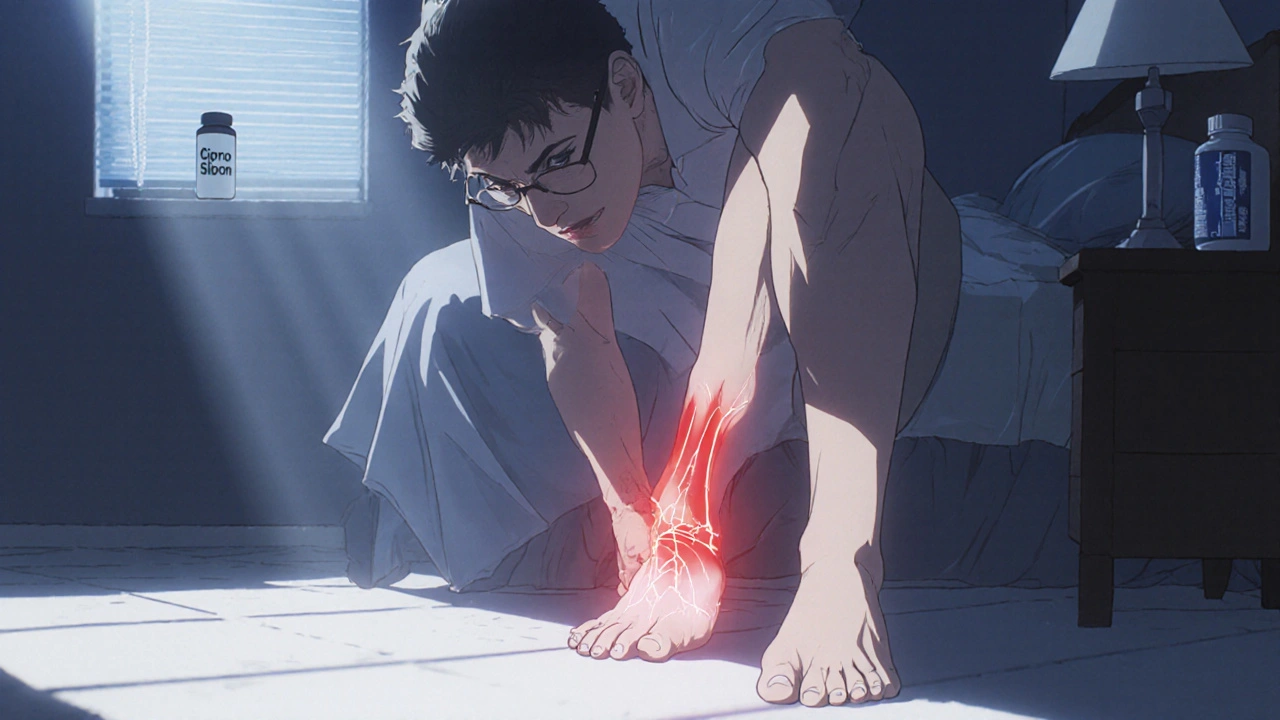
When you take an antibiotic, you expect to fight off an infection—not risk a torn tendon. But tendinopathy from antibiotics, a rare but serious side effect caused by certain antibiotics, especially fluoroquinolones, leading to tendon inflammation, pain, or even rupture. Also known as fluoroquinolone-induced tendinopathy, it can strike without warning, even in healthy people. This isn’t just a footnote in the drug leaflet—it’s a real risk that shows up in emergency rooms and physical therapy clinics.
The antibiotics most linked to this problem are fluoroquinolones, a class of broad-spectrum antibiotics including ciprofloxacin, levofloxacin, and moxifloxacin. Also known as FQ antibiotics, they’re commonly prescribed for urinary tract infections, sinus infections, and pneumonia. But they don’t just kill bacteria—they can weaken collagen in tendons, especially the Achilles, rotator cuff, and biceps tendons. The risk isn’t high, but it’s real: studies show people taking these drugs have up to a 4x higher chance of tendon rupture compared to those on other antibiotics. And it’s not just older adults—athletes, fitness enthusiasts, and even teenagers have reported sudden tendon pain after starting these meds.
What makes it worse? Combining fluoroquinolones with steroids, intense exercise, or kidney problems. If you’re on prednisone or have chronic kidney disease, your risk goes up fast. The pain doesn’t always come with swelling or redness—it’s often a dull ache that gets worse with movement. Some people feel it within hours. Others don’t notice until they hear a pop. And once it happens, recovery can take months—or never fully heal.
It’s not all fluoroquinolones, though. Most antibiotics—like amoxicillin, doxycycline, or azithromycin—don’t carry this risk. But if you’ve been prescribed cipro or levofloxacin and feel unusual stiffness or pain in your heel, shoulder, or wrist, don’t wait. Stop the activity. Talk to your doctor. Don’t assume it’s just overtraining. This is a known reaction, and catching it early can prevent a full rupture.
Below, you’ll find real-world guides that break down how these drugs affect your body, what alternatives exist, and how to spot early signs before it’s too late. Whether you’re managing a chronic infection, recovering from surgery, or just trying to stay active while on meds, these posts give you the facts without the fluff.