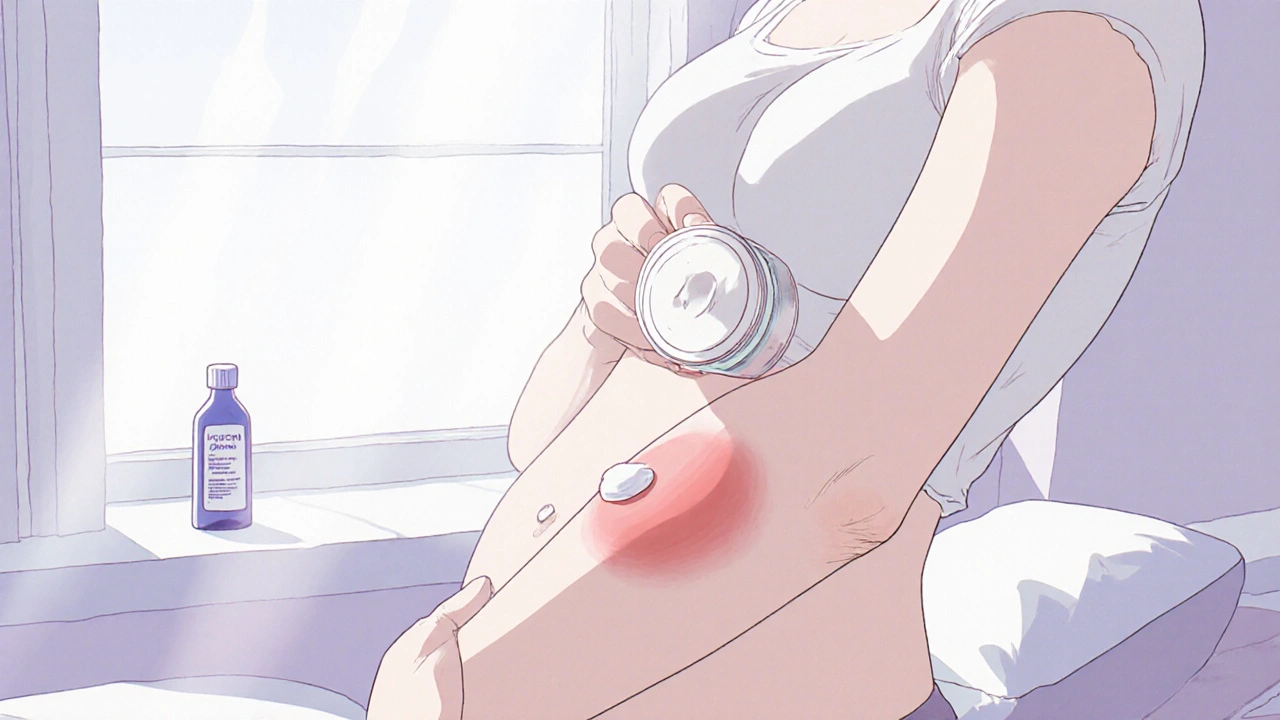
When you’re pregnant, your skin changes—acne flares up, stretch marks appear, and rashes pop up out of nowhere. That’s when many reach for topical creams, skin treatments applied directly to the surface to treat conditions like acne, eczema, or itching. Also known as skin creams, they’re often seen as safer than pills because they don’t enter your bloodstream the same way. But not all topical creams are safe during pregnancy, and some can cross the placenta and affect your baby. The key isn’t avoiding all creams—it’s knowing which ones to use and which ones to leave on the shelf.
Topical steroids, corticosteroid creams used to reduce inflammation and itching, are common in pregnancy for eczema and psoriasis. Low-potency versions like hydrocortisone 1% are generally considered safe for short-term use on small areas, according to dermatology guidelines. But stronger versions like clobetasol or betamethasone? Avoid them unless your doctor specifically says it’s okay. These can suppress fetal growth if used too often or over large areas. Then there’s tretinoin, a retinoid cream used for acne and wrinkles, which is a hard no during pregnancy. Even though it’s applied to the skin, animal studies show it can cause birth defects, and doctors universally advise against it. On the flip side, benzoyl peroxide, an antibacterial agent used to treat acne, is one of the safest options. It doesn’t absorb much into your blood, and the American College of Obstetricians and Gynecologists lists it as pregnancy-friendly. For itchy skin, plain moisturizers with ceramides or colloidal oatmeal are your best friends. They don’t treat the root cause, but they soothe without risk.
What about natural remedies? Tea tree oil? Aloe vera? Some are fine in small amounts, but others—like salicylic acid in high doses or herbal extracts like licorice root—can be risky. And don’t assume "natural" means safe. Many plants contain compounds that can trigger contractions or interfere with hormone levels. The safest route? Always check with your OB-GYN or a dermatologist who knows pregnancy-specific guidelines. You’re not being overly cautious—you’re protecting your baby’s development while still taking care of yourself.
Below, you’ll find real-world advice from trusted medical sources on managing skin issues during pregnancy. From what creams actually work to which ingredients to avoid at all costs, these posts give you clear, no-fluff answers based on current research and clinical experience. No guesswork. Just what you need to know to keep your skin healthy and your pregnancy safe.