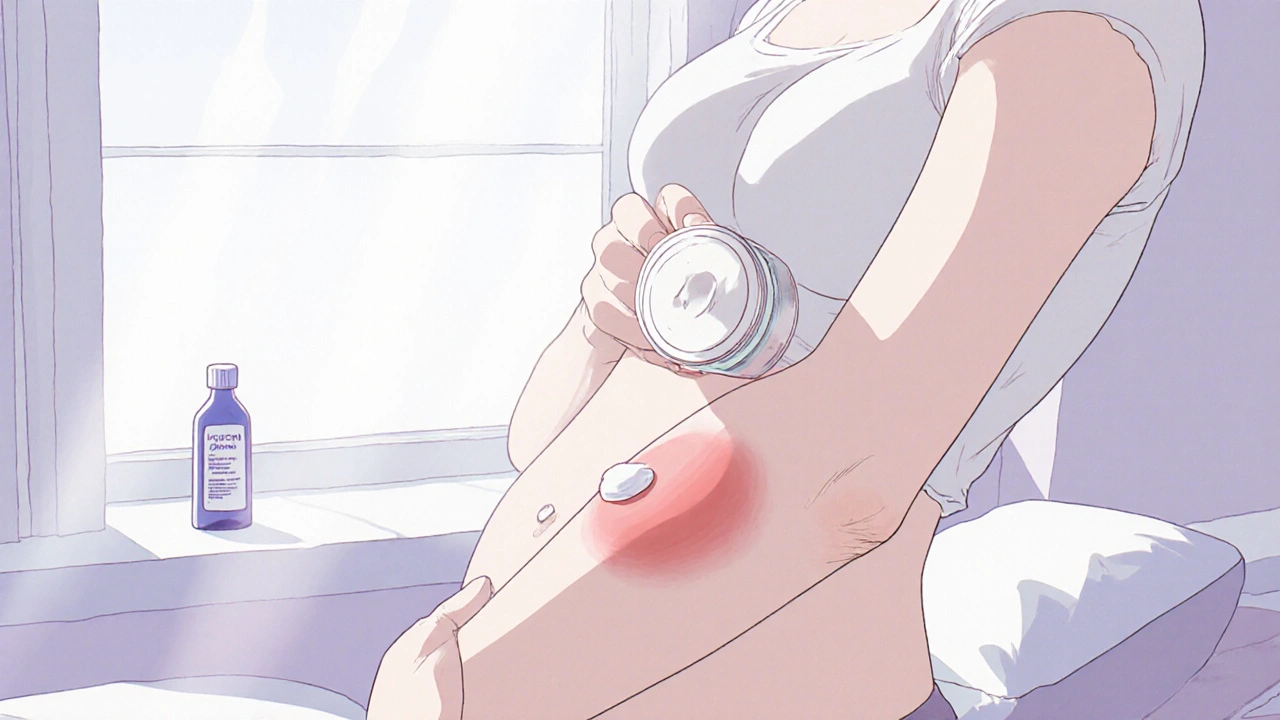
When you're pregnant, even simple skin care choices can feel risky. Topical retinoids, a class of vitamin A-derived creams and gels used for acne, wrinkles, and skin texture. Also known as tretinoin, adapalene, or tazarotene, these are powerful skin treatments—but their safety during pregnancy is a real concern. Unlike oral retinoids like isotretinoin, which are known to cause severe birth defects, topical versions are absorbed in much smaller amounts. But that doesn’t mean they’re risk-free. Many doctors still advise avoiding them entirely during pregnancy, not because of proven harm, but because the data isn’t clear enough to say they’re 100% safe.
Tretinoin, the most common topical retinoid found in brands like Retin-A. Also known as all-trans retinoic acid, it’s highly effective for acne and anti-aging—but it’s also the one most often flagged in pregnancy warnings. Adapalene, a newer retinoid sold as Differin. Also known as a synthetic retinoid, it’s milder and less irritating, and some studies suggest even lower skin absorption. Still, the FDA classifies both as Category C: animal studies showed risk, but human data is limited. That’s why most OB-GYNs and dermatologists recommend pausing them as soon as you know you’re pregnant. The skin changes you get during pregnancy—oilier skin, breakouts, melasma—are normal. You don’t need strong chemicals to manage them. Simpler options like benzoyl peroxide, azelaic acid, or gentle cleansers work well and have much stronger safety records.
It’s not just about avoiding harm—it’s about making smart swaps. If you were using a retinoid for acne before pregnancy, switching to azelaic acid, a naturally occurring acid found in grains and used to treat acne and rosacea. Also known as a topical antimicrobial and anti-inflammatory, it’s safe during pregnancy can keep your skin clear without the worry. If you’re dealing with fine lines or texture, look for products with niacinamide or hyaluronic acid. These don’t carry the same theoretical risks. And if you’re unsure? Always check with your provider before using any new product. Your skin matters, but your baby’s safety matters more.
The posts below give you real-world insight into how medications affect skin, pregnancy, and overall health. You’ll find clear comparisons of topical treatments, warnings about drug interactions, and safer alternatives for common skin and systemic conditions. Whether you’re managing steroid acne, dealing with sensitive skin, or just trying to stay healthy while pregnant, you’ll find practical advice that cuts through the noise.