
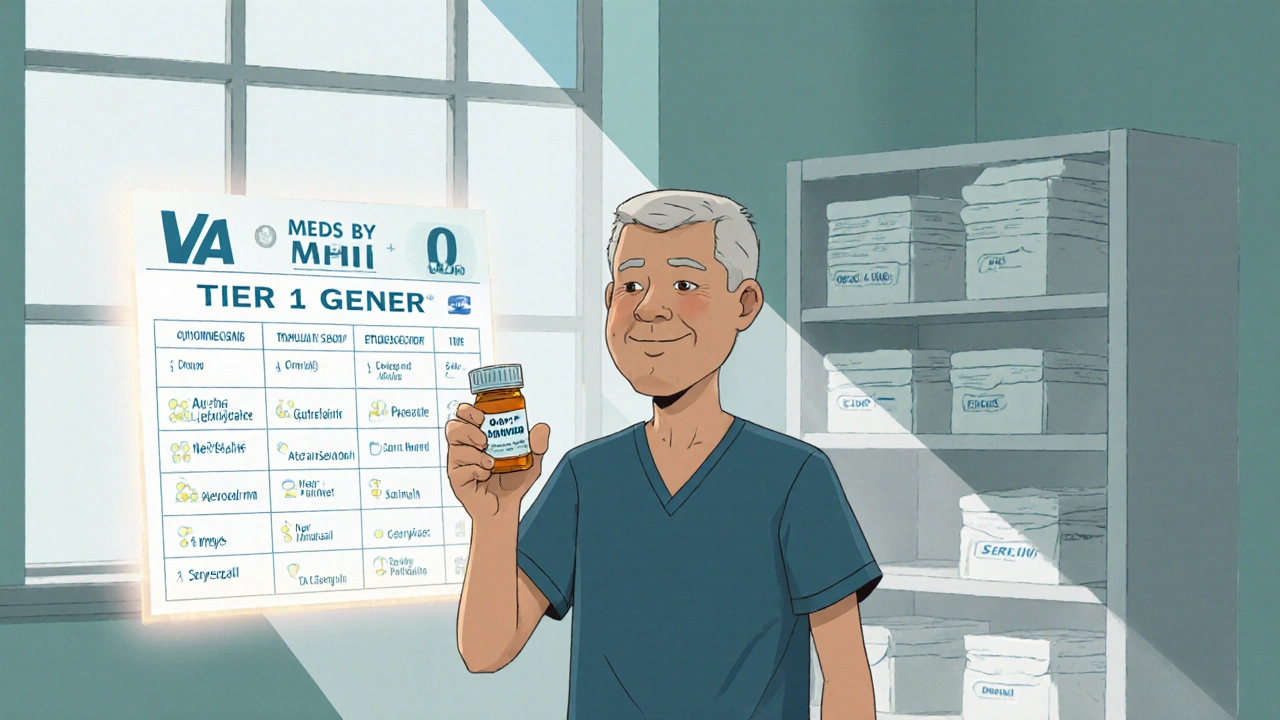
When you’re a veteran relying on VA healthcare, your prescription drugs don’t work like they do at a regular pharmacy. The VA doesn’t just hand out any medication you ask for. Instead, it uses a strict, nationwide list called the VA National Formulary-and it’s built around one simple rule: if a generic version exists, you get the generic. This isn’t a suggestion. It’s policy. And it’s saving veterans billions every year.
How the VA Formulary Works
The VA National Formulary is the official list of all medications that every VA medical center, clinic, and pharmacy must have on hand. It’s not optional. If it’s on the list, it’s available. If it’s not, you won’t get it through VA unless you jump through major hoops. This system started in 1998 and has been tightened up ever since. As of October 2025, the formulary includes over 1,200 medications, with monthly updates to add, remove, or change restrictions. The formulary is split into three parts:- Standard VA National Formulary - The core list of approved drugs.
- VA National Formulary Changes - Monthly updates showing what’s new, removed, or restricted.
- VA Urgent/Emergent Formulary - For when you need a drug right away outside a VA facility, like during an emergency visit at a civilian hospital.
Every drug on the formulary is assigned to one of three cost tiers. These tiers determine how much you pay out of pocket. The lower the tier, the cheaper it is.
Tier 1: The Generic Advantage
Tier 1 is where the VA really shines. These are the preferred generic medications with the lowest copay-usually just $5 to $10 for a 30-day supply. Some veterans pay $0 if they use Meds by Mail. Compare that to commercial insurance, where the same generic might cost $20 to $50. The VA doesn’t just offer generics-they push them hard. Here are just a few Tier 1 drugs covered as of January 2025:- Alendronate (for osteoporosis)
- Aspirin buffered tablet (for heart health)
- Allopurinol (for gout)
- Ibuprofen (for pain and inflammation)
- Atorvastatin (for high cholesterol)
- Ezetimibe (cholesterol blocker)
- Furosemide (water pill for swelling)
- Hydrochlorothiazide (blood pressure medication)
- Fluoxetine (for depression)
- Sertraline HCL (another antidepressant)
- Trazodone (for sleep and mood)
That’s not a random list. These are drugs with decades of proven safety and effectiveness. The VA doesn’t care about brand names. They care about what works-and what costs less. And the results? A 92% generic use rate across the VA system. That’s higher than any commercial insurer in the U.S.
Why Generics? The Numbers Don’t Lie
The VA spends about $1,850 per veteran on prescription drugs each year. Medicare Part D? Around $2,300. Commercial insurance? Over $2,700. That’s not a coincidence. It’s because the VA refuses to pay more than it has to. The savings aren’t just theoretical. In 2024 alone, the VA saved $2.8 billion by sticking with generics. That money goes back into care-more mental health counselors, better diabetes programs, more home visits for elderly vets. The Government Accountability Office even praised the VA’s formulary process for being evidence-based, not profit-driven. Dr. Susan Turkel, who leads the VA’s pharmacy program, put it simply: “We don’t choose drugs because they’re flashy. We choose them because they work-and they’re affordable.”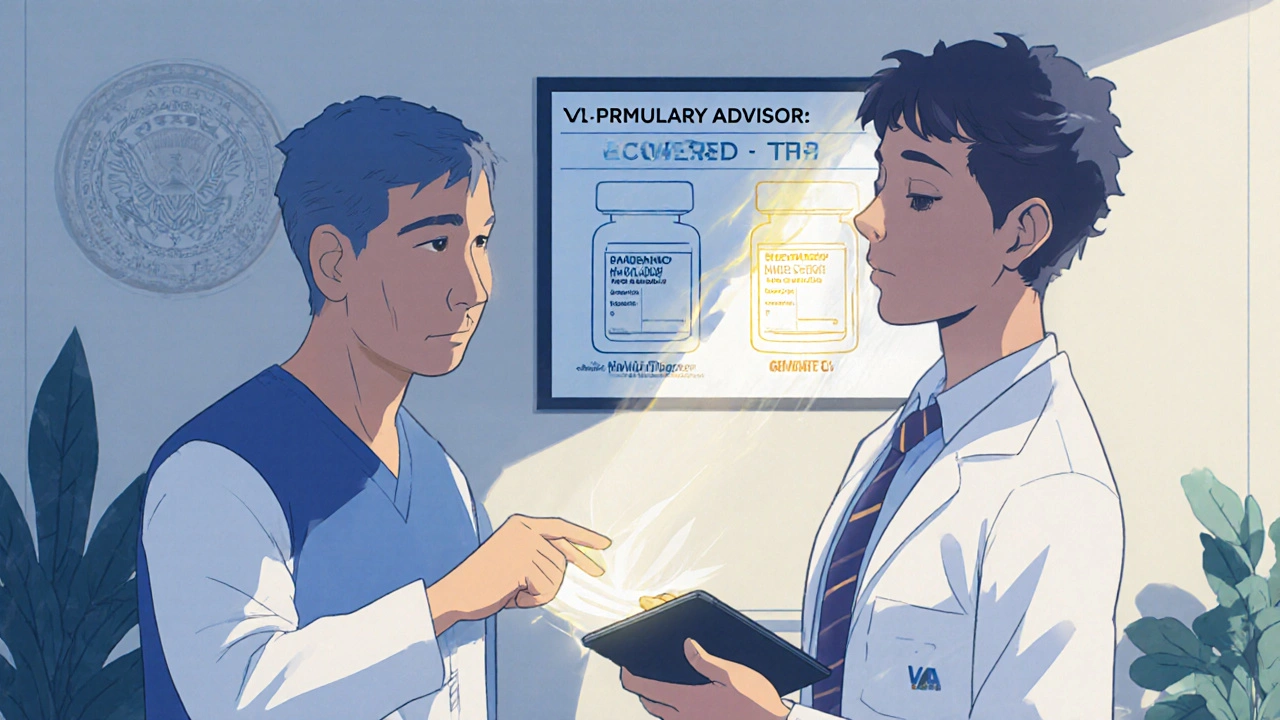
What’s Not Covered? The Limits of the Formulary
The VA formulary isn’t perfect. Some newer, expensive drugs are either excluded or hard to get. The biggest complaints from veterans come around weight-loss medications like Wegovy, Ozempic, and Mounjaro. Here’s the catch: the VA will cover these drugs-but only for FDA-approved uses. That means if you have type 2 diabetes, you can get them. If you want them for weight loss alone? Not covered. Not even with prior authorization. The same goes for newer cancer drugs or rare disease treatments. The VA’s National Drug Formulary Committee reviews every new drug based on three things: clinical evidence, cost, and whether there’s a cheaper alternative that works just as well. A veteran on Reddit wrote in October 2025: “My doctor said Wegovy could help me lose 40 pounds. VA said no unless I have diabetes. I had to switch to diet and exercise. It’s harder, but I’m doing it.” Some veterans report initial worries about generics. A 2024 VA survey found 12% of users were nervous that generics wouldn’t work like the brand name. But after talking with their provider, 94% stuck with the generic-and saw no difference in how they felt.How to Get Your Medication Through VA
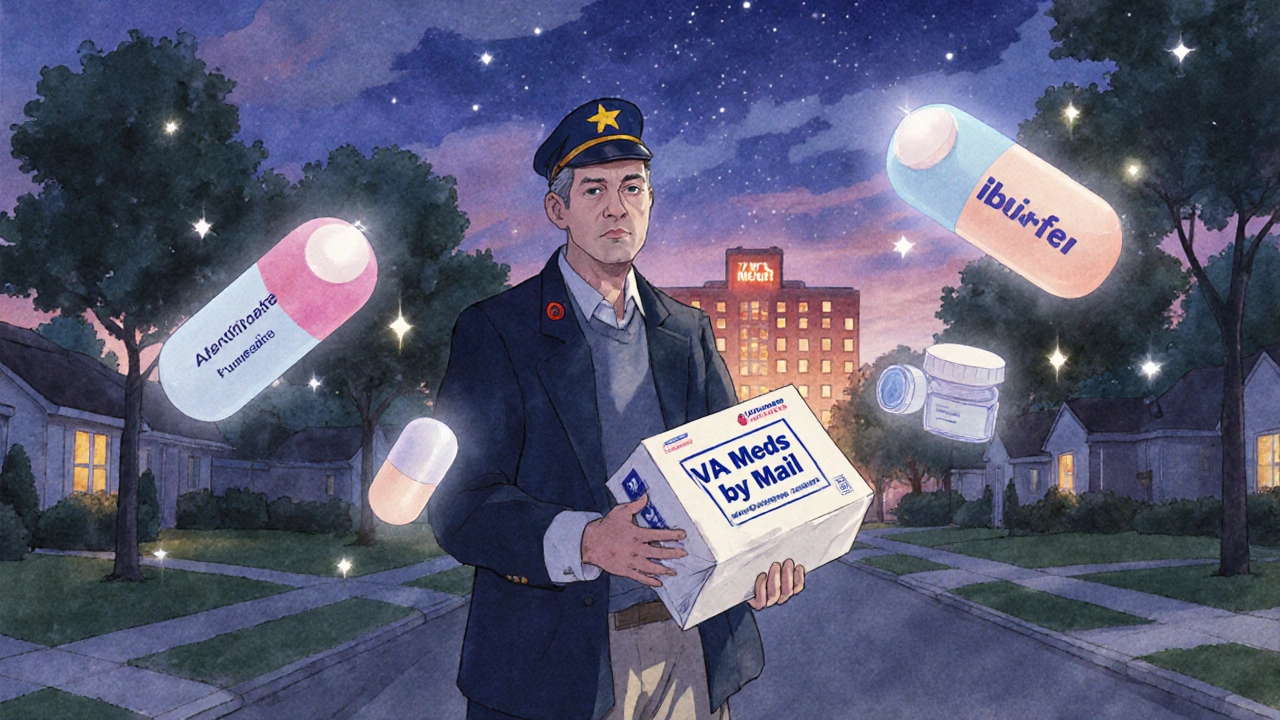
Getting your meds through VA isn’t complicated, but you need to know where to look. Step 1: Check the VA Formulary Advisor - Go to VA.gov and search for “Formulary Advisor.” Type in your drug name. It’ll tell you if it’s covered, what tier it’s on, and if prior authorization is needed. Step 2: Use Meds by Mail - For maintenance medications (drugs you take every day), sign up for Meds by Mail. You get a 90-day supply delivered to your home, often with no copay. No trips to the pharmacy. No waiting. It’s the most popular way veterans get their prescriptions. Step 3: Go to a VA Pharmacy - If you need a refill right away, walk into any VA pharmacy. Bring your ID and your prescription. They’ll fill it if it’s on the formulary. Step 4: Use Community Care (if needed) - If you’re away from a VA facility and need a drug that’s on the formulary, you can get it at a local pharmacy under the VA’s Community Care program. Just make sure your provider gives you a VA-authorized prescription. Step 5: Request Prior Authorization - If your drug isn’t on the formulary, your provider can request an exception. But they’ll need to prove it’s medically necessary-like if you had a bad reaction to the generic, or if the generic doesn’t work for you. It takes time. Don’t wait until your last pill is gone.CHAMPVA and Other VA-Linked Programs
If you’re covered under CHAMPVA (for spouses or dependents of certain veterans), your formulary is mostly the same as the VA’s-but with some extra rules. As of January 2025, CHAMPVA covers GLP-1 drugs (like Ozempic, Wegovy) only for:- Type 2 diabetes
- Obstructive sleep apnea
- Cardiovascular disease or metabolic liver disease
No weight loss unless it’s tied to one of those conditions. The VA doesn’t bend on this. It’s not about denying care-it’s about following federal guidelines on what’s medically justified.
What’s Changing in 2026?
The VA isn’t standing still. By mid-2026, they plan to roll out AI tools inside electronic health records that will suggest generic alternatives in real time when a provider writes a prescription. That means if your doctor tries to write for a brand-name drug, the system will pop up: “A generic is available and equally effective. Would you like to switch?” They’re also working on better transparency. Soon, when you log into your VA account, you’ll see a live status indicator on each drug: “Covered,” “Prior Auth Required,” or “Not Covered.” No more guessing.What Veterans Say
Most veterans appreciate the system. One wrote on a VA forum: “I switched from Zoloft to generic sertraline through Meds by Mail. Same effect. Zero copay. I wish my civilian job offered this.” Others are frustrated when their new prescription isn’t covered. But the VA has made it easier to get help. Their Pharmacy Benefits call center answers about 18,000 calls a day. Pharmacy staff at VA clinics spend time walking new veterans through the system. Over 78% of veterans say their pharmacist helped them understand their coverage.Final Thoughts
The VA formulary isn’t about limiting choices. It’s about making smart ones. By focusing on generics, the VA ensures that every veteran gets the medication they need without being hit with a huge bill. It’s a system built on science, not profit. And while it’s not perfect-some newer drugs are still out of reach-it works better than almost any other system in the country. If you’re a veteran, know your formulary. Use the Formulary Advisor. Ask your pharmacist. Use Meds by Mail. And don’t assume a brand name is better. The VA’s data shows: the generic is just as good-and it’s paid for by your country.Are all VA prescriptions generic?
No, not all. But if a generic version exists and is clinically equivalent, the VA will only cover the generic unless your provider proves you need the brand-name version. This is called a "generic-first" policy. Brand-name drugs are covered only when there’s a medical reason-like an allergy or adverse reaction to the generic.
How do I check if my medication is covered by the VA?
Use the VA Formulary Advisor tool on VA.gov. Just type in the drug name (brand or generic), and it will show you if it’s covered, what tier it’s on, and whether prior authorization is needed. You can also download the full formulary as an Excel file or CSV from the VA’s open data portal.
What’s the difference between Tier 1, Tier 2, and Tier 3 drugs?
Tier 1 drugs are preferred generics with the lowest copay-usually $5-$10 for a 30-day supply. Tier 2 includes non-preferred generics and some brand-name drugs with higher copays. Tier 3 is for specialty drugs, often high-cost medications that require prior authorization and have the highest copay. The lower the tier, the less you pay.
Can I get brand-name drugs through VA if I prefer them?
Only if your provider requests and justifies it. You can’t just ask for a brand name because you like it. The VA requires proof that the generic doesn’t work for you-like side effects, allergic reactions, or lack of effectiveness. Even then, approval isn’t guaranteed.
Does the VA cover weight-loss drugs like Wegovy or Ozempic?
Only if you have a qualifying medical condition. As of January 2025, the VA covers GLP-1 drugs like Wegovy and Ozempic only for type 2 diabetes, obstructive sleep apnea, or cardiovascular disease prevention. They are not covered for weight loss alone. CHAMPVA beneficiaries follow the same rules.
How do I get my VA prescriptions delivered to my home?
Sign up for Meds by Mail through VA.gov. It’s free for most veterans, with no copay and no deductible. You’ll get a 90-day supply mailed to your home. It’s ideal for maintenance medications like blood pressure pills, antidepressants, or cholesterol drugs. Refrigerated biologics and certain controlled substances can’t be mailed.
What if my VA prescription isn’t covered?
Your provider can submit a prior authorization request. They’ll need to explain why the generic doesn’t work for you and why the non-formulary drug is medically necessary. Approval can take days to weeks. In urgent cases, you may qualify for the Urgent/Emergent Formulary and get the drug through a community pharmacy.
Can I use my private insurance with VA prescriptions?
No. VA benefits are separate from private insurance. You can’t use your Medicare, Medicaid, or commercial plan to pay for VA prescriptions. If you want to use your private insurance, you must get your prescriptions filled outside the VA system. But you’ll pay more-often significantly more-than you would through VA.
It's wild how the VA just cuts through the noise and picks what actually works. No marketing hype, no fancy packaging-just science and savings. I used to think generics were cheap knockoffs, but after switching to generic sertraline through Meds by Mail? Same relief, zero copay. I wish my private insurer had that kind of sense.
Im glad VA does this. I was scared to switch from brand zoloft but my pharmacist said it was the exact same stuff. I saved like 80 bucks a month. #VAforthewin
As someone from Nigeria who’s watched my cousin struggle to afford meds in the U.S., this VA system is a revelation. They’re not denying care-they’re making it sustainable. That’s leadership. I wish more countries thought this way.
Don’t let them fool you. This isn’t about savings-it’s control. They don’t want you feeling better, they want you compliant. You think you’re getting a deal? You’re getting a cage.
My father was skeptical about generics at first, but after his doctor explained the bioequivalence standards, he switched without hesitation. He’s been on atorvastatin and hydrochlorothiazide for five years now-no side effects, no issues. The VA’s approach is grounded in real clinical evidence, not corporate pressure. It’s rare, and it matters.
Oh sure, let’s all drink the VA Kool-Aid. Next they’ll tell us to use chalk for toothpaste because it’s cheaper. Brand names exist for a reason-patents, research, quality control. You think a $5 generic has the same fillers? Please.
OMG I CRIED reading this. I’ve been on trazodone for sleep since 2020-$5 a month through VA. My civilian friend pays $140 for the same thing. I’m not just grateful-I’m emotional. This is what healthcare should look like. Thank you, VA.
Generics? Yeah right. They’re just repackaged Chinese factory waste. The VA’s formulary is a government mind-control tool. You think they care about your health? They care about the budget. You’re being experimented on. Look up the 2019 VA-DoD merger documents. They’re not telling you everything.
Why are we letting the government decide what meds we get? This is socialism. I paid for this country with my blood. Now they tell me I can’t have my brand name? Screw that. I’ll pay out of pocket if I have to.
My brother had a bad reaction to a generic antidepressant-turned out the filler triggered his autoimmune condition. He got the brand name approved after a 3-week battle. The system isn’t perfect, but it has a path. That’s more than most insurers offer. 🙏
You think this is good? You’re wrong. The VA’s formulary is outdated. They still don’t cover the new Alzheimer’s drugs. Why? Because they’re expensive. They’d rather let veterans forget their own kids than spend a dime. This isn’t care-it’s neglect dressed up as frugality.
Just got my first Meds by Mail package-120 pills of metformin, free, in 3 days. I was nervous, but it’s the same as the pharmacy. VA got my back. And the pharmacist called me personally to check in. That’s human. That’s real. 🤝
My mom’s on fluoxetine through the VA-she’s been stable for two years. She used to skip doses because of the cost. Now she takes them every day. That’s not just a drug. That’s dignity. Thank you, VA pharmacy team.
Let’s be real-this whole system only works because the VA has monopsony power. They’re not saving money because they’re ethical. They’re saving because they’re the only buyer. Try getting a generic this cheap on the open market. Good luck.
Wegovy for weight loss? Nah. But I get it. If you’re diabetic, you need it. If you’re just trying to fit into jeans? That’s not a medical emergency. VA’s not heartless-they’re just not a cosmetic clinic. 😊
Some people see restrictions as oppression. I see them as responsibility. The VA doesn’t have infinite money. But it does have infinite responsibility to veterans. Choosing generics isn’t denying care-it’s making sure care lasts. That’s not bureaucracy. That’s stewardship.
Ugh. I hate the VA. Took me six months to get my thyroid med approved. My doctor had to write a novel. Meanwhile, my cousin in Canada just walks in and gets it. This system is broken. I’m switching to private insurance even if it costs twice as much.
Wait, so if I have high blood pressure, I get HCTZ for $5, but if I have migraines, I can’t get Nurtec? That’s not fair. Why are some conditions prioritized over others? This feels arbitrary. The VA needs to be more transparent about their decision-making.
Generics? Ha. They’re just the same pills with different colors. The VA is part of a bigger plan to dumb down American medicine. You think they don’t know the brand names work better? They do. They just don’t care about you. They care about the budget. And the budget? It’s controlled by someone else.