When you’re dealing with kidney stones, hard deposits of minerals and salts that form in the kidneys and can cause severe pain when passing. Also known as renal calculi, they’re one of the most common urinary tract problems—and one of the most preventable. The single most effective thing you can do? Drink more fluid, liquids consumed to maintain hydration and support kidney function. It’s not just a suggestion. It’s the foundation of every doctor’s plan to stop stones from forming or help you pass them faster.
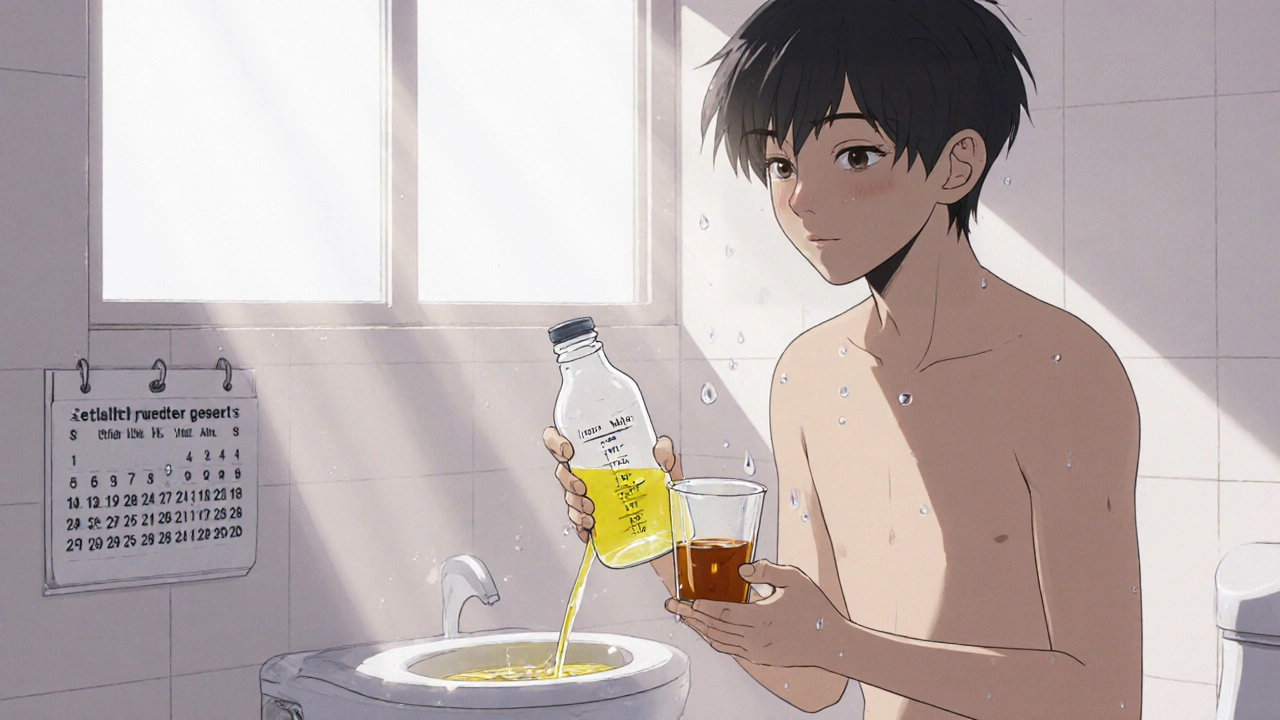
Most people think drinking eight glasses of water a day is enough. For kidney stones? That’s barely the starting line. Studies show you need at least 2.5 liters (about 10 cups) of total fluid daily to keep your urine diluted enough to stop crystals from sticking together. If you’ve had a stone before, you should aim for 3 liters or more. Your goal isn’t just to pee more—it’s to make sure your urine looks like pale lemonade, not dark apple juice. Dark urine? You’re not drinking enough. Clear? You’re on track. And yes, that includes water from food, coffee, tea, and even soup. Caffeine doesn’t dehydrate you when you’re used to it, so your morning cup counts. But skip the soda, especially colas with phosphoric acid—they’re linked to higher stone risk. Lemonade made with real lemon juice? That’s a win. Citrate in lemon juice blocks stone formation.
It’s not just about quantity. Timing matters too. Drinking all your water in the morning won’t help you at night when your body’s making concentrated urine. Spread it out. Have a glass before bed, another when you wake up, and sip through the day. If you sweat a lot from exercise or heat, add extra fluid. People who work outdoors, drive long hours, or live in hot climates are at higher risk—and often don’t realize it. And if you’ve had a stone before, your risk of another is 50% within 10 years. That’s why fluid intake isn’t a temporary fix. It’s a lifelong habit. The posts below cover exactly how to get this right: what drinks help, what to avoid, how much urine output you need, and what to do if you’re still getting stones even after drinking plenty. You’ll find real-world tips from people who’ve been there, plus clinical insights on hydration strategies that actually work.