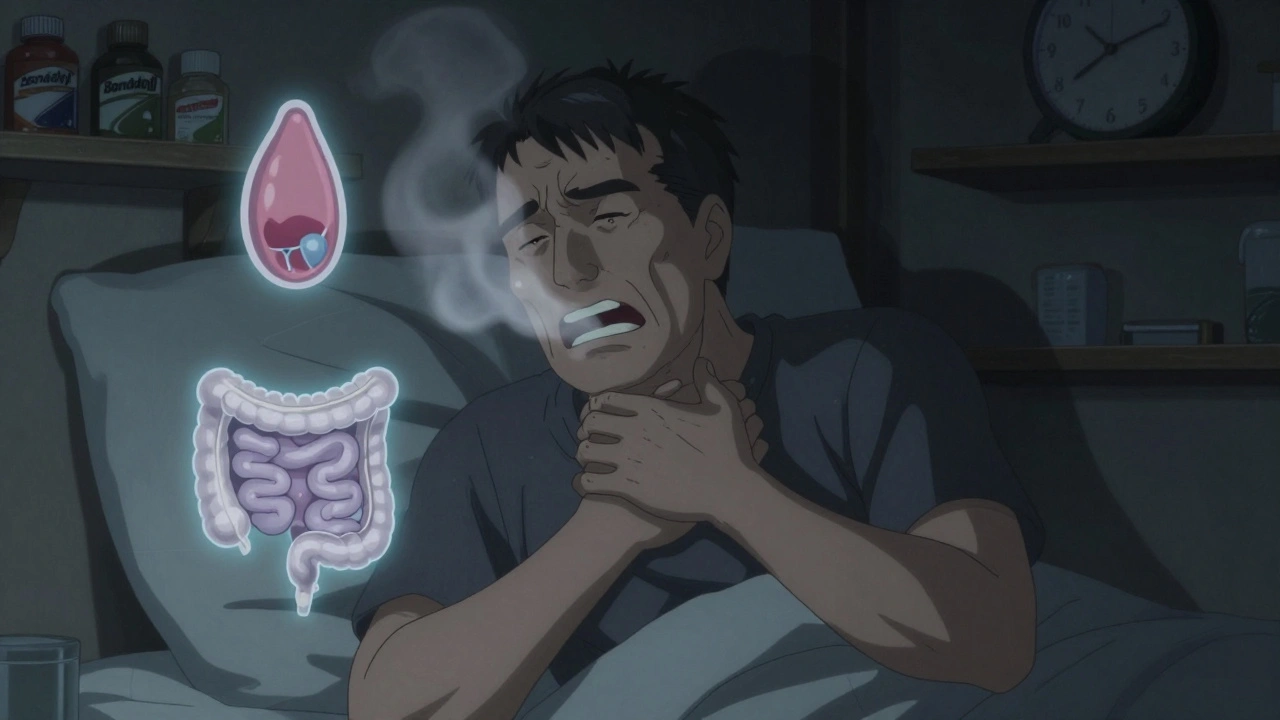
When your bladder fills up but won’t empty, that’s urinary retention, a condition where the bladder doesn’t fully empty during urination. It’s not normal, and it’s not something to ignore. Left untreated, it can lead to infections, kidney damage, or even sudden, painful bladder distension. Also known as bladder retention, this issue often shows up quietly—maybe you feel like you’re peeing but can’t finish, or you’re up all night with a full bladder but barely any output.
Many cases of urinary retention are linked to medication side effects, how certain drugs interfere with bladder muscle function or nerve signals. Antihistamines, decongestants, antidepressants, and even some painkillers can cause this. For example, drugs like diphenhydramine or oxybutynin may relax the bladder too much, while opioids can block the signals telling your bladder to contract. It’s not always the drug itself—it’s often the combo. If you’re on multiple meds, especially for chronic conditions like high blood pressure or depression, you might be at higher risk. And it’s not just older adults—anyone taking these drugs can be affected, especially if they have an enlarged prostate or nerve damage from diabetes.
Another major player is bladder dysfunction, when the muscles or nerves controlling urination stop working properly. This can come from spinal injuries, multiple sclerosis, or even long-term constipation putting pressure on the bladder. Sometimes, it’s not about drugs at all—it’s about your body’s wiring. And if you’ve had surgery, especially pelvic or prostate surgery, temporary retention is common. But if it sticks around, you need answers.
What happens next matters. Some people get relief with simple fixes—drinking less before bed, avoiding caffeine, or adjusting meds. Others need a urinary catheterization, a temporary or long-term tube to drain the bladder. It sounds scary, but it’s routine, safe, and often life-changing. In hospitals, it’s used to monitor output and prevent complications. At home, many people manage it with intermittent catheters, which are easier than you think.
What you’ll find below are real, practical posts that dig into the medications that cause urinary retention, how to spot the warning signs before it gets serious, and what alternatives exist when your current drugs are the problem. You’ll see how pharmacists help adjust regimens to protect bladder function, how certain antibiotics or pain meds can trigger this issue, and what to ask your doctor if you’re struggling to empty your bladder. This isn’t theory—it’s what people are actually dealing with, and what’s working for them.