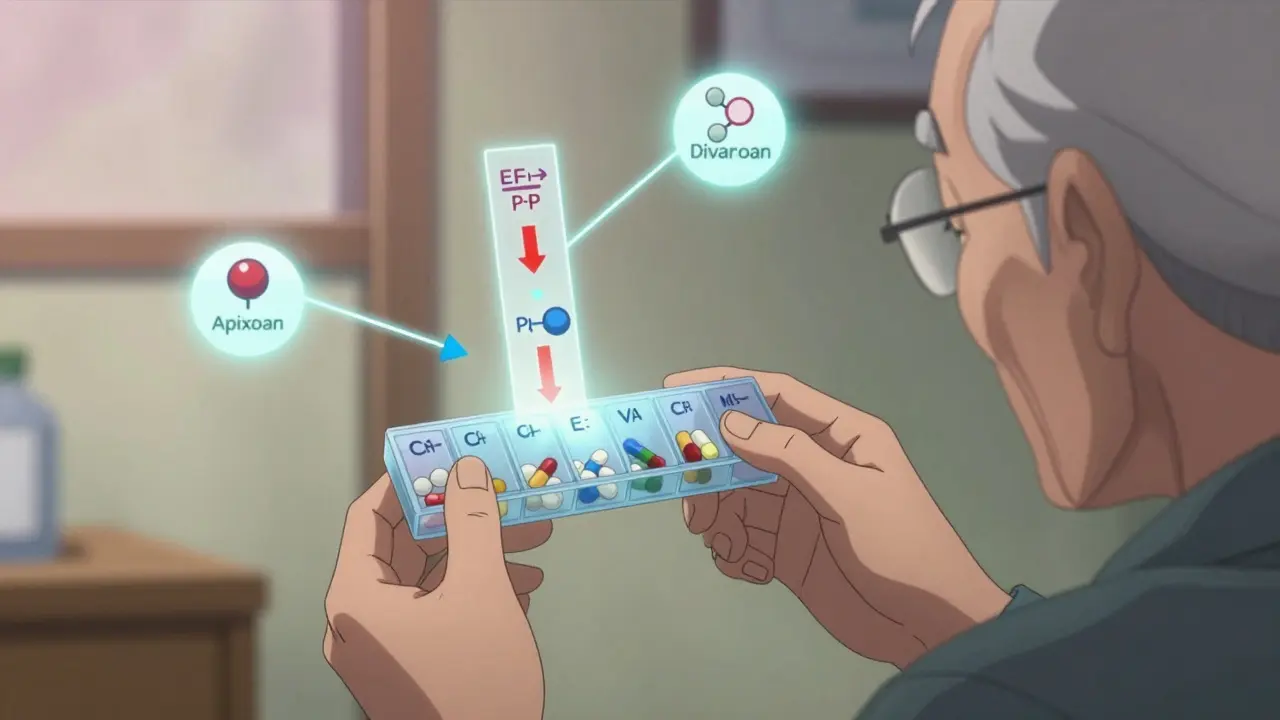
When you take more than one medication, your body doesn’t always treat them like separate guests—it sees them as roommates who might clash. This is what we call drug interactions, when two or more drugs react in a way that changes how they work, increases side effects, or causes unexpected harm. Also known as medication interactions, they’re not rare, and they’re not always obvious. Even something as simple as taking ibuprofen with blood thinners or grapefruit juice with a cholesterol drug can turn a safe routine into a health risk.
These reactions happen because drugs are chemicals, and your body processes them through the same systems—liver enzymes, kidney filters, bloodstream transporters. If one drug slows down how another gets broken down, it builds up too high. If another blocks absorption, it doesn’t work at all. That’s why blood thinners, medications like warfarin or dabigatran that prevent clots are so sensitive to other pills, supplements, or even foods. Same with antibiotics, like doxycycline or ciprofloxacin, which can lose effectiveness or cause nerve damage when mixed with antacids or steroids. And it’s not just prescription drugs. Haronga, vitamin D, or even common painkillers like aspirin can interfere. The real danger? You might not feel anything until it’s too late—like a sudden nosebleed from too many blood thinners, or liver stress from stacking supplements with prescription meds.
What makes this even trickier is that many people don’t realize they’re at risk. Seniors on five or more meds? High risk. People using herbal supplements thinking they’re "natural" and safe? Also high risk. Athletes on anticoagulants like dabigatran? Need to know how exercise affects drug levels. Even something as simple as changing your sleep habits or using a new topical cream during pregnancy can shift how your body handles other drugs. That’s why understanding drug interactions isn’t just about reading labels—it’s about asking the right questions, tracking everything you take, and knowing when to pause and check.
Below, you’ll find real, practical guides on exactly how these interactions play out in everyday life—from how fluoroquinolones can wreck your tendons when mixed with steroids, to why tolvaptan needs careful monitoring with other kidney drugs, and how even common pain relievers can trigger nosebleeds or stomach issues when layered on top of each other. These aren’t theory pages. They’re the kind of advice you’d want from a pharmacist who’s seen it all.